Teradyne and Elite Robots Settle, But the Cobot Patent War Isn't Over
Teradyne Robotics and Elite Robots quietly settled their German patent and copyright dispute on October 1, but the litigation strategy behind it, and a parallel suit against JAKA, reveals how Universal Robots is fighting cheaper Chinese cobot competition in court rather than on price.

Teradyne Robotics and Elite Robots told the market on Wednesday that they had resolved their legal dispute by mutual agreement, with the terms kept confidential and neither side admitting fault. For a fight that began with a cease-and-desist letter and escalated into a German court ordering Elite Robots to hand over its own customer list, that is a remarkably quiet ending, and the quiet is the part worth examining. A settlement that resolves nothing publicly, states nothing about who was right, and discloses no number is not really an ending to the underlying conflict. It is a pause in a much larger contest over who gets to build the next generation of collaborative robots without paying a licensing fee to the company that invented the category.
Teradyne Robotics A/S, the Universal Robots-branded subsidiary of Teradyne Inc. (NASDAQ: TER), said only that the resolution reflected "their shared interest in avoiding the continued time and cost associated with legal proceedings." Elite Robots, formally Suzhou Elite Robot Co., Ltd., is a Chinese collaborative-robot maker founded in 2016 by professors from Beihang University's Robotics Institute, dual-headquartered in Shanghai and Suzhou, that has expanded its cobot arms into more than 35 countries on pricing aggressive enough to worry an incumbent that has dominated the category since inventing it.
How a Cease-and-Desist Letter Became a Pattern
The dispute that ended this week did not start as a settlement negotiation. In February, Teradyne Robotics sued Elite Robots' German subsidiary, accusing it of copyright infringement tied to Universal Robots' proprietary software, after an earlier cease-and-desist letter went unresolved. In April, the Regional Court of Hamburg issued a preliminary injunction barring Elite Robots Germany from offering the disputed software, or any product containing it, inside Germany, and separately ordered the company to disclose details of the infringing conduct, including the identities of customers it had already supplied. That is an unusually aggressive remedy: an injunction stops future sales, but a customer-disclosure order exposes a company's existing book of business to its own litigation adversary.
Elite Robots was not the only Chinese cobot maker Teradyne Robotics pursued this way. The company separately sued JAKA Robotics over what it alleged were infringements of three distinct Universal Robots patents, and JAKA pushed back with its own countersuit rather than settling quietly. Read together, the Elite Robots case and the JAKA case describe a strategy, not an isolated grievance: Teradyne Robotics is using its home-field advantage in European courts, where Universal Robots has operated longest and its patents are best established, to slow down Chinese competitors in the specific markets where price competition from China has hurt it most.
Why the Incumbent Is Litigating Instead of Just Competing on Price
Universal Robots built the collaborative-robot category and, for most of a decade, set its pricing without serious undercutting from below. That changed as Chinese manufacturers including Elite Robots, JAKA and several smaller rivals scaled domestic production and began exporting cobots priced meaningfully below UR's comparable arms, backed by a Chinese supply chain for harmonic drives, servo motors and torque sensors that has matured faster than equivalent capacity anywhere else. A buyer evaluating a six-axis collaborative arm for a mid-volume assembly line today can often find a Chinese-made unit at 40 to 60 percent of an equivalent Universal Robots arm's list price, a gap wide enough to change a procurement decision even after accounting for brand reputation and service-network depth.
Patent and copyright litigation is one of the few remaining levers an incumbent has against that kind of price pressure once a rival's hardware has become good enough to compete on specifications alone. Rather than matching Chinese pricing directly, which would compress Teradyne Robotics' own margins across its entire installed base, the company has chosen to raise the legal cost of entry into its strongest markets. A German injunction does not stop Elite Robots from selling cobots in Southeast Asia or Latin America, but it does make Europe, one of the highest-margin regions for collaborative robotics, a more expensive place for a Chinese challenger to compete, at least until the underlying patent and copyright questions are fully litigated or, as happened this week, quietly settled.
The Market Share Numbers Behind the Litigation
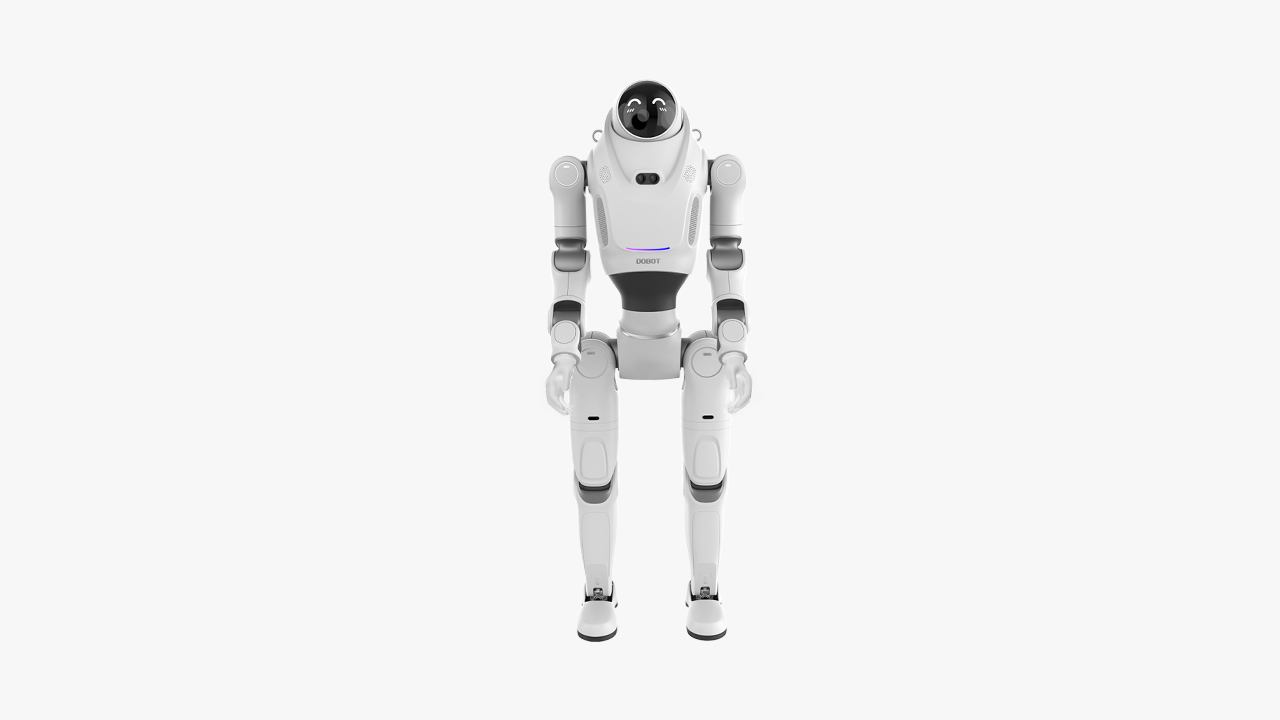
The financial pressure behind Teradyne Robotics' legal strategy is visible in its own numbers. Universal Robots still leads the global collaborative-robot market by installed base, but its share has fallen to roughly 15 percent in 2026, with China's Dobot, AUBO and JAKA now occupying three of the next four positions by unit share. Teradyne's robotics segment, which includes Universal Robots and Mobile Industrial Robots, generated about US$308 million in revenue in 2025 against a roughly US$100 million operating loss, and posted US$91 million in revenue in the first quarter of 2026, figures that describe a business still searching for a profitable scale rather than one comfortably defending a dominant position. Chinese rivals have compounded the pressure by selling bundled cobot cells, a robot arm, gripper, vision system and safety fencing sold as one line item at one price, which collapses a sale that used to require stitching together several separate vendors and lets a price-sensitive buyer compare one number against Universal Robots' typically unbundled quote.
Seen against that backdrop, suing Elite Robots and JAKA in German courts looks less like a confident incumbent defending its intellectual property on principle and more like a company that has concluded it cannot win a straight price war in its most profitable region and needs another lever. That does not make the underlying infringement claims meritless; patent and copyright law exist precisely so that a company facing cheaper competition can still prevail if its rival actually copied protected technology, but it does mean a buyer should read Teradyne Robotics' litigation campaign as a competitive strategy with a clear financial motive, not a neutral legal process playing out independent of the market pressure driving it.
What a Confidential Settlement Actually Signals
A settlement with no disclosed terms and no admission of liability from either side is often read, incorrectly, as a face-saving tie. In practice, it usually means one side paid the other an amount neither wants disclosed, because a disclosed number would either embolden further litigation against the payer or undercut the payer's own pricing leverage against other rivals facing similar suits. Given that Teradyne Robotics was the plaintiff holding an active injunction and a customer-disclosure order in Germany, the more probable reading is that Elite Robots paid to make the German exposure go away before it compounded further, whether through additional damages, a broader European injunction, or further disclosure obligations that would have handed Teradyne Robotics visibility into exactly which customers it could target next with direct sales pressure.
That reading is consistent with, though not proven by, the fact that Teradyne Robotics continues to pursue JAKA on a parallel track rather than appearing to have reached a global truce with Chinese cobot makers as a group. A buyer should not assume this settlement signals the end of patent risk across the Chinese cobot category. It more likely signals that Elite Robots specifically decided the cost of continued litigation in Germany outweighed the cost of a confidential payment, a calculation that will look different for every other Chinese manufacturer depending on its own European sales volume and patent exposure.
The Procurement Question Buyers Keep Avoiding
Most procurement teams evaluating a Chinese collaborative robot against a Universal Robots arm focus on landed cost, payload, reach and service-network coverage. Few ask the harder question this dispute raises directly: does the vendor's supply contract include an intellectual-property indemnification clause broad enough to cover a future injunction in the buyer's own country, not just the seller's country of manufacture? A European logistics operator that purchased Elite Robots arms through its German distributor before April's injunction was, for a period, buying equipment a court had just barred from further sale in that market, through no fault of the buyer's own. Whether that buyer had recourse against Elite Robots for a product it could no longer be serviced or resupplied under in Germany is exactly the kind of contractual detail that gets skipped during a competitive bake-off focused on unit price.
That question matters more, not less, as Chinese cobot makers keep winning share on price. A buyer locking in a multi-year deployment with a Chinese vendor currently involved in European patent litigation, even one that just settled, should ask directly whether other open disputes exist in the jurisdictions where that buyer actually operates, and should price the risk of a future injunction into the total cost of the relationship rather than treating this week's settlement as proof the legal overhang has cleared.
A Truce That Changes Nothing About the Underlying Fight
Picture the floor of a European automotive supplier two years from now, where a Universal Robots arm and an Elite Robots arm work the same assembly line side by side, bought in the same fiscal year by a procurement team that cared more about throughput than the patent filings sitting in a Hamburg courthouse. That scene is already closer to reality than the confidential language of Wednesday's settlement suggests. Teradyne Robotics bought itself quiet in one courtroom, JAKA's parallel case grinds on in another, and the price gap that started this fight in the first place has not moved by a single euro.
This analysis synthesizes company statements and public market activity as of the publication date and should not be read as investment, financial, or professional advice; it is provided for general information purposes only.