Robotics Capital Shifts to Factory Integration
Capital allocation in advanced robotics is shifting from valuation stories to control of factory integration, software capability, and deployment operations. Hyundai's proposed ownership consolidation around Boston Dynamics and Agility Robotics' expansion of its physical AI capacity show that investors now value the operational systems required to make robots perform reliable work. The market is placing an execution premium on firms that can connect a robot platform to repeatable customer outcomes.
The middle week of July 2026 produced a capital signal more important than a conventional funding round. Strategic investors are moving closer to the assets, facilities, and operating teams that convert robotics demonstrations into factory work. Hyundai’s consolidation effort sits beside a different but related response from Agility Robotics, an Oregon based developer of bipedal robots for logistics and warehouse automation. The market reality is that impressive hardware no longer earns durable backing without evidence of validation, integration, and field readiness. The structural shift is capital moving from the idea of a robot into the systems that make it useful. The implication is that control of deployment capability is becoming more valuable than a passive stake in a promising machine.
Ownership Moves to the Operations Table
Hyundai Motor Group shareholders began reviewing the acquisition of SoftBank's remaining stake in Boston Dynamics after the put option exercise. The process remains subject to corporate governance, approvals, and settlement procedures. Even at that stage, the strategic meaning is clear. Hyundai is seeking greater control over a robotics platform at the same moment it is defining how that platform could enter its manufacturing operations.
The move matters because ownership and deployment are converging. Hyundai has described an end to end AI robotics value chain that combines Boston Dynamics technology with manufacturing capacity, mobility knowledge, and global supply capabilities. This is a different proposition from an automaker making a minority investment in a startup. It places the robot developer inside a larger system that can provide test sites, operating data, industrial design feedback, sourcing leverage, and a path to scale.
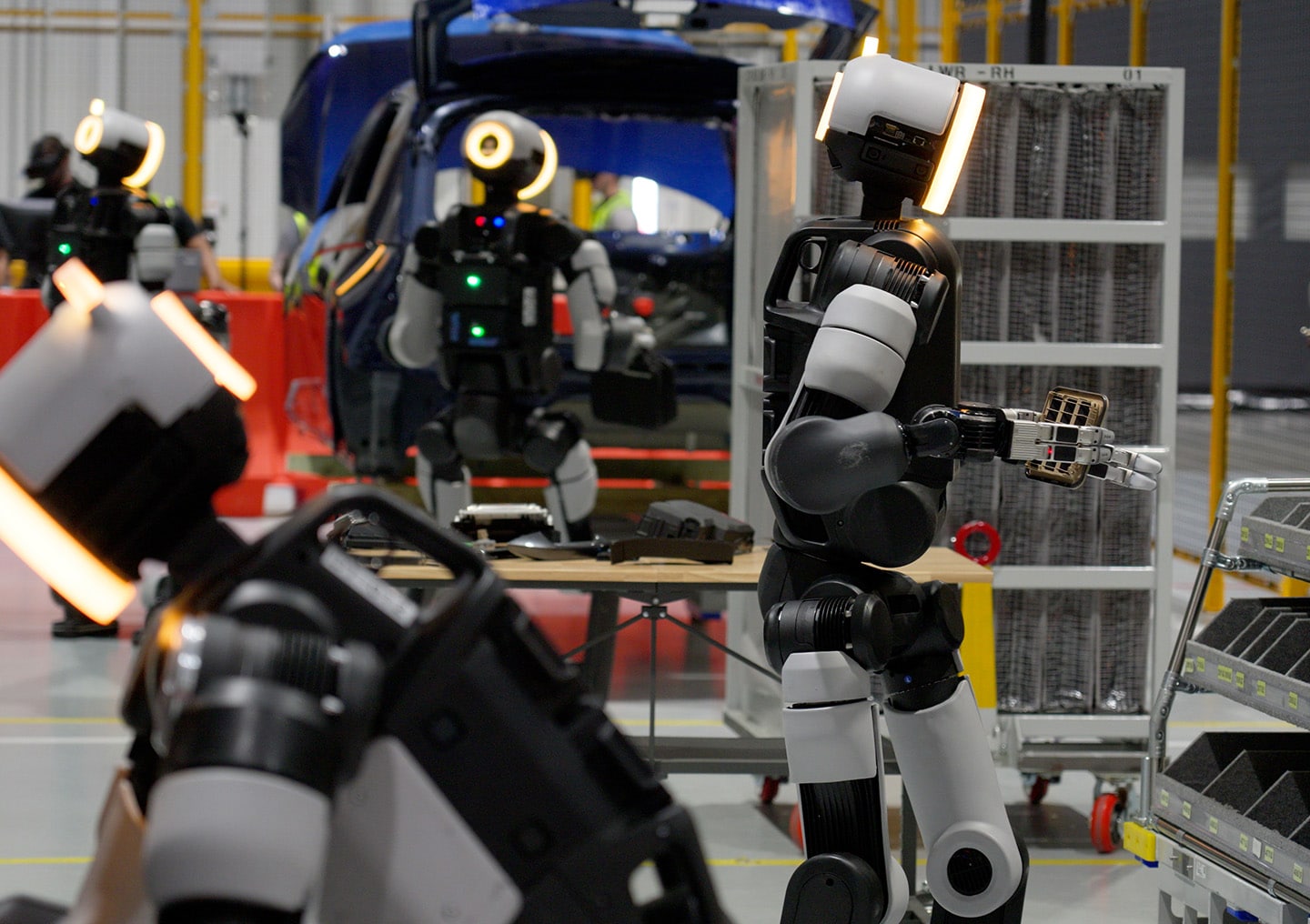
The practical horizon is long enough to be credible and near enough to matter. Hyundai plans to use Atlas at its innovation center from 2028 for parts sequencing, subject to validation, operational readiness, and business requirements. It has also described the potential for a broader assembly role by 2030. That schedule acknowledges a reality often obscured by promotional footage: useful factory robots require years of work on task definition, safety, tooling, material flow, exception handling, and maintenance. Strategic ownership can fund that work patiently because the owner captures the benefit across the whole production system.
A financial investor can help a robotics company cross a development milestone. An industrial owner can determine whether the resulting product becomes embedded in a live operating model. That distinction is increasingly visible in advanced robotics. The company with a factory relationship has a place to fail, learn, refine, and prove reliability. The company without it must purchase every hour of validation through customer pilots, integrator relationships, and field support.
The Capability Hub Becomes the Asset
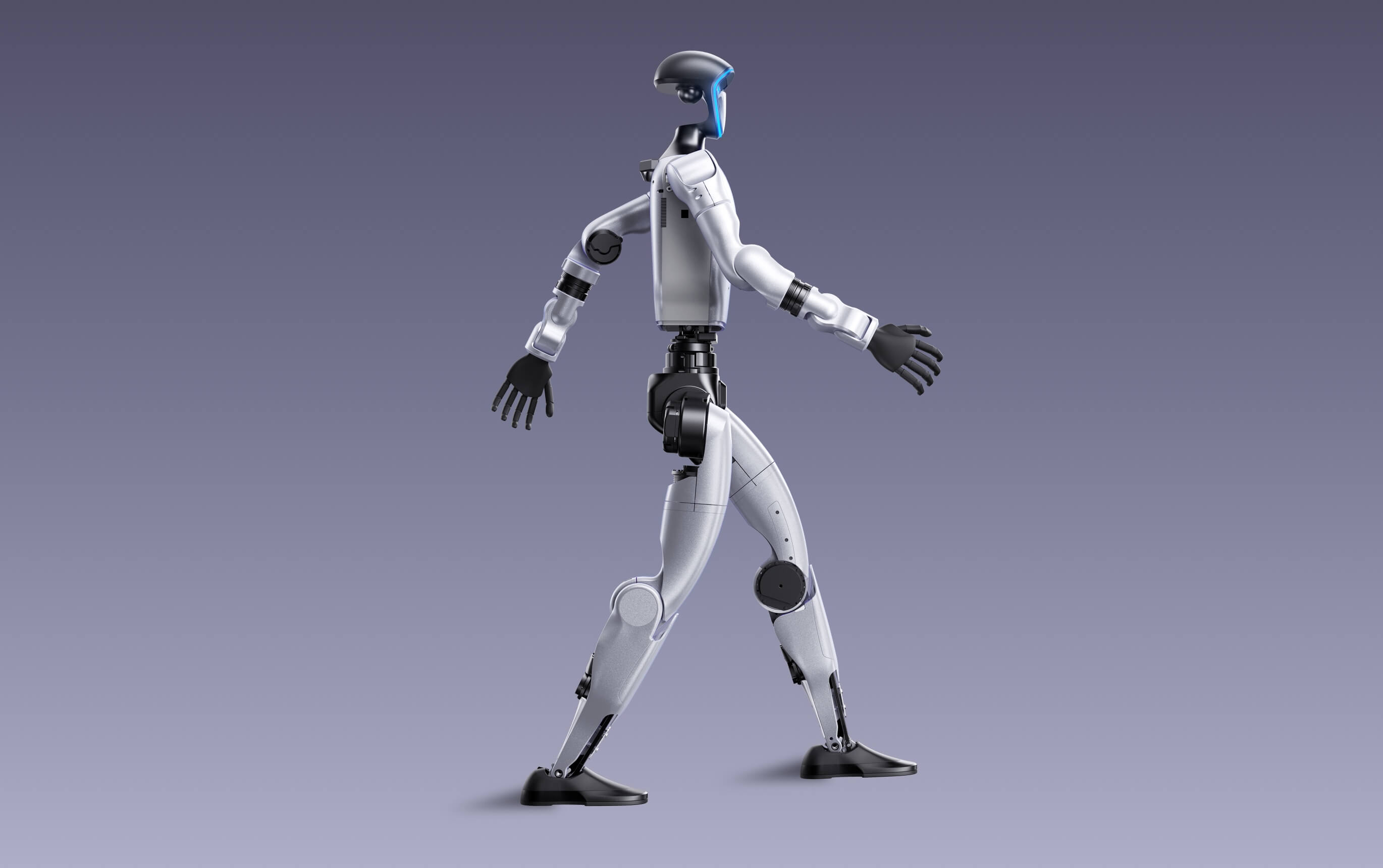
The same week showed how an independent robotics company is responding to this new capital logic. Agility Robotics, an Oregon based developer of bipedal robots for logistics and warehouse automation, opened a 60,000 square foot software and capabilities hub in Fremont, California. The hub operates alongside the company’s RoboFab manufacturing operation in Salem, Oregon.
The significance of the Fremont facility is not its size alone. It reveals where the next tranche of investment is going. Agility plans to hire nearly 200 professionals across AI and machine learning, software engineering, and field operations. None of those roles changes the mechanical silhouette of a robot. All of them can change whether a robot completes a shift, recovers from a problem, accepts a new task, and fits into a customer’s workflow.
This is the capability layer. It contains the software that turns perception into action, the tools that configure a worksite, the teams that manage rollouts, and the operating knowledge that accumulates once robots meet real production constraints. Investors used to assess a robotics company by asking whether its machine could walk, grasp, or navigate. They must now ask whether the organization can convert that motion into dependable throughput.
Agility has stated that Digit has active deployments with Schaeffler, GXO, Toyota Motor Manufacturing Canada, and Mercado Libre. The company has also stated that it secured more than $300 million in multi year orders for Digit v5, subject to contractual milestones, and maintains a pipeline of more than 30 customers. Those figures should be interpreted as company reported commercial indicators rather than realized revenue. Their strategic value lies in what they reveal about the company’s priorities. A robot developer with customer deployment activity must spend heavily on skills, reliability, field support, and integration. A pure research program does not.
The capital devoted to the Fremont site therefore tells a wider story. The winning robotics company will not simply manufacture units. It will create a factory of capabilities around those units. That factory may include training data, simulation, commissioning procedures, safety documentation, remote support, application libraries, and customer success operations. These assets are less visible than a robot hand, but they are more likely to determine renewal decisions and repeat orders.
The Cost of Controlled Learning
Capital is also being redirected because real world learning is expensive. A factory deployment can reveal hundreds of problems that a controlled demo never encounters. Packaging changes, lighting shifts, floor contamination, unusual inventory, human workarounds, and network interruptions each create a gap between a robot’s apparent capability and its operational value. Closing those gaps requires access to the environment and the authority to change the process around the machine.
An industrial parent can internalize much of that learning cost. It can dedicate areas of a facility to robot validation, align manufacturing engineers with the robot team, and make process changes that benefit both the automation program and the core business. An independent vendor must negotiate the same access one customer at a time. This does not make independence impossible. It makes capability development more capital intensive and more dependent on a carefully chosen customer base.
That is why the current financing cycle favors companies that can demonstrate more than a robot. They must demonstrate an operating system for deployment. The market rewards evidence that a company can support a customer after the purchase order, not merely persuade a customer before it. The highest value does not sit in the first machine delivered. It sits in the accumulated knowledge that reduces the cost and duration of the next deployment.
Public Markets Demand an Operating Proof
The public market question follows naturally. Agility has described a planned business combination as a path to becoming a publicly listed pure play humanoid robotics company in the United States. The point is not whether every robotics developer should pursue that route. The point is that public investors will judge the same execution system that industrial owners are building internally.
Public capital can support rapid scale, but it also forces a company to explain its economics with greater discipline. Investors will want to know how much field support each installation needs, how long it takes to commission a site, which tasks generate recurring value, how frequently a machine requires service, and how margins change as fleets expand. A strong order pipeline is valuable. A validated deployment method is more valuable because it tells the market how orders can become revenue and revenue can become durable cash flow.
This is a narrower financing thesis than the broad robotics enthusiasm of earlier cycles. The question is no longer simply whether robots will become useful. The question is which firms own the pathways that let a useful robot enter a facility, earn trust, and remain productive. Capital allocation is beginning to reflect that narrower question.
The New Capital Hierarchy
The week’s developments establish a hierarchy. At the top are strategic owners with factories, supply chains, and tolerance for multiyear operational learning. Next are independent companies with enough deployment evidence to justify investment in software, field operations, and customer integration. Below them are hardware programs that may be technically impressive but lack a clear route to validation at scale.
This hierarchy will shape mergers, partnerships, recruitment, and public listings. Component suppliers will be valued for reliable throughput. Software providers will be valued for reducing commissioning time. Robot makers will be valued for repeatability in a defined task. The firms able to connect these layers will attract the strongest backing because they reduce the uncertainty that still surrounds physical AI.
The industry has passed the point at which capital can be separated from the operating environment. The investor who controls the factory, the software team, and the deployment loop controls the route from prototype to productive asset.
This analysis synthesizes company statements and public market activity.