Kinetix AI Builds a Full Humanoid Stack in One Year
Shenzhen startup Kinetix AI has assembled hardware, dexterous hands, data-capture rigs, a predictive world model, and AI training infrastructure for its KAI humanoid in about a year, a stack rival Figure needed three years to build, and it is already selling components to other robotics developers.

A Faceless Robot's Table-Tennis Return Is the Least Interesting Thing About It
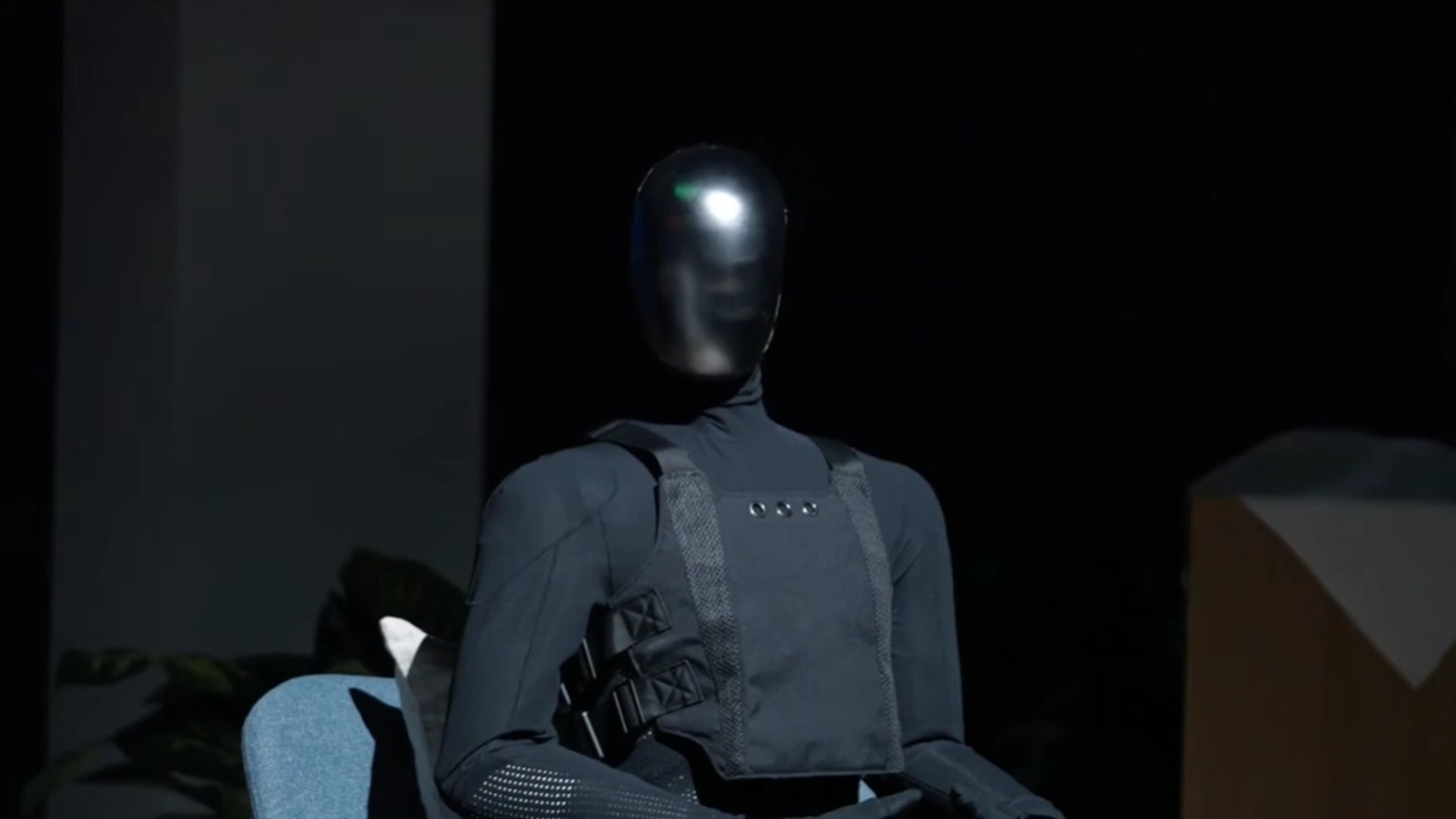
A humanoid robot with a blank, helmet-like head returned volleys smoothly enough at Beijing's World Robot Conference this month to draw a crowd, including a few mishit balls and awkward high bounces it tracked down without breaking stride. The robot, KAI, belongs to Kinetix AI, a Shenzhen startup founded in July 2025 that builds its own humanoid bodies, dexterous hands, motion-capture headsets and the world-model software that ties them together. In just over a year, the company has assembled a five-part embodied-AI stack, hardware, hands, data capture, a predictive world model and a training pipeline, that took Figure, the best-funded humanoid company in the United States, roughly three years to build out.
Kinetix AI (深圳超维动力智能科技有限公司, Shenzhen Chaowei Dongli Intelligent Technology) is not yet a household name outside China's robotics circles, and the ping-pong demo at WRC is the kind of clip built for social feeds rather than balance sheets. But the claim underneath the demo, that a one-year-old company has replicated the full technical architecture a much larger rival needed three years and considerably more capital to assemble, is the one worth examining, because it tests whether "full-stack" embodied AI is actually a capital-and-time moat or a checklist any well-staffed team can now clear quickly.
The Five Pieces a Full-Stack Humanoid Company Needs
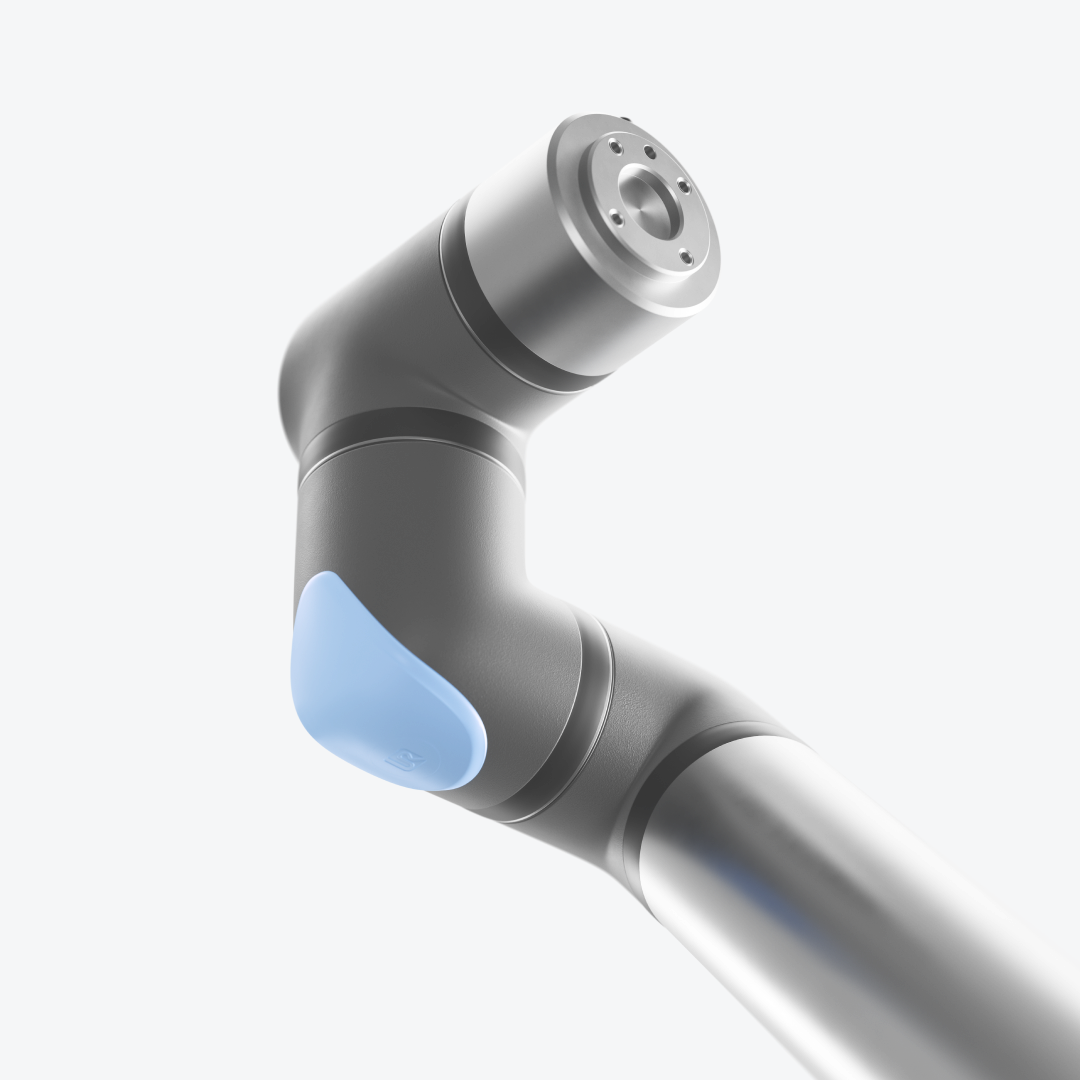
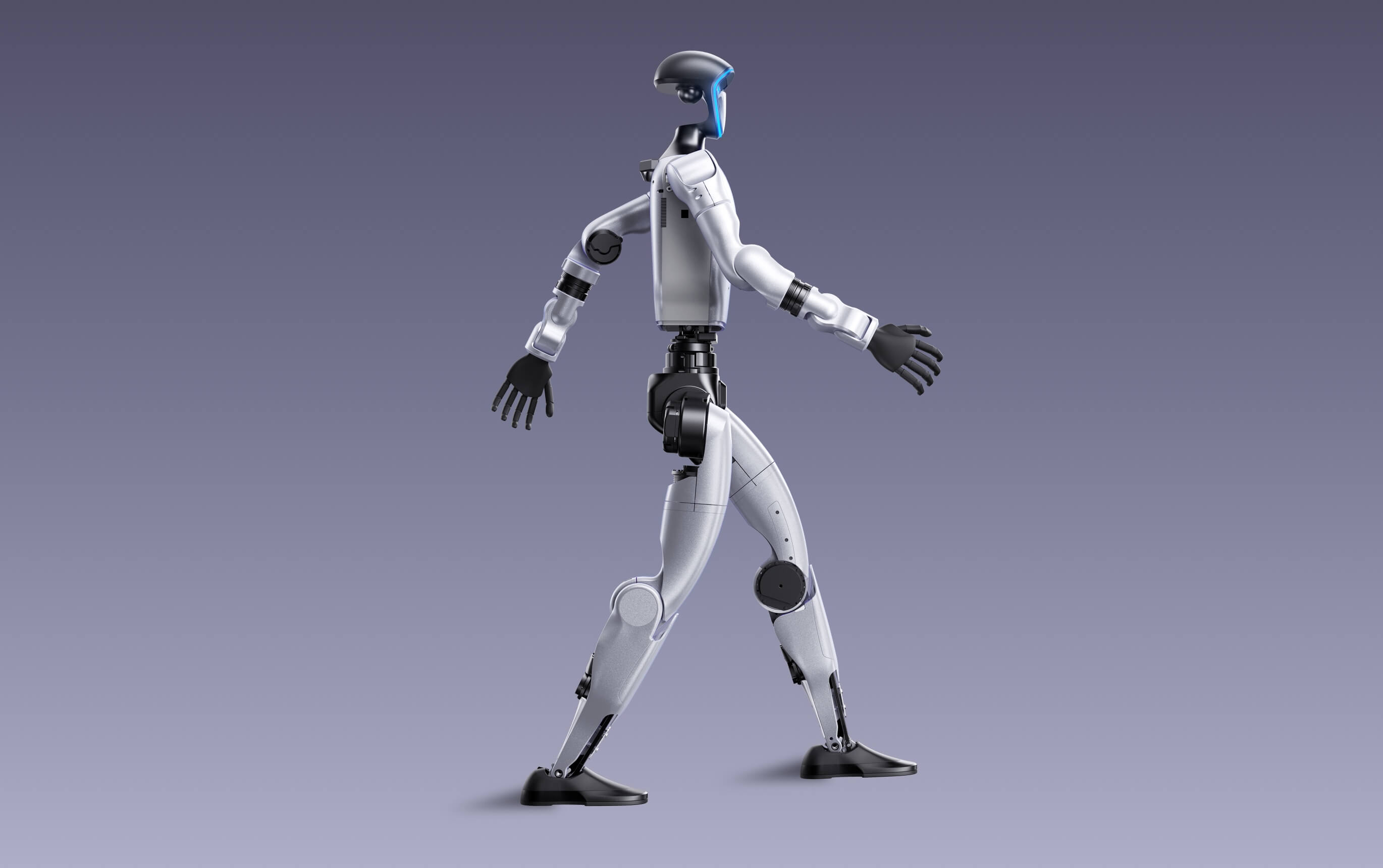
Kinetix AI's argument, echoed across the industry by Figure, Tesla and the model-focused startup Physical Intelligence, is that no single component wins the humanoid race on its own. A capable body without a model to drive it is a expensive mannequin. A capable model without real-world deployment data to train on cannot generalize past its lab. Kinetix AI has built all five pieces the thesis requires: KAI Bot, a 173-centimeter, 70-kilogram humanoid with 117 degrees of freedom and roughly 18,000 tactile sensing points across about 80 percent of its body surface, sensitive enough to register contact under 0.1 newtons; KAI Hand, a 37-degree-of-freedom dexterous hand sold as a standalone product with more than 30 newtons of fingertip force and thermal management that keeps it below human body temperature after ten minutes of continuous grip; KAI Halo and the lighter KAI Halo Lite, wearable rigs that hundreds of data collectors use to record first-person, multimodal footage inside homes, supermarkets, commercial spaces and small factories; KAI World Model, a predictive system the company describes as a real-time generative environment that lets a human operator manipulate objects in a simulated space and produces training data from the result; and KAI Embodied AI Infra, the back-end platform that processes that data, trains models and evaluates them in simulation before deployment.
The company says its data-collection effort has logged more than 100,000 hours of first-person video across more than 20 scenarios and 300-plus whole-body atomic skills, and that its infrastructure platform lifts data-processing throughput by a factor of ten and model training and evaluation speed by five to seven times. Those multipliers matter more to a buyer evaluating vendors than the headline degrees-of-freedom count does, because the ceiling on any embodied-AI product is not how articulate the hardware is but how fast the underlying model improves once it starts collecting deployment data, and a slower training loop compounds into a widening capability gap the longer two competing vendors operate side by side.
Betting the Company on Reuse, Not a Single Robot
The table-tennis demonstration, branded internally as SMASH, is a useful test case for that infrastructure claim rather than a novelty act. Fast-moving, unpredictable ball trajectories force a robot to perceive, predict and act in a tight closed loop rather than execute a pre-scripted routine, and Kinetix AI says SMASH's perception-and-control stack was not built exclusively for its own hardware. The same algorithms have been adapted to run on Unitree's G1 and AgiBot's Yuanzheng A3, two of China's more widely deployed humanoid platforms built by rival companies. A software stack that transfers across competitors' hardware without a full rebuild is a stronger commercial signal than a stack that only works on the vendor's own robot, because it suggests the underlying perception and control layer is genuinely reusable rather than hand-tuned to one chassis, the kind of portability a buyer evaluating multiple robot suppliers would want confirmed before standardizing on any single vendor's software.
Kinetix AI has also started monetizing pieces of the stack independently rather than waiting for a finished, market-ready humanoid. KAI Hand and KAI Halo Lite went on public sale during the WAIC conference earlier this year, letting other robotics developers buy the dexterous hand for their own platforms or the data-capture rig for their own model-training efforts without buying a complete KAI Bot. That unbundling does two things a procurement team should note: it gives the company revenue and market feedback well before a full humanoid product ships, and it turns every buyer of a standalone component into a source of additional deployment data flowing back into Kinetix AI's own models, a version of the same data flywheel that Figure has pursued through direct factory deployments and that Tesla pursues through its vertically integrated Optimus program.
The Team Behind the Speed
Kinetix AI's pace has a specific, checkable explanation rather than an unexplained shortcut. Co-founder Luo Ping holds a faculty position in computing and data science at the University of Hong Kong, and the company has active research collaborations with HKU's MMLab and the Shenzhen Hetao cooperation zone. More tellingly for the infrastructure claims, members of the engineering team previously built the data and training infrastructure behind Huawei's autonomous-driving program as it scaled from prototype to more than a million production vehicle deliveries, alongside prior work on rehabilitation exoskeletons and Level 4 autonomous mining trucks. That background matters because the hardest part of Kinetix AI's stack to fake is the infrastructure layer, the unglamorous pipeline that ingests raw sensor data, cleans it, trains models against it and evaluates the results before anything reaches a physical robot, and it is precisely the layer a team with prior experience scaling an autonomous-vehicle data pipeline to production volume would be positioned to build quickly.
Where the Comparison to Figure Actually Holds
Figure, founded in 2022, built its reputation by pairing a self-designed humanoid body with its own Helix vision-language-action model and a live deployment inside a BMW factory, closing the loop between real task data and model retraining. Tesla's Optimus program leans on the company's existing self-driving software stack, supply chain and factory floors to advance body, model and manufacturing simultaneously. Physical Intelligence has taken a narrower model-first approach, building a general-purpose embodied foundation model intended to run across different robot bodies rather than one it manufactures itself. Kinetix AI's pitch sits closest to Figure's playbook, hardware and model and real-world data developed in-house and fed back into each other, but compressed into roughly a third of the time, helped by a founding team that arrived with infrastructure expertise most first-time robotics founders spend years acquiring on the job.
The comparison has real limits that a buyer should weigh before treating Kinetix AI as Figure's peer rather than its imitator. Figure's factory deployment inside BMW generates production-line data under sustained real operating conditions and a paying industrial customer relationship; Kinetix AI's commercial deployments so far are limited to standalone component sales and conference demonstrations, not a comparable production environment. A working ping-pong demo and a set of internally reported throughput multipliers are not the same evidentiary weight as a multiyear factory contract, and the gap between demonstrating a capability and selling a reliable, supported product at volume is where most humanoid startups, regardless of how complete their technical stack looks on paper, have historically struggled.
What This Means for a Buyer Evaluating Embodied-AI Vendors
For a procurement or automation team assessing humanoid or embodied-AI suppliers, Kinetix AI's structure is a useful template for the diligence questions worth asking any vendor claiming full-stack capability, not just this one. Ask whether the vendor's data pipeline and training infrastructure were built in-house or licensed, since infrastructure that was built by a team with direct prior experience scaling a comparable pipeline is a materially different bet than infrastructure assembled for the first time inside a new startup. Ask whether the vendor's perception-and-control software has been demonstrated on hardware it does not manufacture, since portability across platforms is a stronger signal of reusable software than a single polished demo on the vendor's own robot. And ask what fraction of the vendor's current revenue, if any, comes from standalone components already shipping rather than a complete product still in development, since a company generating real market feedback from partial products today is testing its assumptions against paying customers sooner than one waiting for a finished humanoid to reach market.
Kinetix AI has not disclosed pricing or a firm delivery date for a complete KAI Bot unit, and none of its reported specifications or throughput multipliers have been independently benchmarked outside the company's own disclosures. What is independently checkable is that the pieces exist, dexterous hands and data-capture rigs are shipping to outside buyers today, a perception-and-control stack has run on at least two rival companies' robots, and a one-year-old team is claiming throughput numbers that would be unremarkable coming from a company with three times its operating history. Whether that speed reflects a genuinely faster path to the same destination Figure and Tesla are pursuing, or a company that has front-loaded its most demonstrable claims before the harder test of sustained factory deployment, is the question the next twelve months will answer. Back at the WRC show floor, KAI kept returning serves through the awkward net-clippers and wild high lobs that separate a rehearsed demo from a genuinely reactive system, the kind of unglamorous consistency that, more than any single spec sheet, is what a buyer should actually be watching for.
This analysis synthesizes company disclosures, product specifications, and public conference demonstrations reported in the days following WRC 2026.
Disclaimer: This article is for general information purposes only and does not constitute investment, legal, or procurement advice. Readers should verify details with primary sources before making business decisions.