The Investment Case for Industrial 6-Axis Arms: Why Capital is Flowing In
A macro-level analysis of the industrial 6-axis arm market. This report examines market size, key demand drivers, recent venture capital flows, and the structural risks that sophisticated investors are monitoring in 2026.
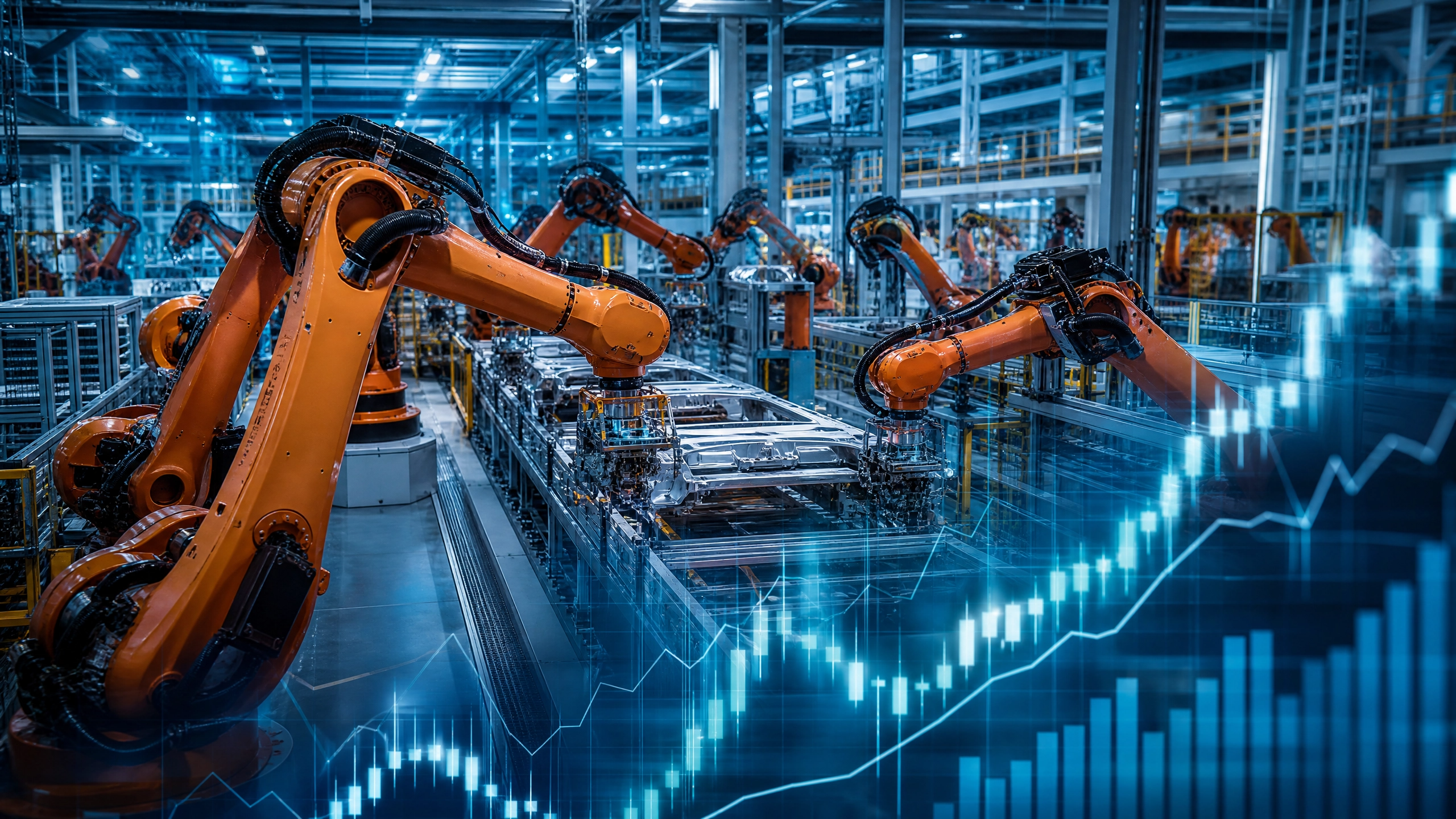
The industrial robotics sector has transitioned from a specialized hardware niche into a foundational pillar of global infrastructure. In 2026, the robotics industry is no longer defined merely by the novelty of new form factors, but by its capacity to solve systemic macroeconomic challenges. As venture capital funding for robotics startups surged to a record eighteen point eight billion dollars in the first half of 2026 alone [1], the investment thesis for industrial 6-axis arms has never been stronger. This influx of capital reflects a marked shift in perception among institutional investors, who increasingly view industrial automation not as a discretionary hardware gamble, but as a structural necessity for modern manufacturing.
Market Size and Growth Rate
The financial trajectory of the industrial robotics market underscores this institutional confidence. The global industrial robotics market reached thirty eight billion dollars in 2026, representing a thirty four percent year over year increase and the fastest growth rate the sector has seen in a decade [2]. Looking ahead, market analysts project continued robust expansion. Persistence Market Research forecasts the global industrial robotics market to grow at a compound annual growth rate of ten point five percent, reaching forty seven point one billion dollars by 2032 [3].
Within this ecosystem, articulated robots, primarily the industrial 6-axis arm, dominate the landscape. These versatile manipulators currently command approximately forty four percent of the total market share [3]. Their dominance is driven by their ability to perform complex motion patterns required in welding, material handling, and precision assembly across major industrial sectors.
Key Demand Drivers
The surge in robotics investment is not occurring in a vacuum; it is a direct response to three powerful structural forces reshaping the global economy.
First, severe labor shortages are forcing manufacturers to automate. Demographic shifts, particularly aging populations in major manufacturing hubs like East Asia and Europe, have created a shrinking working age population [4]. In the United States, manufacturing struggles with high turnover and a skills gap. As human labor expenses compound annually, the cost of robotics has structurally declined, making capital substitution the only viable path to maintaining production capacity [4].
Second, geopolitical tensions and supply chain vulnerabilities exposed in recent years have accelerated the reshoring of manufacturing operations. Companies are actively bringing production back to domestic markets to mitigate risk [4]. However, reshoring is only economically feasible if domestic facilities can remain cost competitive with offshore alternatives. Industrial 6-axis arms provide the necessary flexibility and efficiency to make reshoring profitable, allowing companies to scale production without relying on scarce local labor pools.
Third, the integration of advanced artificial intelligence is transforming the capabilities of industrial arms. The rise of Vision Language Action models has crossed from research curiosity to production infrastructure [2]. These models allow robots to process natural language instructions and adapt to unstructured environments, significantly reducing the programming burden and expanding the addressable market for automation into high mix, low volume manufacturing environments.
Recent Notable Investments
The conviction of the smart money is evident in recent funding rounds. The first half of 2026 saw robotics startups eclipse the funding totals of the entire previous year, surpassing even the peak venture funding year of 2021 [1].
Notable investments highlight a focus on embodied AI and industrial automation at scale. In May 2026, Mind Robotics, a startup developing an AI enabled industrial robotics platform focused on automating manufacturing tasks, raised four hundred million dollars in a financing round led by Kleiner Perkins [1]. This followed a five hundred million dollar Series A round just two months prior. Similarly, Neura Robotics secured up to one point four billion dollars in Series C funding to advance its AI infrastructure, enabling robots to learn and collaborate across real world environments [1]. These capital injections demonstrate that investors are aggressively funding platforms that make industrial arms smarter and easier to deploy.
Key Risks
Despite the bullish outlook, sophisticated investors are closely monitoring several structural risks that could impact the sector's trajectory.
Market concentration risk remains a significant factor. The global industrial robotics market is heavily consolidated, with the "Big Four" manufacturers—FANUC, ABB, Yaskawa, and KUKA—controlling approximately seventy five percent of global shipments [3]. This dominance creates high barriers to entry for new hardware startups and concentrates supply chain dependencies.
Geopolitical risk also looms large. The competition for leadership in advanced manufacturing robotics, particularly between the United States and China, has profound implications for supply chains. China currently dominates global installations, accounting for fifty one percent of the market share [3], and Chinese manufacturers are aggressively commoditizing the hardware layer by offering highly capable robotic arms at significantly lower price points [2]. Investors must navigate the potential for tariffs and export controls that could disrupt global supply chains.
Finally, technology risk remains inherent in the transition to AI driven automation. While foundation models show immense promise, their reliability and safety in critical industrial applications must be rigorously proven before widespread enterprise adoption can occur.
What Smart Money is Watching
As the market matures, sophisticated investors are shifting their focus from raw hardware capabilities to the underlying data and software infrastructure. The defensibility layer in robotics has moved up the stack.
Smart money is currently watching the economics of data collection. The cost of collecting high quality teleoperation data fell by sixty percent between 2024 and 2026, making it financially viable to train robust AI policies for industrial tasks [2]. Investors are backing companies that are building repeatable data collection workflows and proprietary datasets, recognizing that deployment specific data is a durable competitive asset.
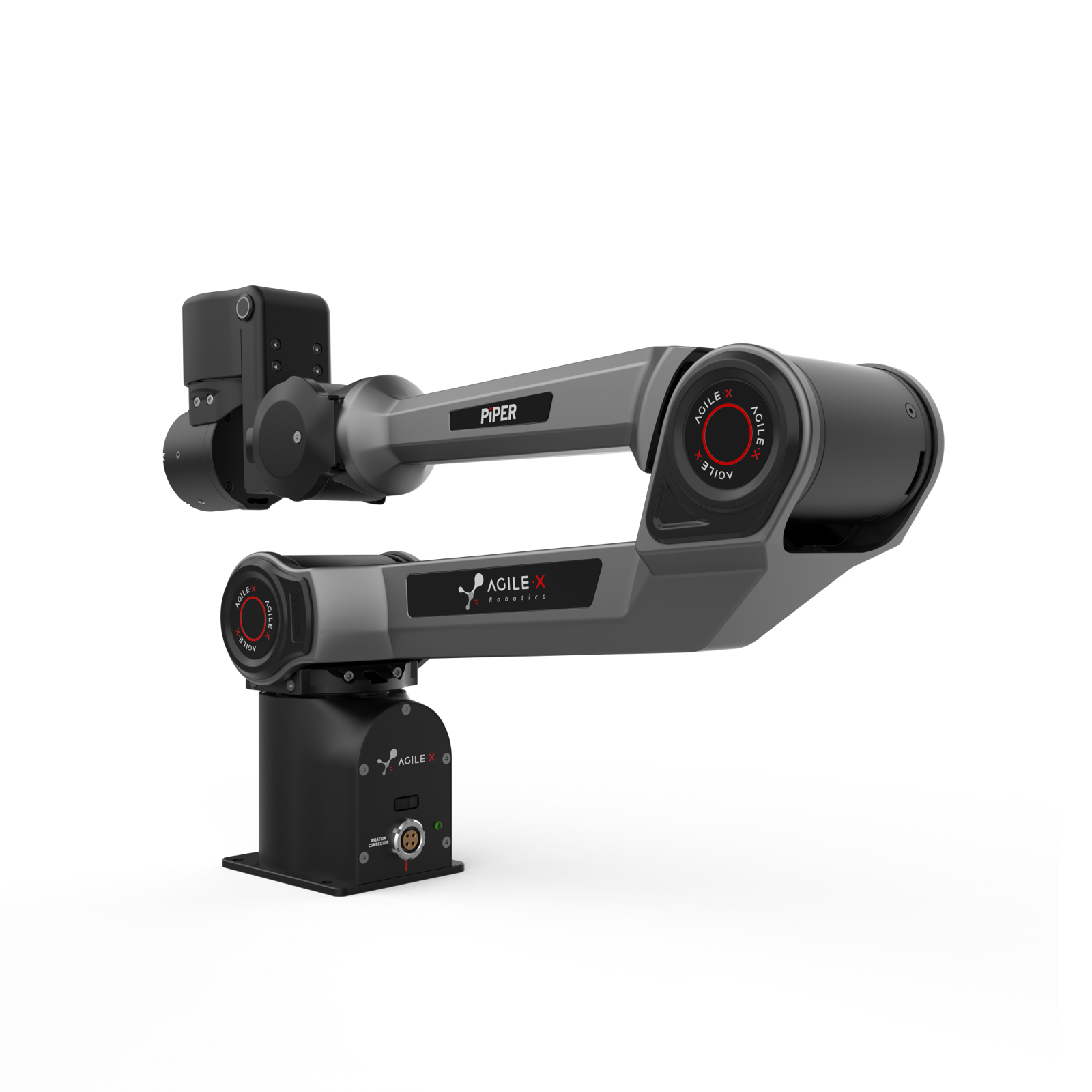
Furthermore, investors are tracking the commoditization of hardware. As sub ten thousand dollar 6-axis arms proliferate, the value is migrating toward the software platforms that control them. The companies poised to capture the most value are those transitioning from hardware exclusivity to offering comprehensive training pipelines, policy libraries, and Robotics as a Service business models [2] [3].
The investment case for industrial 6-axis arms in 2026 is defined by a clear macroeconomic mandate. As labor markets tighten and supply chains localize, the capital flowing into robotics is the funding of essential industrial infrastructure for the next decade.
References
[1] Crunchbase News. "Sector Snapshot: Robotics Startups On Fire As Venture Funding Surges To Record Numbers In 2026." https://news.crunchbase.com/robotics/startup-venture-funding-surges-2026-data/
[2] SVRC Research. "State of Robotics 2026." https://www.roboticscenter.ai/state-of-robotics-2026
[3] Persistence Market Research. "Industrial Robotics Market Size, Share, Trends, Growth, Regional Forecasts 2025 - 2032." https://www.persistencemarketresearch.com/market-research/industrial-robotics-market.asp
[4] VanEck. "Reshoring with Robotics & Bridging the Labor Gap." https://www.vaneck.com/us/en/blogs/thematic-investing/reshoring-with-robotics-and-bridging-the-labor-gap/