The Economics of the World Model Era: How AI Robotics is Reshaping Industry Paybacks
The evolution from LLMs to predictive world models is triggering a cost deflation cycle in robotic intelligence. We analyze the ROI, payback periods, and adoption timelines across the top five AI robotics industries, and what the "silent handover" means for manufacturing arbitrage in Southeast Asia and Europe.
The artificial intelligence narrative is shifting. The conversation is no longer about the billions spent training Large Language Models (LLMs) to generate text. The new frontier is the "world model," a predictive intelligence architecture that allows robots to internally simulate the physical world and anticipate the consequences of their actions before they move. To understand why this matters commercially, let's follow the evolutionary chain that got us here: from LLMs, to Vision-Language-Action (VLA) systems, to world models, with each step removing a specific cost barrier to putting robots to work.
From a market intelligence perspective, this technological leap is not just an engineering milestone; it is a deflationary economic event. By removing the need for bespoke, task-specific programming, the new model architectures are collapsing the software and integration costs that have historically gated robotics adoption. As the intelligence becomes commoditized, the "brain" of the robot ceases to be the primary cost barrier. The focus shifts entirely to the physical deployment economics: hardware bill of materials, integration costs, and the Return on Investment (ROI) timeline across the top five adopting industries.
The Deflationary Arc: LLM to VLA to World Models
The first step in the chain was the Large Language Model. LLMs gave robots the ability to understand natural language commands and reason through multi-step logic, but they had no physical grounding. A robot running an LLM could understand the instruction "pick up the apple," yet it did not inherently know what an apple looked like in its camera feed or how to move its arm to grasp one. Bridging that gap required expensive, hard-coded engineering for every individual task, which is exactly why industrial robots stayed locked inside cages doing one repetitive job for decades.
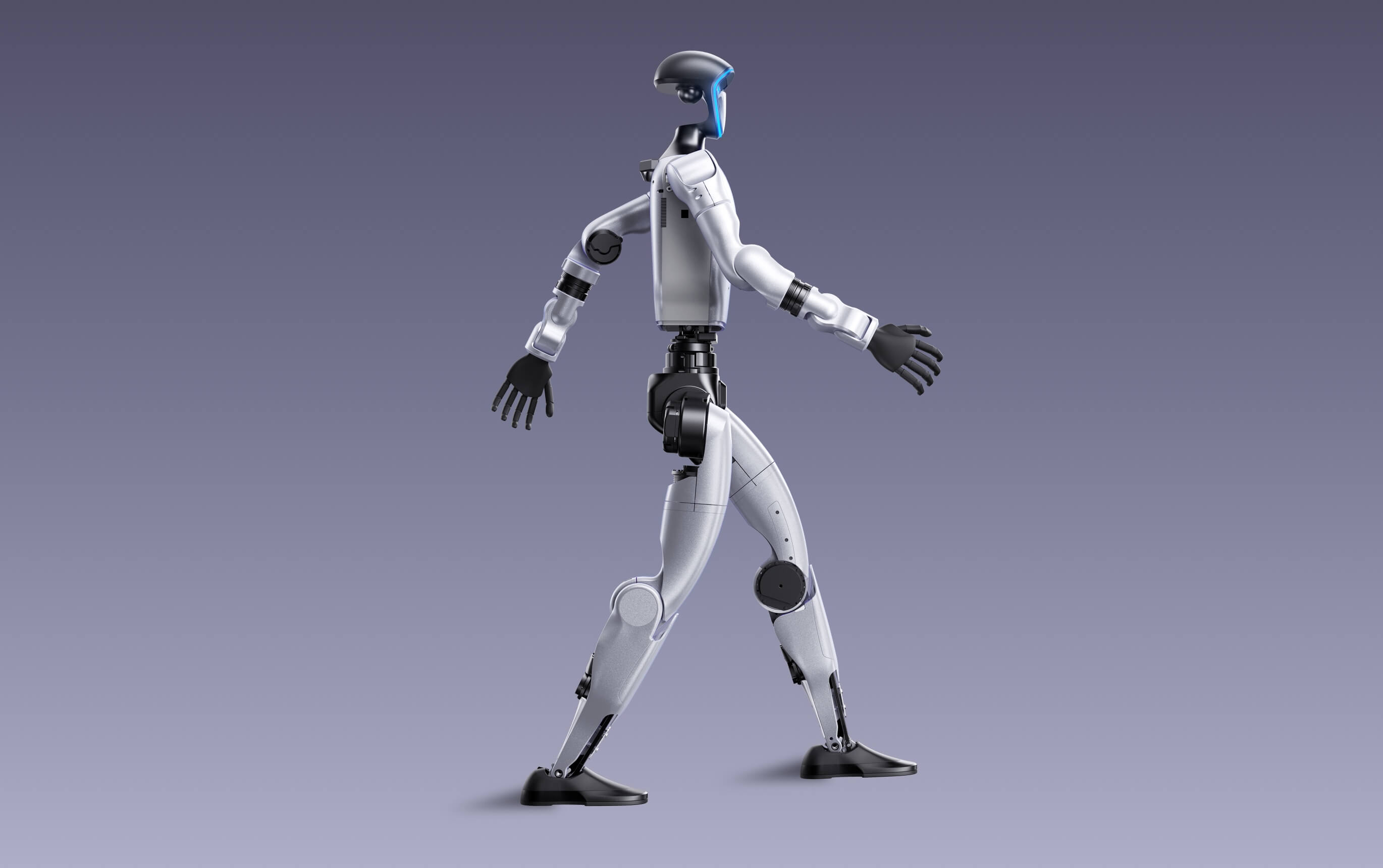
The second step was the Vision-Language-Action model. VLAs connected camera input and language commands directly to motor outputs, so a robot could look at a scene, process a spoken or written instruction, and generate the joint movements needed to act. This was the breakthrough that made general-purpose humanoids plausible. But VLAs are fundamentally reactive. They respond to what they see in the moment and cannot anticipate the physical consequences of their own actions. A VLA robot only learns that it gripped a glass too loosely after the glass shatters on the floor. Correcting these failures requires enormous volumes of expensive real-world trial and error, which keeps training data costs high and limits how well the robot handles situations it has never seen.
The third step, and the current leap, is the world model. A world model learns the underlying physics and causal rules of the environment: gravity, friction, object permanence, and how materials respond to force. As NVIDIA describes in its recent technical work on world-action models, these systems are pretrained to imagine and fine-tuned to act. Before moving a single motor, the robot simulates the outcome internally, predicts that the glass will slip at the current grip strength, and adjusts in simulation rather than in reality. That predictive ability removes the two largest remaining software costs: the need for massive real-world failure data and the need to hand-engineer every edge case.
The economics of this chain compound quickly. According to recent data from Epoch AI and a16z, the inference cost for LLM-class performance has been dropping by roughly a factor of ten every year. What cost $36 per million tokens 18 months ago now approaches $0.25 to $0.40 in optimized environments. Apply that same deflation curve to world-model intelligence and the cost of the robot's brain trends toward zero, while its ability to generalize across tasks trends toward human flexibility. That combination is what changes the payback math in the industries below.
The Top 5 AI Robotics Industries: A Payback Analysis
Because world models let robots generalize across tasks without expensive, bespoke reprogramming, the economic equation of automation has fundamentally changed. A single robot platform can now be redeployed across different workflows without a six-figure integration project each time. This flexibility alters the payback math across the five sectors driving the AI robotics market.
1. Logistics and Warehouse Automation Logistics is the most mature B2B adoption environment because the tasks are repetitive and the environments are semi-structured. Traditional warehouse automation systems typically require a five-year payback period. However, the introduction of AI-driven humanoid and mobile robots is accelerating this timeline. In multi-shift operations, platforms like the Agility Digit are achieving 120 to 180 percent ROI over five years, with payback periods shrinking to 18 to 24 months. Every 20 percent gain in throughput shortens the payback by 8 to 12 months, making logistics the immediate beachhead for world-model deployments.
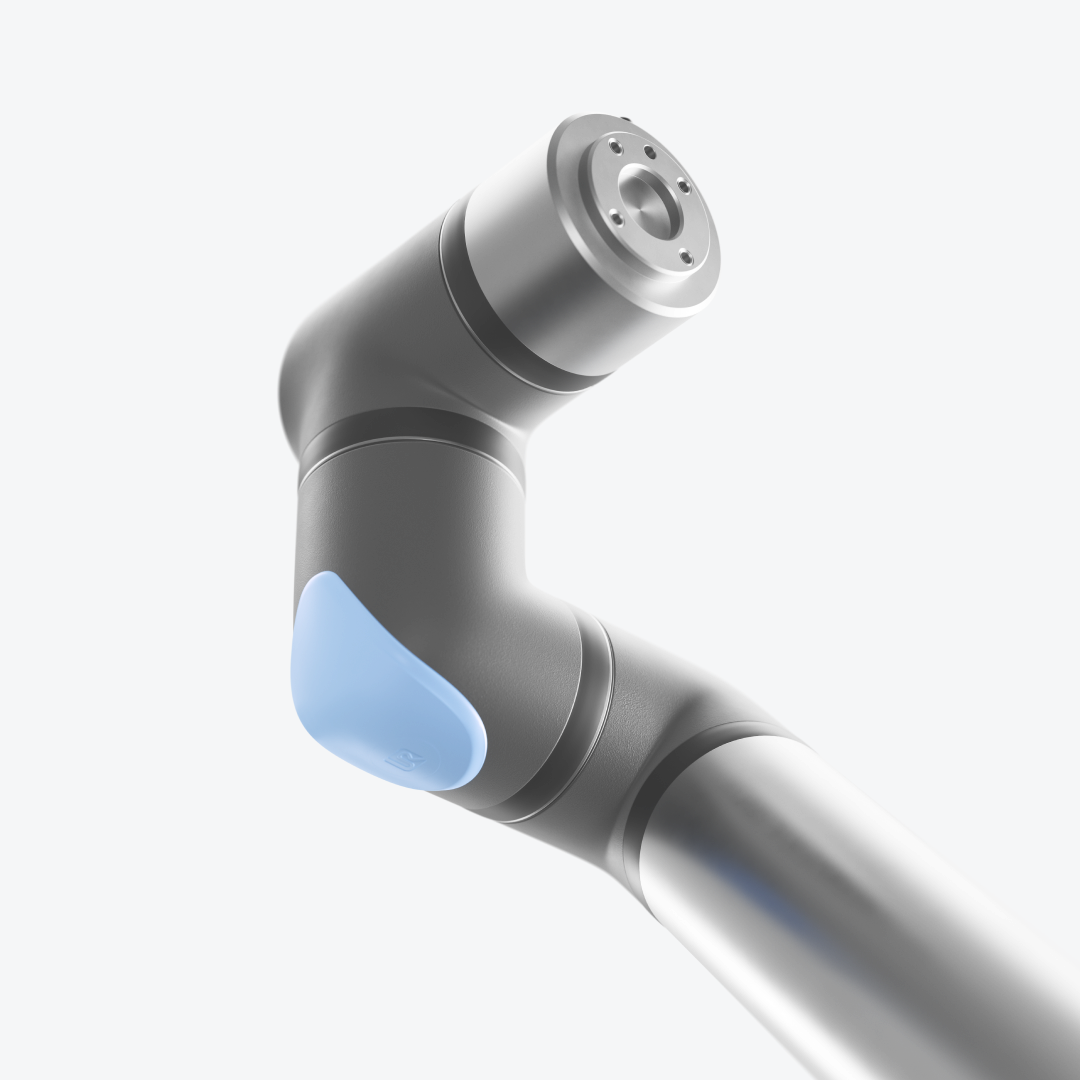
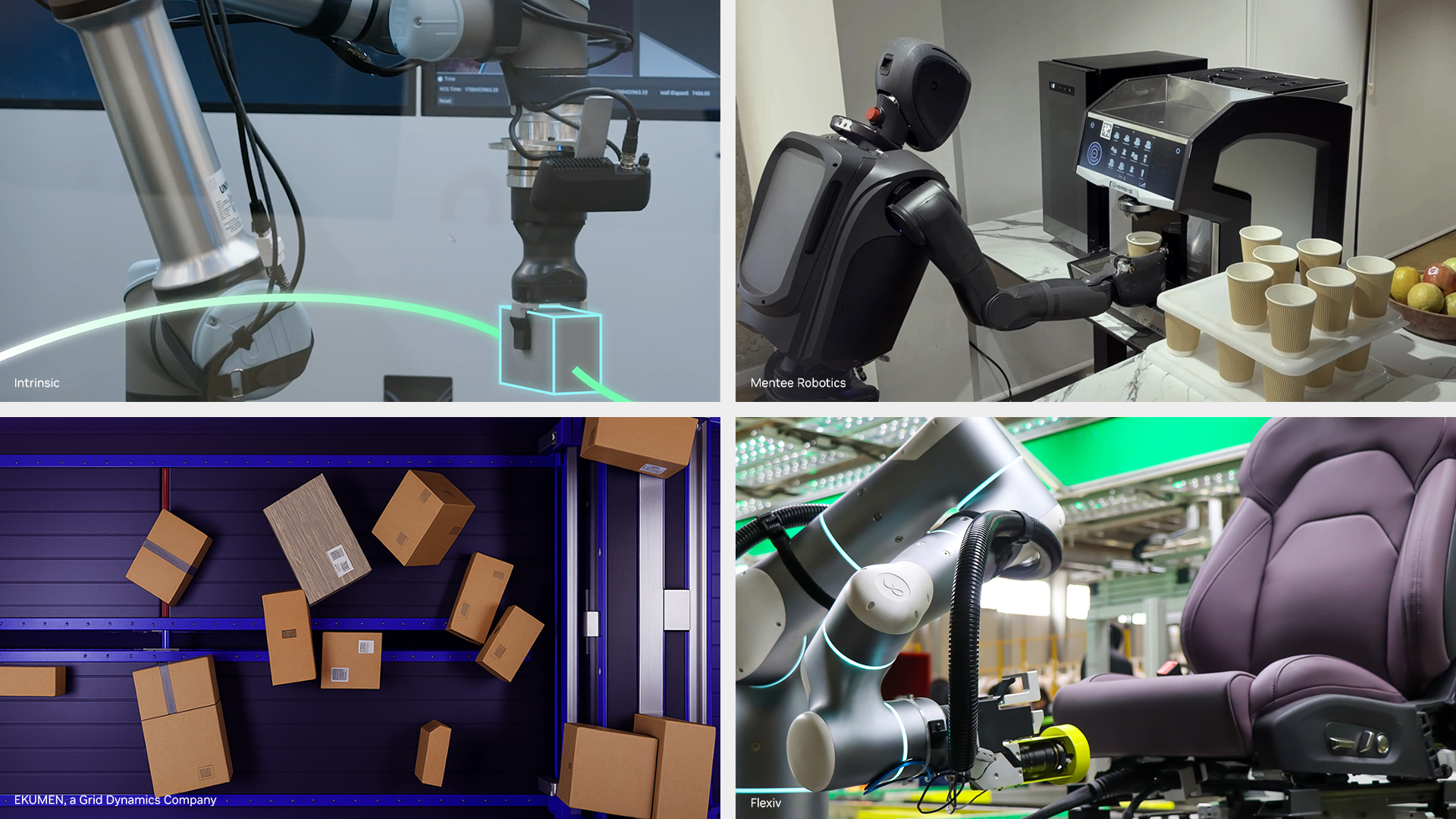
2. Manufacturing and Industrial Assembly The manufacturing sector faces a slightly longer payback period, typically 18 to 36 months, depending on the complexity of the integration and local labor costs. However, world models allow collaborative robots (cobots) to adapt to variations in assembly lines without downtime for reprogramming. This adaptability is pushing the payback period for advanced cobots down to the 8-to-18-month range, a threshold that triggers mass corporate adoption.
3. Autonomous Driving and Robotaxis The autonomous vehicle sector is the most capital-intensive application of world models. By simulating millions of driving scenarios, world models allow autonomous systems to handle edge cases without requiring billions of physical test miles. The economic prize is the cost per mile. While human-driven ridehail services cost upwards of $2.00 per mile, ARK Invest estimates that autonomous ridehail at scale could drop to $0.25 per mile. With the global robotaxi market projected to grow from $1.27 billion in 2026 to $96.31 billion by 2034, the ROI is measured not in months, but in the capture of a trillion-dollar global transportation market.
4. Healthcare and Surgical Robotics Unlike logistics, healthcare robotics is not driven by direct labor cost replacement. The $1.8 to $2.5 million acquisition cost of a da Vinci 5 surgical robot, plus the $1,000 to $6,000 premium per procedure over traditional laparoscopy, means the ROI is calculated through clinical outcomes: shorter hospital stays, fewer complications, and the ability to scale the output of scarce specialist surgeons. World models in this space are being applied to surgical planning and autonomous tissue tracking, pushing the global robotic-assisted surgery market toward a projected $14 billion by 2026.
5. Agriculture The agricultural sector is adopting AI robotics out of demographic necessity. Driven by acute labor shortages in harvesting and an aging farming population, the autonomous farm equipment market is projected to double from $22.3 billion in 2026 to nearly $45 billion by 2033. World models allow robotic harvesters to distinguish between ripe fruit and foliage in unpredictable outdoor lighting, a task that previously confounded simpler machine vision systems.
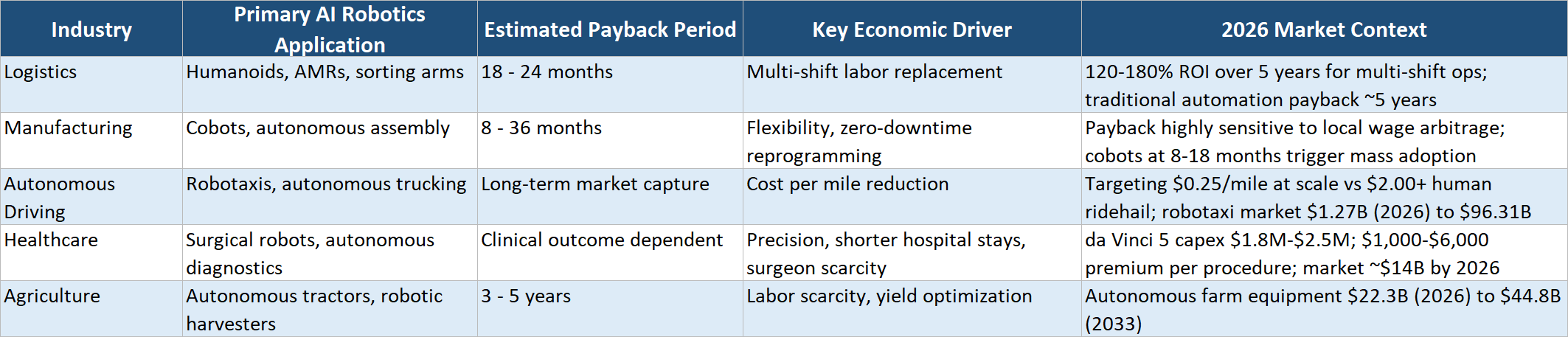
Note: Data from IDTechEx, ARK Invest, Fortune Business Insights, IFR, American College of Surgeons, Grand View Research, compiled July 5, 2026. Estimates vary by deployment conditions.
The "Silent Handover" and the Arbitrage Squeeze
The most profound geopolitical impact of this cost deflation is the erosion of global labor arbitrage. For decades, traditional manufacturing has migrated from the United States and Europe to China, and subsequently from China to Southeast Asia (SEA), chasing lower hourly wages. For example, a factory worker in Vietnam currently costs approximately 30,000 to 40,000 RMB per year, roughly half the total cost of a counterpart in China.
However, the proliferation of cheap, world-model-driven robotics is triggering a "silent handover." According to the International Federation of Robotics (IFR), China has surged to the third highest industrial robot density in the world, with roughly 470 operational robots per 10,000 employees, surpassing both Germany and Japan. South Korea leads globally with over 1,200 per 10,000, while Singapore maintains a top-tier position.
As the annualized cost of operating an AI robot drops below the 30,000 RMB threshold, the incentive to offshore manufacturing to SEA evaporates. For traditional manufacturing hubs in Europe, the choice is binary: automate aggressively or lose competitiveness permanently. The robotics gap is already cited as a primary reason European brands are struggling to compete with highly automated Chinese supply chains.
The Adoption Timeline: B2B vs. Consumer Readiness
Despite the rapid deflation in AI inference costs, mass adoption is not instantaneous. While the "brain" is getting cheaper, the "body" is facing inflationary pressure. Hyperscaler data centers are projected to spend up to $741 billion in capital expenditures in 2026, consuming vast quantities of memory and pushing semiconductor lead times to 40 weeks. This creates a supply chain squeeze that inflates the hardware bill of materials for robot manufacturers. Furthermore, AI data centers are projected to consume up to 12 percent of total US energy by 2028, creating environmental and infrastructure bottlenecks.
Because of these hardware and energy costs, mass consumer adoption of general-purpose home robots remains a decade away. Consumers require a sub-$20,000 price point and absolute reliability, a threshold that cannot be met while hardware costs remain elevated. Therefore, the immediate future belongs entirely to B2B deployments. Businesses can amortize a $100,000 robot over multiple shifts, absorb the integration costs, and achieve a measurable 18-month payback. The world model era has arrived, but it will reorganize the factory floor and the warehouse long before it reaches the living room.
Sources:
1. Epoch AI, LLM inference price trends, March 2025
2. a16z, Welcome to LLMflation, November 2024
3. NVIDIA Technical Blog, Pretrained to Imagine, Fine-Tuned to Act: The Rise of World-Action Models, June 2026
4. IDTechEx, Humanoid Robots Show ROI, but Success Depends on Effective Output, May 2026
5. ARK Invest, Tesla Has Launched Its Robotaxi…Now What?, August 2025
6. Fortune Business Insights, Robotaxi Market Size Report 2026-2034, June 2026
7. IFR (International Federation of Robotics), Robot Density Surges in Europe, Asia, and Americas, April 2026
8. American College of Surgeons, Cost of Robotic Surgery Remains Complex Equation, February 2026
9. Grand View Research, Autonomous Farm Equipment Market Report, 2026
10. Deutsche Welle, AI needs data centers. But what do people get out of them?, June 2026
Disclaimer: This article is for informational and market intelligence purposes only and does not constitute financial or investment advice. Payback periods and ROI estimates are based on industry averages and public data, which vary significantly by specific deployment conditions.