China's Embodied AI Sector Absorbs 44 Billion Yuan as Startups Cross Unicorn Thresholds
In the first half of 2026, China's embodied AI sector absorbed nearly 44 billion yuan in funding. On June 30, both X Square Robot and AI² Robotics crossed the 20 billion yuan valuation mark, signalling a massive concentration of capital at the intelligence layer.
In the first half of 2026, China's embodied artificial intelligence (AI) sector absorbed nearly 43.8 billion yuan in funding, a figure that captures how quickly capital is repositioning around the commercialization of physical AI. The scale of the money involved marks a clear departure from the earlier phase of the industry, when investment was spread thinly across a large number of early prototype developers. Money is now concentrating rapidly around a smaller group of companies that investors believe can reach production scale.
That concentration reached a visible peak on June 30, when two Shenzhen based startups announced funding milestones on the same day. X Square Robot and AI Squared Robotics each crossed a valuation of more than 20 billion yuan, equivalent to roughly 2.9 billion United States dollars. Two companies reaching the same landmark within a single day is unusual, and it underlines how investors are racing to secure positions in the businesses they consider most likely to define the next phase of the sector.
X Square Robot and the Backing of China's Technology Giants
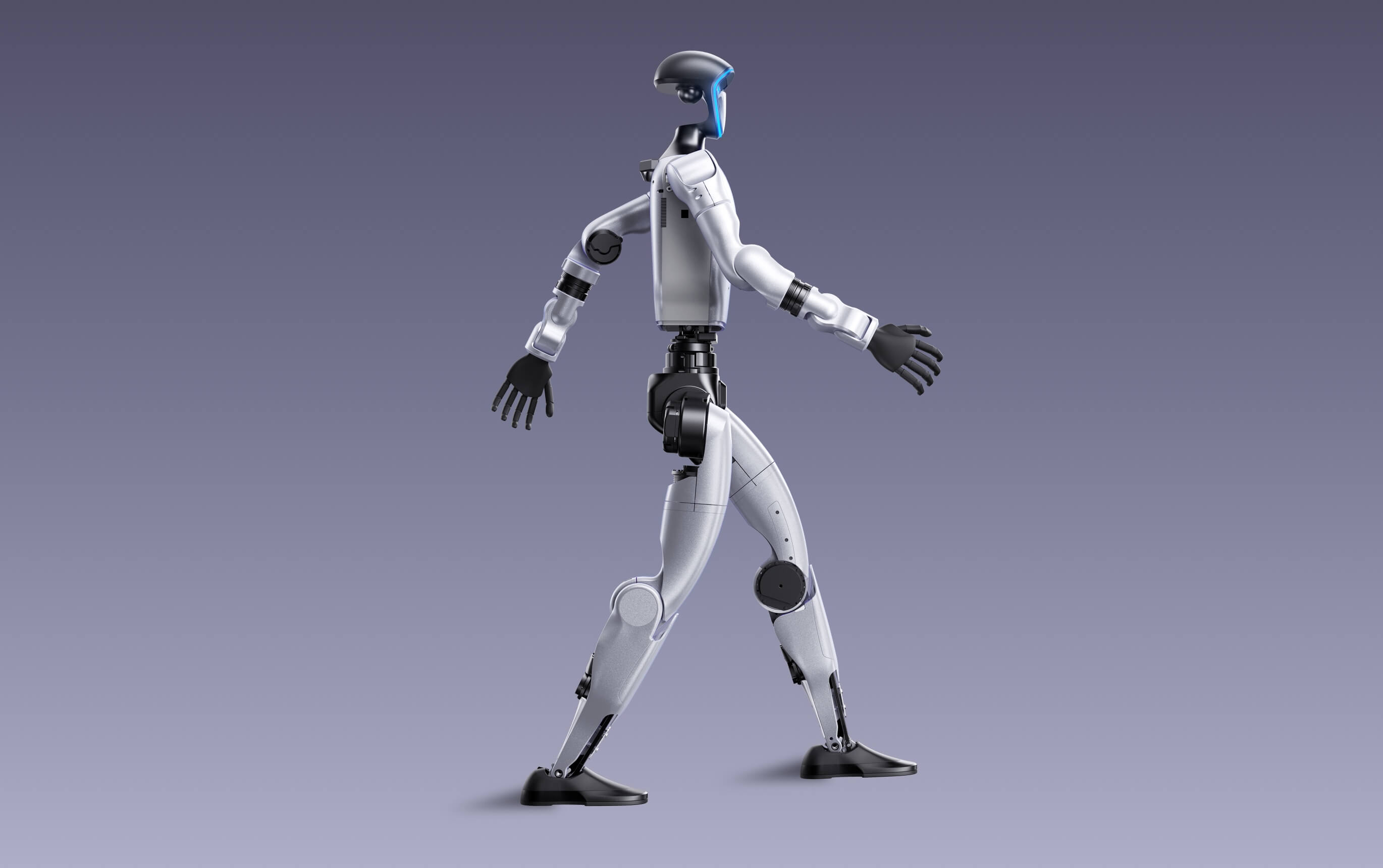
X Square Robot develops proprietary embodied AI brains alongside wheeled humanoid robots, positioning itself as a full stack company that controls both the cognitive software and the physical hardware. According to the company, it completed four consecutive financing rounds over roughly two months, culminating in a Series C raise that pushed its valuation above the 20 billion yuan threshold.
The investor roster is notable for its breadth. X Square Robot states that it is the only embodied AI startup in China to have secured lead round backing across different stages from four of the country's largest technology firms, namely Alibaba Group, ByteDance, Xiaomi, and Meituan. Its recent rounds also brought in industry capital from the online marketplace operator 58.com, the automaker Chery Automobile, and the smartphone brand Honor. That mix of strategic backers points toward potential deployment channels in automobile manufacturing, consumer electronics, and household services. The company is reported to be considering an initial public offering in Hong Kong to raise approximately 500 million United States dollars.
AI Squared Robotics and the Speed of Value Creation
On the same day, AI Squared Robotics announced that it had raised almost 5 billion yuan, equivalent to about 735.9 million United States dollars, in new financing. The raise doubled the company's valuation in roughly four months, having previously been valued at 10 billion yuan upon completion of its Series B round. AI Squared Robotics develops its flagship AlphaBot series of general purpose robots designed to navigate and manipulate objects in complex real world environments such as factories, laboratories, and households.
The company completed a joint stock reform in April, a structural step that is widely viewed as a precursor to a public listing. By establishing the legal and structural prerequisites required by the China Securities Regulatory Commission (CSRC), a joint stock reform typically serves as the essential first step toward an initial public offering. Its investor base spans state level and regional government funds, domestic insurers, and a diverse group of corporate shareholders that includes the strategic investment arm of the technology giant Baidu, the pharmaceutical firm Sino Biopharmaceutical, the state owned spirits brand Kweichow Moutai, and the rolling stock manufacturer CRRC Corporation.
A Shift Toward the Intelligence Layer
The dual milestones reflect a broader change in where investors believe value will accumulate. During the initial wave of humanoid enthusiasm, much of the attention focused on hardware, including actuators, joints, and dexterous hands. The current round of capital is flowing more aggressively toward the intelligence layer, meaning the foundation models and cognitive architectures that allow a robot to perceive its surroundings, plan actions, and make decisions autonomously in unstructured settings.
This thesis is consistent with wider sector data. Between the start of January and early June 2026, a total of 226 Chinese embodied intelligence and robotics startups collectively raised more than 46 billion yuan across 288 deals, according to the Chinese data service provider IT Juzi. The capital was heavily concentrated, with the ten largest fundraisers during the period, a group that included Spirit AI, Galaxea AI, Galbot, and LinkerBot, collectively securing 24.2 billion yuan, or roughly 52.6 percent of the sector total. The pattern suggests that investors are consolidating behind a short list of companies they view as the most credible candidates to reach mass deployment.
The Greater Bay Area as a Manufacturing and Capital Hub
Both X Square Robot and AI Squared Robotics are headquartered in Shenzhen, part of the Greater Bay Area that links nine mainland cities with the special administrative regions of Hong Kong and Macao. The region is home to 80 Chinese unicorns, representing a net increase of eight compared with the prior year, according to the Global Unicorn Index 2026 released by the Hurun Research Institute in late June. The area accounts for just over a fifth of the country's 381 unicorns, and its combination of manufacturing capacity and access to capital markets makes it a natural base for companies attempting to move embodied AI from demonstration into volume production.
What the Capital Enables
The practical effect of this funding is straightforward. Large raises give manufacturers the financial runway to build production lines, expand engineering teams, and pursue deployment contracts across automotive, logistics, and consumer sectors. Analysts at Morgan Stanley noted in a May 2026 report that China's approach is defined increasingly by speed, cost efficiency, and system level integration, enabling AI to diffuse rapidly across the real economy rather than remaining confined to the research frontier.
The concentration of capital around a small number of well funded companies signals that China's embodied AI industry is entering a consolidation phase in which scale, deployment evidence, and access to public markets will separate the leaders from the wider field of more than one hundred humanoid developers now competing for attention.
Sources
· DealStreetAsia, "Greater Bay Area mints two unicorns as embodied AI boom continues," June 30, 2026. https://www.dealstreetasia.com/stories/greater-bay-area-ai-unicorns-487332
· PR Newswire, "X Square Robot Secures Four Consecutive Financing Rounds, Surpasses US$2.8 Billion Valuation," June 29, 2026. https://www.prnewswire.com/apac/news-releases/x-square-robot-secures-four-consecutive-financing-rounds-surpasses-us2-8-billion-valuation-in-push-for-physical-ai-foundation-models-302813098.html
· Gasgoo Auto News, "44 Billion Yuan Floods into Embodied AI," June 29, 2026. https://autonews.gasgoo.com/articles/icv/44-billion-yuan-floods-into-embodied-ai-yet-the-chip-sector-has-an-uncharted-territory-2071587973328846848
· Hurun Research Institute, Global Unicorn Index 2026, June 25, 2026.