The Multibillion Dollar Race to Become the World's AI Robotics Exhibition Capital
China has engineered an uncontested July and August showcase window with WAIC, WRC, and a dense circuit of embodied AI expos, while Japan, Korea, the US, and Singapore fight for exhibition hub status. The prize is measured in billions of procurement deals, visitor spending, and a new end-to-end exhibition business model.
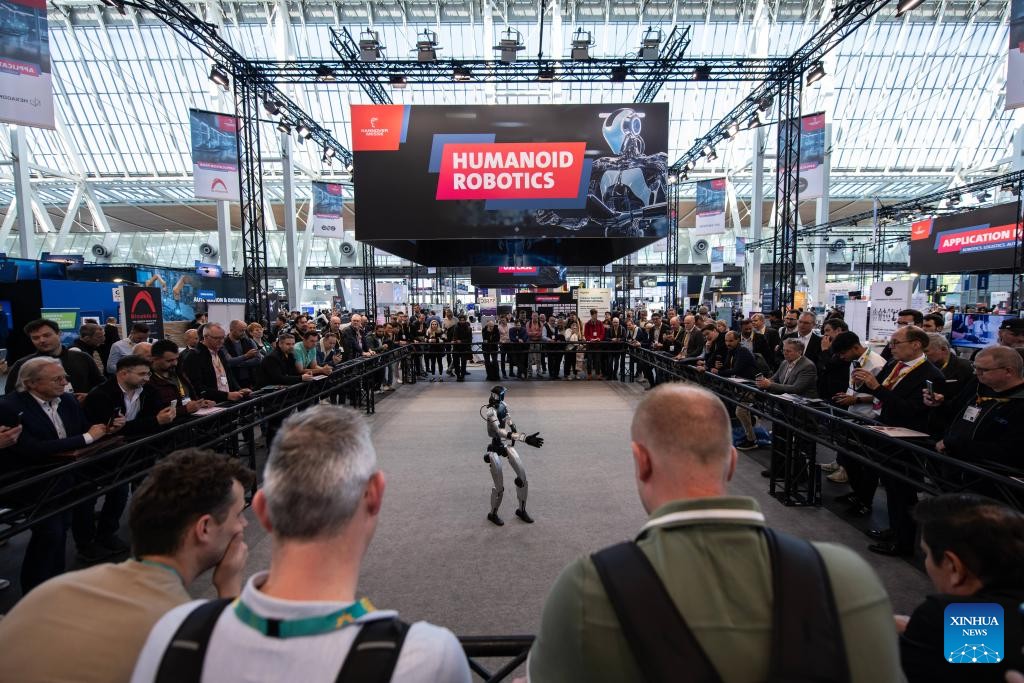
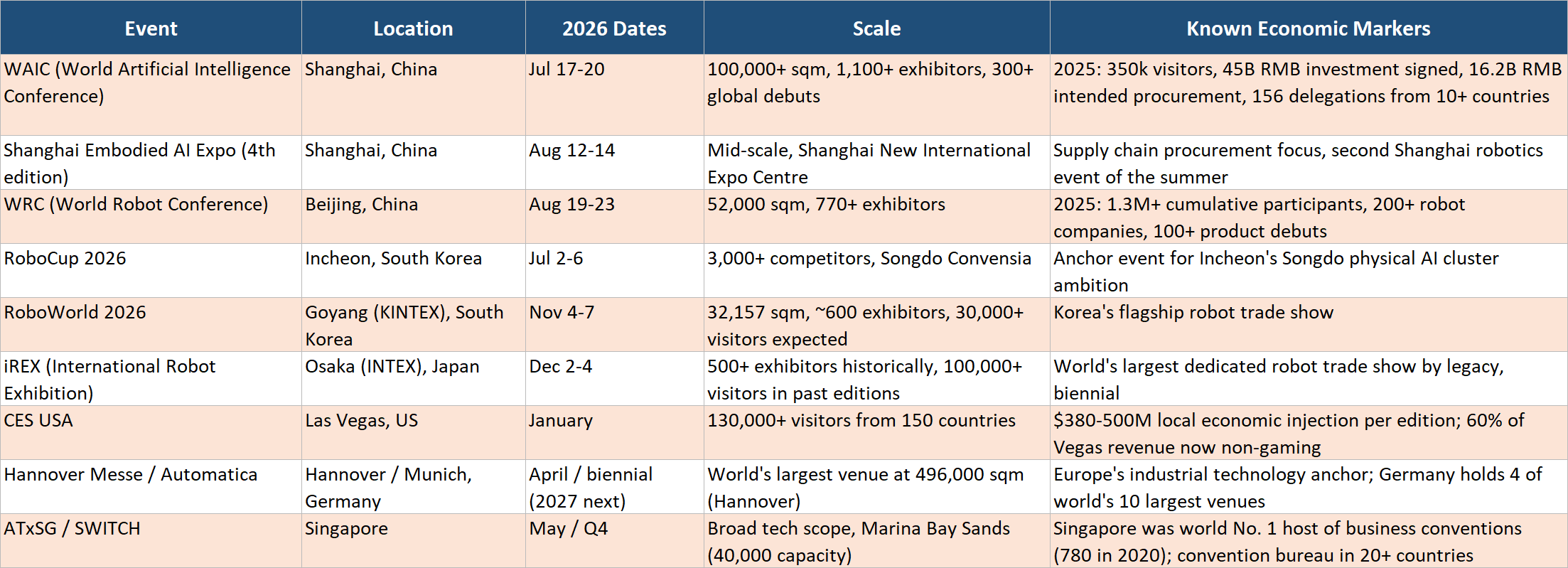
Something unusual happens to the global robotics calendar every summer. The United States anchors winter with CES in Las Vegas. Germany commands spring with Hannover Messe and, in alternating years, Automatica in Munich. Japan saves its flagship iREX for December, and Korea holds RoboWorld for November. But in July and August, one country runs the table. This year, China has engineered what amounts to an uncontested global showcase window for AI robotics, and the economics behind it reveal a new kind of national competition, a race to own not just the robots but the marketplace where the world comes to see, compare, and buy them.
Beyond the Booth: Competitions as the New Showcase
While WAIC and WRC anchor the traditional trade show format, countries are increasingly using live competitions as dynamic stress tests that serve the exact same geopolitical and commercial purpose. South Korea demonstrated this strategy in early July by hosting RoboCup 2026 at the Songdo Convensia in Incheon. The event drew over 3,000 competitors from 45 countries, featuring humanoid soccer matches, rescue robotics, and industrial logistics challenges.
A live competition proves technology in action rather than on a pedestal, and Korea immediately leveraged the event's gravity. On July 2, as the competition opened, the Incheon Free Economic Zone Authority launched a council to build Korea's largest physical AI cluster, directly tying the global robotics showcase to permanent regional infrastructure development.
A Season Built Like a Product Launch
The anchor events are enormous by any standard. The World Artificial Intelligence Conference opens in Shanghai on July 17 and runs through July 20, expanding this year to more than 100,000 square meters across three districts, the World Expo Exhibition Center, Xuhui West Bund, and Pudong Zhangjiang. Organizers expect more than 1,100 exhibiting companies, over 3,000 products, and more than 300 global first launches, up from roughly 800 companies and 70,000 square meters at the record-setting 2025 edition.
One month later the spotlight moves north. The World Robot Conference runs August 19 to 23 in Beijing's E-Town district, with around 52,000 square meters of exhibition space and more than 770 exhibitors listed for this year. WRC 2025 drew over 200 robot companies displaying 1,500 exhibits, with more than 100 new products making their debut, and its official tally counted more than 1.3 million cumulative online and offline participants.
What makes the season remarkable is not the two anchors alone but the connective tissue between them. The 4th Shanghai International Embodied Intelligent Robot Industry Conference and Exhibition runs August 12 to 14 at the Shanghai New International Expo Centre, placing a second major robotics trade event in the same city three weeks after WAIC and one week before WRC. Shenzhen staged its International Embodied Intelligent Robot Technology Supply Chain Expo in June, alongside the city's AI and robotics exhibitions. Hangzhou launched what it bills as China's first humanoid robot supply chain vertical trade show, now annual, in May. Guangzhou hosts the Greater Bay Area edition of the China Embodied Intelligent Robot Industry Conference in October. Exhibition directories list more than 80 robotics conferences across China in 2026. A buyer landing in Shanghai in mid-July can, in a single extended trip, work through a rolling procurement circuit that no other country currently offers.
What a Top Conference Is Actually Worth
The financial anatomy of these events explains why cities fight so hard for them. WAIC 2025 drew a record 350,000 offline visitors and 2.36 billion online views, and it closed with 32 signed projects worth 45 billion yuan in total investment plus 16.2 billion yuan, roughly 2.3 billion dollars, in intended procurement deals. The conference received 156 procurement delegations from more than ten countries, published over 300 procurement demands, ran 60 project roadshows, and brokered more than 2,000 meetings between startups and investors.
The organizer economics are just as striking. Booth fees at WAIC range from tens of thousands of yuan to around 2 million yuan for prime positions, and demand is so intense that returning exhibitors book a year in advance and still face rationing. One robotics chief executive reported having to shrink his planned booth to around 100 square meters because space simply ran out. Brands reported booth costs rising about 30 percent year over year. Sponsorship has spread beyond the tech industry, with consumer brands such as Cotti Coffee and Yili buying their way in to position themselves as AI-era products. Even ticket resale tells the story: single-day passes priced at 168 yuan were reportedly scalped for over 1,000 yuan.
Then there is the tourism halo. Business event visitors stay roughly two days longer and spend about three times more than leisure tourists, according to Korea Tourism Organization data. The global MICE industry, covering meetings, incentives, conventions, and exhibitions, is valued at around 1.3 trillion dollars in 2026 and is projected to more than double by 2034. For a reference point on what a single flagship event can mean to a host city, CES injects an estimated 380 to 500 million dollars into the Las Vegas economy each January, and conventions helped push the city to the point where 60 percent of its revenue now comes from non-gaming businesses.
The End-to-End Play: From Expo Floor to Robot Showroom
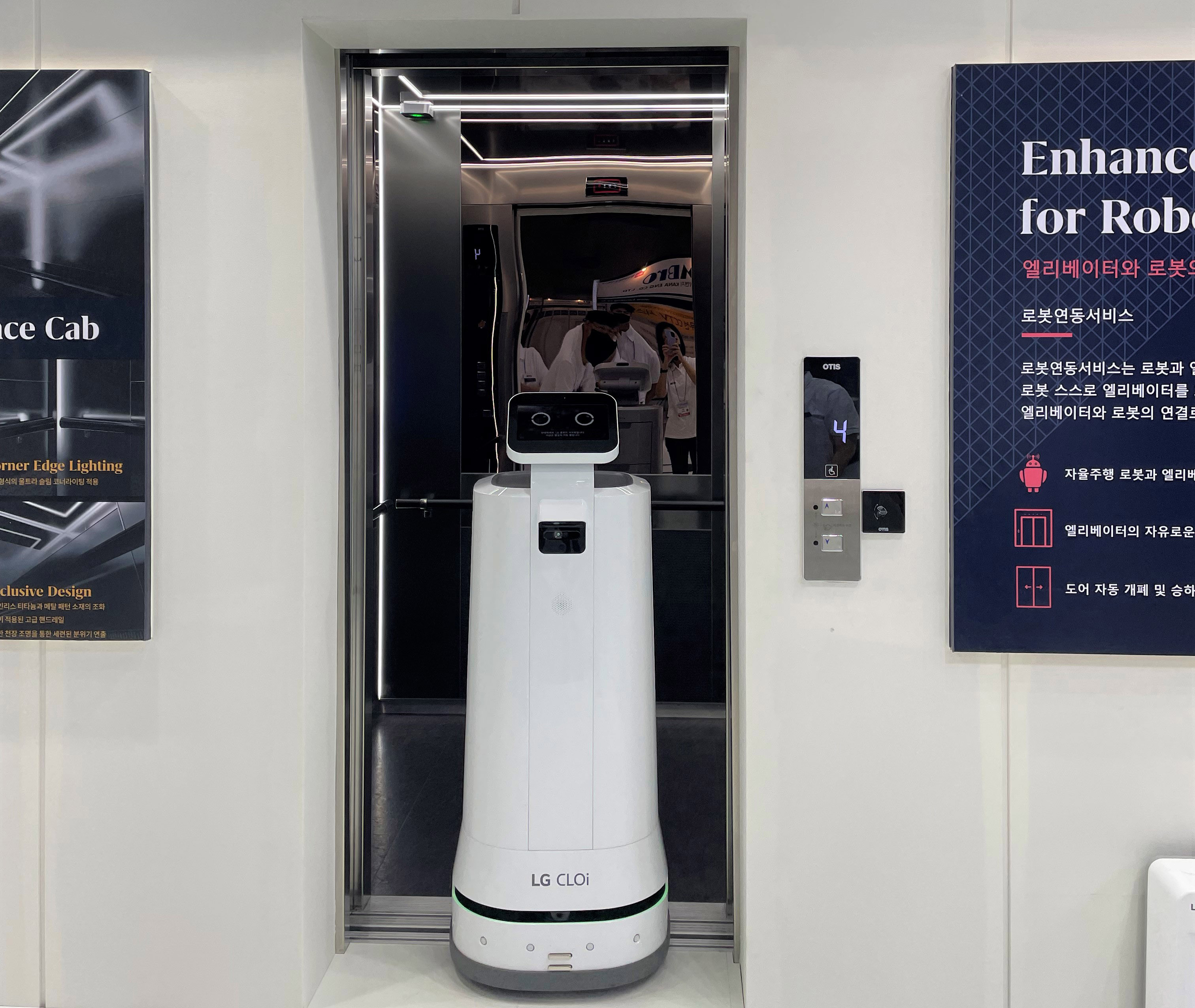
The deeper story is that China is converting temporary exhibitions into permanent commercial infrastructure. Beijing's E-Town, the district that hosts WRC, has built a year-round Robot Mall anchored by the world's first embodied AI robot 4S store, a 4,000 square meter facility that mirrors an automotive dealership with robot sales, parts supply, after-sales maintenance, and custom development under one roof. The district already clusters more than 300 robotics and smart manufacturing companies with an industry chain worth over 10 billion yuan, and in March 2026 the Robot Mall extended its model to a second Beijing district. The sequence is deliberate: the annual mega-event generates procurement intent, and the permanent showroom infrastructure captures the follow-through, the servicing, and the repeat business for the other 360 days of the year.
This is what an end-to-end exhibition strategy looks like, and it reframes the question of who leads. Las Vegas built its dominance on convention square footage and hotel rooms. Singapore built its position on connectivity, neutrality, and a convention bureau with offices in more than 20 countries, which helped it become the world's top host of business conventions with 780 in a single year. Germany built the world's largest venue at Hannover. China is now building something different: a vertically integrated pipeline in which the trade show, the supply chain expo, the government procurement delegation, the industrial cluster, and the permanent retail showroom all sit inside the same ecosystem, often inside the same district.
Korea is the fastest follower, explicitly pairing the RoboCup competition with the launch of its Songdo physical AI cluster to apply the same event-plus-infrastructure logic. Japan retains enormous industrial credibility, and iREX in Osaka this December will be a major moment, but its biennial cadence and December timing leave the summer window open. Singapore, for its part, competes as a neutral MICE platform rather than a robotics-specific hub, which wins it corporate events but not, so far, the robotics procurement circuit.
What It Means
For countries and cities eyeing this market, the lesson from China's summer season is that AI robotics exhibitions have become a compound business. The direct revenue, booth fees that reach 2 million yuan, sponsorships, and ticket sales, is the smallest layer. The second layer is the visitor economy, where hundreds of thousands of attendees fill hotels, restaurants, and airlines at multiples of normal tourist spending. The third layer is procurement gravity, the billions in deals signed on the floor. And the fourth, which China is pioneering, is permanence, turning the exhibition district itself into a year-round marketplace for an industry that is just beginning its commercial ramp. With the global MICE market heading past 3 trillion dollars by the early 2030s and robotics becoming its fastest-growing vertical, the race to own this stage is itself becoming one of the more valuable competitions in physical AI.
Sources:
1. 21jingji, Shanghai's WAIC Economics, July 30, 2025
2. Xinhua News, World's First Embodied AI Robot 4S Store, August 8, 2025
4. Jufair / Onezh, China 2026 Exhibition Directories
5. Forbes, CES 2026 Closes With Robots, China, And AI Everywhere, January 10, 2026
6. RoboCup Federation, RoboCup 2026 Incheon official event page
7. RoboCup 2026 Incheon official site, July 2-6, 2026, Songdo Convensia
Disclaimer: This article is for general information only and does not constitute investment, procurement, or business advice. Event details, statistics, and financial figures are drawn from public sources believed to be reliable at the time of writing and may change. Readers should verify details independently before making decisions.