Robotics Capital Moves Into the Learning Factory
Capital activity this week pointed less to a single winning robot and more to a change in what investors and operators are willing to fund. Faraday Future is presenting robotics as a core growth engine with a raised 2026 shipping target, while LG and NVIDIA are linking models, data factories, manufacturing validation, and compute. The most important signal is that capital is moving toward integrated learning and deployment loops, although the evidence remains company-reported and commercial outcomes are still uneven.
The robotics market is entering a more demanding phase of capital allocation. A company can still attract attention with a new body, a new model, or a large forecast, but the projects that now reveal the market’s direction are the ones that connect funding to a repeatable path from data collection to factory validation to paid deployment. That shift matters because physical AI does not scale like software alone. It needs hardware, field service, safety engineering, operators, working capital, and enough real-world use to turn every intervention into a better next task.
The clearest public example this week came from Faraday Future Intelligent Electric. In its fiscal second quarter presentation dated August 13, the company described EAI Robotics as a core growth engine and raised its 2026 annual shipping target from 1,500 units to 2,000 units. The company presented three form factors across a broader product family, including humanoids, quadrupeds, and mobile manipulators, and identified education, security inspection, industrial and logistics work, and commercial and hospitality settings as demand areas. These are company targets, not independent shipment verification. Their importance lies in the capital logic. Faraday Future is trying to turn robotics from a speculative adjacency into a multi-product revenue system with a sales architecture, channel partners, and a plan to reduce dependence on external financing.
From a single robot to a portfolio of revenue paths
Faraday Future’s presentation gives an unusually explicit view of how an emerging robotics company thinks about capital discipline. The company described a near-term priority of volume adoption across selected business verticals, a medium-term transition toward greater domestic assembly, and a longer-term goal of a self-reinforcing physical AI flywheel. It also described a possible standalone financing or public listing for the robotics division, while saying that new funds should support robotics growth rather than legacy debt. Those statements do not prove that the plan will succeed, but they show the questions that capital markets are beginning to impose on robotics operators.
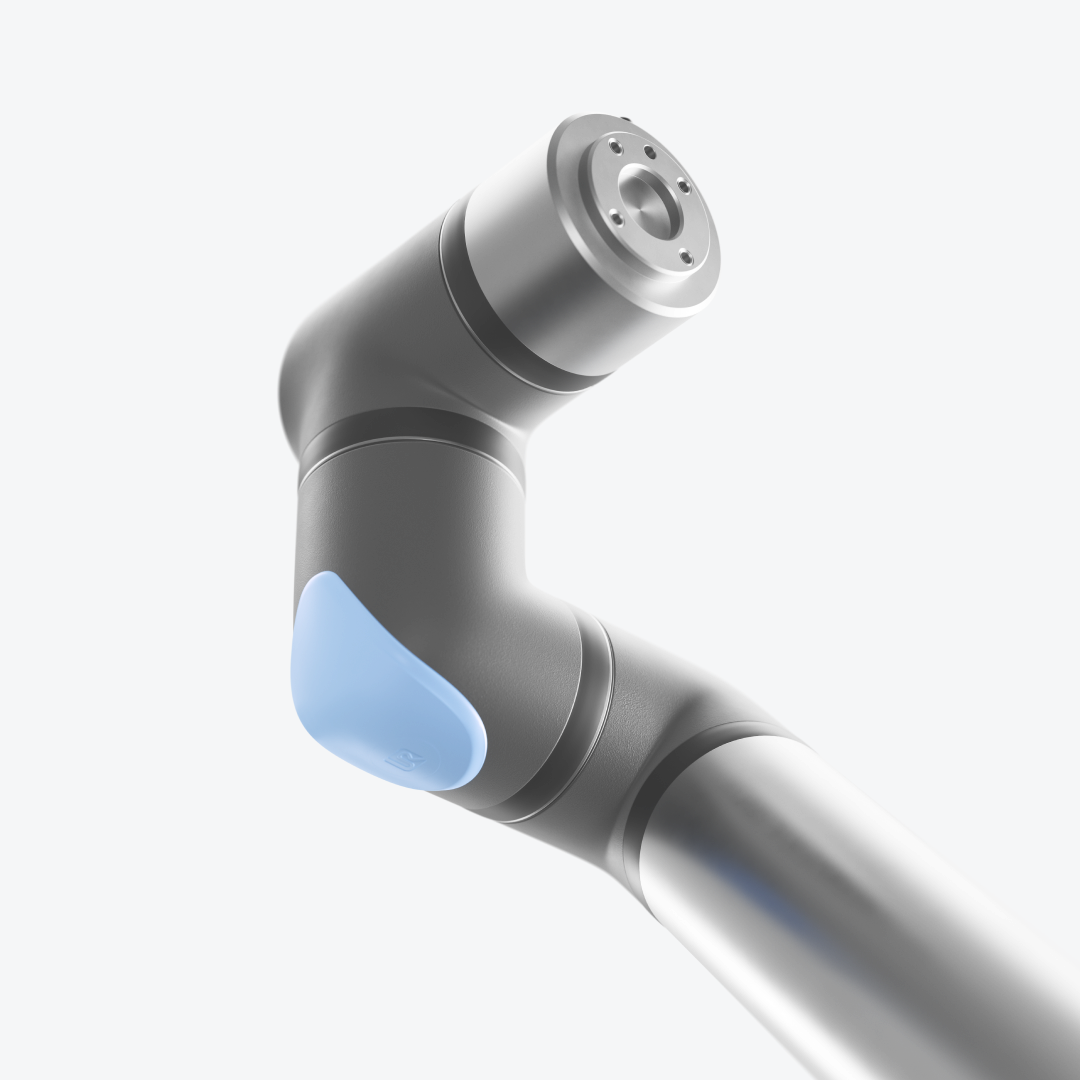
First, investors want to know whether product breadth creates a genuine platform or merely spreads scarce engineering resources across too many forms. Faraday Future lists a humanoid, a quadruped, and several mobile-manipulator configurations. The company assigns different use cases and price bands to them, including a high-priced humanoid configuration, lower-priced quadrupeds, and custom industry pricing for mobile manipulators. That structure could support cross-selling and shared software, sensing, and service infrastructure. It could also create a difficult support burden if every form factor requires a different field workflow. The capital question is therefore not how many robots exist in the portfolio. It is whether the portfolio shares enough components, data, tooling, and customer support to lower the cost of the next deployment.
Second, capital is being tied to operational evidence. A raised shipment target is meaningful only if units become reliable revenue, not inventory. The company’s own language moves in that direction by emphasizing revenue validation, regional key-account managers, channel distribution, and active commercial deployment. The market will eventually need to see delivery acceptance, utilization, uptime, maintenance cost, and repeat orders. Until then, a shipping target remains a planning assumption. A disciplined investor should treat the number as a testable milestone rather than as proof of product-market fit.
The data factory becomes a capital asset
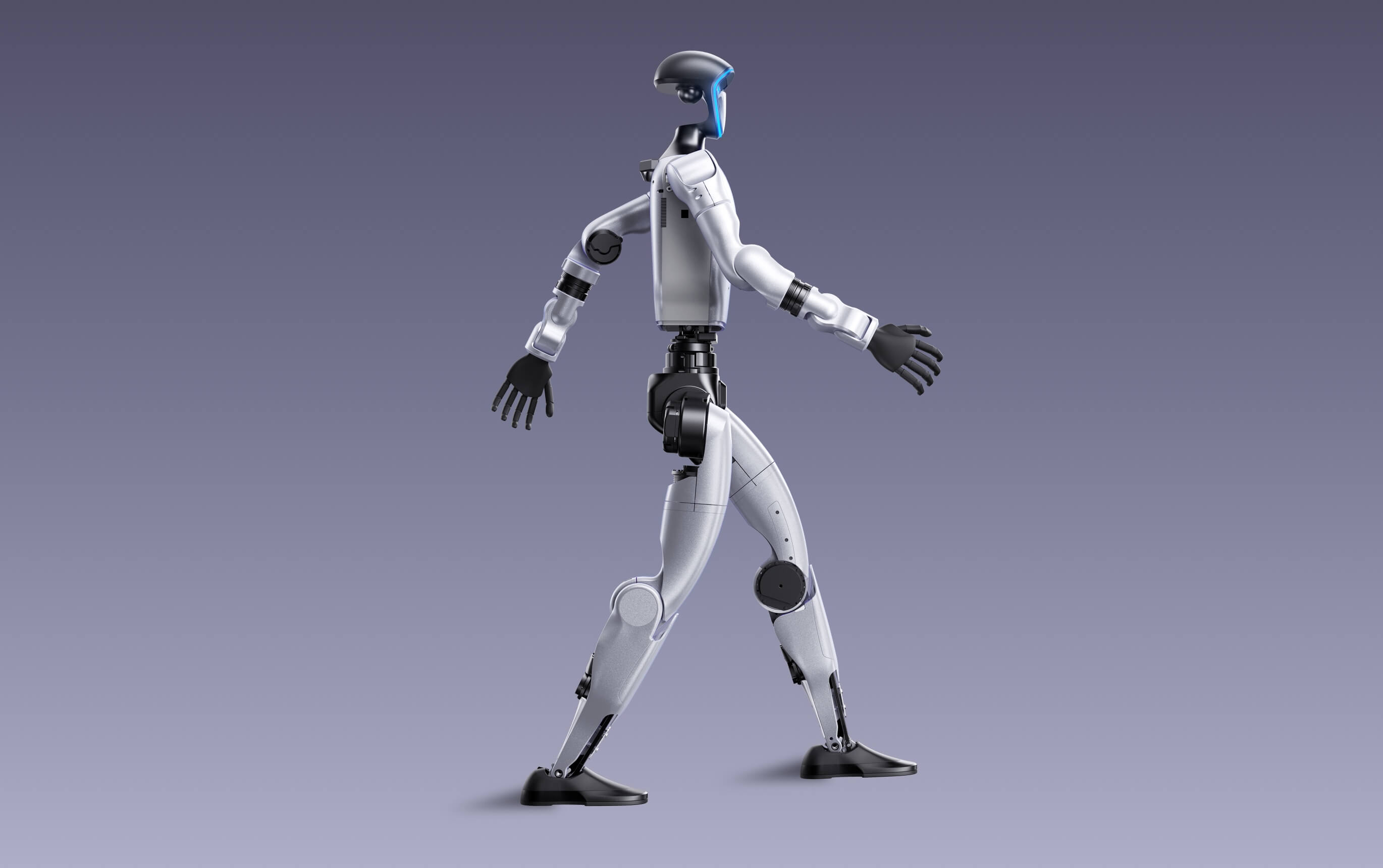
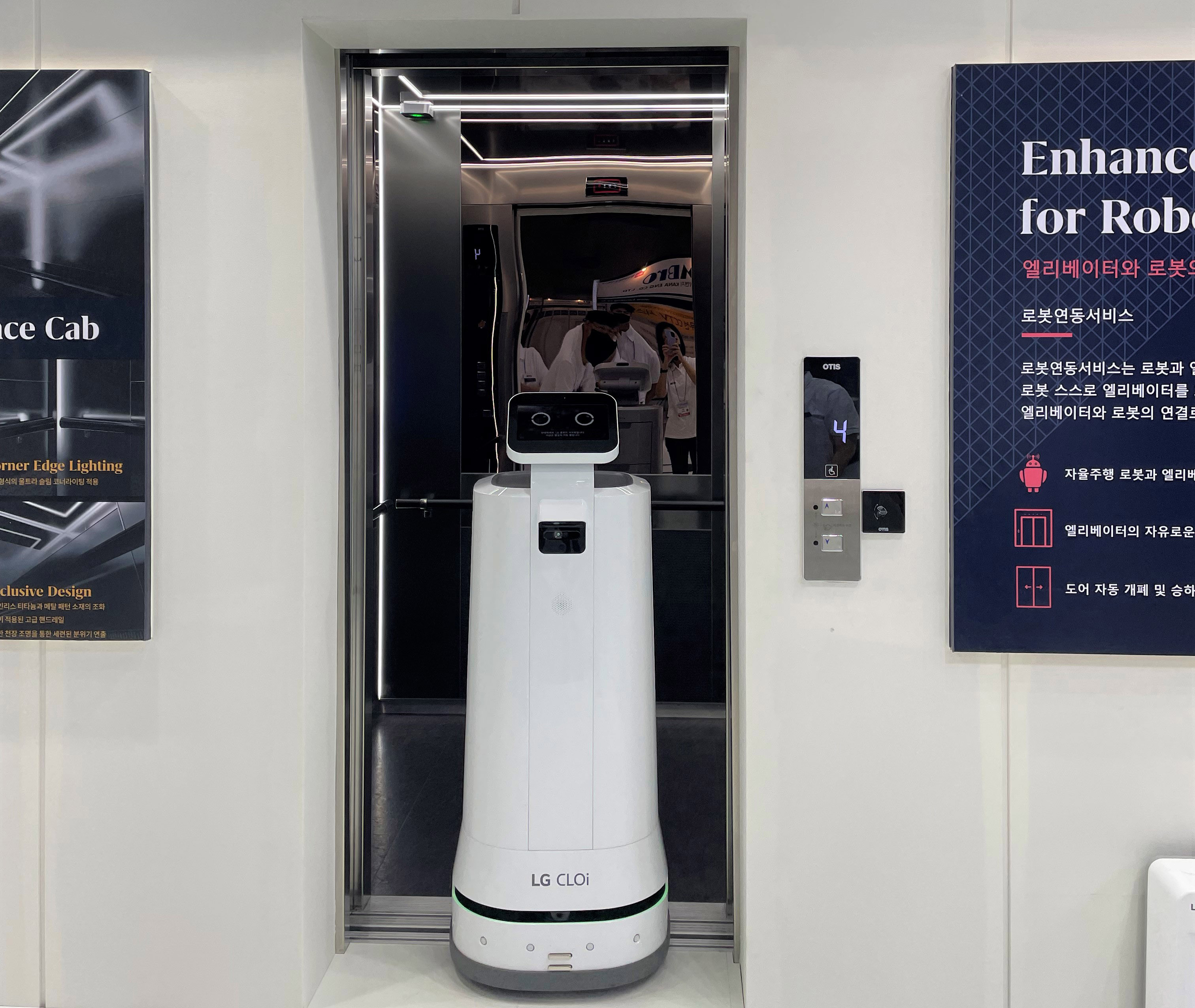
LG and NVIDIA provided the week’s strongest strategic example of capital moving beyond the robot body. Their August 13 announcement described a next-generation bipedal humanoid intended for public unveiling in the first quarter of 2027, using NVIDIA Isaac GR00T, Jetson Thor, and NVIDIA Halos for Robotics. More important than the planned unveiling is the operational layer around it. LG said it would deploy its wheel-based CLOiD robot on a washing-machine production line in Tennessee for real-world validation within 2026. It also described PhysicalWorks as a robot data platform for continuous collection, synthetic-data generation, training, and verification.
That combination changes the ownership question. The valuable asset is not only the robot design or the model checkpoint. It is the controlled environment where the company can collect data, measure failures, update models, and validate a new version on a real production line. LG also described plans for an AI-factory reference site and a larger facility in Cheonan. The company has not disclosed a robotics investment figure that would allow an external return calculation. Still, the structure of the announcement suggests that the company views data infrastructure, compute, manufacturing sites, and robotics engineering as a single capital program.
This model favors companies with existing factories, component businesses, and customer relationships. It also raises the entry cost for startups that lack a place to gather representative data. A startup can develop a capable policy in a lab, but the buyer wants proof under production constraints. A factory owner can provide that proof and keep the resulting data inside its own operating loop. In that sense, industrial ownership becomes a form of data ownership, and data ownership becomes part of capital allocation.
The new financing test is evidence density
Capital providers are also learning to distinguish strategic integration from simple vertical expansion. Owning a factory does not automatically create useful training data, and owning a model does not automatically create a productive robot. The link has to be operational. A team must collect the right events, label the failure, deploy a controlled update, and show that the updated system performs better under a customer’s constraints. That sequence requires people and infrastructure that may not appear in a funding announcement, including safety reviewers, field technicians, data engineers, and operations managers. The financing advantage belongs to companies that can fund those functions long enough for the loop to compound.
Dyna Robotics’ Dyna-2 research release adds a technical dimension to the same capital shift. The company says the world-action model was pre-trained on more than one million hours of human video and that its experiments show scaling trends on human data plus a human-to-robot transfer scaling law. The release also reports a bottle-cap-opening example fine-tuned with ten minutes of teleoperation data. These are vendor-reported research results, not independent certification or a guarantee of production performance.
The capital implication is that investors may increasingly value the quality of the learning loop rather than the size of a single demonstration. A large video corpus is not automatically useful for every task. A useful system needs a data representation that transfers across embodiments, post-training that works with limited robot data, and evaluation that measures performance on held-out tasks. If those properties hold, capital can compound through software and data. If they do not, every new site may require costly collection and manual engineering.
This is why funding announcements that describe factories, data platforms, customer pilots, and component integration deserve more attention than headline round sizes alone. They reveal where the company expects the next unit of value to come from. A hardware-only model seeks margin in the machine. A learning-factory model seeks margin in a growing base of deployed machines whose data improves the next release.
Commercial readiness is still the scarce proof
The week’s signals should not be read as confirmation that robotics has solved its financing problem. Faraday Future’s presentation still describes a company managing legacy liabilities, dilution concerns, and a plan to restore capital value. LG and NVIDIA describe a roadmap with future unveiling and validation milestones rather than current humanoid revenue. Dyna-2 presents a research result whose production generalization remains a question for customers. Capital is moving toward operational proof, but the proof is not yet evenly distributed.
The most credible next milestones are therefore concrete. Can a factory robot reduce human interventions per task across multiple sites? Can a company convert a shipment target into paid recurring revenue? Can a model retain performance when the robot, workcell, and operator change? Can a data factory reduce the cost of each additional deployment? And can the capital structure fund that process without starving the service organization that keeps the fleet productive?
The strongest capital allocation story this week was not a single financing headline. It was the convergence of models, factories, data systems, and sales channels into one investment thesis. Robotics companies that can make those pieces reinforce one another will attract capital for measurable growth. Companies that can only add prototypes will face a more skeptical market.