Weekly Robot Economics Wrap-Up: The Geopolitics of Supply
The commercial tension in the robotics market is no longer just between the cost of human labor and the cost of automation; it is between the demand for hardware and the geopolitical restrictions on its supply. With the US Federal Communications Commission banning Chinese robots, the global supply chain is fracturing, creating massive pricing disparities and forcing rapid industrial pivots in allied nations.

The commercial tension in the robotics market is no longer just between the cost of human labor and the cost of automation; it is between the demand for hardware and the geopolitical restrictions on its supply. With the US Federal Communications Commission banning Chinese robots, the global supply chain is fracturing, creating massive pricing disparities and forcing rapid industrial pivots in allied nations.
The central tension in the commercialization of robotics has abruptly shifted from technological capability to geopolitical availability. For years, enterprise buyers have modeled the return on investment for autonomous systems based on a globally integrated supply chain, assuming access to low-cost hardware manufactured in Shenzhen and the Pearl River Delta. In early August 2026, that assumption was formally invalidated. The United States Federal Communications Commission expanded its Covered List to ban the import of new mobile, communicating robots weighing more than two kilograms from any foreign country deemed a national security threat, effectively locking Chinese hardware out of the American market.
The commercial operator understands that this is not a minor regulatory adjustment; it is a fundamental rewiring of the industry's unit economics. The ban creates an immediate supply gap in the North American market, estimated at ten billion dollars, as enterprise buyers are forced to seek alternatives to the aggressively priced hardware produced by Chinese firms. This regulatory intervention protects domestic manufacturers from subsidized competition, but it also guarantees that American companies deploying robotics will pay a significant premium for their hardware compared to their international competitors. The cost of automation is now inextricably linked to national security policy.
The immediate consequence of this policy is a rapid pivot by manufacturers in allied nations attempting to fill the void. In South Korea, automotive component manufacturers such as Halla Cast, SL, and Samhyun are actively doubling their production lines and signing new contracts to supply robotic components. These companies are leveraging their existing expertise in precision manufacturing to transition from internal combustion engines to robotic joints and actuators. A recent report by Goldman Sachs projects that this pivot will allow Korea to produce 74,000 humanoid robots by 2030, capturing 30 percent of the global output.
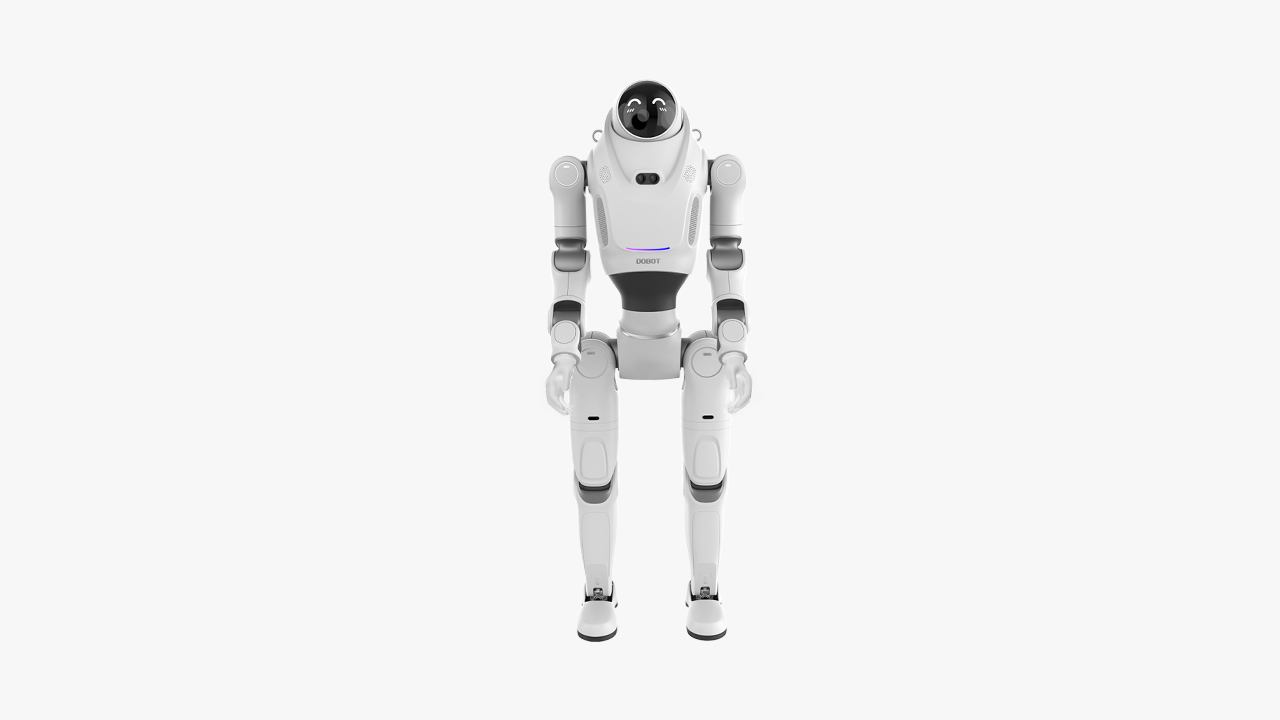
While the United States attempts to rebuild a secure supply chain, the scale of the manufacturing capacity it has excluded is becoming clear. On August 7, China's Ministry of Industry and Information Technology disclosed that domestic output of humanoid robots exceeded 40,000 units in the first half of 2026. The ministry confirmed that the industry is on track to produce more than 100,000 units for the full year.
This production volume represents a critical milestone in commercial economics. It confirms that the Chinese robotics sector has successfully transitioned from building expensive, handcrafted prototypes to operating standardized, high-volume assembly lines. At this scale, the cost of precision components such as harmonic drives and tactile sensors begins to collapse, driving down the unit cost of the final product. For buyers outside the jurisdiction of the United States ban, this manufacturing scale guarantees access to increasingly capable hardware at prices that Western manufacturers currently cannot match.
The divergence in hardware costs will inevitably lead to a divergence in deployment strategies. In markets with access to low-cost Chinese hardware, companies can afford to deploy robots in lower-margin applications or utilize them as expendable assets in hazardous environments. In the United States, the higher cost of secure, domestically sourced or allied-nation hardware will restrict deployments to high-value use cases where the return on investment justifies the premium. The geopolitical fracturing of the supply chain ensures that the economics of automation will vary wildly depending on the zip code of the deployment.
As the hardware market fragments, the software and service layers are demonstrating consistent commercial maturation. Brain Corp, a San Diego-based company that provides the BrainOS autonomous navigation software for commercial floor scrubbers and inventory scanners, announced that it has surpassed 50,000 deployed robots worldwide. The company reported that its deployments in the first half of 2026 jumped 68 percent year-over-year.
The Brain Corp milestone is significant because it validates the software-as-a-service model in physical environments. The company does not manufacture the cleaning machines; it provides the cognitive layer that makes them autonomous, partnering with established industrial equipment manufacturers like Tennant. This model allows Brain Corp to scale its software deployments without bearing the capital intensity of hardware manufacturing. Furthermore, the company's recent achievement of SOC 2 Type II compliance indicates that enterprise buyers are demanding the same level of data security and operational rigor from their robotic fleets as they do from their enterprise software systems.
This maturation of the service layer is also evident in the evolution of distribution models. In Shenzhen, the world's first Robot 6S Dealership Complex recently opened, spanning over 5,000 square meters. The facility adapts the traditional automotive dealership model, offering sales, spare parts, service, surveys, showcasing, and support. By providing a centralized hub for leasing, customization, and industrial training, the 6S complex attempts to reduce the friction of adoption for small and medium-sized enterprises. It treats the robot not as an experimental technology, but as a standard piece of industrial equipment requiring predictable financing and reliable maintenance.
The fracturing of the global supply chain is creating two distinct market equilibria. In the first, accessible to buyers in China, Southeast Asia, the Middle East, and much of Africa and South America, the cost of humanoid hardware will continue to decline as Chinese manufacturing achieves further scale efficiencies. In the second, accessible to buyers in the United States and its closest security allies, the cost of hardware will remain elevated as domestic and allied-nation manufacturers invest in new production capacity that has not yet achieved the economies of scale necessary to compete on price.
This dual equilibrium will persist for at least five years, the minimum time required for Korean and American manufacturers to build the production lines, train the workforce, and establish the component supply chains necessary to approach Chinese cost structures. During this period, American companies deploying robotics will face a structural cost disadvantage compared to their international competitors, offset only by the security premium and the integration advantages of a domestically sourced supply chain.
The pricing implications extend beyond the hardware itself. The service and maintenance costs in the restricted market will also remain elevated, as the pool of qualified technicians and the availability of spare parts are constrained by the same supply chain limitations. The total cost of ownership for a robotic system in the United States will include not just the hardware premium, but the ongoing operational premium of maintaining that hardware within a restricted supply ecosystem. For enterprise buyers, this means that the return-on-investment calculations for automation must now include a geopolitical risk premium that did not exist twelve months ago.
The commercial reality of August 2026 is that the economics of robotics are no longer dictated solely by the pace of technological innovation. They are dictated by the intersection of manufacturing scale, software reliability, and the blunt force of geopolitical trade restrictions. The global market has fractured, and the price of automation now depends entirely on which side of the regulatory boundary the buyer sits. China produced 40,000 humanoid robots in the first six months of the year, and American buyers cannot purchase a single one of them.