Is the AI Robotics Investment Boom a Bubble? What the Tulips, the Dot-Com Crash, and $425 Billion in VC Actually Tell Us
Every bubble in history looked rational from inside it. The people buying Dutch tulip contracts in 1636 thought they were participating in a new luxury market, not a collective delusion. The question for anyone with money, a business, or a pension exposed to the AI robotics wave right now is not whether this feels like a bubble. It is whether this bubble, if it is one, ends like the tulips or ends like the internet.


In February 1637, a tulip auction in Haarlem, Netherlands, failed to attract bidders at the expected price. That was it. No bank collapsed. No sovereign defaulted. A market that had been pricing rare bulbs at the equivalent of a skilled worker's annual salary simply stopped, and within weeks the contracts were worthless. The Dutch economy absorbed the shock and moved on — the tulip mania, despite its legendary status in financial history, left almost no durable economic damage, partly because the episode was smaller than its mythology and partly because tulips, however beautiful, produce no infrastructure that the next generation can use. The same cannot be said of the railroad bubble that swept Britain in the 1840s, which destroyed fortunes on a far greater scale but left behind the tracks that carried the industrial economy for a century. Or the dot-com crash of 2000, which wiped out five trillion dollars in market value, made Pets.com a punchline, and also bequeathed the world Amazon, Google, and the fiber-optic cables that carry this sentence to your screen.
In 2026, with $425 billion in global venture and growth capital deployed in 2025 and AI robotics early-stage companies raising at median revenue multiples of 39x, the question of whether this is a bubble has stopped being abstract — it is the most consequential unanswered question in global capital markets. The tulips, the railroads, and the dot-com crash are all being invoked to describe it. The problem is that these historical precedents have almost nothing in common with each other except the word "bubble," and the choice between them determines everything about what the current wave means for investors, businesses, and the broader economy. The tulips left nothing. The railroads left the tracks. The dot-com crash left the internet. The question that determines everything about the AI robotics bubble is which of these it most resembles — and the answer is not the same for every company in the sector.
What Is the AI Robotics Investment Bubble?
A financial bubble in AI robotics is a condition in which investor capital is pricing AI and robotics company assets significantly above their current and near-term earnings capacity, sustained by narrative expectations of transformative future returns rather than demonstrated present-day profitability, and vulnerable to rapid correction if those expectations are revised. The pressure creating this question is specific: AI robotics early-stage companies were raising at median revenue multiples of 39x in recent Series A and B rounds as of 2025, according to Marion Street Capital's 2025 industry analysis — four to eight times the traditional SaaS benchmark — while leading foundation model companies like OpenAI project cumulative losses of $44 billion between 2023 and 2028, according to financial documents reviewed by media analysts, despite a $340 billion valuation. For anyone whose pension, portfolio, or business strategy is exposed to this wave, understanding whether these valuations reflect a temporary overpricing that corrects gradually or a structural disconnection from reality that corrects catastrophically is not an academic question.
What the Capital Flow Actually Looks Like Before Drawing Conclusions
The raw numbers are large enough that they require a moment of honest attention before any interpretation is layered on top of them.
Venture and growth investors deployed $425 billion globally into startup funding in 2025 — the highest annual total in four years, up 46% from 2024 — with close to 60% of that capital going to just 629 companies that raised rounds of $100 million or more, and more than a third going to 68 companies that raised rounds of $500 million or more, according to Crunchbase data published in January 2026. The concentration is not subtle. In Q1 2025 alone, venture capital flowing to AI companies represented 58% of all global VC investment, compared with 28% a year prior. In the US specifically, 64% of all venture capital in 2025 went to AI. For robotics specifically, investment is projected to reach $21 billion in 2025 according to F-Prime Capital's State of Robotics 2025 report — including a 150% increase in funding for general-purpose robotics from $2 billion in 2024 to $5 billion in 2025.
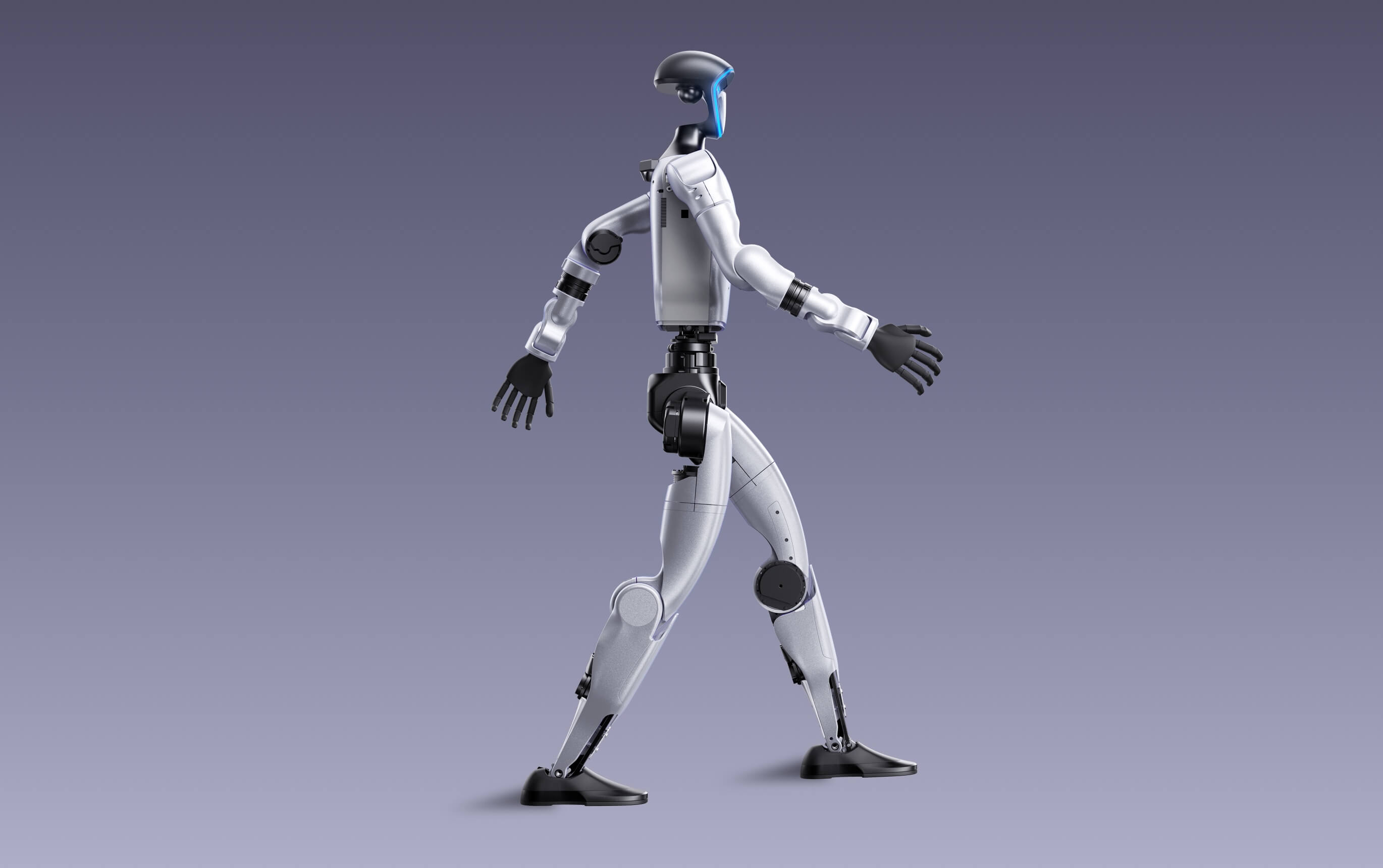
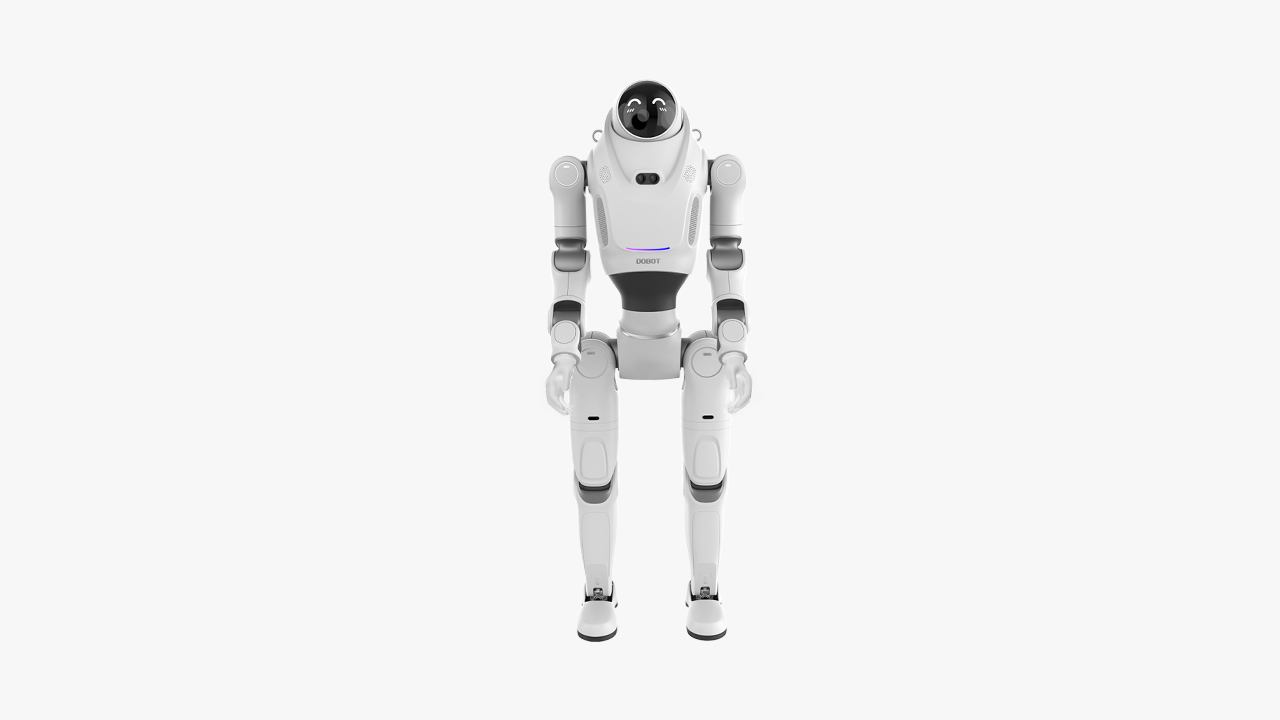
The humanoid robot segment tells a particular story about where physical production capacity is actually building and where it is mostly paper. Chinese firms accounted for 87% of the approximately 13,000 humanoid robots shipped globally in 2025, led by AGIBOT with an estimated 5,168 units and a 39% global market share, according to Omdia research cited by Bloomberg in January 2026. By contrast, US firms Tesla and Figure AI delivered approximately 150 units each. The capital flowing into US humanoid robotics companies is not yet matched by equivalent production output — a gap that does not make those investments wrong, but does clarify that the market is pricing future capability rather than current throughput.
What makes the financing pattern specifically concerning is not the scale but the circularity. Nvidia invested $100 billion into OpenAI in September 2025 on the expectation that OpenAI would power additional data centres using Nvidia GPUs. Nvidia holds 7% of CoreWeave and signed a $6.3 billion agreement to purchase CoreWeave's unsold data centre capacity through 2032. OpenAI purchased billions in electronics from AMD, making it one of AMD's largest shareholders. The hyperscalers are investing in the AI companies that buy their compute; the AI companies are investing in the chip companies whose output they require. This is not necessarily fraud — it resembles, as iShares noted in October 2025, the asset-backed financing models that Boeing uses with airlines and that energy equipment vendors use with long-term infrastructure projects. But it does mean that some of what is recorded as AI revenue is capital cycling within the ecosystem rather than income from external customers. The distinction matters when assessing whether the current valuations are anchored in real commercial demand.
What the Historical Bubbles Actually Have In Common — and Where This Breaks From All of Them
Every financial bubble shares a recognisable psychological sequence: early adopters see genuine value, the narrative spreads, FOMO capital floods in, prices decouple from fundamentals, and the correction eventually arrives. What differs is what the correction destroys and what it leaves behind.
Tulip mania is the reference that gets invoked most carelessly. The Dutch episode of 1634–1637 was, by the standards of later financial catastrophes, remarkably contained — modern scholarship, including work by historian Anne Goldgar cited in the Smithsonian, suggests it was smaller and less economically destructive than its mythology implies. What made tulips a pure speculative episode was structural: the underlying asset produced nothing. A tulip bulb cannot be converted into industrial infrastructure. It cannot carry freight, transmit data, or process information. The moment collective belief in its price evaporated, no residual value remained. Prices fell in February 1637 when a single Haarlem auction failed to attract buyers, and within weeks the contracts were worthless. The bubble left nothing. That is what makes it the wrong historical frame for AI robotics.
The railroad mania of the 1840s in Britain is more instructive and more uncomfortable. Investors lost enormous sums — some estimates suggest the capital destruction was proportionally larger than the dot-com crash relative to the economy — but the tracks remained. The physical infrastructure built during the speculative frenzy became the foundation for a century of industrial productivity. Most of the companies that built the railways went bankrupt. The railways themselves were used for generations. The investors who bought railroad shares at peak mania were ruined. The economy that inherited the infrastructure was transformed.
The dot-com crash sits between these poles. NASDAQ rose approximately 700% from December 1995 to its March 2000 peak. The forward price-to-earnings ratio hit approximately 79x. Seventy-four percent of publicly traded internet companies had negative cash flows as of the Barron's "Burning Up" cover story in March 2000. When the correction came, five trillion dollars in market value was destroyed. But Cisco, despite losing 86% of its value, survived and remained a critical infrastructure company. Amazon lost 90% of its value and became the dominant force in global commerce. The fiber-optic cables, the server architectures, the e-commerce habits, the logistics networks — all of this infrastructure residue outlasted the companies that were capitalised to build it, and the economic value it eventually generated dwarfed the losses of the crash.
This is where the AI robotics comparison becomes analytically specific rather than rhetorical. The question is not whether there is speculative excess — there clearly is. The question is whether the underlying technology is building infrastructure residue or tulips. And the evidence on that question, when you follow it carefully rather than from a distance, points toward something closer to the railroad and dot-com pattern than to the tulip pattern — for the technology, if not for every company currently capitalised to deploy it.
Why AI Robotics Is Not Tulip Mania — Even If Parts of It Behave Like a Bubble
The structural case for AI robotics being categorically different from purely speculative bubbles rests on a specific, verifiable claim: the underlying technology is already demonstrating measurable real-world productivity impact, and that impact is accumulating in physical infrastructure that will persist regardless of what happens to individual company valuations.
The railroad analogy is imperfect but instructive here. AGIBOT's 10,000th humanoid robot rolled off a production line in March 2026 — not a prototype facility, a production line that scaled from 5,000 to 10,000 units in three months. These machines are operating in logistics, retail, and manufacturing environments across multiple continents. The autonomous mobile robot market in US fulfilment centres alone exceeded 45,000 units in 2024. Japan is projecting a shortage of 570,000 care workers by 2040 and is deploying robotic systems specifically to fill roles that human labour cannot. This is not a speculative bet on hypothetical future value. It is physical deployment of physical machines in real operational environments, generating real operational data that improves those systems for the next deployment cycle.
The productivity data is still developing, and honesty requires acknowledging that directly. A National Bureau of Economic Research study published in February 2026 found that 90% of firms report no measurable impact of AI on workplace productivity despite executive projections of significant gains — a productivity paradox that looks uncomfortably like the early internet years when the technology was deployed before operational practices had adapted to use it effectively. The MIT research finding that 95% of AI pilot projects fail to yield meaningful results is real, and it applies to AI robotics deployments as much as to generative AI. The technology is demonstrating genuine capability in controlled deployments. It has not yet demonstrated the broad-based enterprise productivity gains that would justify current valuations at a portfolio level.
What distinguishes the companies that will generate the infrastructure residue from those that will become the Pets.com of their era is not which sector they are in — it is whether they have found specific operational problems that robots solve more reliably than available alternatives, at a unit economics that makes repeated commercial deployment rational rather than speculative.
The physical infrastructure being built — the production facilities, the supply chains, the sensor ecosystems, the training datasets accumulated through real-world deployment — will have value beyond the companies that built it. That is the railroad pattern. Whether the companies currently capitalised to build it will survive the inevitable valuation correction is a separate question, and the honest answer is that most of them will not, just as most railroad companies did not.
Is the AI Robotics Bubble Going to Burst — or Is the Fear of Bursting the Wrong Question?
There are two serious, well-reasoned positions on whether this constitutes a dangerous bubble, and both deserve engagement rather than dismissal.
Julien Garran of MacroStrategy Partnership called the AI bubble in October 2025 "the biggest and most dangerous bubble the world has ever seen" — 17 times larger than the dot-com bubble. This is not a fringe position from an attention-seeking commentator. It rests on documented evidence: OpenAI projecting cumulative losses of $44 billion between 2023 and 2028 while valued at $340 billion; the five largest companies holding 30% of the S&P 500 — the greatest concentration in half a century; the Shiller price-to-earnings ratio exceeding 40 for the first time since the dot-com peak; circular financing patterns between hyperscalers and AI companies that inflate revenue figures. Microsoft CEO Satya Nadella warned in 2025 that AI companies without real GDP growth and real demand to back valuations would face consequences. Ray Dalio of Bridgewater Associates said the current levels of investment are "very similar" to dot-com conditions. These are serious people making serious arguments.
On the other side, BlackRock's analysis published in October 2025 argues that AI spending has been largely funded by profits rather than speculative debt — that NVIDIA posted $215.9 billion in FY2026 revenue with gross margins of 71% and net margins of 53%, numbers that have no equivalent in the dot-com era. Janus Henderson Investors noted that NASDAQ's current forward P/E of approximately 25x is far below the approximately 79x of the dot-com peak, and that the price gains — approximately 125% from November 2022 — are nowhere near the 700% of the dot-com run. The companies leading this wave have real balance sheets, real earnings, and real cash flows in a way that Pets.com and TheGlobe.com never did.
The hard structural truth is that both positions are correct about different layers of the same ecosystem. At the infrastructure layer — the chip manufacturers, the cloud providers, the companies building the physical systems that AI runs on — the fundamentals are genuinely strong and the dot-com comparison is misleading. NVIDIA is not a speculative bet on future value. It is a profitable company with extraordinary margins supplying critical infrastructure to a growing market. At the application layer — the thousands of AI robotics startups raising at 39x revenue multiples without demonstrated path to profitability — the conditions are precisely those that precede significant valuation destruction in every prior technology cycle. Not all bubbles burst in the same place, and the AI robotics bubble, if and when it corrects, will likely destroy most of its application-layer companies while leaving the infrastructure layer intact and more dominant than before.
Cisco survived and Pets.com disappeared. Both were "tech companies" in a bubble. The label tells you nothing about which outcome you are invested in.
The question for anyone whose capital or business is exposed to this wave is not whether the bubble will correct — some correction in application-layer valuations is a near-certainty — but whether the correction will be accompanied by infrastructure residue that the next decade's economy is built on.
This sits at the intersection of the market dynamics and real-world deployment questions this site tracks across physical AI, supply chain economics, and the future of work.
This development reinforces:
- Why Robotics Will Move Markets Like Algorithms Did: The argument that physical AI is restructuring market economics, made in that article through supply chain data, connects directly to this one's claim that the infrastructure being built during the current investment wave will change competitive dynamics regardless of which companies survive the valuation correction.
- Who Owns Robot Data: The circular financing patterns in AI — where companies invest in each other's equity to create the appearance of revenue — raise the same question that robot data ownership raises about who controls the asset of durable value when the speculative dust settles.
- Is AI Self-Aware? What Current Systems Actually Are, and How Far We Really Are From Skynet: The gap between what AI systems currently are and what investors are pricing them to become is the same gap that article identifies between current AI capability and the science fiction projections — both gaps are where the real risk lives.
The people who bought tulip contracts in 1636 and the people who funded Cisco in 1999 were both participating in financial manias. One of them was left holding a worthless bulb. The other was left holding equity in the infrastructure company that built the internet's backbone — at a loss of 86%, but still holding something that mattered. The difference between those two outcomes was not the sophistication of the investors or the irrationality of their hope. It was whether the thing they were funding could, after the mania ended, be used to build anything real. The AI robotics investment wave is building things that can be used. The question of who survives long enough to own them when the correction comes is the question that no amount of historical analogy can answer — because it depends not on the pattern of the bubble but on the specific financial structure of the specific company you are in, which is the kind of due diligence that a hype cycle is specifically designed to make you forget to do.
1. Is AI a financial bubble right now? Partially, yes — but the bubble is concentrated in specific layers of the ecosystem rather than spread evenly across all AI and robotics investment. At the application layer, where AI robotics startups are raising at median revenue multiples of 39x according to Marion Street Capital's 2025 analysis, the conditions mirror previous speculative cycles. At the infrastructure layer — chip manufacturers, cloud providers, and established technology companies — earnings growth is real and the dot-com comparison is structurally misleading. Venture and growth investors deployed $425 billion globally in 2025, according to Crunchbase, with 60% going to fewer than 630 companies, which itself signals the concentration typical of late-stage bubble dynamics.
2. How does the AI investment boom compare to the dot-com bubble? The Nasdaq rose approximately 700% from December 1995 to its dot-com peak in March 2000, with a forward P/E of approximately 79x and 74% of public internet companies reporting negative cash flows. The Nasdaq has risen approximately 125% from ChatGPT's November 2022 launch to October 2025, with a current forward P/E of approximately 25x, according to the Bloomsbury Intelligence and Security Institute's December 2025 analysis. The scale of speculation is smaller by these metrics, but the concentration of capital into pre-profit companies is comparable. The critical difference is that today's infrastructure-layer companies — unlike dot-com era peers — are generating substantial real earnings.
3. Is the AI robotics bubble like tulip mania? No — and the distinction matters structurally, not just rhetorically. Tulip mania was a speculative episode in an asset that produced no durable infrastructure; when confidence collapsed in February 1637, nothing of economic value remained. AI robotics is building physical production capacity, operational datasets, and deployment infrastructure that will have genuine economic utility regardless of what happens to the specific companies funded to build it. This is what this site calls infrastructure residue — the durable assets that survive a technology bubble and enable the next generation of economic value. The railroad bubble left tracks; the dot-com crash left the internet. The AI robotics wave is leaving production facilities, supply chains, and physical robots in operation.
4. Which AI robotics companies are most at risk if the bubble corrects? Application-layer startups — those raising capital based on future AI capability rather than demonstrated recurring revenue — face the most acute valuation risk in a correction. Companies raising at 39x revenue multiples with no clear path to profitability are structurally equivalent to the dot-com companies that did not survive. Infrastructure-layer companies — chip manufacturers, cloud providers, and robotics hardware manufacturers with genuine production scale — are better positioned to survive correction because their value is anchored in physical assets and real cash flows. The Chinese humanoid robotics firms that account for 87% of global humanoid shipments, according to Omdia and Bloomberg (January 2026), have demonstrated actual production capacity that has a floor value independent of narrative.
5. Could the AI investment bubble cause a financial crisis like 2008? The structural conditions that made the 2008 financial crisis systemically dangerous — widespread household leverage, opaque mortgage-backed securities embedded in institutional balance sheets globally — are not present in the current AI investment wave. The AI bubble is primarily a private market and public equity phenomenon concentrated in sophisticated investors, not retail mortgage holders. A sharp correction would destroy significant paper wealth and damage the balance sheets of institutions heavily concentrated in AI technology stocks, but the systemic contagion mechanism that turned the 2008 housing correction into a global financial crisis does not have a direct equivalent here. Julien Garran of MacroStrategy Partnership called it the largest bubble in history in October 2025; whether that claim proves correct depends on whether current valuations are anchored in genuine infrastructure value or pure narrative — and the evidence currently points to a mixture of both.
6. What does the AI robotics investment wave leave behind if it corrects? The infrastructure residue of the current investment wave — the physical production facilities, supply chains, operational robots, training datasets, and technical talent — will have durable economic value regardless of what happens to the specific companies capitalised to build it. This is the railroad pattern: most railroad companies went bankrupt in the 1840s bubble, but the tracks carried industrial freight for a century. AGIBOT's 10,000th humanoid robot production milestone in March 2026, and the 87% Chinese share of global humanoid shipments, represents physical infrastructure being built that will not disappear in a valuation correction. The question for investors is not whether this infrastructure will have value — it will — but whether the companies they are invested in will still own it when the correction resolves.