U.S. Orders Robotics Import Talks, Not New Tariffs
Trump ordered robotics and machinery import negotiations with a 180-day update. No new tariff rate, quota or import ban was imposed.


President Donald Trump signed an October 28, 2026 proclamation directing U.S. officials to negotiate over imported robotics, industrial machinery and components. The order accepts a national-security finding and sets a 180-day progress update, but does not introduce a new tariff rate, quota or import ban.
For an automation buyer, the immediate change is a formal negotiating mandate, not a new number to enter in a landed-cost calculation. Commerce Secretary and U.S. Trade Representative officials must jointly pursue or continue agreements with foreign trading partners. The President retains the option of further remedies, including tariffs, duties, quotas, fees and a program encouraging investment in U.S. production. None of those possible measures is specified as a newly implemented charge or funded program in this document.
The proclamation follows a Commerce investigation under Section 232 of the Trade Expansion Act. Trump concurs with the department's conclusion that imports of robotics, industrial machinery and their parts and components threaten to impair national security. Commerce must keep monitoring imports and identify circumstances that could warrant further presidential action. At least one negotiation update is due within 180 days; the text also allows updates along the way.
That distinction matters to Chinese exporters, multinational equipment manufacturers and U.S. factories evaluating imported automation. The policy covers a supply-chain category rather than announcing a deal with one named country or a restriction on one named robot. Its commercial significance lies in what officials have been instructed to negotiate, and what buyers still cannot price from the published text.
A Security Finding Is Not a Tariff Schedule
The order moves beyond a question about whether imports present a security concern. The President has accepted Commerce's finding and selected negotiations as the immediate response. But a completed finding and a completed trade remedy are different milestones. Reading the proclamation as an instant robotics tariff would erase the most important distinction in its operative clauses: officials are told to seek agreements, while additional import measures remain possibilities.
The White House's accompanying fact sheet reinforces the industrial argument. It says the United States consumes more robotics and industrial equipment than it produces and cannot satisfy demand solely through domestic sources. The proclamation attributes related findings to Commerce, including dependence on imported components and cybersecurity risks associated with equipment from certain foreign entities. These are the government's stated grounds for action, not newly audited supplier performance figures.
The finding is broader than battlefield robots. Commerce identifies the machinery used to manufacture defence equipment and the automation supporting civilian infrastructure. Automotive production, electronics, metalworking, medical devices and food processing appear in its account of industrial dependence. That makes the action relevant to factory procurement even when the machine being purchased never enters a military facility. It does not, by itself, establish the customs treatment of every item used in those sectors.
Think of the difference as the gap between authorising a supplier renegotiation and receiving a revised price list. Management can decide that a dependency is unacceptable and instruct its purchasing team to change the relationship. Until the new terms are specified, a buyer still cannot replace the old price with an imagined surcharge. Here the political decision is real, but the border-cost terms that might follow are not yet supplied.
A national-security finding can change the bargaining position before it changes the landed cost. The practical response is to separate the known instruction from scenarios about its outcome. A project forecast can identify exposure to imported equipment without booking an invented duty. A vendor can explain its manufacturing and service footprint without claiming that the footprint has already earned an exemption.
There is an equally important counterpoint for buyers who see the absence of a new rate as reassurance. The President has not promised that talks will succeed, that further action must wait until the reporting deadline, or that any agreement will cover every supplier. The proclamation contemplates other remedies depending on the status or outcome of negotiations. An unchanged price assumption can therefore be a working baseline, but it should not become an assertion that policy risk has disappeared.
This is where the broader relationship between robotics and geopolitical industrial power becomes a purchasing issue rather than an abstract strategic argument. The current document treats the capacity to make and sustain machinery as part of national security. It does not provide enough detail to forecast which trading partner, product category or production arrangement will receive which final treatment.
The Supply-Chain Question Reaches Past the Robot
For a U.S. buyer, identifying a vendor's headquarters is not a substitute for understanding the equipment being supplied. The proclamation refers to robotics, industrial machinery and their components together. A complete machine, a replacement assembly and the equipment used to manufacture a robot can therefore raise different sourcing questions. The published action does not resolve those questions through a new product-code annex or a model-by-model list.
A useful supplier discussion begins with the proposed machine's production location, the origin information available for major assemblies, and the contractual party responsible for delivering it. Those are information requests, not conclusions about tariff liability. Buyers should have qualified trade advisers determine applicable classifications and obligations rather than infer them from a robot's brand, its distributor's address or the presence of an American sales office.
For an exporter in China, that means the immediate task is not to announce a U.S. exclusion that has not been issued. It is to be ready to explain what is manufactured where and what can be supported locally. For a multinational supplier, it means distinguishing a domestic integration operation from domestic production of the underlying equipment. For a domestic producer using imported assemblies, it means recognising that a U.S. factory address alone does not answer every component question.
These are comparisons of procurement positions, not a ranking of winners. The proclamation identifies no automatic exemption for an American-owned vendor and no newly imposed country-specific rate for a Chinese-owned one. It also does not establish that final assembly in another jurisdiction will avoid a future measure. Any commercial claim about such treatment needs a subsequent authoritative rule or agreement, not a sales presentation describing a global footprint.
The service supply chain deserves its own review. A machine's economic value depends on its ability to remain in use, not only on crossing the border once. Buyers can ask whether critical spares are stocked near the installation, which party supplies replacement assemblies and whether there is an approved repair alternative. These questions can reveal ordinary operational weaknesses even if negotiations produce no additional import charge.
Technical dependence should not disappear inside that review. The proclamation's sensitive-data concerns concern the behaviour and security of equipment, not merely the country printed on a shipping label. A buyer still needs to assess remote access, software maintenance and continuity of support. The related issue of robotics platform dependence and contractual control remains separate from customs treatment: an acceptable border cost does not guarantee control of the system after installation.
Project Approvals Need a Baseline and a Contingency
The sensible commercial response is not an automatic freeze on imported robotics. It is a clearer separation of the production case from the policy contingency. A factory may have a verified need for higher throughput, safer handling or better quality, while still lacking enough information to quantify a possible future border measure. Treating those as separate questions preserves the reason for the project without pretending that its risk is fully priced.
The baseline should use applicable, verified costs rather than a forecast tariff presented as fact. A separate contingency can describe what would need to change if a later measure affected the equipment or its components. Until a rate, scope and effective date are published, that contingency is best expressed through identified exposures and decision triggers. Giving an unsupported percentage to a spreadsheet may create a tidy total, but not a reliable procurement decision.
Contract discussions can make the uncertainty less ambiguous without eliminating it. Buyers can ask how quotations handle changes in import charges, which party bears an increase, and how a delivery delay would be managed. Suppliers can distinguish committed terms from assumptions that may need to be revisited. These are subjects for negotiation and professional review; the proclamation does not prescribe a standard purchasing clause or decide existing commercial disputes.
An alternative supplier must also clear the same operational requirements as the original proposal. Changing a source can entail integration work, revalidation, training and a different maintenance relationship. No result of the current negotiations has been announced that would make those burdens disappear. Procurement teams should not trade a known technical fit for a hypothetical policy advantage without documenting both sides of that decision.
The domestic-capacity argument carries a similar constraint. The White House wants a stronger U.S. robotics and machinery ecosystem, while its own stated rationale acknowledges that domestic production is insufficient. That does not prove imports can be replaced at the required price, volume or delivery time. Nor does it prove the proposed investment incentive will be enacted. The publication records an intended policy direction, not completed capacity expansion or a funded supplier-development program.
The next concrete evidence to watch is an announced negotiation outcome, the required progress update, or an implementing measure that supplies product scope and actual terms. Those developments could turn a sourcing exposure into a calculable cost or a specific obligation. Until then, the decision is to prepare documentation and contractual options around a verified negotiation mandate, not to purchase around a tariff schedule that has not been issued.
This analysis synthesizes the publicly released proclamation and companion White House fact sheet. Procurement implications are interpretation; unannounced agreements, implementing measures and supplier outcomes are not assumed.
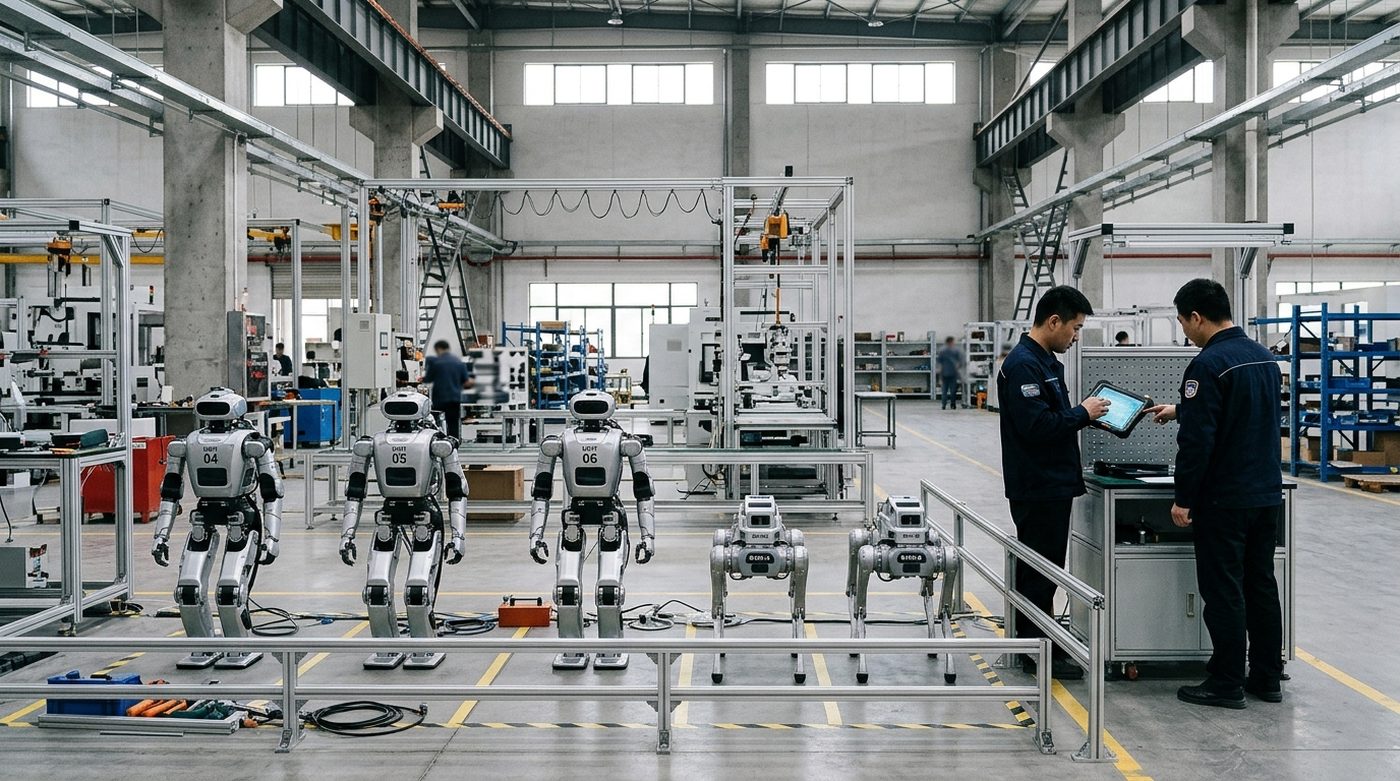
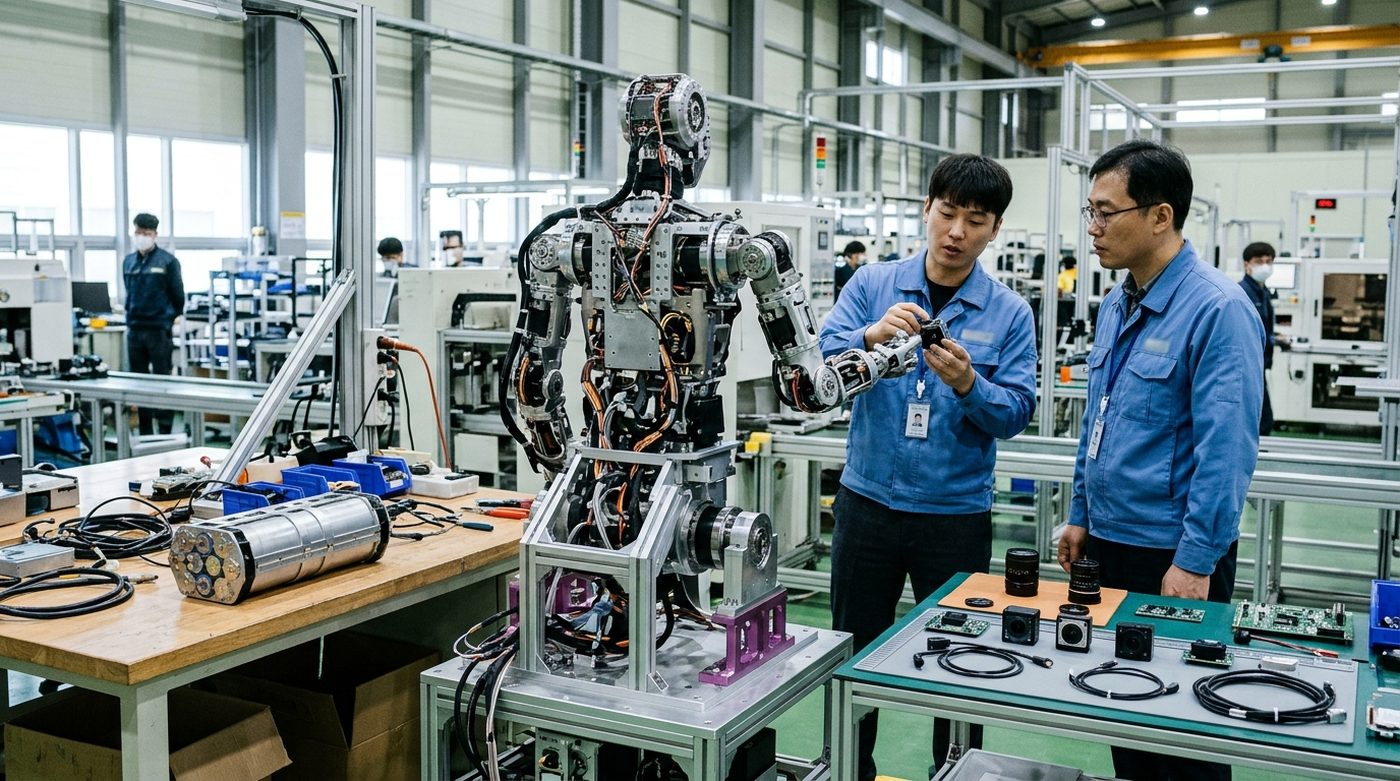
Photo: ABB. Robots in the company's Shanghai factory, shown as an archive illustration, not as a new U.S. policy event or a finding against ABB.
This article is provided for general information purposes only and does not constitute investment, procurement, legal, or engineering advice. Product specifications reflect public company information available at the time of writing and may change without notice.