


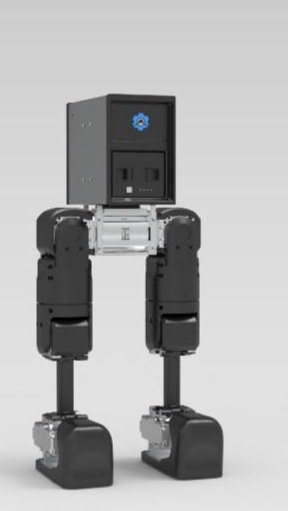
DESCRIPTION
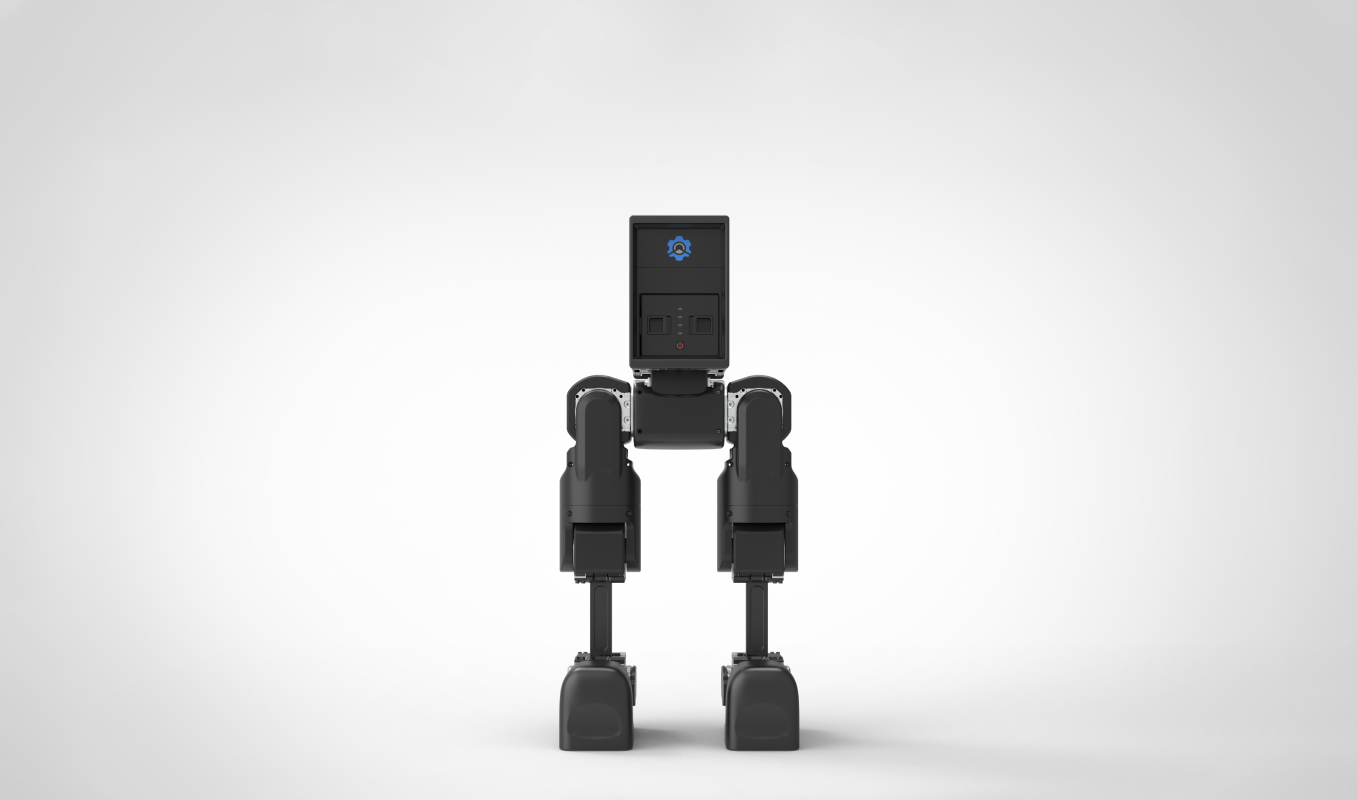
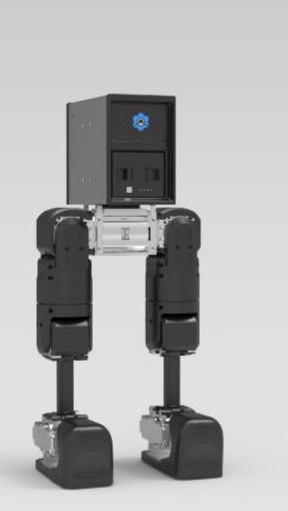
Mini Pi is High Torque's entry-level bipedal research platform: 52 cm tall, 7 kg, and twelve degrees of freedom driven by the company's own servo joint modules at up to 21 Nm peak torque. There is no torso or arms — the body is a compute box on two legs, which is exactly the point, because the machine exists so that locomotion researchers can buy walking hardware rather than build it. Hip, knee and ankle each move through a documented range, a six-axis IMU closes the loop, and one to two hours of runtime comes from a 21.6 V 4,500 mAh pack. Two compute options split the line: the standard Pi runs an RK3588 with a 6 TOPS NPU, while Pi Pro swaps in an NVIDIA Jetson Orin NX at 100 TOPS for onboard learning workloads. Both ship with SDK-based development, OTA and firmware upgrades, and voice interaction, and both carry a one-year warranty.
FEATURES
- 12 DoF biped, 52 cm tall and 7 kg
- 21 Nm peak joint torque from High Torque's own servo joint modules
- two compute tiers — Pi with RK3588 and a 6 TOPS NPU, Pi Pro with NVIDIA Jetson Orin NX at 100 TOPS
- 21.6 V 4,500 mAh pack for 1-2 hours of running
- six-axis IMU
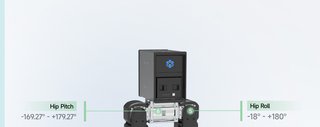
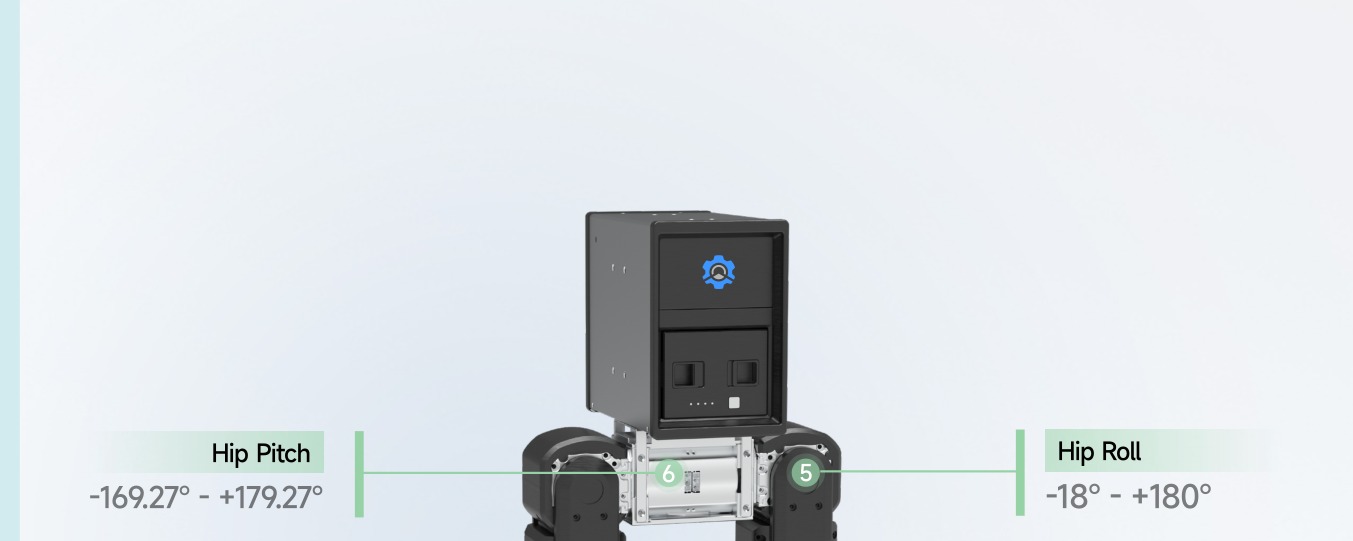
- documented joint ranges (hip pitch -169.27° to +179.27°, hip roll -18° to +180°, hip yaw ±165°, knee ±143°, ankle pitch -56° to +53°, ankle roll ±45°)
- built-in motions for waist twist, hip twist, splits and lunge
- SDK interface, SDK-based development, OTA and firmware upgrade, voice interaction
- remote control and BMS battery with charger included
- one-year warranty.
TECHNICAL SPECIFICATIONS
| Physical | |
| Weight | 7 kg |
|---|---|
| Dimensions | H 520 mm |
| Mobility | |
| Movement Type | Bipedal |
| Degrees of Freedom | 12 |
| Manipulation | Low |
| Actuators | 12 servo joints built from High Torque HTDW-series planetary joint modules; 21 Nm peak joint torque |
| Power | |
| Battery Life | 1-2 h |
| Sensing & Compute | |
| Sensors | 6-axis IMU |
| Connectivity | Bluetooth and Wi-Fi (Pi); WNIC (Pi Pro); USB 3.0 x1, USB 2.0 x3 and HDMI 2.0 x1 (Pi), Type-C x2, USB 2.0 x2 and HDMI 2.0 x1 (Pi Pro) |
| Software / AI | SDK interface with SDK-based development, OTA and firmware upgrade; voice interaction |
TECHNICAL SPECIFICATIONS
| Physical | |
| Weight | 7 kg |
|---|---|
| Dimensions | H 520 mm |
| Mobility | |
| Movement Type | Bipedal |
| Degrees of Freedom | 12 |
| Manipulation | Low |
| Actuators | 12 servo joints built from High Torque HTDW-series planetary joint modules; 21 Nm peak joint torque |
| Power | |
| Battery Life | 1-2 h |
| Sensing & Compute | |
| Sensors | 6-axis IMU |
| Connectivity | Bluetooth and Wi-Fi (Pi); WNIC (Pi Pro); USB 3.0 x1, USB 2.0 x3 and HDMI 2.0 x1 (Pi), Type-C x2, USB 2.0 x2 and HDMI 2.0 x1 (Pi Pro) |
| Software / AI | SDK interface with SDK-based development, OTA and firmware upgrade; voice interaction |
Images
 martti
 martti
 martti
Image Contributions
Videos
ROBOT FORUMS
Loading forums...
RATINGS
FREQUENTLY ASKED QUESTIONS
What is the Mini Pi?
Mini Pi is High Torque's entry-level bipedal research platform: 52 cm tall, 7 kg, and twelve degrees of freedom driven by the company's own servo joint modules at up to 21 Nm peak torque.
Who makes the Mini Pi?
The Mini Pi is made by High Torque Technology, a robotics company based in China.
How much does the Mini Pi cost?
High Torque Technology has not publicly announced pricing for the Mini Pi. You can enquire through RobotAIGeek for current pricing.
What is the Mini Pi used for?
The Mini Pi is designed for research, bipedal locomotion research, reinforcement-learning training, and robotics education. It is used in research and education settings.
How much does the Mini Pi weigh?
The Mini Pi weighs 7 kg.
What is the battery life of the Mini Pi?
The Mini Pi runs for 1-2 h on a charge.
How many degrees of freedom does the Mini Pi have?
The Mini Pi has 12 degrees of freedom.
COMPARE WITH SIMILAR ROBOTS
See how this robot stacks up against its closest alternatives
- Mini Pi vs Mini Pi Plus
- Mini Pi vs Lanxin H6 Standard
- Mini Pi vs yobot R2V1
- Mini Pi vs YMBot Type E3
- Mini Pi vs InMoov