
Mini Pi vs yobot R2V1
High Torque Technology vs Openmind Intelligent Robot — specs, price, and data-backed comparison.
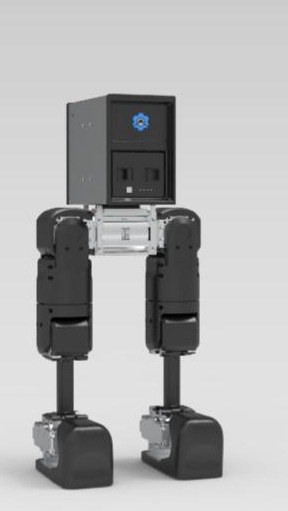
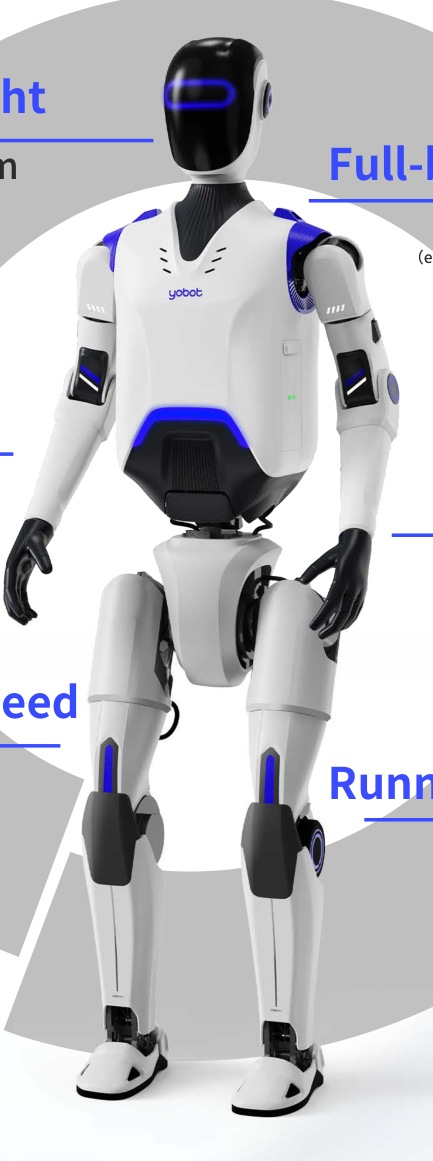
QUICK TAKE
- yobot R2V1 offers the longer runtime (120 min vs 90 min).
- yobot R2V1 offers the more degrees of freedom (22 vs 12).
- Mini Pi offers the lighter build (7 kg vs 43 kg).
SPECIFICATIONS COMPARED
| Mini Pi | yobot R2V1 | |
|---|---|---|
| Company | High Torque Technology | Openmind Intelligent Robot |
| Category | Educational-Robots | Educational-Robots |
| Price: | Not announced | Not announced |
| Weight | 7 kg | 43 kg |
| Degrees of Freedom | 12 | 22 |
| Speed | — | 3.6 km/h |
| Battery Life | 90 min | 120 min |
| Connectivity | Bluetooth and Wi-Fi (Pi); WNIC (Pi Pro); USB 3.0 x1, USB 2.0 x3 and HDMI 2.0 x1 (Pi), Type-C x2, USB 2.0 x2 and HDMI 2.0 x1 (Pi Pro) | Ethernet, Wi-Fi 6, Bluetooth and 5G; RJ45 x2 and USB 3.0 Type A x2 expansion; Ethernet port x4, USB 3.1 Type C x4; HDMI x1, AUX x1, RS485 x2, GMSL x6 |
| Software / AI | SDK interface with SDK-based development, OTA and firmware upgrade; voice interaction | GOPS embodied-intelligence training framework developed with Tsinghua University, integrating 30+ reinforcement-learning algorithms for highly dynamic whole-body coordinated control; five control modes (zero-torque, standby, damping, debugging, motion); ROS 2, Python and C++ on Ubuntu with URDF, simulation models, EtherCAT and standard SDK; OTA with one-click upgrade and rollback |
Buying guides and prices
FREQUENTLY ASKED QUESTIONS
What is the difference between the Mini Pi and the yobot R2V1?
Mini Pi is made by High Torque Technology, while yobot R2V1 is made by Openmind Intelligent Robot. Both are educational-robotss, so the differences come down to price and specifications.
Which has the longer battery life, the Mini Pi or the yobot R2V1?
The yobot R2V1 has the higher runtime at about 120 minutes, compared to about 90 minutes for the Mini Pi.