West Lake Robot raises capital for whole body humanoid model
West Lake Robot says it has completed a new round led by Haiyuan Fund, taking its cumulative funding across four rounds in six months to RMB 500 million, approximately US$70 million. The company plans to direct the capital toward a whole-body unified model for humanoid robots, its self-developed general brain and a GAE embodied-avatar system. The announcement details investor support but not valuation, benchmarks, customers or commercial deployments.
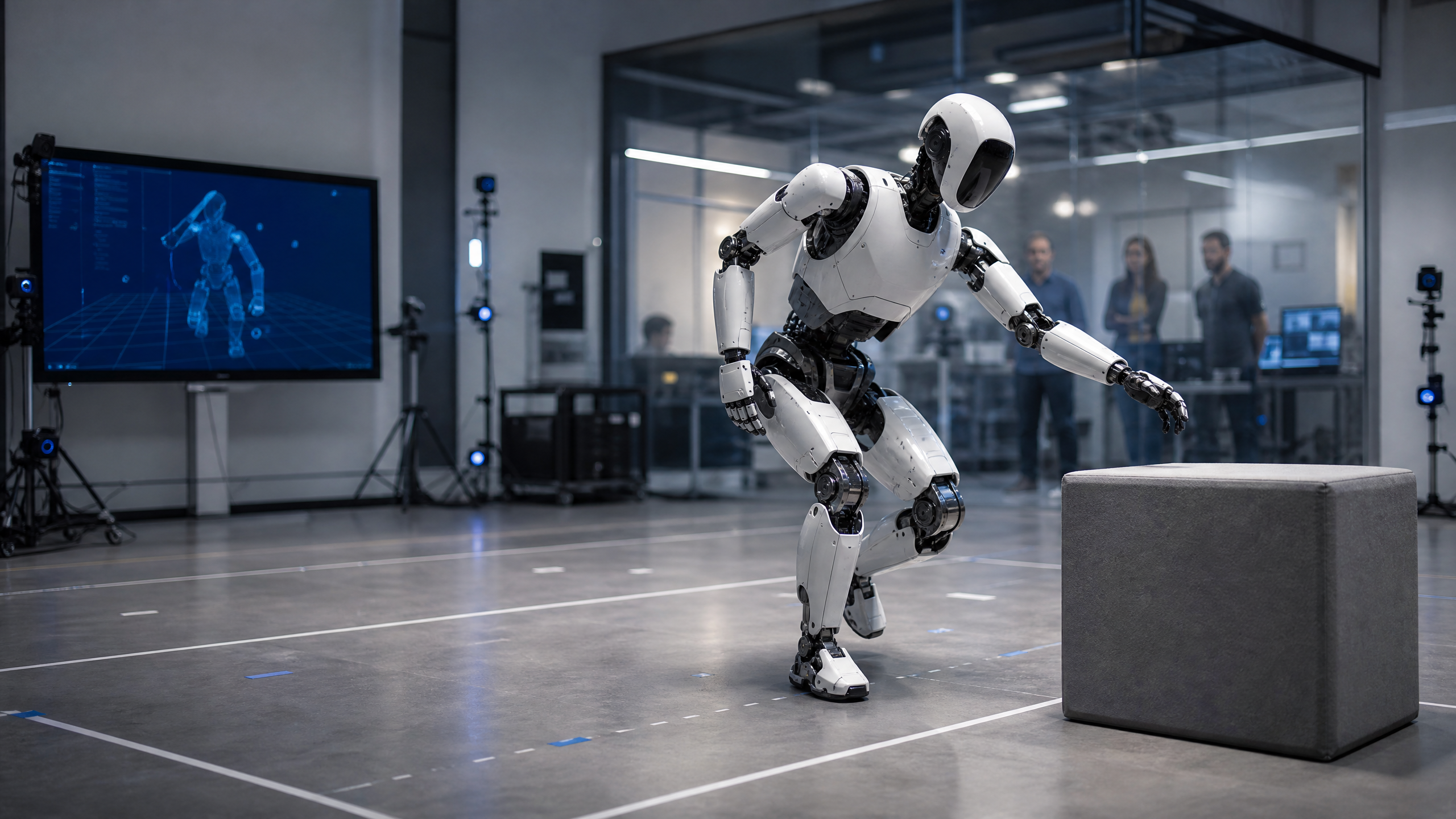
West Lake Robot, a developer of a general embodied-AI brain, announced a new funding round on August 12 2026. Haiyuan Fund led the round, which the company said closed less than one month after its prior raise. Reported cumulative financing reached RMB 500 million, about US$70 million, to advance a unified whole-body model and related systems.
Whole-body control sits at the center
The factual event is straightforward. West Lake Robot reported a new A round led by Haiyuan Fund. The company framed the raise as support for a whole-body unified model for humanoid robots, upgrades to its self-developed general brain, and development of its GAE embodied-avatar system. The round closed less than one month after a prior financing, and the company said it has completed four rounds in six months with a total of RMB 500 million, about US$70 million.
West Lake Robot describes itself as a developer of a general embodied-AI brain. That is the company’s organizing thesis and it anchors the current announcement. On the product side, the stated targets are a unified control approach for the full body of a humanoid, continued work on a general brain that the company says it self-developed, and a GAE embodied-avatar system that the company lists among its development priorities. The reported investor group pairs lead backer Haiyuan Fund with SAIF, Xiaomiao Langcheng and Henan Investment Group Huirong Fund.
For procurement, the declared shift toward a unified whole-body model has a clear operational implication. Buyers should expect vendors pursuing this path to request sustained access to diverse data streams and to propose iterative software refreshes across core behaviors, not just peripheral skills. That affects how pilots are scoped and how change control is written into agreements. A unified policy that touches all limbs will be more sensitive to distribution drift across tasks and hardware variants. Contract language and integration budgets should reflect that exposure.
A plain way to picture a whole-body unified model is to think of a single conductor running an entire orchestra rather than several section leaders giving cues to their own groups. The conductor can shape a performance with coherent phrasing across strings, winds and percussion. The same conductor also magnifies error if timing slips. In robotics, unified control can coordinate contact, balance and manipulation, yet it also ties many behaviors to one model’s assumptions.
The skeptical counterpoint belongs near the top. The company did not disclose the new round size, valuation, model benchmark results, a release timetable, named customers, field deployments, safety data, revenue or hardware product details. Those are major open items for any buyer. The announcement signals intent and resource flow, not evidence of reliability in a plant or a home.
Funding pace signals an R&D push
Four rounds reported within six months and a close that followed the prior round by less than one month indicate a desire to compress development timelines. Haiyuan Fund is listed as the lead of the new round, and the named investor cohort includes SAIF, Xiaomiao Langcheng and Henan Investment Group Huirong Fund. The company asserted cumulative financing of RMB 500 million, approximately US$70 million.
Rapid financing does not answer the hardest applied questions. The company did not provide model benchmarks, reference tasks, or any safety summary. It did not describe customer pilots, trial durations, or whether any humanoid platform was used outside a lab setting. It did not outline the bill of materials or the supplier stack for any hardware it might intend to support. Those gaps matter because they map to acceptance testing, validation, and site readiness.
From an operations view, a fast capital cadence can be helpful. It can underwrite data collection, simulation, motion capture, teleoperation pipelines and large training runs that whole-body models tend to require. It can also keep engineering teams working in parallel on policy learning, low-level control, and perception without waiting on tranches. That is positive for iteration speed. It also raises a gating question for buyers. Which milestones will the vendor treat as cash-driven and which as capability-driven. The answer should appear in a development plan and in the entrances and exits of a pilot.
One issue is model granularity. A unified model spanning balance, locomotion, grasping and tool use can simplify policy management, but it couples risk. If a locomotion update degrades arm timing, the potential fallout touches more of the stack. Buyers should ask for rollback procedures and audit trails for each software change that affects the unified control surface. The financing story does not cover this.
"Financing speed is not a proxy for operational maturity."
Procurement teams face integration choices
If you are evaluating vendors pursuing a whole-body unified approach, align due diligence with practical control points. Start with acceptance criteria that link tasks to measurable outcomes that your sites can validate. Define error budgets as counts per hour or per shift for interventions and resets. Ask for evidence that training data reflects your floor conditions. If the vendor uses simulation or teleoperation to augment data, request a summary of domain transfer techniques and the regime where the model is expected to generalize.
Budget planning should include compute and storage for on-premise inference or edge accelerators if applicable, as well as backhaul for fleet logs if the vendor requests it. Even if the model will run mostly on vendor infrastructure, your team will need ways to stage updates, validate control changes on a test rig, and roll forward in batches. That requires a staging cell, a safety review procedure, and people trained to supervise robot behavior during the rollout window.
Procurement language should be explicit about change control. A unified whole-body model puts more functional scope under a single training loop, which increases the chance that a non-obvious task gets affected by an update. You can mitigate this with a test catalog that covers not only primary tasks but also common transitions, for example stepping off a pallet and reaching for a handle in the same cycle. Require the vendor to run the catalog before any update and to publish a signed report.
Data rights and privacy also come into play. If the vendor will use your site data to improve a general brain, define how mixed datasets are handled, the retention window for raw logs, and whether model improvements trained on your site can be scoped to your environments for a fixed period. That is especially relevant if your team is concerned about sharing rare failure cases or workflow choreography that reveals a competitive process.
Operational design domains should be precise. Even if a vendor seeks long-horizon generality, each deployment should pin down the surfaces that the robot will touch, the objects it will manipulate, and the range of environmental perturbations that are expected. A unified policy does not remove the need for boundaries. It can make the mapping cleaner, but only if the boundaries are written and measured.
Data, compute and training pipelines
Whole-body models for humanoids pull together perception, state estimation, contact planning, force control, and high-speed reflexes into a shared representation. That ambition translates into workload across data and compute. The company’s financing narrative suggests it intends to fund that load. The stated plan to continue upgrading a self-developed general brain and to develop a GAE embodied-avatar system indicates a broad software effort.
The practical side is resource mix. Training can involve large datasets of multi-joint motion, bimanual manipulation and variable contact sequences. These datasets can come from motion capture, teleoperation, scripted simulation, and in some cases shared logs. Each source has bias. Motion capture can produce smooth trajectories that miss edge cases. Teleoperation can introduce operator habits that a plant does not want. Simulation can be clean yet drift on friction and delay. Mixed pipelines can work, but the vendor needs a plan for calibration and for residual error that persists when reality deviates.
Compute planning should assume bursts. Whole-body training and ablation studies run in waves, not in a steady state. If your vendor wants to co-locate inference or tuning hardware on site, plan for power and cooling. If the vendor runs all heavy training off site, plan for secure and reliable transfer of logs and labels. Track the operational cost floor that comes from data collection and curation. That cost does not fall to zero after an initial spin up. Every new task or variant resets some of the loop.
A useful analogy helps. Teaching a unified model to control a humanoid is like coaching a single athlete to perform a full decathlon rather than training ten different athletes for their favorite events. The benefit is one brain that learns how running affects pole vault timing and how long jump strength aids hurdles. The risk is that fatigue or bias in one area can bleed into others. Training and evaluation have to catch cross-couplings.
For buyers, this means update cadences will be active. Expect regular model refreshes as the vendor rolls in new data and expands task coverage. Plan for windows where robots are staged for update and for the staffing needed to supervise post-update validation. If your line cannot tolerate frequent pauses, negotiate clear windows, create a shadow cell, or request that updates be batched to a defined calendar with no ad hoc pushes.
Gaps that buyers should treat as open items
Humanoids with unified whole-body control are an appealing idea for sites that need flexibility across unstructured tasks. They are not a free pass to generality. Your team will do better if it treats the model as a living control policy that needs boundaries, test catalogs, and regular review. Financing can buy time and people. Evidence on your floor is still the gate.
This analysis is provided for informational purposes only and does not constitute investment, legal, or procurement advice. RobotAIGeek does not endorse specific vendors or guarantee the performance of early-stage technologies.