
UMA debuts Northstar humanoid and Real-Time Learning, sets 2026 pilots with a Europe-first plan
Paris-based UMA unveiled the design of its Northstar humanoid and a Real-Time Learning architecture at the Machina Summit, pitching a robot that acquires skills from demonstrations and corrective feedback while deployed on factory and logistics floors.
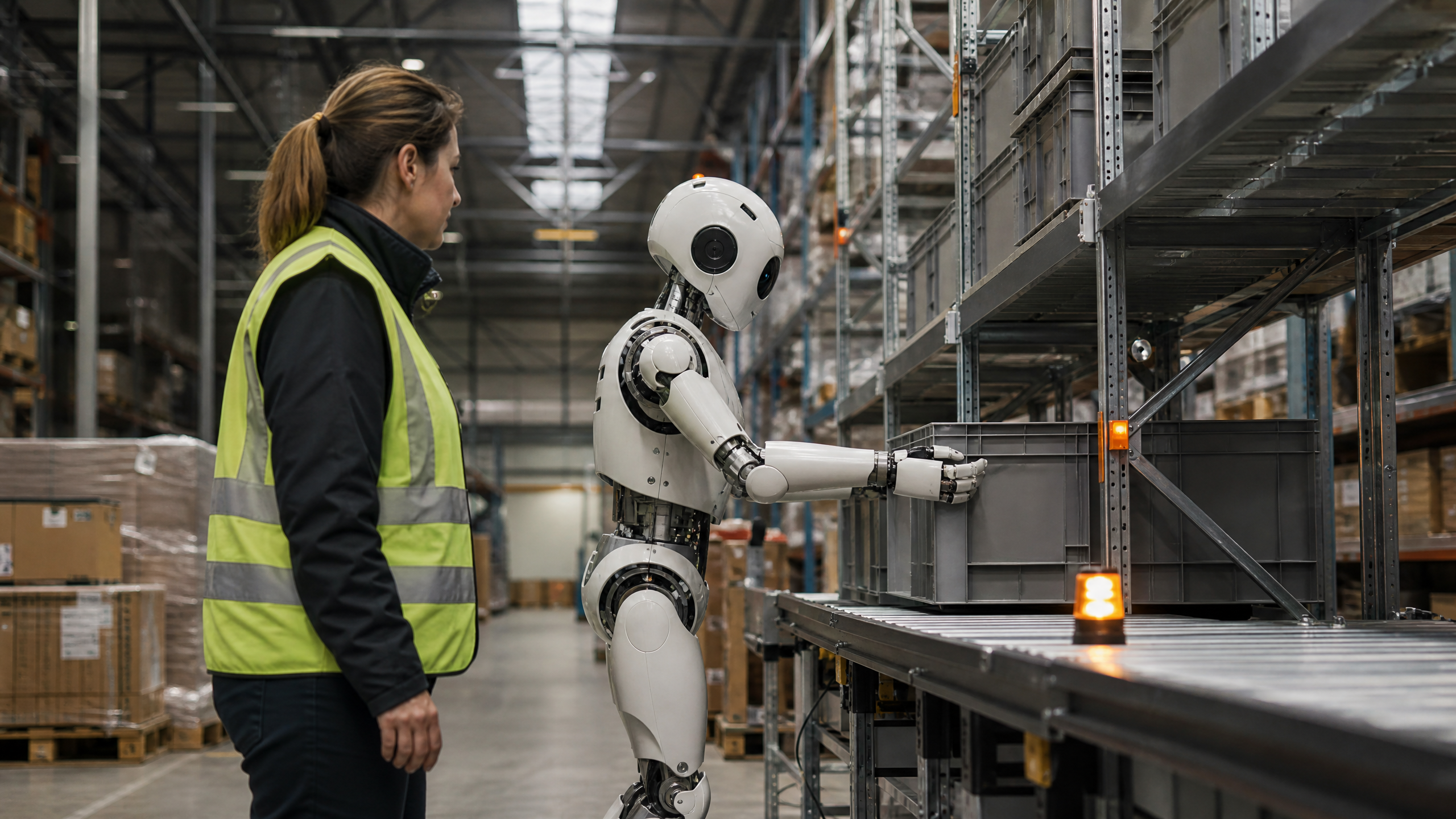
European factories and fulfillment centers are packed with jobs that are dull, repetitive, and hard to staff. Robots can help, yet most systems break down when the task or the lighting changes even slightly. Into that gap steps UMA, a Paris startup that says its first humanoid, Northstar, is being built to learn on the fly in real work, not just in the lab.
On July 7, 2026, at the Machina Summit, UMA unveiled the design of Northstar and a Real-Time Learning architecture that aims to keep a robot improving while it works. The company, which emerged from stealth in December 2025, is in talks with about 50 potential customers and is planning industrial pilots this year. UMA is taking a Europe-first approach with an initial focus on manufacturing and logistics, with the home market later. A small team designed and assembled the first prototype, dubbed V0, in Paris in just nine months.
The founder and CEO, Rémi Cadène, worked for about three years in Tesla’s Autopilot group on AI for both Autopilot and the Optimus program. He left Tesla in early 2024 to join Hugging Face, where he led the LeRobot open-source robotics library, before starting UMA. Co-founders include former Hugging Face engineer Simon Alibert and robot designer Rob Knight. Backers include Greycroft, Relentless, and Unity Growth, along with angel investors Yann LeCun, Olivier Pomel of Datadog, and Hugging Face co-founder Thomas Wolf.
What UMA announced
UMA’s reveal combined two elements: the industrial design of its first humanoid, called Northstar, and a software stack the company describes as Real-Time Learning. Northstar is positioned as a lightweight general-purpose robot meant to operate in factories and logistics sites. UMA’s pitch centers on learning in deployment. Rather than treat every new plant as a months-long integration, UMA wants its robot to acquire and refine skills through a continual loop of demonstration, corrective feedback, and on-robot adaptation.
The team emphasized speed of execution in getting to the first prototype. V0 was designed and assembled in Paris within nine months by a small, multidisciplinary crew. That pace matters for operators because it signals whether the company can iterate quickly when, say, a new conveyor layout or a slightly different pallet height throws off a pre-scripted routine. The company also said it is already speaking with about 50 potential customers, and that it expects to start industrial pilots this year in Europe.
Why a European-first plan matters for operators
UMA’s choice to center early pilots in Europe is not only about geography. It is a product decision and a go-to-market tactic that meets specific operator constraints:
· European labor markets in logistics and light manufacturing continue to run tight, especially for night shifts and seasonal peaks. Robots that can stand in for a worker on low-skill repetitive tasks offer resilience without requiring a full line redesign.
· European safety and compliance frameworks are explicit. If a robot clears CE marking under the EU Machinery Regulation, and if it adheres to relevant harmonized standards, facilities teams gain clarity on how to deploy it near people.
· A local build and support presence shortens response time. When a gripper seal fails or a balance controller needs a patch, time to fix is the difference between a robot being an asset or a bottleneck.
By focusing on European manufacturing and logistics first, UMA puts itself in the middle of constrained labor, high standards, and operators who already budget for automation. If the company can translate its Real-Time Learning into faster task setup and fewer brittle integrations, that is a tangible advantage for line managers who need to hit weekly throughput targets, not just show a demo.
Inside Northstar and the Real-Time Learning stack
Most operators do not buy machine learning. They buy a robot that clocks reliable hours without drama. UMA’s Real-Time Learning concept tries to bridge the two by keeping training in the loop during deployment. Here is what that usually looks like in practice, based on how similar systems are built and what UMA has described.
· Skill acquisition: Tasks are taught from brief human demonstrations, teleoperation examples, or recorded sequences. The robot encodes task intent and constraints, not just raw joint trajectories, so that skills can transfer to slightly different layouts or object types.
· Corrective feedback: When the robot fails, a human can label an error, show a corrective action, or approve an alternative grasp. This feedback updates the policy immediately or in batched increments during breaks and shift changes.
· Safety layers: A low-level controller enforces balance, limits torque, and defines safe volumes around people and equipment. The learning stack proposes actions, but the safety layer has veto power, which keeps the robot within certified envelopes.
· On-robot and near-edge compute: To qualify as real time for a plant, the learning loop must tolerate unreliable connectivity and run largely on the robot or on a local server. That design reduces cloud dependence and helps with data governance inside European facilities.
Northstar’s design is billed as lightweight. In operator terms, that is attractive for two reasons. First, a lighter robot tends to be safer around people because it stores less kinetic energy and is easier to arrest during contact. Second, low mass increases battery efficiency, which means more useful hours on a charge. UMA has not disclosed specific specs for payload, top walking speed, or battery life, and it has not yet published details on the hands or end effectors. For many buyers in logistics and assembly, the hands will make or break early use cases, since grasping non-rigid packaging or thin components remains one of the hardest problems in practical robotics.
UMA’s founding DNA matters for the stack. Cadène’s time at Tesla on Autopilot and Optimus put him at the intersection of perception, control, and high-volume data operations. His later role at Hugging Face on LeRobot points to a preference for modular, open interfaces that let developers contribute drivers, policies, and datasets. For operators, that orientation could translate into faster support for new grippers, cameras, and safety scanners already installed on site.
Pilots in 2026, what a credible trial looks like
A credible humanoid pilot in a European plant this year will not start with a full shift swap. It will likely begin with a scoped, supervised task that is easy to repeat, easy to measure, and valuable enough to justify downtime during setup. Typical candidates include:
· Kitting and line-side replenishment for small parts where pick faces are regular and bins are standardized.
· Case picking from waist-height shelves with standard corrugate, followed by conveyor induction.
· Palletization or depalletization for a limited SKU set with known weights and packaging.
· Tote transfer between parallel stations when the line is short-staffed.
A well-run pilot documents five metrics from day one: cycle time, success rate on the primary task, exception rate and recovery time, mean time between assist calls, and effective runtime per battery charge. If UMA’s Real-Time Learning delivers, exceptions should fall week over week as the robot internalizes operator corrections. That is the pattern that turns a demo into a viable line asset.
Beyond task metrics, serviceability will be under the microscope. Facilities will track how quickly UMA’s field team closes tickets, whether spare parts are stocked locally, and how often software patches require planned downtime. Early customers will also watch how UMA handles data. Recording video and motion during deployment helps the robot learn, but it introduces risks around worker privacy, product IP, and cross-border data flows. UMA’s Europe-first plan will need a clear, auditable policy on retention, anonymization, and processing.
Friction points that will decide go or no go
Humanoids are approaching factory floors at the same time customer expectations are rising. Several friction points will determine whether UMA’s pilots progress to paid rollouts.
· Safety and compliance: UMA will need to demonstrate conformity with the EU Machinery Regulation and with relevant standards for collaborative operation and power and force limiting. Independent testing and a readable technical file will be demanded by most operators and insurers.
· Hands and end effectors: General manipulation is where many humanoids stumble. UMA should expect to pair its learning stack with a small library of grippers and hands tuned for corrugate, totes, shrink-wrapped packs, and simple components. A quick-swap interface will lower downtime.
· Reliability under variation: Real warehouse tasks vary. Tape placement on a box changes, bins are overfilled, lighting shifts. UMA’s claim of Real-Time Learning will be judged on its ability to maintain success rates without constant retuning.
· Power, charging, and shifts: Even with a lightweight design, battery planning matters. Operators will need a schedule for hot swaps or fast charging that does not break the line. Runtime per charge is a gating metric.
· Human acceptance: Line leads and safety reps need to trust the system. Transparent behavior, predictable motion, and respectful co-working are practical requirements. Training that shows how to intervene safely will reduce resistance.
If UMA clears these hurdles, the payoff for customers is tangible: staffing resilience during peaks, fewer late picks, and the ability to reassign scarce workers to higher-value tasks.
How UMA’s timing compares to Tesla and Figure
The broader humanoid field is moving quickly. In January 2026, Elon Musk acknowledged that as of that date there were no Optimus units doing useful work. Tesla has targeted low volume production of Optimus Gen 3 this summer at its Fremont site, with initial deployments expected inside Tesla’s own factories. Figure, meanwhile, has reported that its robots ran shifts at BMW’s Spartanburg plant, a strong signal that automotive partners are willing to test humanoids against production-level expectations.
UMA’s reveal lands in the middle of that race, with a few notable differences in positioning. Where Tesla optimizes first for its own lines and Figure dives deep with a single anchor partner, UMA is seeking a spread of European pilots across manufacturing and logistics and is framing its core advantage as learning speed in deployment. If the claim holds up, it could allow smaller plants to skip the sort of prolonged integration cycles that have traditionally kept automation out of low-volume, high-mix operations.
Comparison: global humanoid platform competitors
The table below summarizes the state of play among prominent humanoid efforts as of mid-2026. Many specifications remain undisclosed, and availability is limited to pilots or internal deployments. Operators should focus on near-term readiness, named pilot sites, and whether the control and learning stack can adapt to their specific tasks.

What to watch next
· Pilot selection and scope: Which customers sign first, what precise tasks UMA tackles, and whether pilots run for a full shift without excessive supervision will reveal the robot’s real readiness.
· Hands and grasp success: Expect UMA to show progress on gripper options and grasp benchmarks that match warehouse and light assembly realities. Cycle times and exception handling on corrugate and totes are key signals.
· Safety documentation: CE conformity and third-party validation are not optional for deployments near people. UMA’s ability to publish a clear compliance path will accelerate or slow adoption.
· Service and support model: A Europe-first plan only works if the field organization can resolve issues quickly, stock spares locally, and schedule updates without disrupting operations.
· Learning loop evidence: The company’s Real-Time Learning claim will need proof. Before and after metrics from the same site, showing fewer exceptions and faster cycles without manual retuning, will carry weight with operators.
There is a clear context for UMA’s push. Tesla aims to bring Optimus into its own factories, with low volume production planned for summer. Figure is already testing prolonged shifts in a major automotive plant. For UMA, the opening is not to out-hype rivals, but to show that a lightweight, safety-forward humanoid with a live learning loop can settle into European plants and quietly raise throughput. If the company clears safety, shows measurable learning during real tasks, and keeps service response tight, it will win supporters among operations leaders who rarely care about flash and always care about output.
Sources
· Bloomberg
· Electrek
· AFP release














