
The Reality Check for Generalist Robots: What the RoboDojo Benchmark Reveals About Embodied AI
The newly released RoboDojo benchmark exposes the stark reality of current generalist robot manipulation models, revealing single-digit success rates and challenging industry timelines for production-ready embodied AI.
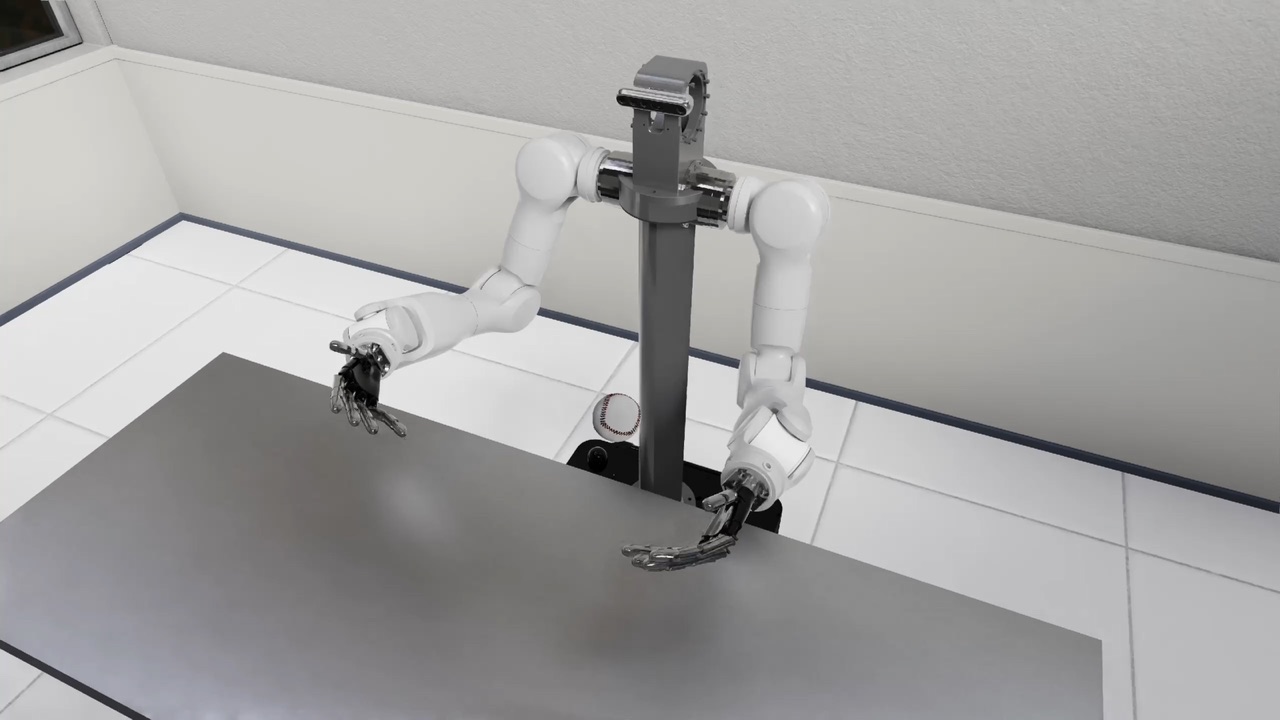
For years, the robotics industry has operated under a comfortable, highly visual illusion. Companies routinely showcase impressive, heavily edited videos of humanoid robots folding laundry, sorting objects, or making coffee, suggesting that generalist robot manipulation is on the verge of widespread commercial deployment. Investors and the public alike have been captivated by these demonstrations, pouring capital into startups promising the imminent arrival of artificial general intelligence in physical form. However, a closer look at the underlying evaluation methods reveals a fragmented and often forgiving testing environment. The reality, stripped of marketing polish, is that current models are still far from reliable, generalizable, and deployable. The introduction of a new, rigorous testing standard has just quantified exactly how far we have left to go, and the numbers are a stark wake-up call for the entire sector.
What is the RoboDojo Benchmark?
RoboDojo is a unified simulation and real-world benchmark designed for the comprehensive evaluation of generalist robot manipulation policies. Released in July 2026, it tests models across 42 simulation tasks and 18 real-world tasks using three different robot embodiments, providing a standardized framework to accurately measure progress in embodied AI.
The Core Facts of the Release
In early July 2026, a massive coalition of researchers from top global universities introduced RoboDojo to the robotics community. The foundational research paper was submitted to arXiv on July 5, 2026, and the project gained wider industry attention following a detailed report published on July 8, 2026. The benchmark integrates and evaluates 30 representative robot manipulation policies, providing a broad assessment of the current state of the art. The models tested include prominent names such as Hy-Embodied-0.5-VLA, Spatial Forcing, Pi_05, X-VLA, X-WAM, Xiaomi-Robotics-0, StarVLA, GigaWorld-Policy, GalaxeaVLA, and LingBot-VLA.
The headline results from these evaluations are sobering and directly challenge the optimistic narratives prevalent in the industry. In the simulation environment, the best performing model, Hy-Embodied-0.5-VLA, achieved an average success rate of only 8.80%. In the real-world testing phase, a single-source report claims the best model, π0.5, reached a 12.8% success rate. To put these figures into perspective, the same report notes that human experts achieve a 100% success rate in the real world and a 76.03% success rate in simulation. These single-digit and low double-digit success rates for AI models highlight a massive gap between current capabilities and the requirements for production-ready generalist robots.
The Illusion of Progress in Embodied AI
The robotics sector has long suffered from a measurement problem. Progress in artificial intelligence is typically driven by rigorous, standardized benchmarks. In natural language processing, benchmarks like MMLU or HumanEval provided clear targets that drove rapid iteration and improvement. In robotics, however, evaluation has historically been siloed, inconsistent, and prone to overfitting.
Many research teams and companies have relied on proprietary testing environments or benchmarks that evaluate only a narrow slice of capabilities. A common practice has been to test models exclusively in simulation, where physics can be simplified and unexpected variables are eliminated. Alternatively, real-world tests are often conducted in highly constrained laboratory settings, with objects placed in exact starting positions and lighting carefully controlled. When a robot succeeds in these specific, rehearsed scenarios, it is easy to extrapolate that success to general capabilities.
This fragmented approach has created an illusion of rapid progress. If every company uses its own ruler to measure success, everyone can claim to be winning the race. RoboDojo disrupts this dynamic by introducing a unified sim-and-real benchmark that evaluates generalist robot manipulation policies across a wide array of tasks and embodiments. By forcing models to perform in both simulated and physical environments, and across different types of robotic hardware, RoboDojo strips away the advantages of overfitting and exposes the true baseline of current technology.
Deconstructing the Evaluation Dimensions
To understand why the success rates are so low, it is necessary to examine the specific dimensions that RoboDojo evaluates. The simulation benchmark is designed to test five critical areas of robot manipulation, each representing a fundamental requirement for real-world deployment.
First, generalization tests a model's ability to handle novel objects, environments, and tasks that it did not encounter during training. A true generalist robot must be able to operate in a kitchen it has never seen before, manipulating utensils of varying shapes and sizes. The low scores in RoboDojo indicate that current models struggle significantly when moved outside their training distribution.
Second, memory evaluates whether a robot can retain information over time and use it to inform future actions. For example, if a robot opens a drawer to find a tool, it should remember that the drawer is open and where the tool is located if it needs it again later. Current policies often lack the persistent memory required for complex, multi-step tasks.
Third, precision is critical for tasks requiring fine motor skills, such as inserting a peg into a hole or grasping a delicate object without crushing it. While large vision-language-action models are good at understanding high-level commands, translating those commands into millimeter-accurate physical movements remains a profound challenge.
Fourth, long-horizon execution tests a robot's ability to complete tasks that require a sequence of dependent actions over an extended period. Making a cup of coffee involves finding a mug, placing it under the machine, inserting a pod, and pressing a button. If a model fails at any single step, the entire task fails. The compounding probability of error over long horizons is a primary reason for the low overall success rates.
Finally, open-vocabulary instruction following evaluates whether a robot can understand and execute commands expressed in natural, unstructured language. Instead of relying on pre-programmed commands, the robot must interpret the user's intent from varied phrasing. While large language models have improved this capability, grounding that linguistic understanding in physical actions is still an unsolved problem.
The Reality Check for Production Timelines
The implications of the RoboDojo benchmark extend far beyond academic curiosity; they directly impact the commercial timelines for embodied AI. For the past two years, the industry narrative has suggested that the integration of large language models with robotic control systems would rapidly solve the manipulation problem, leading to the imminent deployment of general-purpose robots in homes and factories.
The data from RoboDojo provides a necessary correction to this timeline. An 8.80% success rate in simulation and a reported 12.8% success rate in the real world indicate that current models are still in the early stages of basic research, not the final stages of productization. The benchmark results show that current models are still far from reliable, generalizable, and deployable generalist robot manipulation.
This means that production-ready generalist robots are still a significant distance away. Companies promising to deliver autonomous, general-purpose humanoids for consumer use within the next year or two are likely underestimating the technical hurdles that remain. The path to commercialization will require fundamental breakthroughs in model architecture, data collection, and physical reasoning, rather than just scaling up existing approaches.
Standardizing the Evaluation Framework
Before RoboDojo, the industry relied on a patchwork of benchmarks, each with its own strengths and limitations. Understanding this landscape is crucial for appreciating the contribution of the new unified standard.
Existing benchmarks have often been limited in systematically evaluating generalist robot manipulation policies. They frequently rely on simple tasks and are typically conducted only in simulation or only in the real world. For instance, LIBERO is a well-regarded benchmark designed specifically for studying knowledge transfer in multitask and lifelong robot learning problems. While valuable for its specific focus, it operates entirely in simulation.
Similarly, SimplerEnv provides a suite of open-source simulated evaluation environments for common real robot manipulation setups. It has been instrumental in allowing researchers to test policies in standardized virtual settings, but it does not bridge the gap to physical hardware. BEHAVIOR is another comprehensive simulation benchmark for human-centered robotics, including 1,000 everyday household activities. Its scale is impressive, but again, it remains confined to the virtual world.
RoboDojo's primary innovation is its unified approach. By providing 42 simulation tasks and 18 real-world tasks across 3 robot embodiments, it forces models to prove their capabilities in both domains. This dual requirement is essential because success in simulation rarely translates directly to success in the real world, a phenomenon known as the sim-to-real gap. By measuring both simultaneously, RoboDojo provides a much more accurate picture of a model's true utility.
Comparing the Benchmark Landscape
 Strategic Procurement and Deployment Considerations
For engineering leaders, procurement officers, and venture capitalists evaluating robotic manipulation platforms, the RoboDojo results serve as a critical reality check. When vendors present high success rates or flawless demonstration videos, it is imperative to ask whether those metrics were achieved in isolated, over-fitted environments or against a rigorous, unified benchmark like RoboDojo. The single-digit success rates in generalized simulation tasks indicate that current vision-language-action models require significant custom engineering, constrained environments, and extensive site-specific training to function reliably in production.
Organizations should adjust their deployment timelines and budget accordingly. Relying on out-of-the-box generalist capabilities is premature and carries significant operational risk. Instead, strategic investments should focus on platforms that offer robust data collection, efficient fine-tuning pipelines, and clear pathways for handling edge cases. Acknowledging that the path to autonomous, open-vocabulary manipulation will be iterative and require substantial ongoing validation is essential for building sustainable robotics programs.
Expert Perspectives on the Benchmark
"The introduction of RoboDojo forces the industry to confront the actual state of generalist manipulation, stripping away the polish of curated demonstrations to reveal the raw, single-digit success rates that define our current technological frontier," notes a robotics industry analyst. This level of transparency is exactly what the sector needs to move past the hype cycle and focus on solving the hard, unglamorous problems of physical interaction.
The Collaborative Force Behind RoboDojo
The creation of a benchmark as comprehensive as RoboDojo requires resources and expertise that exceed the capacity of most individual research labs. Consequently, the project is a massive collaboration among researchers from leading academic institutions worldwide.
The team identity reflects a global effort, including researchers from HKU MMLab, UC Berkeley, Tsinghua University, Peking University, Stanford University, MIT, UNC Chapel Hill, Princeton University, Carnegie Mellon University, National University of Singapore, Nanyang Technological University, The Chinese University of Hong Kong, Imperial College London, Shanghai Jiao Tong University, Northwestern University, HKUST (Guangzhou), Zhejiang University, and Yale University.
Key people driving the initiative include Tianxing Chen from HKU MMLab and Yue Chen from Peking University, alongside Zixuan Li, Junyuan Tang, Kailun Su, Haoran Lu, Weijie Wan, Baijun Chen, and Songling Liu. This team brings significant prior experience to the project, having previously developed the RoboTwin series benchmark. Their earlier work, RoboTwin 2.0, serves as a scalable framework for data generation and benchmarking in bimanual robotic manipulation, laying the groundwork for the more expansive sim-and-real approach realized in RoboDojo.
The scale of this collaboration underscores the difficulty of the problem. Building the physical setups, designing the simulation environments, integrating 30 different manipulation policies, and running the evaluations requires a monumental coordination of effort. The fact that it took 18 top-tier universities to build this benchmark highlights why individual companies have struggled to create objective evaluation standards on their own.
As the robotics industry continues to push toward general-purpose machines, benchmarks like RoboDojo will be the true arbiters of progress. They provide the standardized, reproducible, and comprehensive evaluation framework necessary to accurately measure advancements and identify the shortcomings in current models. Until success rates on these rigorous tests climb out of the single digits, the dream of the deployable generalist robot remains firmly in the future.
Sources
1. RoboDojo benchmark project page: https://robodojo-benchmark.com/
2. RoboDojo paper (arXiv 2607.04434): https://arxiv.org/abs/2607.04434
3. RoboDojo GitHub repository: https://github.com/robodojo-benchmark/RoboDojo
4. 36Kr analysis of the benchmark results (Chinese): https://36kr.com/p/3886887316500745
5. RoboTwin project page: https://robotwin-platform.github.io/
6. LIBERO benchmark project page: https://libero-project.github.io/main.html
7. SimplerEnv project page: https://simpler-env.github.io/
8. Stanford BEHAVIOR benchmark: https://behavior.stanford.edu/index.html














