NDRC & MOHRSS Release 15th Five-Year Employment Plan: AI and Robotics Displacement Addressed
China's National Development and Reform Commission (NDRC) and the Ministry of Human Resources and Social Security (MOHRSS) jointly released a Q&A on June 18, 2026, explaining the State Council's newly issued 15th Five-Year Employment Priority Strategy Plan. The plan explicitly addresses the challenge of adapting to artificial intelligence development to promote employment and entrepreneurship.
To understand why this plan matters, it helps to understand the pressure it is responding to. China is simultaneously pursuing two goals that are in tension with each other. On one hand, the 15th Five-Year Plan adopted at the National People's Congress in March 2026 calls for AI to be deployed throughout the economy, mentions artificial intelligence more than 50 times, and explicitly targets humanoid robots, embodied AI, and autonomous systems as strategic priorities. On the other hand, China faces a labour market under significant stress: approximately 12.7 million university graduates entered the job market in 2026, youth unemployment among highly educated graduates stands at around 70% of total youth unemployment, and middle-aged workers with limited education are experiencing prolonged joblessness as traditional manufacturing automates. The employment plan is Beijing's attempt to manage both sides of this equation at once.
The plan was issued by the State Council and covers the 2026–2030 period, making it the employment counterpart to the broader 15th Five-Year Plan. It sets five overarching goals: maintaining overall employment stability; ensuring more adequate employment opportunities (including guaranteeing at least one employed person per zero-employment household); creating a fairer employment environment by eliminating unreasonable restrictions and employment discrimination; optimising employment structure by increasing the urban employment share; and improving human-job matching efficiency through modernised vocational training and labour market services. Ten quantitative indicators are set, including targets for urban new employment, surveyed unemployment rates, and the urban employment share of total employment.
The plan deploys nine priority task areas. The first and most significant for the technology sector is the directive to ‘adapt to AI development to promote employment and entrepreneurship mandate that explicitly frames AI not only as a job-creation tool but as a structural force requiring active policy management. This includes developing new AI-related occupations, broadening employment opportunities in traditional industries through AI adoption, and strengthening training and career-transition support for workers whose roles are being automated. The second priority area calls for stabilising employment in labour-intensive industries while simultaneously expanding the service sector's capacity to absorb workers and tapping employment potential in emerging fields, a balancing act that reflects the dual-track nature of China's current automation transition.
The remaining seven priority areas address the human capital and institutional infrastructure needed to support this transition. Large-scale vocational skills training is mandated to improve the alignment between education supply and actual labour demand, a structural gap that has widened as manufacturing automation has outpaced the retraining system. Dedicated support is directed at university graduates, migrant workers and veterans, the three groups most exposed to structural displacement. Flexible employment and new employment forms (platform-based work, gig economy roles) are to be actively developed as absorption channels for displaced workers, with new public service and rights-protection frameworks to accompany them. The plan also calls for strengthening employment monitoring and early warning systems to detect and respond to emerging displacement risks before they become crises.
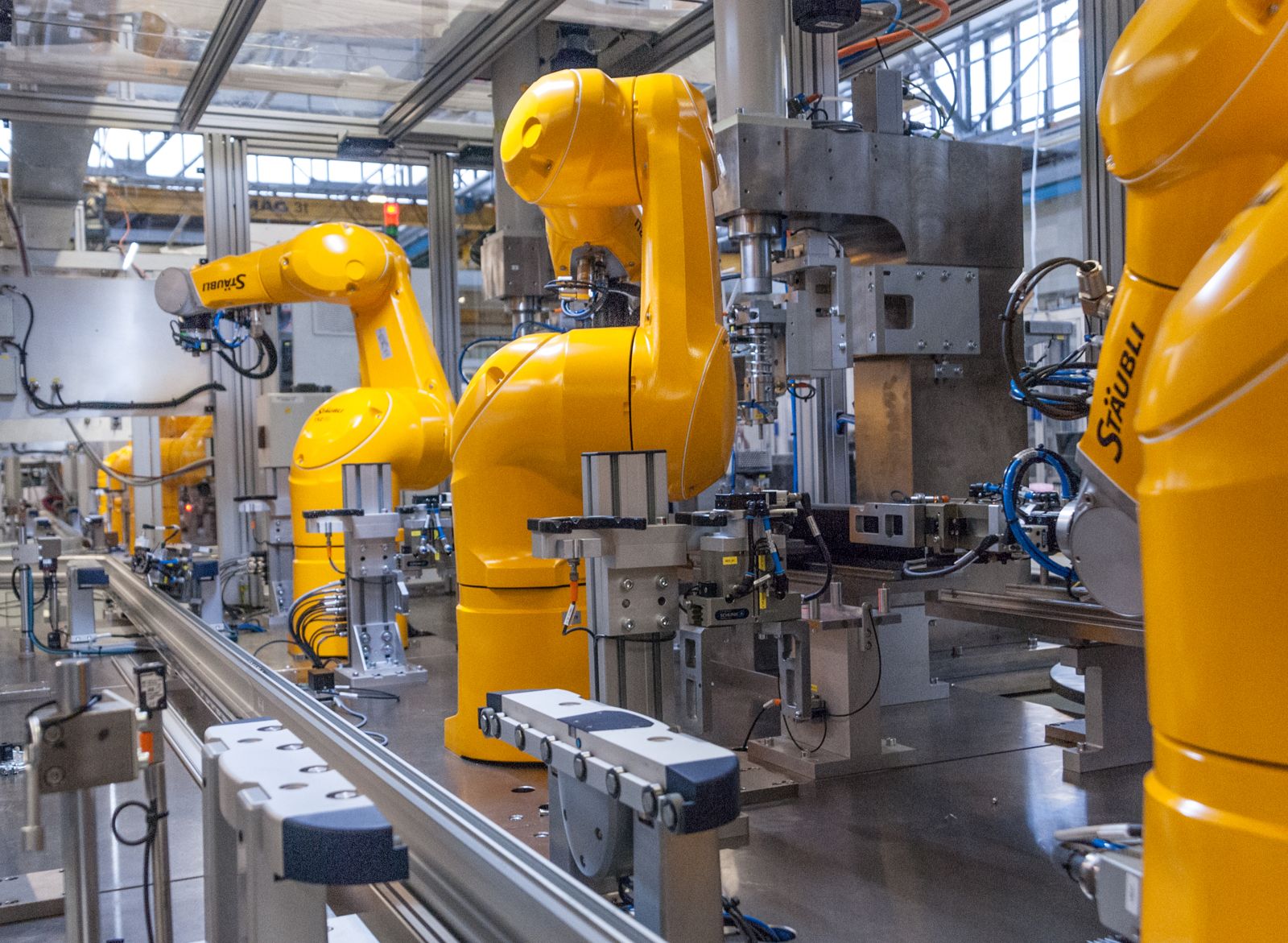
For the robotics and embodied AI sector, the timing and framing of this plan carry specific significance. On the same day the NDRC-MOHRSS Q&A was published, the National Bureau of Statistics confirmed that China's industrial robot monthly output exceeded 100,000 units for the first time 101,150 units in May 2026, up 27.9% year-on-year. The two data points, read together, describe a government that is fully aware of the displacement dynamic it is creating. The 15th Five-Year Plan accelerates robot deployment; the Employment Priority Strategy Plan builds the safety net and retraining infrastructure to manage the consequences. This is not a contradiction, it is a deliberate sequencing of industrial policy and social policy.
The plan's explicit mention of AI-driven employment and entrepreneurship as a priority task area also signals an emerging policy direction that goes beyond displacement management. Beijing is actively trying to position AI and robotics adoption as a net employment creator in new sectors, not merely a destroyer of jobs in old ones. This framing that AI creates new occupations even as it eliminates existing ones to be consistent with the broader 15th Five-Year Plan's ‘AI+ action plan’, which links AI deployment to science, industry, culture, public services, and governance across the economy. The employment plan operationalises that vision at the labour market level.
The broader context is China's demographic challenge. Reuters noted in its March 2026 analysis of the 15th Five-Year Plan that the AI and robotics push reflects, in part, China's need to grapple with a rapidly ageing workforce and a looming demographic crisis. The employment plan's emphasis on the silver economy, elder-care services, and flexible employment forms for older workers reflects the same demographic pressure from the other direction. China is simultaneously deploying robots to compensate for a shrinking working-age population and building policy infrastructure to manage the transition for the workers those robots are replacing. The 15th Five-Year Employment Priority Strategy Plan is the formal acknowledgment that both tasks are now government priorities of equal standing.
Primary Sources:
1. NDRC Official Website — Q&A on the 15th Five-Year Employment Priority Strategy Plan (June 18, 2026)
5. China Daily — Employment crucial for 15th Five-Year Plan period (June 7, 2026)
Disclaimer: All editorial content is independently written based on publicly available Chinese and English-language sources. Quoted material is attributed to its original publisher.