
Kraken Technology Group Reaches Unicorn Status With $175M Series B
UK-based Kraken Technology Group has secured a $175 million Series B funding round led by DTCP, reaching a $1 billion valuation as it rapidly scales uncrewed surface vessel production across NATO countries.
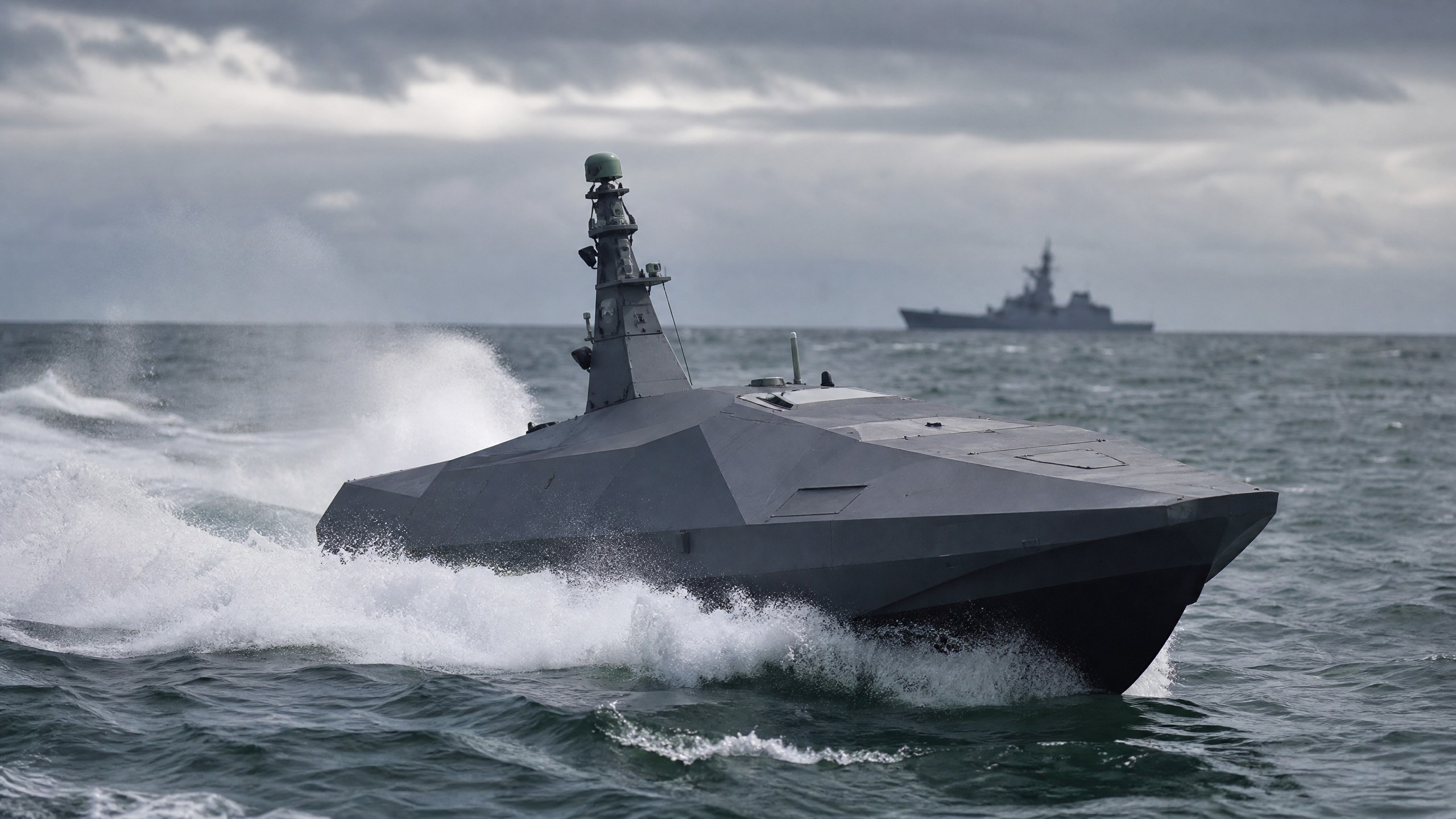
UK-based Kraken Technology Group announced on July 9, 2026, that it has closed a $175 million Series B financing round, achieving a $1 billion valuation [1]. The round was led by DTCP Defence, with participation from the British Business Bank, the NATO Innovation Fund, Rheinmetall, and the Inocea Group [1]. This capital injection propels the uncrewed surface vessel manufacturer into unicorn status and signals a significant acceleration in the localized manufacturing of autonomous maritime platforms across NATO member states [1].
The funding follows a period of rapid operational expansion for Kraken. The company’s K3 Scout uncrewed surface vessel is currently in series production through Rheinmetall Kraken GmbH, a joint venture operating out of the Blohm+Voss shipyard in Hamburg [1]. Simultaneously, the larger K5 Kraken and K7 Sabre platforms are being manufactured in the United States under a partnership with Anduril Industries [1]. These platforms are not merely developmental prototypes. They are actively deployed in multiple ongoing conflicts, validating their operational utility in high-threat environments [1]. Furthermore, the company secured a $49 million Other Transaction Authority contract from USSOCOM in November 2025, underscoring the immediate demand for its capabilities [1].
The scale of the Series B matters because it places Kraken in a different category from many robotics and defense autonomy companies that remain trapped between successful demonstrations and reliable production. A $175 million raise is large enough to support manufacturing expansion, supplier qualification, systems integration, hiring, and the less visible but essential work of compliance, testing, and sustainment. In defense robotics, the ability to produce a credible prototype is only the beginning. Buyers need repeatable quality, documented performance, cyber hardening, spares, training, mission planning tools, and a clear path for fleet support. Kraken’s valuation suggests investors believe the company is moving beyond proof of concept and into the more demanding phase of industrial execution.
The Shift to Scaled Production
The Series B funding marks a transition for Kraken Technology Group from a specialized developer of high-performance maritime systems to a scaled manufacturer capable of meeting the volume demands of modern naval warfare. The participation of major defense primes like Rheinmetall and Anduril, alongside strategic funds like the NATO Innovation Fund, indicates that the bottleneck in uncrewed surface vessel deployment is no longer technological feasibility, but production capacity.
Kraken’s approach to this challenge relies on distributed, localized manufacturing. By establishing series production of the K3 Scout in Germany through the Rheinmetall joint venture, and manufacturing the K5 and K7 models in the United States with Anduril, Kraken is building a resilient supply chain that aligns with the strategic priorities of its primary customers. This model allows for rapid scaling while satisfying domestic production requirements in key NATO markets. The ability to produce these vessels in multiple geographic locations mitigates the risk of supply chain disruptions, a critical factor in modern defense procurement.
This distributed manufacturing strategy also facilitates closer collaboration with regional defense forces, ensuring that the platforms can be rapidly customized and integrated into specific national command structures. For NATO customers, local production is not simply a political preference. It can influence procurement speed, technology transfer, maintenance access, sovereign control, and the ability to surge production during crisis conditions. In maritime autonomy, those factors are especially important because vessels must be adapted to specific littoral environments, communications architectures, rules of engagement, payload requirements, and naval doctrine.
The shift to scaled production also changes Kraken’s risk profile. Earlier stage robotics firms are usually judged by engineering milestones, demonstrations, autonomy performance, and early customer traction. A company entering scaled defense production is judged by different criteria. Can it hold tolerances across repeated builds? Can it source engines, sensors, composites, batteries, communications equipment, and control electronics under pressure? Can it pass customer acceptance tests repeatedly? Can it train operators and maintainers at the pace required by fleet adoption? Kraken’s new financing gives it more resources to answer those questions, but it also raises expectations. Unicorn status in defense robotics is not just a badge of investor confidence. It is a commitment to execute at industrial speed.
The Economics of Attritable Mass
The valuation of Kraken Technology Group at $1 billion reflects a fundamental shift in naval procurement strategies. Traditional naval power relies on small numbers of highly exquisite, expensive, and heavily crewed vessels. These assets deliver enormous capability, but they are costly to build, slow to replace, and politically sensitive to risk. Recent conflicts have demonstrated the vulnerability of large platforms to asymmetric threats, including drones, missiles, sea mines, and electronic warfare. The loss of a single major surface combatant represents not only a massive financial blow, but also a significant strategic setback.
The response is a move toward “attritable mass,” deploying large numbers of relatively inexpensive, uncrewed systems that can overwhelm defenses, conduct persistent surveillance, and deliver kinetic or non-kinetic effects without risking human lives. Kraken’s uncrewed surface vessels, designed for high performance and cost efficiency, fit squarely into this new paradigm. The $175 million investment provides the capital necessary to produce these systems at the scale required to make attritable mass a practical option for NATO navies.
This shift alters the calculus of naval engagements. If an adversary must expend expensive interceptors, missiles, aircraft sorties, or crewed naval assets to counter lower-cost uncrewed systems, the exchange ratio can become strategically unfavorable for the defender. Even when an attritable vessel is destroyed, the operator may still gain valuable intelligence, force the opponent to reveal positions, exhaust ammunition, or create openings for other platforms. The economic asymmetry created by attritable mass is becoming a defining characteristic of modern maritime strategy.
The concept also changes how commanders think about persistence. Crewed ships and aircraft are constrained by human endurance, crew risk, maintenance cycles, and political concerns. Uncrewed surface vessels can be assigned to repetitive, dangerous, or dull missions with a different risk tolerance. They can patrol chokepoints, monitor harbors, screen high-value ships, inspect routes, deploy sensors, serve as decoys, or extend communications coverage. The most valuable use case may not be any single mission, but the ability to increase operational presence without a proportional increase in crewed force structure.
For robotics markets, this is a direct ARPI signal. Autonomous Robot Penetration Index relevance increases when a robotic system moves from isolated trials into real operational demand, when customers are willing to fund repeat purchases, and when production capacity becomes the limiting factor. Kraken’s round indicates that uncrewed maritime systems are entering that higher penetration phase in defense applications.
The Integration Challenge
While Kraken has secured the funding and manufacturing partnerships to produce uncrewed surface vessels at scale, the next critical phase will be the integration of these platforms into existing naval architectures. The challenge lies not just in building the boats, but in developing the secure communication networks, autonomous control systems, and operational concepts required to manage a fleet of uncrewed vessels in contested environments.
Industry observers should monitor how Kraken’s platforms integrate with broader command and control systems, particularly those developed by its partner Anduril, including the Lattice software platform. The ability to coordinate multiple uncrewed surface vessels with crewed assets and other uncrewed systems, including aerial and underwater vehicles, will be the ultimate determinant of operational effectiveness. The competition is no longer just about who can build the fastest or most durable hull. It is about who can provide the most robust, secure, interoperable, and mission adaptable autonomous system.
The integration of advanced sensors, edge computing capabilities, autonomy stacks, and secure data links will be the key differentiator in this rapidly evolving market. Maritime autonomy is uniquely hard because the ocean is not a clean operating environment. Saltwater, vibration, temperature swings, fog, storms, wave clutter, radar reflections, commercial traffic, fishing vessels, small craft, and contested spectrum all complicate autonomy. A vessel must perceive the environment, classify objects, comply with navigation rules where appropriate, execute mission goals, and react to threats. It must also do so when GPS is degraded, communications are jammed, or operators cannot maintain continuous control.
The industry should also watch how Kraken and its partners handle payload modularity. Defense customers often want common hulls that can support different mission packages, such as intelligence, surveillance, reconnaissance, electronic warfare, mine countermeasures, logistics, communications relay, or strike payloads. A strong platform is not only fast and survivable. It should be adaptable enough to remain useful as mission requirements evolve. In this market, payload flexibility can lengthen product life, reduce customer risk, and make procurement easier for allied navies that share common needs but differ in doctrine and budget.
The Industrialization of Autonomous Warfare
The Kraken Series B is a clear indicator that the autonomous warfare sector is moving from the venture capital fringes into the industrial mainstream. The involvement of established defense contractors like Rheinmetall and sovereign-backed initiatives like the British Business Bank and the NATO Innovation Fund demonstrates that governments and traditional primes are now actively investing in the infrastructure required to produce autonomous systems at scale.
This represents a structural shift in the defense industrial base. The focus is expanding beyond the development of novel AI algorithms to the hard realities of manufacturing, supply chain management, quality assurance, safety certification, and localized production. The companies that will dominate this new era are those that can combine cutting-edge autonomous technology with the industrial capacity to deliver reliable systems in volume. This industrialization phase will likely see further consolidation and strategic partnerships as smaller technology firms seek the manufacturing muscle of established defense primes to meet the growing demand for autonomous platforms.
The transition from prototype to production is the new proving ground for defense technology startups. In software markets, scaling can often happen rapidly once product market fit is established. In robotics, scaling is constrained by physical components, factory throughput, test infrastructure, supplier reliability, regulatory requirements, operator training, and maintenance ecosystems. Defense robotics adds another layer, including export controls, classified integration, cyber assurance, safety reviews, and customer-specific mission systems. Kraken’s Series B suggests investors are backing not only a product line, but an industrial operating model capable of surviving those constraints.
The broader signal extends beyond the maritime domain. Aerial drones, ground robots, autonomous logistics vehicles, counter-drone systems, loitering munitions, and underwater systems are all moving through similar industrialization cycles. The defense market is learning that autonomy only matters if it can be fielded in meaningful numbers. A brilliant system that cannot be manufactured, sustained, or integrated is strategically limited. Kraken’s financing reinforces the point that the next competitive advantage in robotics may come from the fusion of autonomy engineering with production discipline.
Strategic Implications: A Procurement Perspective
For procurement managers and operations leaders evaluating autonomous maritime systems, the Kraken funding round offers several actionable insights. First, the distributed manufacturing model, producing different platforms in Germany and the United States, highlights the importance of supply chain resilience and the need to align procurement with localized production capabilities. Buyers should prioritize vendors that can guarantee delivery even in disrupted global supply environments. The ability to source platforms from multiple allied nations provides a critical buffer against geopolitical shocks and logistical bottlenecks.
Second, the active deployment of Kraken’s platforms in ongoing conflicts provides a critical data point for evaluation. Procurement decisions should be weighted heavily toward systems with proven operational records rather than those relying solely on controlled demonstrations. The gap between demo performance and deployment reality remains significant in the autonomous sector. Systems that have been tested in the crucible of active conflict offer a level of reliability and operational maturity that cannot be replicated in peacetime exercises.
Finally, the partnership with Anduril suggests that the value of an uncrewed surface vessel lies as much in its software integration as its physical performance. When evaluating platforms, buyers must assess the system’s ability to interface with existing and future command and control networks. The hardware is only the delivery mechanism. The software, data layer, autonomy logic, and network resilience are central to the capability. Procurement strategies must evolve to evaluate the entire system architecture, including data links, autonomous algorithms, operator interfaces, cybersecurity posture, and maintainability, rather than focusing solely on the physical specifications of the vessel.
A serious procurement review should also examine sustainment. How quickly can the vendor deliver spares? Can damaged vessels be repaired at forward locations? Are mission systems modular enough to replace in the field? Can software updates be deployed securely? What training burden is required for operators? How does the system perform when communications are degraded? These questions are not secondary. They determine whether a fleet of autonomous maritime systems becomes an operational asset or a maintenance burden.
High Penetration Signal
Kraken’s funding round meets the core ARPI standard because it demonstrates progress across several factors used to assess autonomous robot penetration. The first factor is capital intensity. A $175 million Series B is large enough to support manufacturing scale and suggests confidence from strategic investors. The second factor is production readiness. The company is not describing a single laboratory platform. It is producing the K3 Scout through a Rheinmetall joint venture in Germany while manufacturing larger platforms in the United States with Anduril [1].
The third factor is deployment evidence. Active use in multiple ongoing conflicts is a stronger signal than a controlled demonstration, because it suggests the systems are being exposed to real operational stress [1]. The fourth factor is procurement validation. The $49 million USSOCOM Other Transaction Authority contract indicates customer demand from a sophisticated defense buyer [1]. The fifth factor is ecosystem integration. Partnerships with Rheinmetall and Anduril position Kraken inside a wider industrial and software network, which matters for interoperability and fleet adoption.
The main risk factor remains autonomy robustness in contested environments. The more autonomous vessels are used in GPS-degraded, jammed, or cyber-contested domains, the more pressure falls on onboard perception, edge processing, mission autonomy, and secure fallback modes. A company can score highly on production and market pull while still facing hard technical questions around resilience. That tension is exactly why Kraken’s next phase is important. Scaling the hulls is essential, but scaling trusted autonomy is the decisive test.
From Speedboats to Smart Swarms
Imagine a traditional navy as a few very large, very expensive chess pieces, like the queen or the rooks. They are powerful, but if you lose one, it is a massive blow. Now imagine adding hundreds of pawns that can move on their own, communicate with each other, and help control the board.
Kraken Technology Group builds the smart pawns. They are fast, uncrewed boats that can do dangerous jobs, like scouting ahead, watching an area, carrying equipment, or distracting an opponent, without putting sailors at risk. The $175 million they just raised is like funding more factories and supply chains to produce these smart boats faster, because navies have realized that having many capable, lower-cost uncrewed systems can be better than relying only on a few extremely expensive ships.
This approach allows a navy to cover more area, take more risks, and complicate an opponent’s decisions. If an adversary sees one large crewed ship, the target is obvious. If an adversary faces many fast autonomous vessels operating across a wider area, the situation becomes harder to read and harder to counter. The value is not only in each individual boat. The value comes from the network of boats, sensors, operators, and software working together.
It Is Not Just About the Boat
A common misconception in coverage of autonomous maritime systems is the focus on the physical specifications of the vessel, such as top speed, range, endurance, or payload capacity. These metrics are important, but they miss the core challenge of autonomous naval warfare.
The hard truth is that building a fast boat is relatively easy compared with building a reliable, secure, and autonomous command and control network that can operate in a GPS-denied and electronically jammed environment. The true value of Kraken’s platforms will be determined not only by their hull design, but by the resilience of their software and their ability to operate effectively when communications are degraded.
The focus must shift from the platform to the network. An autonomous vessel that loses its connection to the command center or cannot navigate without GPS can become a liability, regardless of how fast it can travel. The real innovation lies in the algorithms that allow these vessels to make independent decisions, coordinate with other assets, avoid hazards, and complete missions even when the electronic environment is hostile.
That does not mean the hull is unimportant. Maritime hardware still has to survive punishing conditions, maintain speed in rough seas, protect sensitive electronics, support payload swaps, and remain maintainable in forward environments. But the strategic advantage will belong to vendors that can merge rugged marine engineering with trusted autonomy, secure networking, and rapid production. Kraken’s new funding gives it the resources to compete on that full stack. The next test is execution.
References
Kraken Technology Group Series B Announcement, July 9, 2026.
Disclaimer: This article is for informational purposes only and does not constitute financial, investment, or technical advice.














