CIDI expands heavy-duty work robots across industrial sites
CIDI Intelligent Driving reported first-half 2026 revenue of RMB 804 million, approximately US$112 million, alongside 23,000 cumulative smart-product shipments. The Hunan-based company has deployed more than 1,900 unmanned mining trucks across nearly 40 mines and is extending into excavation, explosive-loading, molten-metal and tunnelling robots. The figures offer procurement teams evidence of growing activity in heavy-duty physical AI, while leaving task-level operating economics, safety data and utilization rates undisclosed.
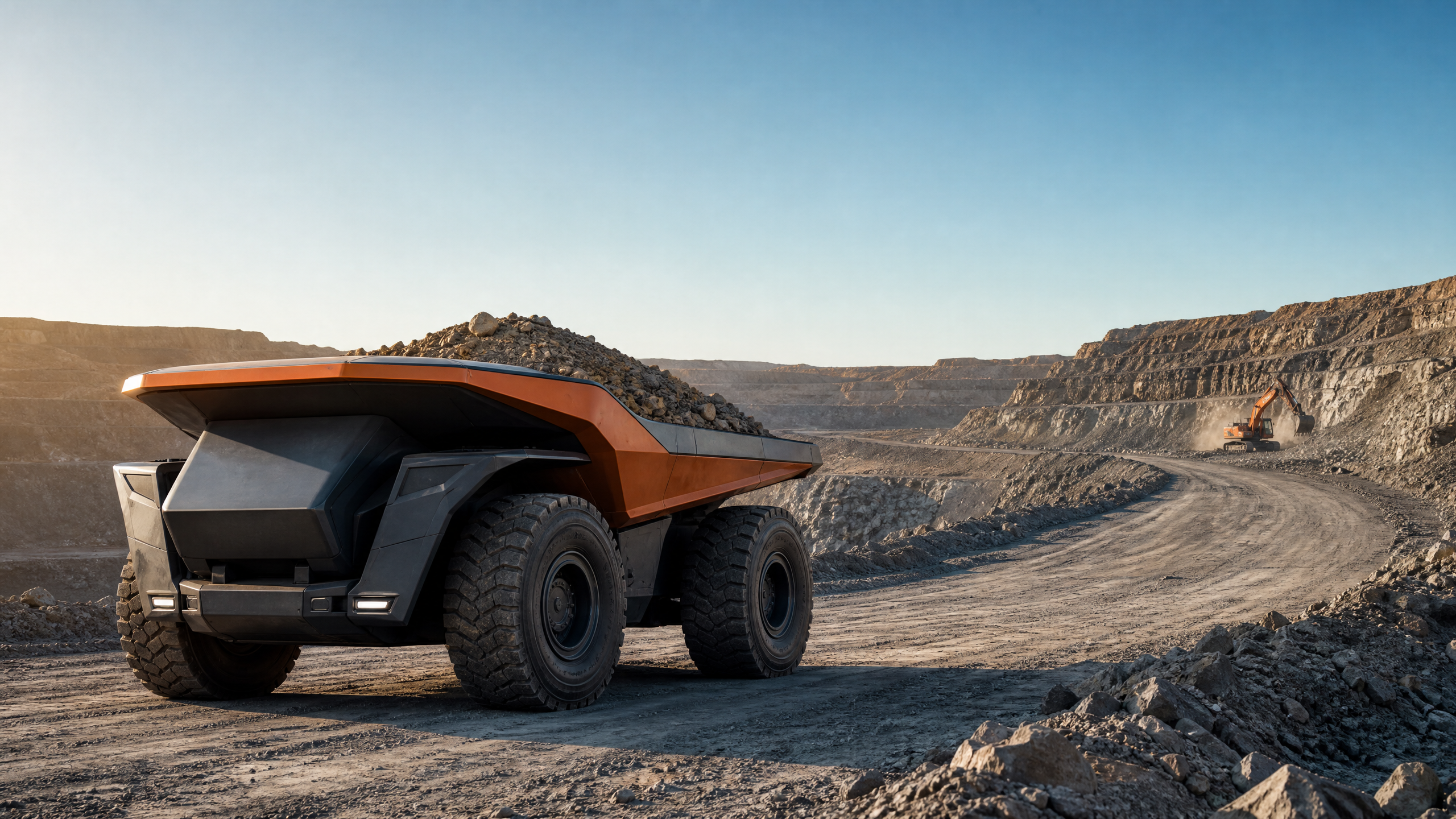
CIDI Intelligent Driving reported first-half 2026 revenue of RMB 804 million, approximately US$112 million, up 97 percent year-on-year, and gross profit of RMB 212 million, approximately US$30 million, up 204 percent. Cumulative smart-product shipments reached 23,000, with more than 3,400 autonomous vehicles delivered or pending delivery and over 1,900 unmanned mining trucks across nearly 40 mines.
Shipments Anchor Credibility
CIDI released its first half-year report after listing in Hong Kong and coupled the financials with production disclosures that matter to operators. The company reports 23,000 cumulative smart-product shipments across its portfolio. Within that, autonomous-driving vehicles delivered or pending delivery exceed 3,400 units. Unmanned mining-truck shipments exceed 1,900 units, tied to operations at nearly 40 mines worldwide. The work-robot business is earlier but moving. Thirty-four excavation robots have shipped. An open-pit explosive-loading robot has been produced. A molten-metal ladle robot is operating in the field. Research and manufacturing of an underground mining-tunnelling robot have been completed.
The cross-sector push spans resource extraction and transport, logistics, major infrastructure and traffic engineering. The company points to Australia, Brazil and Indonesia as focal international markets. These are venues where long routes, repeatable tasks and controlled zones can favor supervised autonomy and teleoperation.
The shipment totals and mine count do not settle questions about safety performance, duty-cycle utilization or maintenance intensity. They do show that hardware is leaving the factory and moving into real environments. For heavy-industry buyers, that is a basic filter. Many vendors can show videos. Few can cite units at mines, on routes or in yards.
"Hardware shipped is the only real proxy for traction in heavy robotics today."
The most notable data point is the 1,900 unmanned mining trucks. This category has a defined operating design domain and existing supervisory models in open pits. It is also capital intensive, with clear productivity levers tied to consistent haul cycles. Excavation, tunnelling and molten-metal handling are more varied tasks with greater environmental variability, which explains the lower volumes and the careful language around field operations and engineering completion.
A Quiet Specialist With Big-field Ambitions
CIDI Intelligent Driving is headquartered in Hunan Xiangjiang New Area. The company began with autonomous-driving systems and is extending into heavy-duty physical AI work robots for resource extraction and transport, logistics, major infrastructure and traffic engineering. The portfolio spans autonomous control stacks, drive-by-wire kits, fleet management software, and purpose-built robots for excavation, explosive loading, industrial ladling and underground tunnelling. Its commercial model combines direct deployments with system integration partners and site operators.
For many outside China, the name remains lesser-known. The company’s profile differs from consumer-facing autonomous brands. It targets long-lived assets, multi-shift operations and defined routes. Listing in Hong Kong provides access to capital suited for asset-heavy production and global service expansion. The stated international focus on Australia, Brazil and Indonesia aligns with markets that combine mining depth, logistics demand and operating areas where autonomy can be bounded and supervised.
The company’s communications lean on unit counts and mine coverage rather than speculative milestones. That tack matches operator priorities. Procurement teams do not buy slogans. They buy systems that run within site rules, meet outcome targets and slot into maintenance and safety regimes. The nut of the story is direct. A specialist that grew up in autonomy software is pushing into the heavy-robot segment with proof points in hauling and early traction in more variable tasks.
Procurement Moves From Proof To Production Pilots
The data from CIDI’s report gives procurement leaders some hard waypoints. There are measurable unit shipments, product categories that match defined tasks and a set of geographies where permitting and safety case formulation are familiar. The right next step for most buyers is not a multi-site rollout. It is a structured production pilot with clear gates.
Practical steps that reduce risk and speed learning include the following.
- Start with a single task in a contained zone. Examples are waste rock haul on a defined loop, a single excavator at a shovel face during day shift, or a ladle move along a pre-cleared corridor.
- Require a site-specific operating design domain document. This should list route geometry, grade, berm heights, lighting, weather patterns, road-crossings, radio shadows and manual vehicle interactions.
- Define human oversight and stop authority. Specify on-site supervisors, remote operators, escalation trees and mechanical overrides. Put those names and devices in the contract.
- Lock in communications and positioning baselines. Confirm network coverage with heat maps. Choose a positioning method that survives dust, rain and partial occlusion. Budget for redundant base stations and power.
- Specify exact interface points. The robot must talk to dispatch, weighbridge, traffic control and maintenance management. Require demonstrated data exchange using production systems, not test servers.
- Align hardware support with site realities. Stock critical spares on site. Identify service intervals. Set daytime response times and night shift response times. Verify training for operators, mechanics and electricians.
- Price for total cost of run. Ask for energy curves for real loads, tire or track wear rates, estimated consumables and parts lifetimes. Tie vendor payments to verified uptime and task throughput.
- Write reversibility into the plan. Include fallbacks to manual control, safe parking protocols and clear triggers for rolling back software versions or pausing operations.
Make the pilot long enough to cross seasons and shift patterns. Ninety-days period rarely captures dust season, wet season and extreme temperatures. Six to twelve months with a clear decision gate is realistic for mines and steel plants. For logistics yards, shorter cycles may suffice, but only if traffic patterns, lighting and weather variations are captured.
Procurement teams should also align on the data that drives acceptance. Agree on fair uptime calculations, utilization baselines and quality thresholds like load count accuracy, spot precision and route compliance. Put unambiguous definitions in the statement of work. That step prevents disputes when a robot is waiting for a loader and the vendor claims it is up, while operations claims it is not producing.
Tasks First, Autonomy Second
Heavy-duty physical AI is not magic. Think of it like a power tool with a smart throttle and sensors. It can do repetitive work with precision and it can avoid obvious hazards, but a human still sets the job, tunes the parameters and watches the gauges. The value appears when a site defines the task tightly and the machine can repeat it with few exceptions.
The current CIDI disclosures indicate a tiered approach. Unmanned mining trucks are a natural early deployment because haul roads can be mapped, bermed and controlled. Excavation robots must interact with changing faces, variable strata and human-operated equipment. An explosive-loading robot in an open pit can be protected by strict exclusion zones and clear procedures. A molten-metal ladle robot must manage extreme heat, splatter and tight aisles while coordinating with crane movements and pouring schedules. An underground tunnelling robot deals with cramped headings, shifting ventilation and intermittent communications.
In each case, success depends on clear task framing and reliable supervision. Autonomy software can handle route following, obstacle detection within design limits and repetitive tool paths. Teleoperation can manage exceptions. Remote assistance can resolve edge cases. The mix will vary by site and by shift. A planning cycle that assumes steady autonomous throughput all day and night is not realistic at early stages.
The breadth of CIDI’s work-robot portfolio is notable, but the volumes tell the truth about maturity. Thirty-four excavation robots shipped points to early fielding and process learning. The explosive-loading and tunnelling units are at the manufactured stage without volume deployment disclosed. The molten-metal ladle robot is operating, which is meaningful, but single-unit operation in a steel plant does not predict multi-line adoption.
Procurement and operations leaders should insist on a simple discipline. Define the task. Define the zone. Define the handoffs. Then test repeatability with real loads and real interruptions. A robot that runs flawlessly at 2 a.m. can struggle at 2 p.m. when traffic picks up, radios get busy and supervisors juggle competing priorities.
Data Gaps Keep ROI Opaque
The company’s financial growth in the first half of 2026 is strong. Revenue reached RMB 804 million, approximately US$112 million, up 97 percent year-on-year. Gross profit reached RMB 212 million, approximately US$30 million, up 204 percent. Those are material gains that reflect demand for automation and assisted driving in heavy assets. Shipments of unmanned mining trucks and autonomous vehicles support the story of scaling production.
The disclosed facts do not prove safety performance across shifts and seasons, operating economics at the task level, or sustained utilization above pilot norms. There is no published data on mean time between failures in dust and heat, sensor degradation in blasting zones, or the human hours required for remote supervision per robot-hour. There is also no breakdown of performance by region. Australia, Brazil and Indonesia present different rules for safety cases, union engagement, explosives handling and industrial permits. Success in one does not automatically transfer to the others.
The work-robot line is in early deployment. Thirty-four excavation robots shipped is a beginning, not a production-wide footprint. The production of an open-pit explosive-loading robot and the completion of research and manufacturing for a tunnelling robot are engineering milestones, not proof of sustained operations. A molten-metal ladle robot running in the field is a strong signal of capability, yet a single line in one mill can be the result of a champion team, not a repeatable template.
The prudent takeaway for procurement and operations leaders is plain. Evidence of shipments and current field work matters more than slogans. Evidence of cost per ton, incidents per thousand hours and remote-operator time per robot-hour will decide whether the technology pays. Ask for the second set of data. Design pilots to generate it cleanly. Hold vendors to it.
This analysis is provided for informational purposes only and does not constitute investment, legal, or procurement advice. RobotAIGeek does not endorse specific vendors or guarantee the performance of early-stage technologies.