
🏮 China’s Humanoid Robots at the New Year Gala: Spectacle or Signal?
China’s humanoid robots did not appear at a New Year gala to entertain. They appeared to normalize presence.

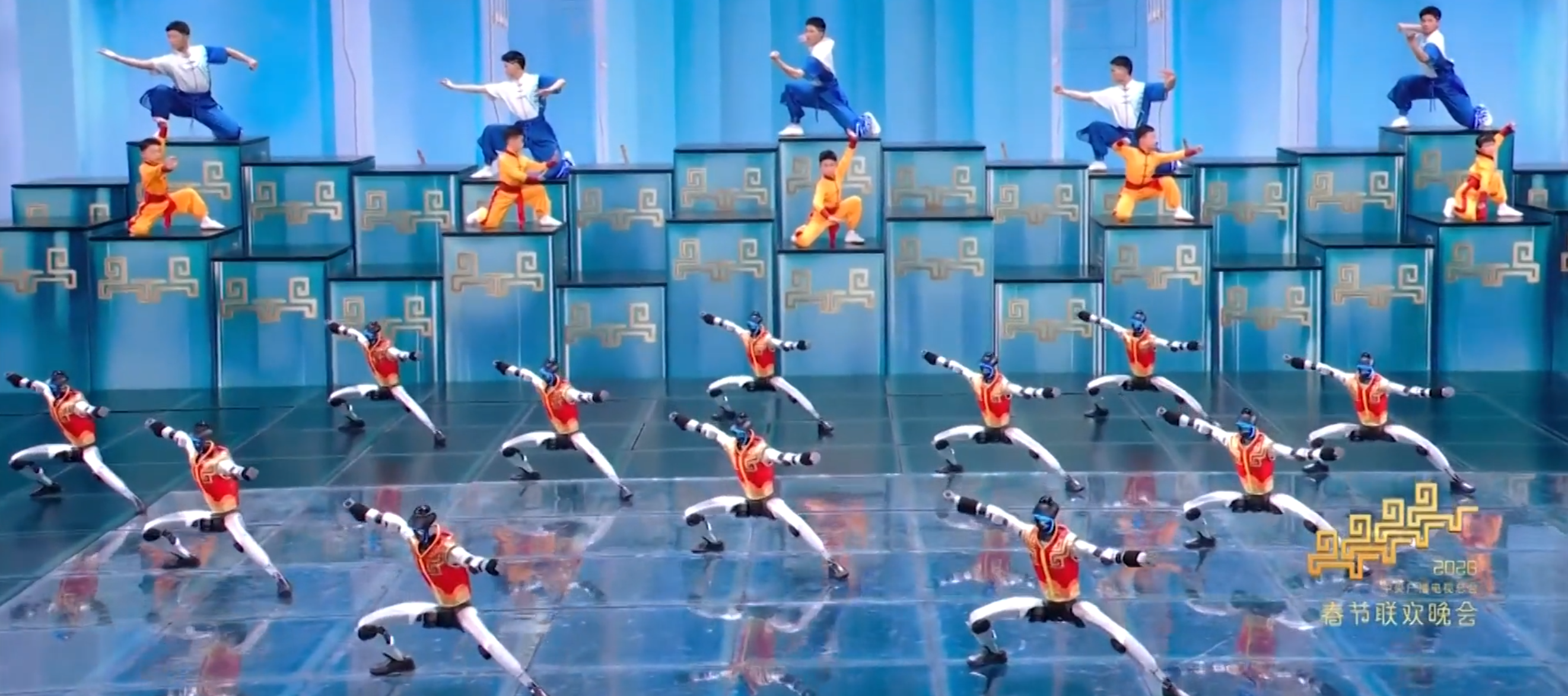
When humanoid robots perform at a nationally televised cultural event, the headline is entertainment — but the structural shift is industrial signaling. This was not about technical capability alone. It was about visibility, legitimacy, and embedding robotics into public imagination as ordinary infrastructure rather than experimental machinery.
This article explains why symbolic deployment often precedes scaled deployment — and why that matters.
Why This Matters
Humanoid robots dancing on stage do not change productivity metrics overnight.
But public normalization changes something deeper:
• Political confidence
• Investor perception
• Talent allocation
• Social acceptance
Large-scale robotics adoption does not begin with factories.
It begins with legitimacy.
When a state-linked cultural platform showcases humanoid robots, it reduces psychological friction. That friction — not hardware capability — is often the final barrier to scale.
What Is Technological Normalization?
Technological normalization is the process by which emerging systems move from novelty to accepted background infrastructure.
It occurs when:
• Media framing shifts from curiosity to routine
• Public fear decreases
• Institutions integrate without debate
• Presence feels ordinary
Normalization does not mean technological maturity. It means psychological readiness.
That difference is crucial.
Spectacle as Industrial Signaling
Public robotics demonstrations often serve three audiences:
1️⃣ Domestic Audience
Signal: “This is real. This is ours.”
It builds confidence in national capability and encourages educational, industrial, and capital alignment.
2️⃣ International Audience
Signal: “We are not behind.”
In an era where AI and robotics are tied to geopolitical leverage, visibility itself becomes strategic messaging.
3️⃣ Capital & Talent Markets
Signal: “This field has state tolerance — possibly state priority.”
Engineers, investors, and supply chain players follow perceived momentum.
The gala appearance is not about dance precision. It is about alignment of perception with industrial ambition.
Capability vs Symbolism
Humanoid robots performing choreographed routines does not mean general-purpose autonomy is solved.
What it does show:
• Mechanical stability at scale
• Coordinated multi-robot control
• Public safety tolerance
• Institutional willingness to showcase
Symbolism often arrives before full capability. But symbolism shapes capital flow — and capital shapes capability.
Why Humanoids Specifically Matter
Industrial robots are common.
Humanoids are not.
A humanoid form triggers a different reaction:
• Recognition
• Emotional comparison
• Identity tension
When humanoid robots enter public ritual — especially cultural ceremony — it signals an attempt to reframe robots not as tools, but as participants.
That reframing is strategic.
Deployment Reality vs Stage Reality
It is important to remain grounded.
Stage environments are controlled:
• Predictable surfaces
• Pre-programmed choreography
• Managed risk
Industrial environments are chaotic:
• Variable lighting
• Unstructured obstacles
• Human unpredictability
Spectacle does not equal readiness.
But readiness rarely scales without spectacle.
The Deeper Structural Question
China’s robotics trajectory has emphasized:
• Manufacturing density
• Open model ecosystems
• Industrial application
• State-aligned deployment
Public humanoid exposure fits within a broader normalization strategy: embed robotics culturally while scaling industrially.
This is not about outperforming anyone on stage. It is about shaping the adoption curve.
This development reinforces:
AI Robotics in the Real World : Deployment legitimacy often precedes scaled industrial integration.
War, Geopolitics & Power : Public robotics showcases function as strategic signaling in technology competition.
Platforms & Ecosystems : Normalization accelerates ecosystem investment and capital alignment.
Conclusion
Humanoid robots appearing at a national gala are not proof of technical supremacy.
They are proof of confidence.
Confidence shapes capital.
Capital shapes capability.
Capability shapes power.
The real shift is not choreography.
It is normalization.
FAQ
Q: Does a public humanoid robot performance mean the technology is mature?
No. Controlled demonstrations show coordination and stability, not full deployment readiness.
Q: Why would a cultural event matter for robotics adoption?
Because legitimacy reduces psychological and political resistance, which accelerates investment and scale.
Q: Are humanoid robots more important than industrial robots?
Industrial robots drive productivity. Humanoids drive perception. Both matter differently.
Q: Is this primarily political signaling?
It is both signaling and ecosystem shaping. Public exposure influences capital and talent decisions.














