
Amap Enters the Physical AI Arena: Analyzing the Strategic Logic Behind Phys AI Data
Amap has launched Phys AI Data, a spatial data foundation featuring a simulation foundry and spatial memory brain, aiming to solve the data bottleneck in embodied AI.
The transition from generative artificial intelligence in the digital realm to embodied artificial intelligence in the physical world requires a fundamental shift in data infrastructure. While large language models rely on vast scrapes of internet text, physical AI demands high-fidelity spatial, temporal, and physical interaction data. The bottleneck for robotics companies is no longer just compute or algorithmic architecture, but the sheer availability of structured, real-world data that allows machines to understand and navigate complex environments. This structural deficit creates a massive opportunity for companies that already possess extensive mapping and spatial data assets to reposition themselves as foundational infrastructure providers for the next generation of robotics.
What is Amap Phys AI Data and why does it matter?
Amap has introduced Phys AI Data, a spatial data foundation designed specifically for physical AI training and application. Launched on July 8, 2026, the platform combines a simulation data factory with a spatial memory brain to address the severe lack of training data and spatial recognition challenges currently hindering embodied AI development.
The Core Announcement: A Dual-Engine Data Foundation
On July 8, 2026, Chinese technology media outlet QbitAI reported that Amap, also known as Gaode, released a new product named Phys AI Data. The company claims this is the industry's first one-stop spatial data foundation tailored specifically for physical AI training and real-world application. The product architecture relies on two primary components designed to bridge the gap between simulation and reality.
The first component is the Phys AI Foundry, which functions as an integrated data factory for simulation training. This foundry fuses real-machine collection, synthetic data generation, and simulation reconstruction. According to unverified company claims cited in the report, the foundry holds over two million hours of high-fidelity action, observation, and feedback triplet data.
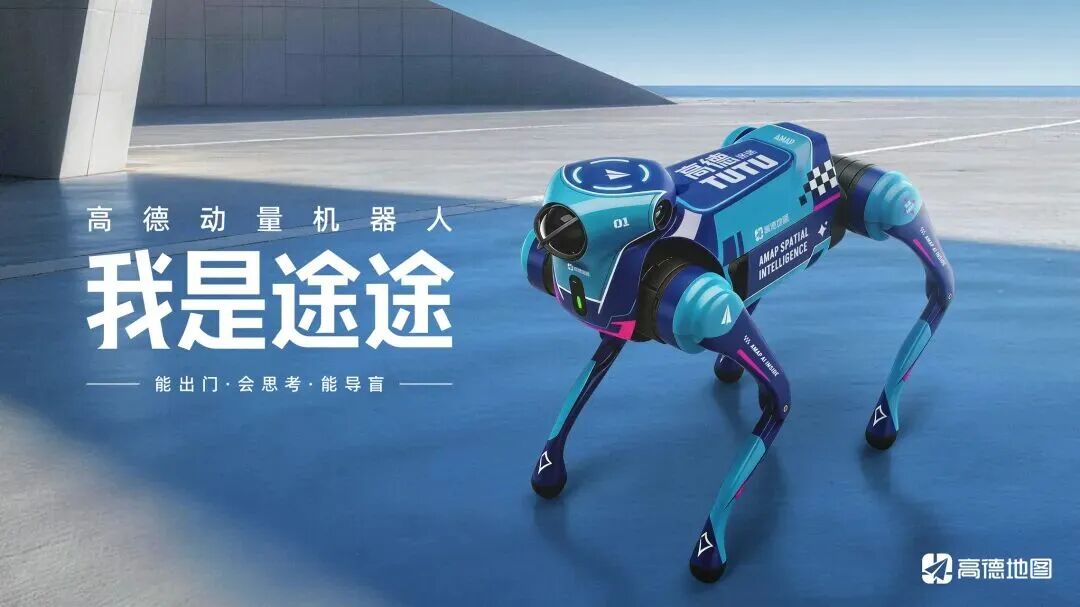
The second component is the Phys AI Map, described as a spatial memory brain for actual robotic applications. This map provides spatial semantic maps intended for robot navigation. The company claims this mapping system covers ninety percent of high-heat indoor spaces across China, though this specific metric remains unverified. The platform offers standardized API access alongside customized data services. The stated goal of the release is to solve two persistent problems in physical AI development: the severe lack of high-quality training data and the unclear spatial recognition capabilities of current robotic systems. While no specific external customers were named in the initial report, the system reportedly supports the previously released ABot-M0 and ABot-World models, as well as the Gaode Tutu robot.
The Strategic Value of Spatial Data in Embodied AI
To understand the significance of this release, one must examine the core challenges facing the robotics industry today. Traditional robots operate in highly constrained, structured environments like factory floors, where every variable is controlled. Embodied AI, however, aims to deploy robots into open, unstructured environments such as homes, offices, and public spaces. In these settings, a robot must constantly perceive its surroundings, understand the semantic meaning of objects, and make real-time decisions based on spatial constraints.
The primary hurdle in achieving this level of autonomy is the data deficit. Training a robot to navigate a novel environment requires massive amounts of spatial data that captures the geometry, semantics, and physics of the real world. Collecting this data manually through teleoperation or real-world exploration is prohibitively expensive and time-consuming. On top of that, real-world data collection is often limited by safety concerns and the physical constraints of the hardware.
This is where spatial data foundations become critical. By providing a pre-built, highly detailed semantic map of the world, a platform like Phys AI Data theoretically allows robotics developers to bypass the arduous process of mapping environments from scratch. The robot can query the spatial memory brain to understand its location, the layout of the room, and the semantic properties of the objects around it. This shifts the computational burden from real-time perception and mapping to querying a centralized, highly optimized data service. The strategic implication is profound: the company that controls the spatial data foundation effectively controls the operating environment for all robots connected to its network.
Amap's Structural Advantage: From Human Navigation to Machine Autonomy
Amap's entry into the physical AI space is a logical extension of its existing business model and core competencies. As a subsidiary of Alibaba Group, Amap is already a leading provider of digital map, navigation, and location-based services in China. For years, the company has built an extensive infrastructure for mapping roads, points of interest, and increasingly, indoor spaces to serve human users.
The transition from human navigation to machine navigation represents a massive expansion of the total addressable market for mapping data. Humans require maps that are visually intuitive and focused on high-level routing. Robots, on the other hand, require maps that are geometrically precise, semantically rich, and continuously updated. They need to know not just how to get from point A to point B, but the exact dimensions of the hallway, the material of the floor, and the location of dynamic obstacles.
Amap's existing data collection infrastructure, which includes fleets of mapping vehicles and crowdsourced data from millions of mobile users, provides a significant structural advantage. While a robotics startup would have to build a data collection apparatus from the ground up, Amap can leverage its existing assets to generate the spatial semantic maps required for the Phys AI Map. This creates a formidable barrier to entry. The claim that the system covers ninety percent of high-heat indoor spaces in China, while unverified, highlights the scale at which Amap operates. If true, this level of coverage would make the platform highly attractive to robotics companies looking to deploy consumer or enterprise robots across the country, as it drastically reduces the time to market and the cost of deployment.
The Economics of Simulation and Synthetic Data Generation
The second pillar of the Phys AI Data platform, the Phys AI Foundry, addresses the other side of the embodied AI equation: training the control policies. Even with a perfect map, a robot must learn how to interact with the physical world. This requires millions of iterations of trial and error, which is impossible to conduct entirely in the real world due to hardware wear and tear, safety risks, and time constraints.
Simulation is the accepted solution to this problem, but simulation is only as good as the data that powers it. The "sim-to-real" gap, where a policy trained in simulation fails in the real world due to discrepancies in physics or rendering, remains a major challenge. The Phys AI Foundry attempts to close this gap by fusing real-machine collection with synthetic data and simulation reconstruction.
By offering over two million hours of high-fidelity action, observation, and feedback triplet data, Amap is essentially commoditizing the raw material needed for robot learning. This data allows developers to train their models in highly realistic simulated environments before deploying them to physical hardware. The economic implications are significant. Instead of each robotics company spending millions of dollars to collect their own proprietary datasets, they can access a standardized, high-quality data foundation via API. This lowers the barrier to entry for new robotics startups and accelerates the overall pace of innovation in the industry. It also positions Amap as a critical toll bridge in the physical AI value chain, capturing value from every robot trained on its platform.
Assessing the Competitive Environment
The market for physical AI data and simulation platforms is becoming increasingly crowded, with different players approaching the problem from various angles. The table below outlines how Amap's offering compares to other notable platforms in the space.
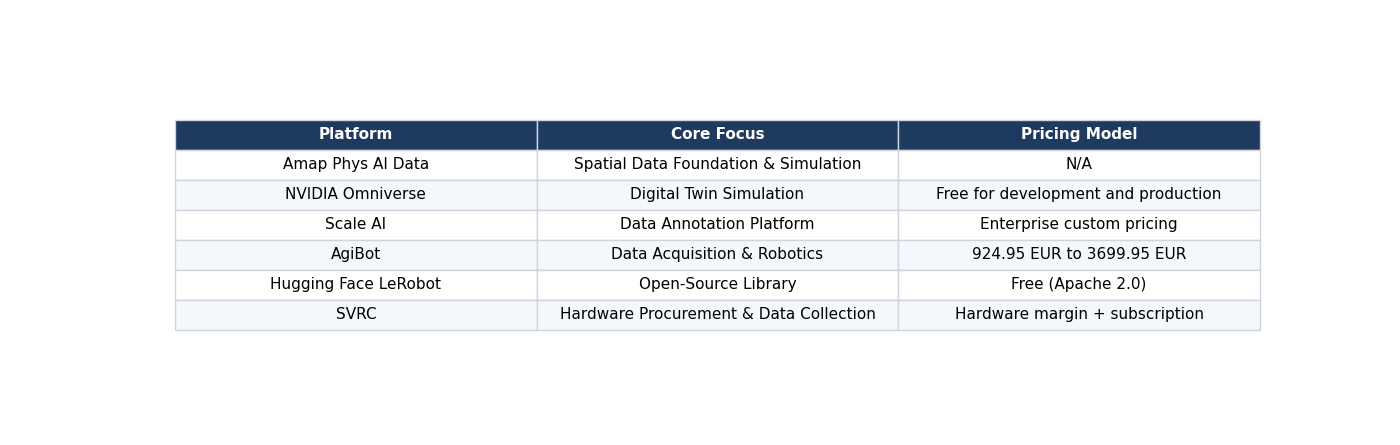
Amap's approach differs significantly from a pure simulation platform like NVIDIA Omniverse. While Omniverse provides the rendering and physics engines to create digital twins, Amap is providing the actual spatial data and pre-collected triplet data to populate those simulations. Scale AI focuses heavily on the annotation of perception data, whereas Amap is offering a more integrated solution that includes the spatial memory brain for real-time navigation. AgiBot provides the hardware modules for data collection, which is a more capital-intensive approach compared to Amap's software and data-as-a-service model. Hugging Face LeRobot offers an open-source alternative, but it lacks the massive, proprietary spatial datasets that a company like Amap can leverage.
Procurement and Integration Considerations
For robotics engineering teams and procurement officers, the introduction of Phys AI Data presents a compelling but complex value proposition. The primary advantage is the potential acceleration of development timelines. By integrating with the Phys AI Map via API, teams can offload the heavy lifting of spatial semantic mapping and focus their engineering resources on higher-level tasks such as task planning and human-robot interaction. The availability of standardized triplet data through the Phys AI Foundry could also significantly reduce the costs associated with real-world data collection and annotation.
However, relying on a centralized data foundation introduces strategic dependencies. Integrating deeply with Amap's APIs means the robotic system's performance becomes tied to the quality, uptime, and pricing structure of the Amap platform. Teams must also carefully evaluate the unverified claims regarding data volume and indoor coverage. Before committing to the platform, rigorous testing in specific target environments will be necessary to validate whether the spatial memory brain truly solves the "unclear recognition" problem in real-world, edge-case scenarios.
Industry Perspective
"The bottleneck in embodied AI has decisively shifted from algorithmic design to the acquisition of high-fidelity, multimodal spatial data. Platforms that can provide standardized, scalable access to this data will become the foundational infrastructure of the robotics industry, dictating the pace of commercial deployment."
About Amap
Amap, also known as Gaode, is a leading provider of digital map, navigation, and location-based services in China. Founded in 2001, the company initially focused on providing map data for automotive navigation systems. Over the years, it expanded into mobile navigation applications, becoming one of the most widely used mapping services in the country. In 2014, Amap was fully acquired by Alibaba Group, integrating deeply into Alibaba's broader ecosystem of e-commerce, logistics, and local services. This acquisition provided Amap with significant financial backing and access to massive computational resources. Today, Amap's extensive mapping infrastructure and data collection capabilities position it as a key player not only in human mobility but increasingly in the foundational data layers required for autonomous vehicles and embodied artificial intelligence.
Sources
1. QbitAI report on the Amap Phys AI Data launch (Chinese): https://www.qbitai.com/2026/07/445946.html
2. Sohu syndicated report (Chinese): https://m.sohu.com/a/1047507903_121956424
3. Umi6 syndicated report (Chinese): https://kx.umi6.com/article/36887.html
4. StorageReview on NVIDIA Omniverse licensing: https://www.storagereview.com/news/nvidia-quietly-makes-omniverse-free-for-production-use














