
Agility Robotics SPAC Highlights Safety Certification as Commercial Gate
A deep analysis of why safety certification, not technology, is the binding constraint on Agility Robotics' commercial scaling. The Digit robot has logged 65,000 deployment hours with a $300M order book and $37M trailing revenue (implying a 34x P/S multiple at SPAC valuation). The article examines NVIDIA Halos integration, ISO/IEC 17020 inspection requirements, and why the gap between "technically capable" and "certified for fenceless operation" is the real bottleneck for the entire humanoid sector.
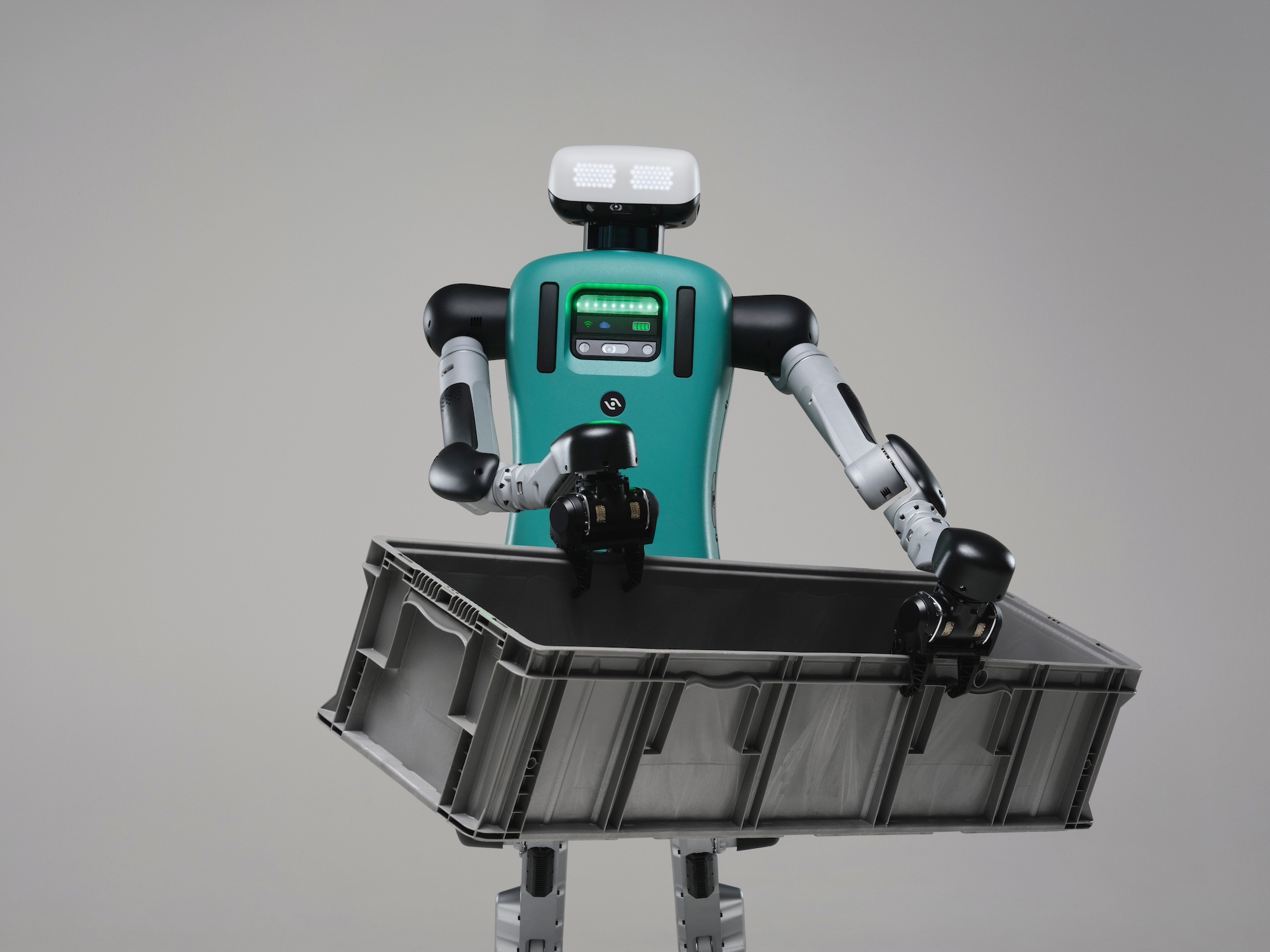
The critical milestone gating Agility Robotics' 300 million dollar order book is not financial. It is regulatory. The Corvallis, Oregon based company, which develops the Digit bipedal logistics robot for warehouse and manufacturing applications, is advancing toward a public listing through a SPAC merger with Churchill Capital Corp XI at a pre money valuation of 2.5 billion dollars. But the commercial viability of that valuation depends entirely on whether the Digit v5 platform can secure third party safety certification to operate cooperatively alongside human workers without physical barriers. This certification, not the listing itself, is the true commercial gate for scaled humanoid robot deployment in the United States.
Agility Robotics has logged more than 65,000 hours of commercial operation across nine enterprise facilities. The company operates under a Robots as a Service model at approximately 30 dollars per hour per robot, bundling hardware, software, fleet management, and maintenance into a single operating cost for customers. With trailing annual revenue of approximately 37 million dollars, the 2.5 billion dollar valuation produces a price to sales multiple near 34, reflecting investor confidence in the company's proprietary dataset of real world humanoid operating data rather than current period earnings.
The Fenceless Operation Imperative
Previous generations of the Digit robot operated within workcells, physically fenced zones where workers and robots cannot share space during normal production. This limitation confined Digit to facilities redesigned around that perimeter, restricting the addressable market to greenfield installations or major facility retrofits. The Digit v5 platform is designed to operate fenceless, meaning it can work in the same physical space as human workers without requiring safety barriers.
Fenceless operation is the prerequisite for addressing the trillion dollar opportunity in existing manufacturing and logistics facilities across the United States. These facilities were built for human workers and cannot be economically retrofitted with robot workcells. A humanoid robot that requires a fenced perimeter is limited to new construction or major renovations. A humanoid robot that can operate fenceless can be deployed in any existing facility, expanding the addressable market by an order of magnitude.
However, fenceless operation in OSHA regulated facilities requires third party safety certification under standards including IEC 61508 for functional safety. This certification process involves independent assessment of the robot's safety systems, including its ability to detect human proximity, predict human movement, and execute safe stopping or avoidance maneuvers with sufficient reliability to meet the required Safety Integrity Level.
The NVIDIA Halos Integration and Its Limitations
Agility Robotics has integrated NVIDIA's Halos for Robotics architecture into the Digit v5 platform. Halos provides a four layer safety framework that includes perception validation, motion planning constraints, real time safety monitoring, and the Halos AI Systems Inspection Lab for pre assessment against safety standards. The integration is technically significant because it provides a structured pathway toward certification rather than requiring Agility to build its entire safety architecture from scratch.
However, the NVIDIA Halos pre assessment is not equivalent to final certification. The Halos AI Systems Inspection Lab evaluates whether a robot's safety software architecture is consistent with the requirements of relevant standards. It does not issue the certification itself. Agility must obtain final certification from an independent third party body such as TUV or UL before Digit v5 can legally operate fenceless in regulated facilities. The timeline for this final certification is uncertain and represents the primary risk factor in the company's commercial roadmap.
For procurement teams considering Digit v5 deployments, the distinction between NVIDIA Halos pre assessment and independent third party certification is critical. A robot that has passed Halos pre assessment is architecturally prepared for certification but has not yet been certified. Deployment contracts should be structured with certification milestones rather than assuming that pre assessment guarantees a specific certification timeline.
Decoding the Robots as a Service Valuation
The 34 times price to sales multiple requires justification beyond current revenue. The investment thesis rests on three pillars. First, the 65,000 hours of commercial operating data provides a training dataset that competitors cannot replicate without equivalent deployment time. This data feeds Digit's training methodology in NVIDIA's Isaac Sim physics simulator, enabling zero shot sim to real transfer that reduces the cost and time of deploying in new environments.
Second, the 300 million dollar order book represents committed multi year contracts that will convert to revenue once Digit v5 achieves safety certification. These contracts are conditional on certification, meaning they represent demand validation rather than guaranteed revenue. If certification is delayed significantly, some customers may exercise cancellation clauses or renegotiate terms.
Third, the RaaS model at 30 dollars per hour positions Digit directly against the fully loaded cost of a human worker in high wage logistics and manufacturing regions. At this price point, the company claims customer payback in less than one year, which if verified would represent compelling unit economics for enterprise buyers.
The Software Architecture of Industrial Safety
The safety challenge for humanoid robots is fundamentally different from the safety challenge for traditional industrial robots. A traditional robot arm operates in a fixed workspace with predictable motion patterns. Its safety system needs to detect human entry into a defined zone and stop. A humanoid robot moves through shared spaces on legs, changing its workspace continuously. Its safety system must predict its own future positions, predict human future positions, and ensure that no collision scenario exceeds acceptable force limits across all possible trajectories.
This is a software problem more than a hardware problem. The sensors on Digit v5 can detect human proximity with high accuracy. The challenge is processing that sensor data fast enough to generate safe motion plans in real time while maintaining productive work output. A robot that stops every time a human is within three meters is safe but useless. A robot that maintains productive operation while guaranteeing safe behavior in close proximity to humans requires sophisticated real time planning that current safety standards were not designed to evaluate.
The Practical Reality for Automation Buyers
Consider the difference between a car that has passed crash testing and a car that has been approved for sale. The crash test validates that the vehicle meets safety standards. The approval for sale confirms that the entire vehicle, including its safety systems, meets regulatory requirements for public road use. Digit v5 with NVIDIA Halos is analogous to a car that has passed crash testing. It has demonstrated safety capability. But it has not yet received the regulatory approval that allows unrestricted commercial deployment.
For automation buyers, this means that Digit v5 is a strong candidate for pilot programs in controlled environments where fenceless operation is not required, and a watch list item for fenceless deployment pending certification. The 30 dollar per hour RaaS pricing is attractive if the robot achieves the uptime and productivity levels necessary to deliver the claimed payback period. But those claims remain unverified at scale until certification enables broader deployment.
The Agility Robotics SPAC process confirms that the market assigns significant value to humanoid robot companies with demonstrated commercial traction. But the gap between valuation and revenue highlights the degree to which that value depends on regulatory outcomes that remain uncertain. Safety certification is the gate, and the gate has not yet opened.
The competitive dynamics of the SPAC market add additional context. Several robotics companies have explored public listings through SPAC mergers in 2025 and 2026, with mixed results. The market has become more discriminating about pre revenue or early revenue companies seeking public market valuations. Agility's 37 million dollars in trailing revenue and 300 million dollar order book position it more favorably than many SPAC candidates, but the conditional nature of the order book, dependent on certification, introduces a binary risk that public market investors must price. The stock's performance post listing will depend heavily on certification progress updates.
The broader implications for the humanoid robotics industry are significant. If Agility successfully achieves safety certification and demonstrates that a humanoid robot can operate fenceless in OSHA regulated facilities, it establishes a precedent that other manufacturers can follow. The certification process, once completed for one platform, creates a template for subsequent certifications, reducing the time and cost for the industry as a whole. Conversely, if certification is delayed or denied, it signals to the market that the regulatory framework is not yet ready for humanoid robots in shared workspaces, potentially delaying commercial adoption across the entire sector.
This analysis synthesizes regulatory filings, company disclosures, and public market activity as of July 2026.














