China's Humanoid Robot Industry Reaches 100,000 Units but the Real Competition Has Not Yet Begun
China's humanoid robot industry is on track to produce 100,000 units in 2026, a supply-side achievement that masks a more complex reality: the gap between production milestones and sustainable commercial deployment. A 36Kr analysis of five companies at WAIC 2026 reveals that most current humanoid robot companies lack a genuine moat, and that the real competition -- for data flywheels, AI brain capability, and deployment scale -- has barely begun.
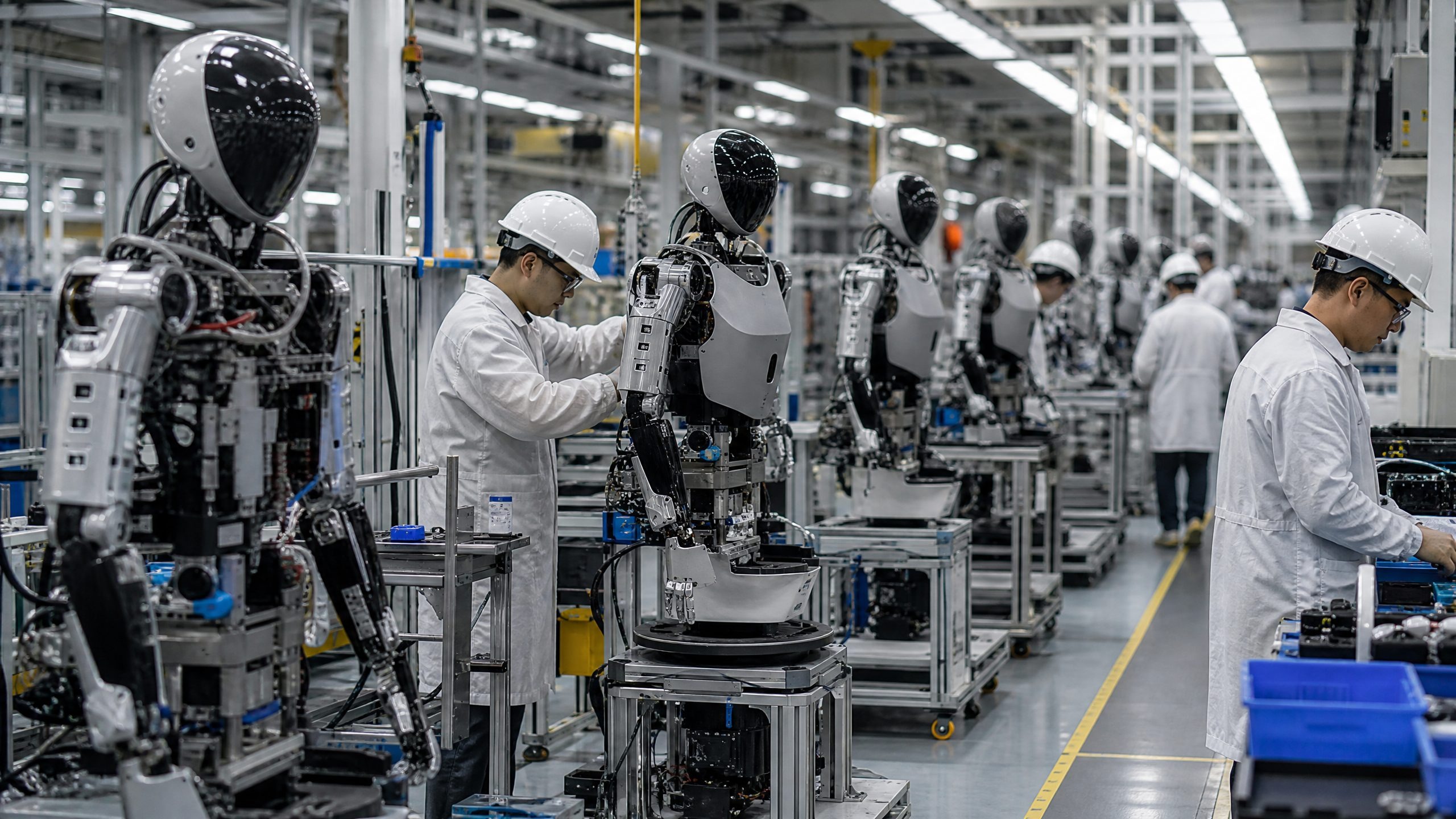
China's Ministry of Industry and Information Technology confirmed at the World Artificial Intelligence Conference in Shanghai in July that the country's annual output of complete humanoid robots will exceed 100,000 units in 2026. The figure, cited by Gan Xiaobin, Vice Director of the MIIT Department of Science and Technology, represents a five-fold increase from approximately 20,000 units produced in 2025. Vice Minister Ke Jixin described the surge as a signal that humanoid robots are "accelerating from technical exploration to standardized and large-scale development." The numbers are real. The question that matters more is what they actually mean for the industry's commercial trajectory.
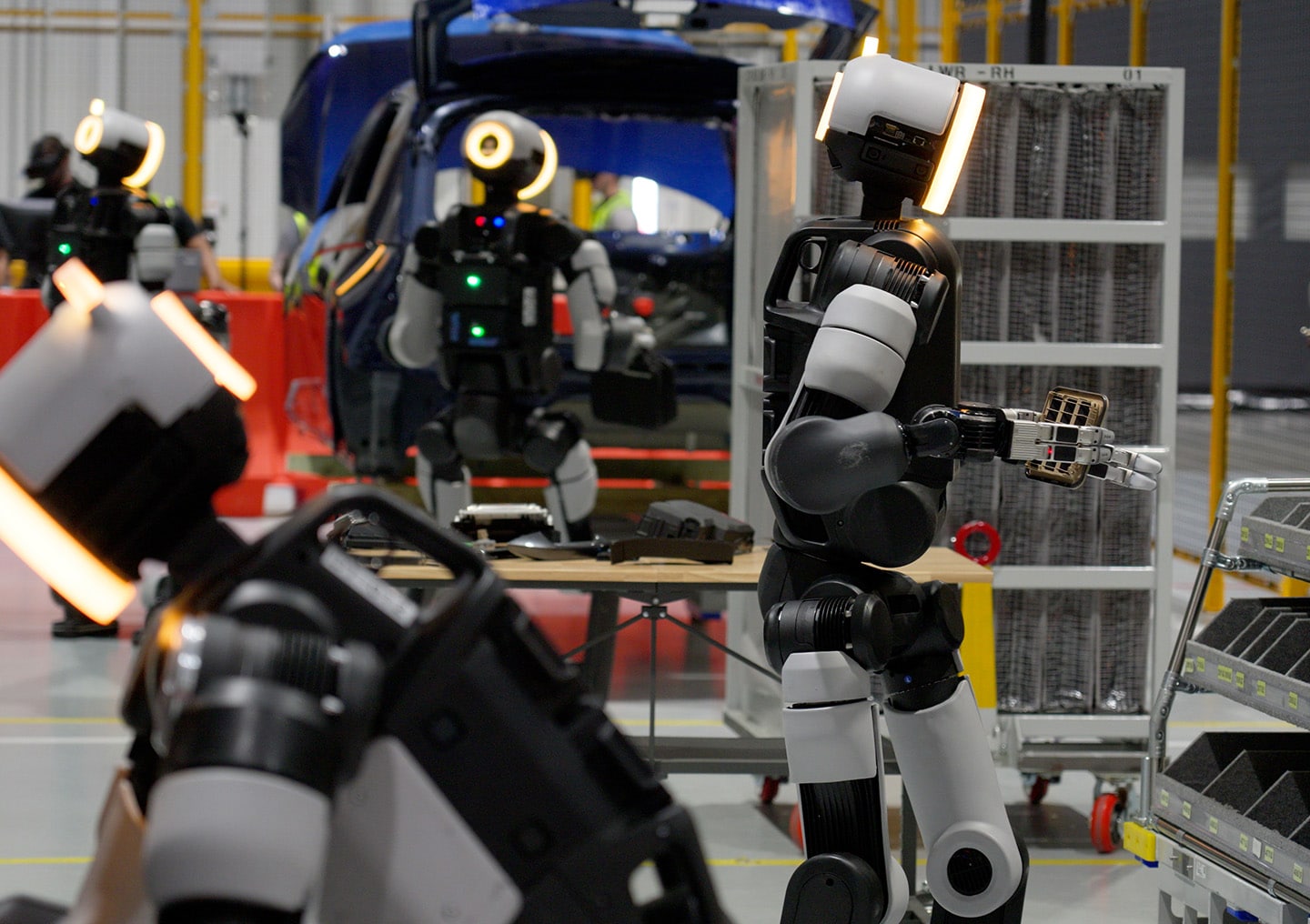
The production milestone is the most visible data point in a sector that has attracted RMB 200 billion (approximately US$28 billion) in financing in 2026 alone, with approximately 370 embodied intelligence startups established in the past two years and nearly 50 companies in Hong Kong or A-share listing processes. Seven leading enterprises have achieved valuations exceeding RMB 10 billion. The WAIC 2026 exhibition hall, spanning nearly 100,000 square metres, hosted more than 200 complete machine enterprises competing across every form factor, price point, and application scenario. The carnival atmosphere is real. So is the gap between production volume and commercial deployment.
The Duopoly and the Data It Obscures
The production ranking for the first half of 2026 is clear. MIR DATABANK data shows that Agibot and Unitree have formed a duopoly at the top of the market. Agibot announced the offline production of 15,000 robots by early June 2026, following a trajectory that moved from 6 prototypes in 2023 to 1,000 units in January 2025, 5,000 by the end of 2025, 10,000 in March 2026, and 15,000 in June. Unitree completed mass production of approximately 11,000 units by March 2026 and expects total 2026 shipments to at least double the 6,500 units shipped in 2025, with plans to expand annual production capacity to 30,000 units.
These numbers are impressive. They are also partially misleading. Until the first three quarters of 2025, more than 70% of Unitree's humanoid robot revenue came from the scientific research and education sector, with industrial applications accounting for only 9% of the mix. A large proportion of shipped robots have not entered factories to work -- they are in laboratories and classrooms. UBTech, which ranks third in production, has slipped to fourth in shipments, suggesting inventory backlog or delayed delivery. The company's U1 Pro consumer robot, priced at RMB 169,800, has accumulated more than 13,361 orders, but consumer orders are not counted in industry production statistics. The boom on the consumer side and the relative calm on the industrial side form a sharp contrast that the headline production figures do not capture.
The core contradiction in the current humanoid robot industry is that manufacturing capacity has been initially established, but real user demand and a sustainable business closed loop are still under construction. The 100,000-unit production target is a supply-side achievement. The demand side has not yet validated it.
Five Companies, Five Survival States
Five companies at WAIC 2026 provides a more granular picture of the industry's actual state. The State-Local Co-constructed Humanoid Robot Innovation Center represents the pragmatic school -- three commercial scenarios (public tour guide, safety inspection, industrial sorting), 5,000 units planned for 2026, wheeled products at over RMB 400,000 and biped products at over RMB 600,000. Notably, the Centre acknowledged that wheeled robots have lower cost, higher stability, and better battery life than biped robots, and that wheeled shipments will significantly exceed biped shipments -- an admission that the biped form factor's commercial case remains unproven in most scenarios.
Matrix Intelligent Manufacturing takes the high-end biped route with its MATRIX-3 platform -- 1.70 metres tall, 65 kg, 27 degrees of freedom, RMB 580,000 starting price, 5,000 units planned, approximately 1,000 orders. The product is still in the adaptation and debugging stage, with scenarios not fully finalized. The gap between high price and small batch, combined with unresolved scenario fit, represents a commercial model that has not yet been validated at scale.
Banxing Embodied Intelligence has taken an ODM customization route, providing skeleton-style delivery at RMB 208,000 and allowing customers to customize the shell and brand. The model reflects a structural awkwardness in the industry -- customers who know what they want and have secondary development capabilities do not need to buy complete machines, while customers who want to buy complete machines are often unsure what they can do with them. Banxing's approach leaves the last mile to customers, which limits its addressable market to buyers with genuine technical capability.
Zhongjian Technology is still in the concept stage, with its ZERO robot in prototype R&D and no clear application scenarios defined despite a 291% year-on-year increase in R&D expenses in Q1 2026. Magic Atom has taken the vertical scenario approach, deploying its traffic duty robot Xiaomai with official permits at the Wuxi Marathon in April and releasing the MagicBot X1 and D1 at WAIC. The vertical scenario approach has the advantage of real demand, clear willingness to pay, and a defined implementation path -- but the market size of traffic duty robots is inherently limited.
The Assembly Factory Problem
The deeper structural question is whether most current humanoid robot companies have a genuine moat. Wang Guangxi, Managing Director of Lenovo Capital, stated bluntly at Lenovo Capital Week in July that "In the long run, robot body manufacturing may not be suitable for technology-based entrepreneurial teams. Those with strong large-scale manufacturing capabilities are OEMs, supply chains, and manufacturing enterprises, and these industrial chain companies may also take the robot body as a business increment."
The observation is pointed. Mechanical joints, reducers, torque motors, vision sensors, and motion control algorithms are all purchasable. In the era of large models, the AI brain can call cloud APIs. Assembling these components into a humanoid robot priced at hundreds of thousands of yuan is not fundamentally different from assembling smartphones in Shenzhen's Huaqiangbei a decade ago. The smartphone assembly plants eventually died in the red sea of cost competition, and only the players who controlled chips, operating systems, and brand channels survived. The humanoid robot sector is repeating this structural dynamic.
The warning case is Cheetah Mobile's OrionStar, which entered service robots in 2016 when Cheetah's market cap was at a peak of US$5 billion. Nine years later, Cheetah's market cap has fallen below US$100 million, and OrionStar's robot business has suffered persistent losses. The failure was not directional -- it was structural. OrionStar integrated rather than developed, sold concept rather than product, and chose scattered scenarios with low willingness to pay. The lesson, as 36Kr puts it, is that there is a Mariana Trench between "can do" and "can survive."
The Data Flywheel as the Real Moat
The companies that have earned premium valuations -- Unitree and Agibot -- have done so not primarily because of their hardware, but because of their data flywheels. Unitree's real barrier is not its ability to perform at the Spring Festival Gala, but its success in reducing the price of biped humanoid robots from hundreds of thousands of yuan to below RMB 100,000 and achieving large-scale shipments. By 2025, Unitree had sold more than 30,000 quadruped robots and shipped more than 5,500 humanoid units. This means Unitree has run through the complete chain from R&D to manufacturing to sales and established cost advantages and supply chain leverage that later entrants cannot easily replicate.
Agibot's founder Peng Zhihui has articulated the competitive logic directly -- the final competition of humanoid robots is not a competition of hardware, but a competition of the "brain." Agibot's Three Intelligence Integration architecture -- combining a large model brain, a motion control cerebellum, and a physical body -- is designed to build a data flywheel. The more robots are sold, the more scenario data is accumulated, the faster the model iterates, the better the product experience, and the more robots are sold. Once this closed loop is established, latecomers face an increasingly difficult catch-up problem. Agibot's July 2026 announcement of a Hong Kong listing process at a target valuation of US$200 billion (approximately RMB 1.35 trillion) reflects the market's willingness to price this flywheel thesis at an extraordinary premium.
The Shakeout That Is Coming
Wang Guangxi's assessment is that the current financing market contains an obvious bubble. A company receiving three rounds of financing in one month with three different valuations is, as he put it, "definitely not right from common sense." His expectation is that from the second half of 2026 into 2027, as companies list intensively and their financial data is forced into the open, the secondary market will begin a brutal interrogation. Players with only demonstration capabilities will face unprecedented survival challenges. The companies that can show real large-scale revenue and genuine deployment cases will pull away from those that cannot.
The 100,000-unit production milestone is a genuine industrial achievement. China has built manufacturing capacity for humanoid robots faster than any country in history, and the policy environment -- from MIIT's production targets to local government procurement subsidies -- has been a significant accelerant. But the milestone also marks the point at which the industry's real test begins. The question is no longer whether China can make humanoid robots at scale. It is whether the robots that are being made can do useful work, generate sustainable revenue, and justify the extraordinary valuations that the sector has attracted. The answer to that question will be written not in production statistics, but in deployment data, customer retention rates, and the financial results that will become visible as the first wave of humanoid robot companies reaches the public markets.
Disclaimer: This analysis is provided for informational purposes only and does not constitute investment, legal, or procurement advice. RobotAIGeek does not endorse specific vendors or guarantee the performance of early-stage technologies.