AI In India - The Path From Being Middle Class To Filthy Rich
How will AI usage evolve in India
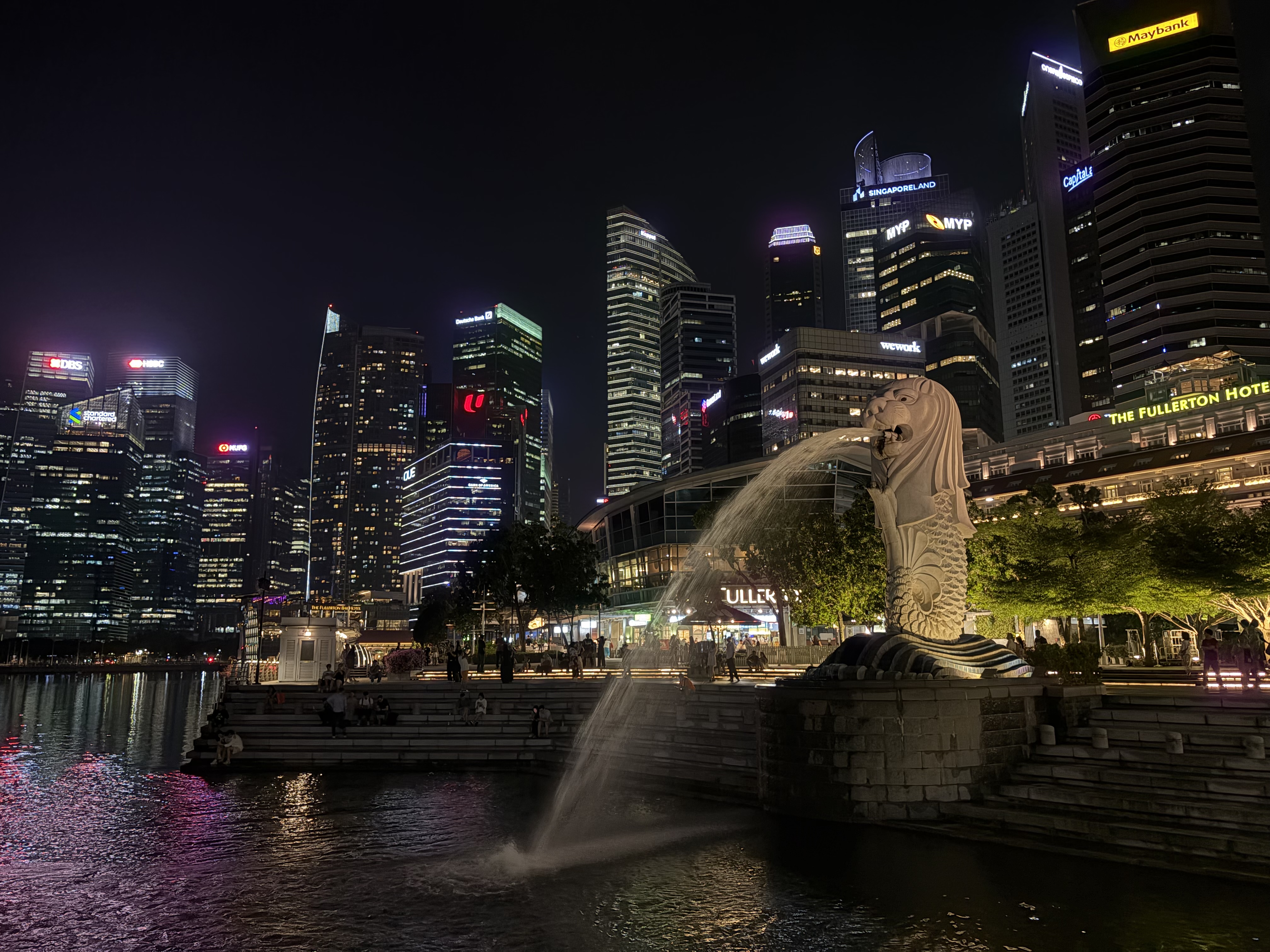
It's 2:47 AM in Surat. Aarav Shah, 27, is on his eleventh cup of tea, talking to Claude for the ninth straight hour.
He has a commerce degree, works in his father's small textile firm, earns $450 a month, lives at home. Three weeks ago his cousin flew down from Bangalore and said one sentence at dinner:
"You're still on free ChatGPT? Get Claude Max. It will eat your job."
Aarav put $200 on his credit card the next morning. He has not been the same since.
The week he stopped sleeping
For seven days, he just uses it. Tax notices in plain language in 30 seconds. A polished email that gets a stuck $5,000 payment released the next day. Black-Scholes explained. His LinkedIn bio roasted. A wedding invitation in classical Sanskrit.
On day five he watches a small mill owner sweat over a one-page export quotation and eventually pay $6 to a "consultant" outside who'll do it by evening.
The thought lands with the finality of a coin in a slot: Most of the world's small businesses run on paperwork nobody is qualified to write. Claude can write all of it in seconds.
This is the unspoken truth of the global emerging-market economy. Billions of people work in informal businesses with no website, no English presence, and a paid army of intermediaries — translators, document agents, junior staff — bridging them to the formal world.
That entire layer is now replaceable by one person with a $200 subscription.
The next weekend he builds a website. Claude builds most of it. Forgettable name, no mention of AI: "Documentation, communication, and digital services for local businesses."
He prints visiting cards. He starts walking.
Six sectors, six months
Diamond merchants. Surat polishes most of the world's small diamonds. Workshop owners turn over $1–6M a year and pay "documentation agents" $25–$180 per export email. Aarav offers his first one a stuck Belgian shipment dispute for $6. Twenty minutes later he comes back with an email that includes the exact trade-law clause the dispute hinges on. Six merchants on $145/month retainers within two weeks. None know he uses AI.
Textile manufacturers. 65,000 small units in the city, no websites, selling to overseas buyers via WhatsApp. Aarav offers a "complete digital presence" — site, product copy, buyer replies — for $95/month. Local agencies charge $480–720 for the same work. 22 clients in six weeks.
Solo doctors. A globally distributed, digitally underserved class — Cairo to Manila to Lagos. He offers an $180/month package: directory profiles, automated patient follow-ups, monthly blog posts, consent forms. Doctors don't understand any of it. They just see enquiries rising. 14 clinics by month four.
Real-estate brokers. Loud, informal, sending blurry WhatsApp listings everywhere. Aarav turns photos and addresses into polished property cards in two hours. $6 per property or $70/month unlimited. 40 brokers on retainer by month five — fighting over him.
The wedding economy. A $130-billion-a-year industry, almost entirely unorganised. One catering proposal for $35 turns into proposals, pitch decks, vendor communication. Wedding season runs $2,400/month.
The accidental kicker. A chartered accountant — India's CPA equivalent — hires him as an "external drafting desk" for $240/month and fires the $450/month junior who used to do it.
That's the moment Aarav understands what he is actually selling. Not documents. Not websites. The labour of every entry-level white-collar worker in the developing world — at a price they can't survive on, with quality they can't match.
Month six
Revenue: $11,400/month. Costs: $200 (Claude) + $650 (office, two assistants) + $120 (tools). Net: ~$10,400/month. ~$125,000 a year.
Context: India's average urban professional earns $5,000–$7,000 a year. A senior Mumbai banker makes $30,000. A 25-year doctor clears $40,000. Aarav was at $5,400 six months ago.
His father thinks he has "some internet business."
What nobody around him saw
His cousins earn $700–$1,700/month in tech. They have ChatGPT Plus. None bought Claude Max — "Plus is enough." His father's accountant refuses to learn AI: "my spreadsheet works." His uncle calls AI a fad: "forty years without it."
These people are not poor. They had the same access, the same announcements, the budget. They just didn't see it.
This is the cleanest example you'll see this decade of the recognition gap. The wealth divide of the next ten years won't run between rich and poor — that one's settled, in every country. It will run between people who recognised what AI was and people who categorised it as a luxury, a toy, or a fad.
True in São Paulo. True in Manchester. True in Cairo. True in Cleveland.
Aarav's monthly Claude bill is less than his motorcycle EMI. The cost was never the obstacle. The obstacle was the imagination required to see what the cost was for.
Now zoom out
The AI economy has three layers, and the percentages in each will define global wealth for the rest of this decade.
Operators. People like Aarav. They use AI as a workbench to extract value. In 2026: ~0.3–0.5% of the world's working-age population. ~0.1% in India — about a million people, almost all under 35, urban, English-comfortable, mostly invisible.
Consumers. People who pay for AI output, often without knowing it. The diamond merchant. The patient reading a blog post. The HR manager evaluating cover letters all written by the same model. In 2026: 10–15% globally.
The Floating Middle. People who use free ChatGPT to rewrite emails and polish bios. They believe they are "using AI." They aren't Operators — no commercial leverage. They aren't Consumers — they don't pay for AI services. They float. They feel current. They are not. In 2026: 30–40% globally.
The remaining ~50% are outside the AI economy entirely.
2030
Operators: ~3% globally, ~1% in India. Tenfold growth, still tiny. The bottleneck was never tooling — it was recognition and operational discipline, neither of which democratises just because tools improve.
Consumers: ~55% globally, ~40% in India. AI output becomes unconscious — the way machine-loomed cloth was unconscious by 1900.
Floating Middle: ~30% globally, holding share but losing outcomes every year. Using GPT-9 to rewrite cover letters while Aarav uses it to run a $3M practice.
2035
Operators plateau at ~10%. AI operation becomes a professional standard, like Excel was in 2010 — but extracting real value from it still requires the same discipline that has always separated the top decile of any profession from the rest. Consumers saturate at ~85%. The Floating Middle erodes to ~10% — people either climb up or fall down. The middle does not hold.
The brutal arithmetic for India
1.4 billion people. 600 million under 25. About 10% English-fluent. Around 84 million with meaningful discretionary income.
In 2030, India's Operator class is approximately 14 million people. One percent. They will capture a wildly disproportionate share of the wealth AI creates in India this decade. Not because they're smarter — because they recognised the tool earlier and built the operational habits earlier.
560 million Indians will sit in the Consumer layer, paying for that 1%'s output. Often unknowingly. Often at a premium.
350 million Indians — most of the urban salaried class — will sit in the Floating Middle, believing they are AI users because they have a chatbot on their phone. They won't be wrong. They also won't be Operators. The distinction will cost them an entire wealth cycle.
If 1% of a population operates AI, and AI becomes the dominant input to knowledge work, 1% captures the surplus. This is not new. Every productivity wave concentrated wealth this way — Industrial Revolution, mainframe, PC, internet, smartphone. The owner-operator class was always 1–10%. They always captured most of the surplus generated by everyone else's work.
What is new is the speed. The Industrial Revolution took 80 years to concentrate wealth. The internet took 20. AI is unfolding in 5 to 7.
In 1995 it was a website. In 2007 a Facebook page. In 2014 a smartphone-first product. In 2021 a Shopify store and TikTok. In 2026 an AI subscription. In 2030 it will be something else, and most readers will miss it again. Not because they can't afford it. Because they won't see it.
It's 2:47 AM in Surat. Six months in. Aarav's phone is still buzzing — a Hong Kong merchant, a doctor's WhatsApp group, a broker needing three property cards by morning. The credit-card balance was cleared four months ago.
His father knocks on the door, half-asleep. "Beta, still awake?"
Aarav nods.
"This internet thing is making you sick. Sleep, son."
He says he will. He doesn't.
The only useful question for anyone reading this is which of the three layers they intend to be in when the numbers settle.
Most readers, statistically, will be in the Floating Middle.
Most won't believe it until 2032.
Aarav saw it. His cousins didn't.