JLS Automation Launches AI Vision System for Chaotic Packaging Lines
JLS Automation debuted JLS Vision AI at PACK EXPO International 2026, an AI vision system that lets its robots pick overlapping food packages straight off the line without separate sorting hardware.

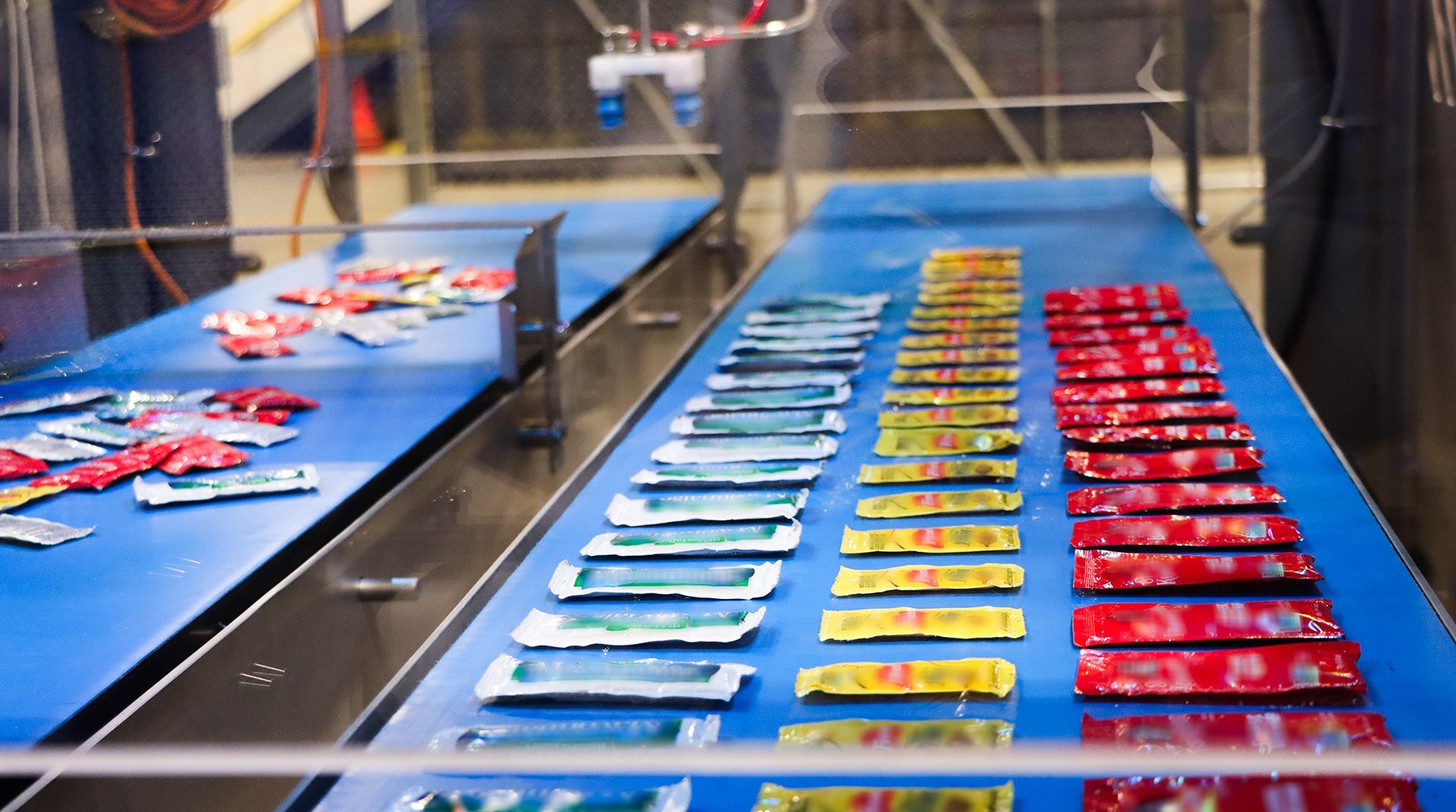
JLS Automation unveiled an artificial-intelligence-driven vision system called JLS Vision AI on Sunday at PACK EXPO International 2026 in Chicago, giving its robotic packaging cells the ability to pick overlapping, randomly oriented food products without the infeed equipment that has traditionally separated items before a robot could grab them. The system runs live at the company's booth through the show's close on Wednesday, processing condiment packets, snack bars and other flexible packaging in front of attendees rather than in a pre-recorded demo reel.
JLS Automation is a 71-year-old industrial automation supplier based in York, Pennsylvania, that has built its business since the early 1990s on sanitary robotic packaging systems for food and consumer-goods manufacturers, selling under product lines including the Talon case loader, the Osprey case packer and the Peregrine cartoning system. The company, led by chief executive Craig Souser, makes a point of designing its machines to be washed down daily on factory floors that handle raw proteins and ready-to-eat products, a design requirement that has shaped what a vision upgrade like this one actually had to solve: not a clean lab bench, but a conveyor covered in product that slides, flips and stacks on itself the moment it leaves a bagger or flow-wrapper.
The Problem Every Packaging Line Pays To Ignore
Ask any plant manager running a case-packing line what slows it down most, and the honest answer is rarely the robot arm. It is the product in front of the robot. Flexible packages such as pouches, flow-wraps and sachets rarely land on a conveyor in a neat single-file row. They twist, overlap, nest into each other and shift as the line vibrates, which is why most packaging operations still install mechanical infeed systems such as timing screws, lane dividers or vibratory tables to spread product out before a robot ever sees it. Those systems add floor space, mechanical wear parts and changeover time every time a plant switches package formats, and they still fail when product variation exceeds what the mechanical geometry was built to handle.
JLS Vision AI is aimed squarely at removing that step. The system uses proprietary artificial-intelligence vision to identify individual products inside a cluttered, overlapping flow, determine which item can be picked cleanly without disturbing its neighbors, and track that target as it continues to move on the line. It processes images at up to 15 frames per second, supports both two-dimensional and three-dimensional vision when package height matters to the pick, and handles orientation detection, product classification and feature-level inspection in the same pass. Mike Newcome, JLS Automation's vice president of sales and marketing, described the premise plainly on the show floor: product rarely arrives perfectly spaced, and presentation does not have to be perfect for the pick to still succeed.
That distinction matters more than it sounds. Most machine-vision systems sold into packaging over the past decade were built to confirm what a robot was about to do, not to decide what to do when the scene in front of it looked nothing like the training image. A system that can only recognize product in an idealized, evenly spaced arrangement still needs the expensive infeed hardware to create that arrangement artificially. A system built to interpret a genuinely chaotic flow, the way a trained human sorter would, is the difference between automating the easy 80 percent of a packaging line and automating the part that actually required a person.
What a Camera Upgrade Does to a Packaging Line's Budget
For a procurement team evaluating this kind of system, the appeal is not the artificial intelligence label itself. It is the capital and floor-space line items a vision-driven pick can remove. Timing screws, lane-forming belts and vibratory infeed tables are not minor accessories; they are engineered subsystems, each with its own footprint, its own changeover procedure when a plant shifts between package sizes, and its own maintenance schedule. A vision system that lets a robot pick directly from an unsorted, overlapping stream collapses that hardware into software, which shifts the recurring cost of a format change from a mechanical retrofit to a reconfiguration of the vision model.
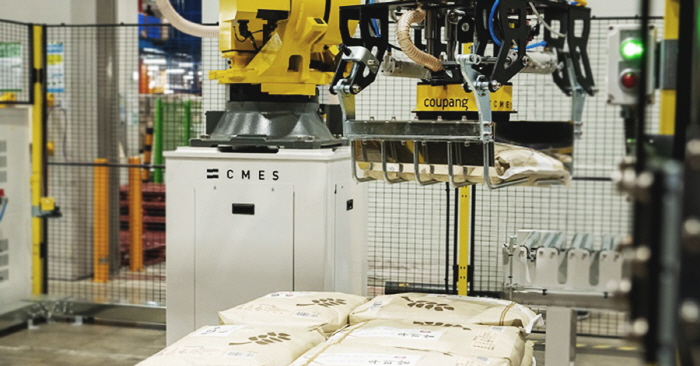
That tradeoff is precisely why vision-guided picking has become one of the most contested corners of industrial automation this year. ABB introduced its own AI-driven vision trainer alongside two new precision robots at the China International Industry Fair in Shanghai earlier this month, aimed at speeding up how quickly a vision system can be taught to recognize a new part. CMES Robotics brought an AI-guided mixed-case palletizer to the same PACK EXPO show floor where JLS Automation is exhibiting, targeting a different stage of the same packaging line: building and stabilizing mixed-SKU pallets rather than picking individual flexible packages. Each entrant is making a version of the same argument to buyers: that the bottleneck in packaging automation has moved from the robot arm, which is now a mature and largely commoditized piece of hardware, to the perception software that tells the arm what it is actually looking at.
The commercial stakes of that shift are specific to food and consumer-goods manufacturing, where labor availability for manual sorting and hand-packing roles has tightened in the United States even as production volumes have held steady. A vision system that can operate reliably on irregular product removes a job category that has become one of the harder positions to staff on a packaging line, not because the work is difficult to learn, but because it is repetitive, requires standing for a full shift, and offers few of the wage premiums that have pulled workers toward warehouse and logistics roles instead. JLS Automation is not marketing JLS Vision AI as a direct labor-replacement tool in its show materials, but the economics of removing a manual sorting station are the same economics that have driven food manufacturers toward robotic case packing for the past fifteen years.
Reading The Live Demo Correctly
It is worth being precise about what attendees are actually watching at McCormick Place this week, because trade-show vision demonstrations are frequently staged with product that has been pre-arranged to flatter the system. JLS Automation's narrated demonstrations, scheduled for 2 p.m. Central time on both Monday and Tuesday, run on condiment packets fed into deliberately irregular, overlapping flow, with the vision system expected to classify each packet, select a pickable target, correct its orientation and reacquire the next target once the current one is placed, on a repeating cycle for every hour the show floor is open. A system that can sustain that cycle without operator intervention across a multi-day public demonstration is a materially different claim than a single scripted run captured for a product video, and it is the kind of sustained, unsupervised operation that food manufacturers will want verified again on their own product before committing capital.
The harder question for buyers is not whether the system works on a trade-show floor under ideal lighting and a curated product set, but whether it holds up against the full variability of a real production run: product that arrives wet, torn, mislabeled or outside normal size tolerances, conditions a demo booth rarely reproduces. JLS Automation has not published independent third-party validation data alongside the launch, and the company has signaled JLS Vision AI is currently positioned as an add-on for select JLS robotic packaging systems rather than a retrofit kit for competitors' installed machines, which narrows its near-term addressable market to plants already running or planning to run JLS hardware.
That narrower scope is a deliberate choice rather than a limitation the company is hiding. Selling a vision upgrade only into its own installed and newly sold equipment lets JLS Automation control the integration quality that a software feature layered onto unfamiliar third-party hardware could not guarantee, and it means every reference customer the company can eventually point to will have run the system on a JLS machine, under JLS service support, rather than on a mismatched retrofit where failures are harder to diagnose and easier to blame on the wrong vendor.
The Strategic Signal Behind a Niche Launch
A vision upgrade to one supplier's existing robotic packaging line is, on its own, a modest product announcement. Its significance lies in timing and company. JLS Automation has spent three decades building a reputation around sanitary, hygienic design for a food industry that has been historically conservative about adopting new automation technology, preferring proven mechanical reliability over experimental software. A company with that customer base choosing to lead its PACK EXPO presence with an artificial-intelligence vision system, rather than a new mechanical platform, is a signal that even the most risk-averse segment of industrial buyers now expects machine-learning-driven perception as a standard feature of a new packaging line rather than a premium add-on reserved for logistics and warehousing.
The booth at McCormick Place will go quiet again once PACK EXPO closes on Wednesday, but the question the demonstration raises for every other sanitary-packaging supplier will not. It is whether a vision system trained to handle genuine disorder, instead of product arranged to look orderly, is now the baseline a buyer expects before signing off on a new robotic cell at all.
This account draws on JLS Automation's own public product pages, its PACK EXPO International 2026 exhibitor materials, and public industry reporting on vision-guided robotic packaging systems shown at the same event. It is provided for general information purposes only and does not constitute investment, legal, or professional advice.
Hero image: JLS Vision AI sorting condiment packets on a JLS Automation packaging line, courtesy of JLS Automation.