Germany Signs Industrial AI Pact With NVIDIA, Backs Agile Robots
Germany signed a Joint Declaration of Intent with NVIDIA on physical AI, as NVIDIA committed nearly US$10 billion across four German startups including humanoid-robot maker Agile Robots, and Siemens showcased an autonomous factory cutting engineering effort by up to 85 percent.

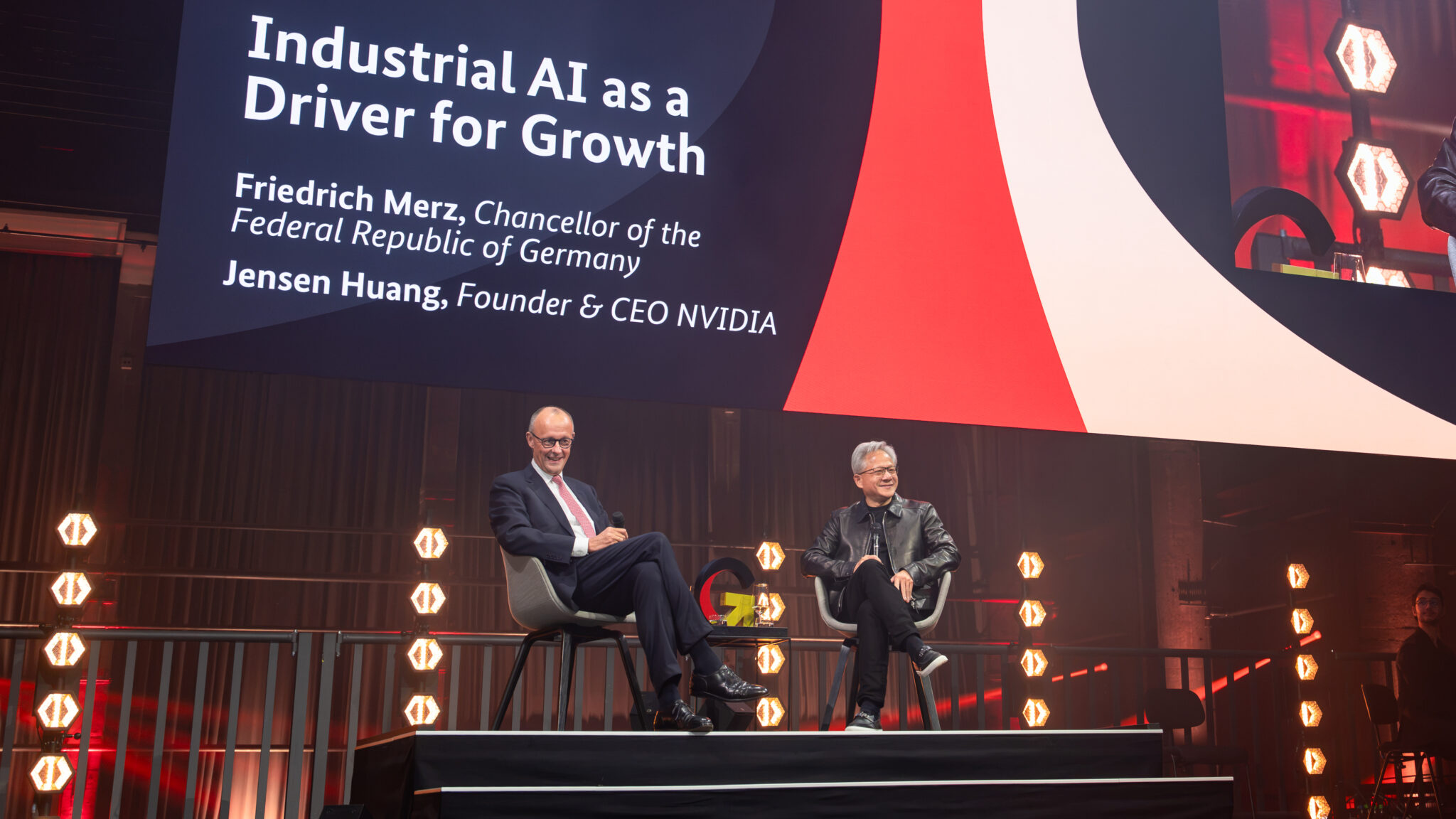
Germany's government signed a Joint Declaration of Intent with NVIDIA on industrial artificial intelligence on October 19, following a meeting between Chancellor Friedrich Merz and NVIDIA founder and chief executive Jensen Huang at Kraftwerk, a former power station in Berlin, on the sidelines of the Invest in Germany Summit. The declaration, signed alongside Germany's Federal Ministry for Economic Affairs and Energy and its Federal Ministry for Research, Technology and Space, commits the parties to a joint initiative advancing AI models for physical AI, the branch of artificial intelligence concerned with robots and machines that act in the real world rather than only process text or images.
The agreement formalizes and expands NVIDIA's role inside Germany's Industry 4.0 Platform, a standing body that brings together representatives from government, industry, research institutions and trade associations with the stated goal of building what the parties describe as a state-of-the-art industrial AI ecosystem in Europe. For manufacturers and robotics buyers, the declaration matters less as a diplomatic gesture than as a signal of where German industrial policy is directing capital and standardization effort over the next several years.
A Nearly US$10 Billion Bet on Four German Startups
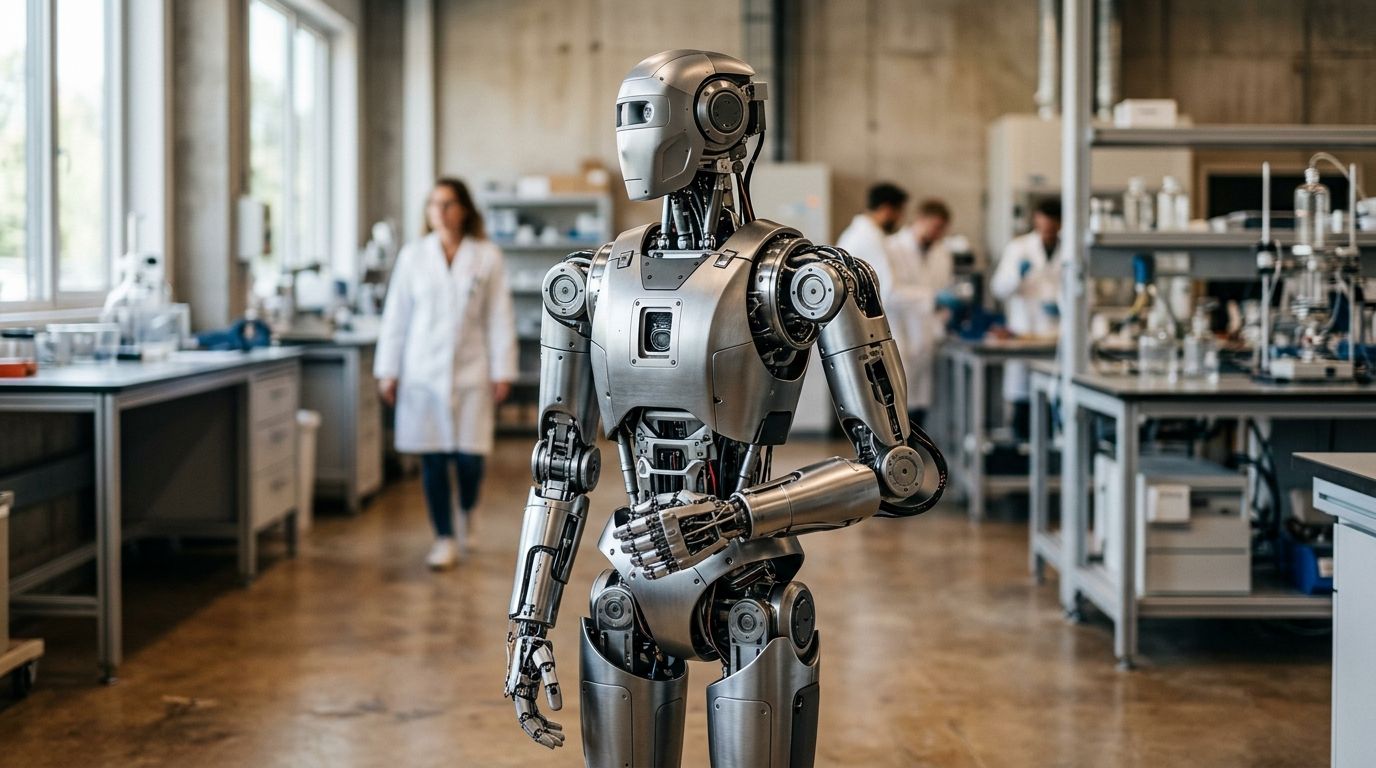
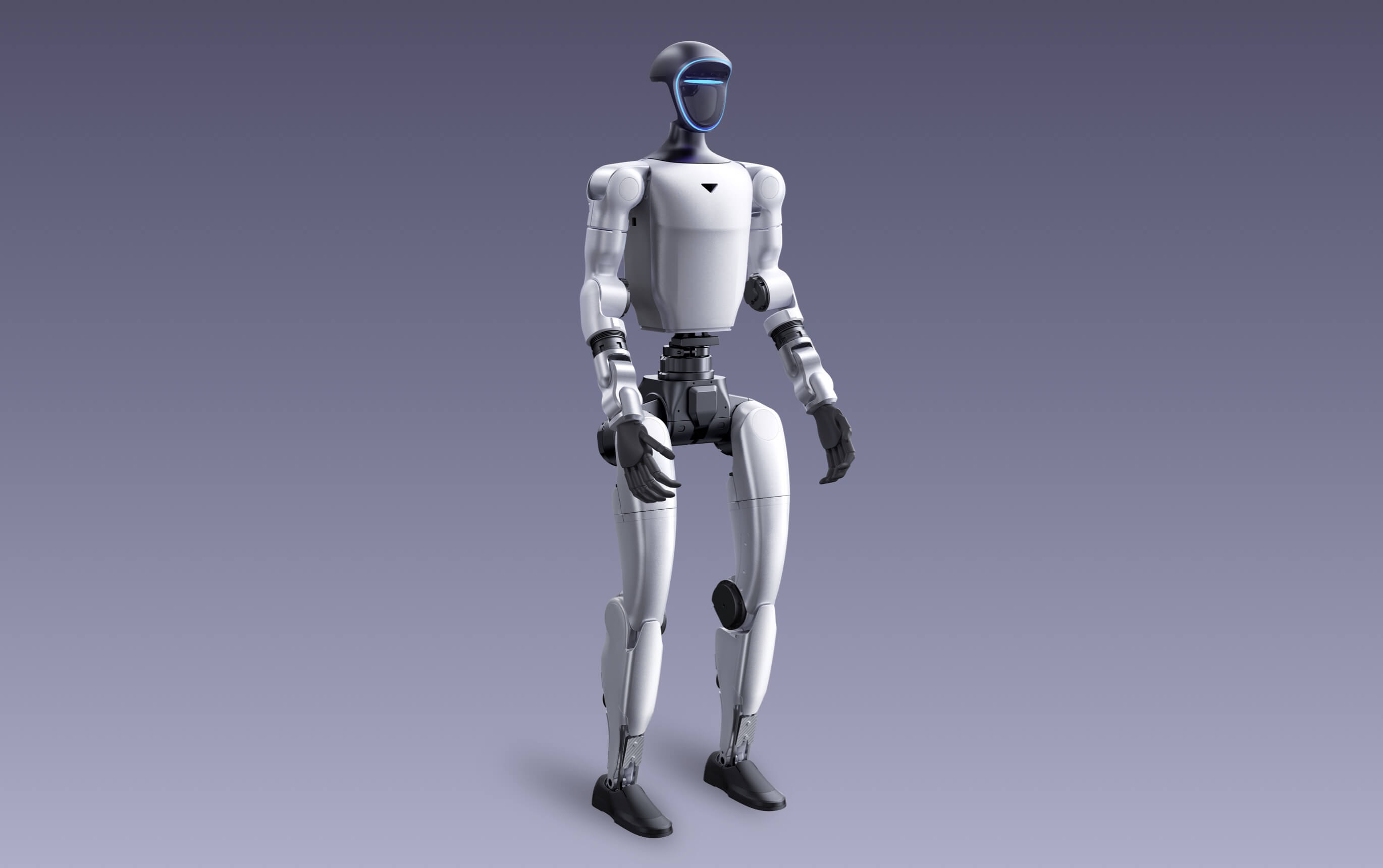
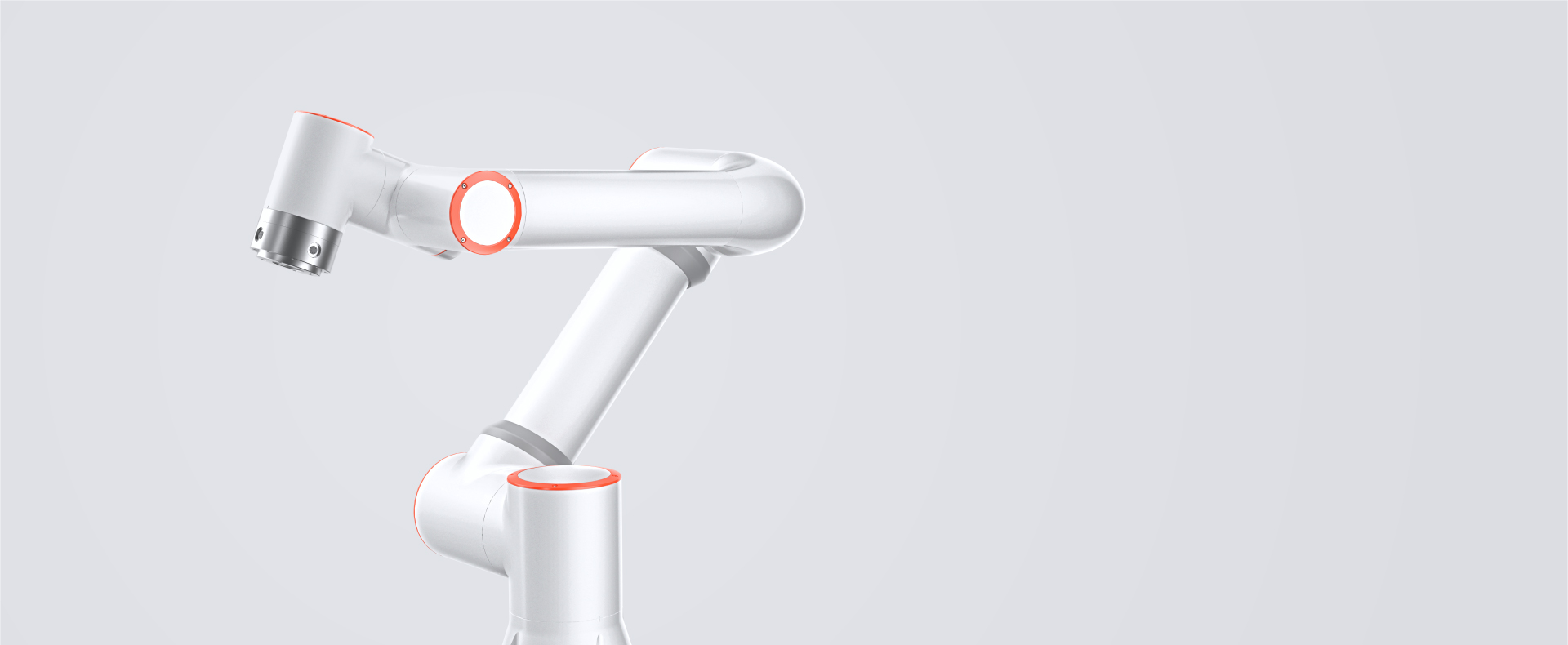
Alongside the government declaration, NVIDIA announced planned investments in four German startups as part of a nearly US$10 billion European commitment. The most directly relevant to robotics buyers is Agile Robots, a Munich-based company that builds AI-powered robotic arms and the Agile ONE humanoid platform for manufacturing, logistics and healthcare applications. The other three companies sit further from industrial robotics but round out NVIDIA's bet on German physical and infrastructure AI: Avelios Medical, also based in Munich, is building an AI-native hospital information system intended to serve as the core clinical and administrative record for health systems; Mirelo develops AI models that generate sound effects, speech and music for video production; and Reflex Aerospace, based in Berlin, designs and builds high-performance satellites it says can go from order to launch readiness in about 12 months rather than the multi-year timelines typical of the sector.
Agile Robots' inclusion is the detail procurement teams evaluating European humanoid and industrial-arm suppliers should weigh most heavily. A direct NVIDIA investment, layered on top of compute and software access through the Industry 4.0 Platform relationship, gives a mid-sized German robotics maker a funding and technology position that smaller European competitors building similar arms or humanoids will now have to match without the same government-level backing.
Siemens Turns Its Own Factory Into the Reference Case
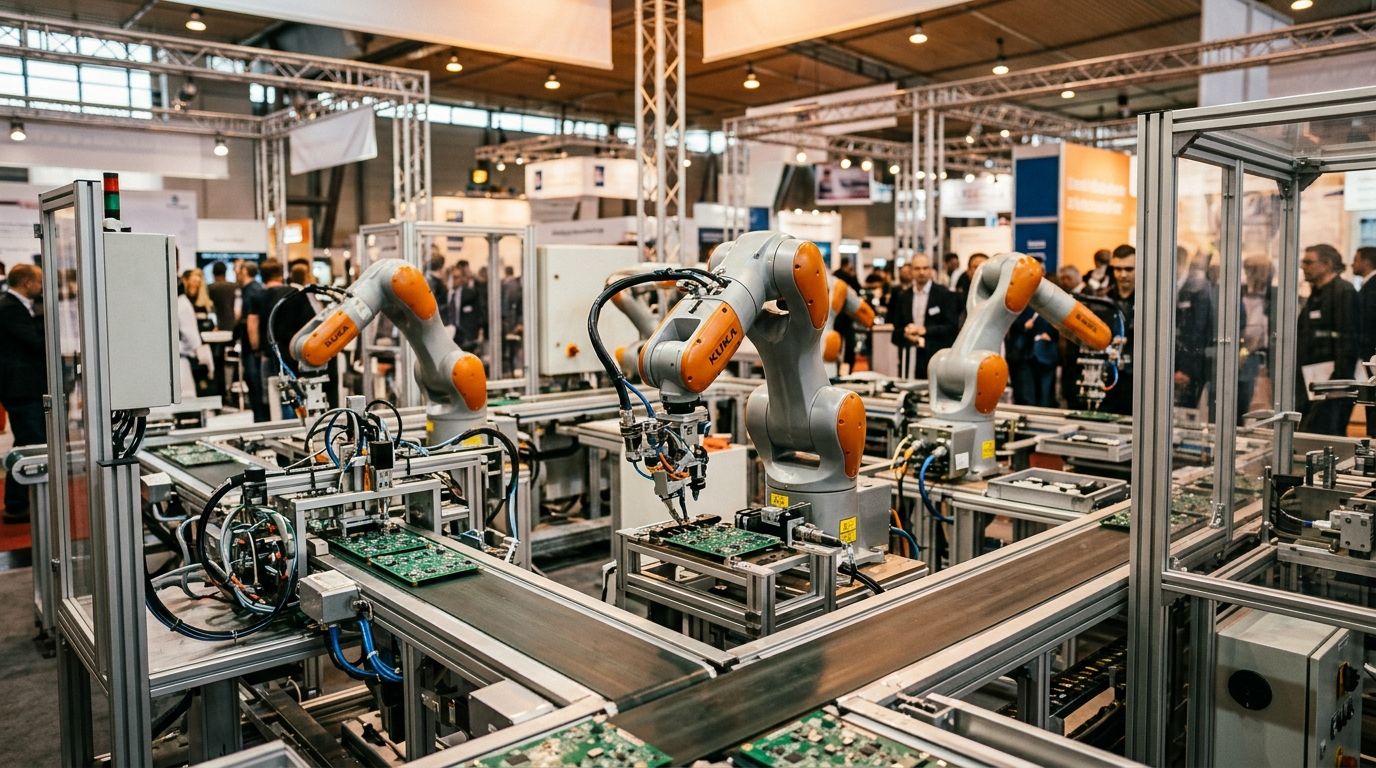
The clearest evidence of what this partnership looks like on a factory floor came from Siemens, which used the summit to showcase new AI-driven autonomous-manufacturing work built jointly with NVIDIA at its Erlangen plant, a facility Siemens is positioning as a reference site for autonomous manufacturing rather than a one-off pilot. Siemens cited two specific efficiency figures from that work: fully virtual production ramp-up, meaning a new product line is simulated and validated digitally before any physical retooling begins, cuts engineering effort by up to 85 percent, and agent-based production planning, where software agents rather than fixed schedules allocate machine time and material flow, delivers cost savings of up to 20 percent.
Those numbers matter more than the summit theater around them because they translate directly into the two line items every manufacturing buyer already tracks: the engineering hours spent before a line produces its first saleable unit, and the ongoing cost of running that line once it is live. An 85 percent reduction in ramp-up engineering effort, if it holds outside a flagship reference factory, would materially shorten the payback period on any automation investment that currently requires extensive manual commissioning. German industrial-automation suppliers that compete with Siemens on cobot and factory-software contracts, and the manufacturers evaluating them, now have a concrete efficiency claim to test their own systems against rather than a vendor's marketing language alone.
The Pattern Behind a Single Summit Announcement
The Agile Robots investment extends a pattern rather than opening one. NVIDIA has previously backed the German AI firms n8n, Neura Robotics and Black Forest Labs, meaning Agile Robots joins a growing roster of companies NVIDIA has chosen to fund directly inside the German market rather than only sell compute and software licenses into. For a European robotics startup competing against Agile Robots for the same manufacturing or logistics contracts, that roster is the more durable competitive signal than the Berlin summit theater itself: it shows which companies NVIDIA has judged worth capital, not only partnership, and capital tends to buy priority access to NVIDIA's own engineering roadmap on top of the funding itself.
That dynamic puts pressure on European robotics makers outside NVIDIA's investment roster to either secure comparable backing from a rival compute platform or compete on a different axis entirely, such as deployment speed, vertical specialization, or price, since matching Agile Robots' combination of government-level standardization support and direct NVIDIA capital is not something a smaller competitor can replicate quickly. The practical question for a European manufacturer sourcing a humanoid or industrial-arm supplier over the next two years is no longer only which platform performs best in a demo, but which platform's backers are also shaping the standards body that supply chain will eventually have to comply with.
Reading the Political Framing Against the Commercial Bet
Merz used the summit to stake out an explicitly competitive position for Germany in the global AI race. "I'm really optimistic that we will be one of the leading, if not the leading, country in the world," he said, pairing that ambition with a direct appeal to the Mittelstand, Germany's base of small and mid-sized industrial manufacturers that form the backbone of the country's export economy: "Please open your doors for AI to make use of your data." That line is aimed squarely at the sector's long-standing caution about sharing proprietary production data with outside AI vendors, a caution that has arguably slowed German industrial AI adoption relative to looser data-sharing environments elsewhere.
Huang, for his part, framed the partnership in terms designed to reassure rather than unsettle that same audience. "AI can only augment your capability, it will not replace your capability," he said, a formulation aimed at factory owners and skilled workers wary that industrial AI adoption functions as a prelude to workforce reduction rather than a productivity tool. Whether that framing holds up depends less on NVIDIA's rhetoric than on how German manufacturers experience the Siemens-style deployments now being held up as proof of concept: an 85 percent cut in engineering effort is, by definition, work that no longer needs to be done by someone, even if the stated intent is to redeploy that labor rather than eliminate it.
What This Means for Buyers Outside Germany
For robotics and automation buyers outside Germany, the practical signal is less about any single investment than about the standardization effort the Industry 4.0 Platform is positioned to drive. A government-industry body with NVIDIA formally embedded inside it has the scale to push common technical standards for industrial AI across supply chains that German manufacturers sit inside globally, from automotive to machine tools. A supplier or integrator selling into that supply chain should expect compatibility with NVIDIA's industrial AI stack, whatever form that takes once the Joint Declaration of Intent produces concrete technical specifications, to become a default procurement expectation rather than a differentiator.
The quantum-computing research NVIDIA separately announced from the same visit, a large-scale simulation of a fault-tolerant quantum processor run on the Jülich Supercomputing Centre's JUPITER system, sits outside the industrial AI story but underlines the scale of compute infrastructure NVIDIA is positioning around its German relationships. It is a research result, not a product, and buyers evaluating near-term industrial AI procurement should treat it as context rather than as part of the same purchasing timeline as the Agile Robots investment or the Siemens factory work.
The Test That Follows the Announcement
Declarations of intent between governments and technology vendors are common at summits like this one, and most produce more press coverage than deployed hardware. What distinguishes this one is that it arrived alongside a named factory with published efficiency numbers and a named robotics company receiving direct capital, rather than only a framework for future cooperation. The next eighteen months will show whether Siemens' Erlangen figures replicate at other sites under the same Industry 4.0 Platform umbrella, and whether Agile Robots converts its NVIDIA backing into humanoid or arm deployments that reach customers beyond pilot programs. Buyers negotiating automation contracts with German suppliers over that period have a specific, dated reference point to hold both companies to.
This account synthesizes NVIDIA's public announcement of the Berlin meeting alongside statements from Chancellor Merz, Jensen Huang and Siemens.
Disclaimer: This article is for informational purposes only and does not constitute investment, financial, or procurement advice. Readers should conduct independent due diligence before making business or purchasing decisions based on the information presented.