GlobalFoundries Didn't Let a Robot Near a Wafer. It Let One Into the Basement.
A new Boston Dynamics deal expands Spot's chip-fab inspections and sets up 2027 Atlas testing at GlobalFoundries, but neither robot has been let anywhere near the cleanroom floor where wafers actually move.

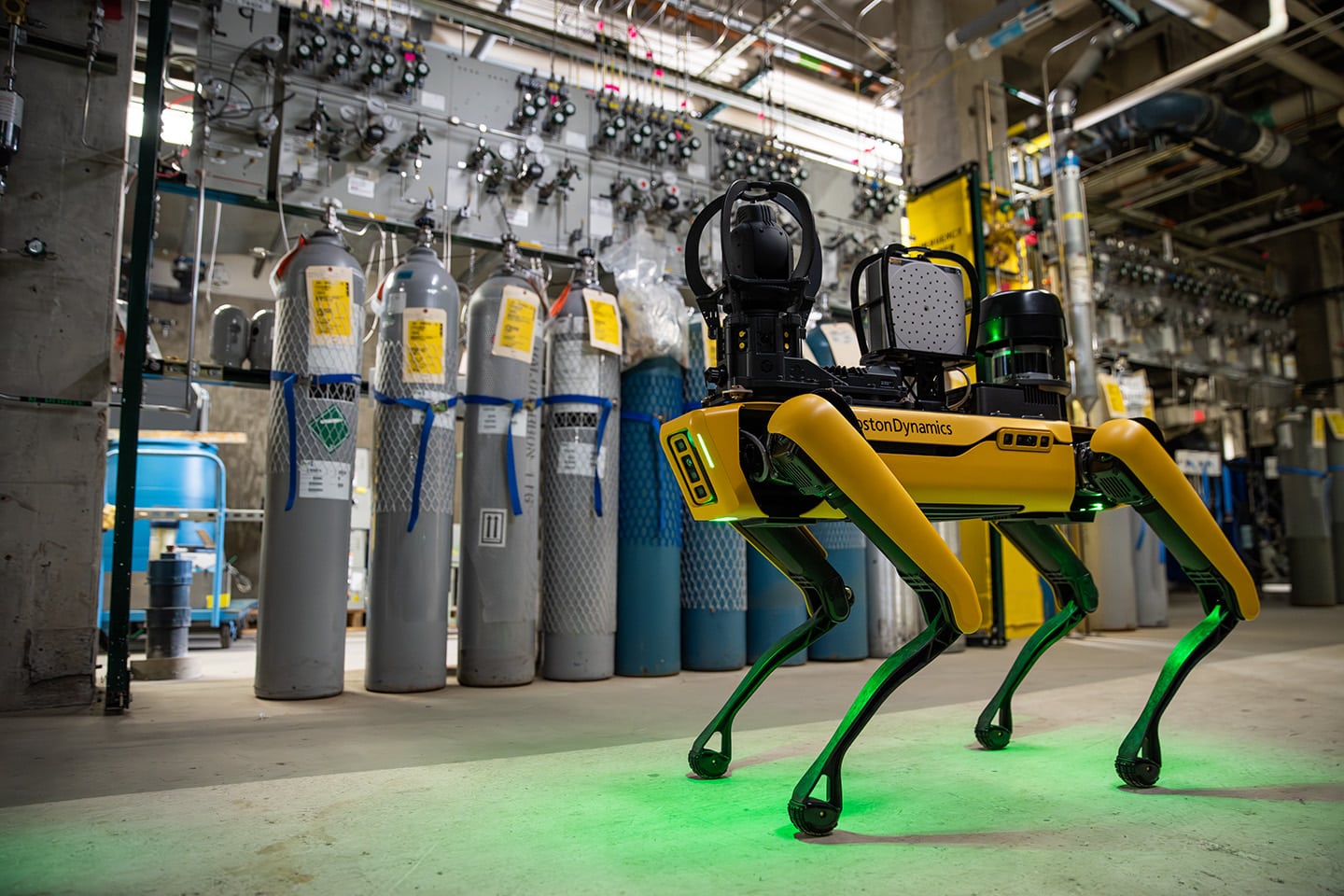
Look at the photo GlobalFoundries and Boston Dynamics released on November 17. A yellow quadruped stands among gas cylinders, pressure regulators and overhead piping, reading a gauge in a cramped utility room most chipmakers never let a camera near. Headlines have already filed this under "humanoid robots enter chip manufacturing." The robot in that photo is not a humanoid. It is Spot, and the room is what fab engineers call the sub-fab: the mechanical floor beneath the one where wafers actually move. Atlas, the humanoid half of this story, has not set foot in a GlobalFoundries building yet. Its testing is scheduled to start in early 2027.
The chip industry has not let a legged robot anywhere near a wafer. It has let one into the basement. The gap between those two sentences is the part the coverage keeps skipping.
What Was Actually Announced
Strip the release to its facts and the story is narrower, and more interesting, than "humanoid comes to semiconductors." Boston Dynamics and GlobalFoundries have worked together for more than four years, since an earlier case study at the company's Burlington, Vermont, facility. The November 17 announcement expands Spot's inspection routes to four sites: Malta, New York; Burlington, Vermont; Dresden, Germany; and Singapore. In Singapore, two Spot units have covered nearly 900 kilometers and logged more than 90,000 inspections in sub-fab areas since April, with a 99 percent mission-success rate. At Burlington, GlobalFoundries says it redeployed 875 routine inspections to Spot in two weeks and plans to more than double that figure.
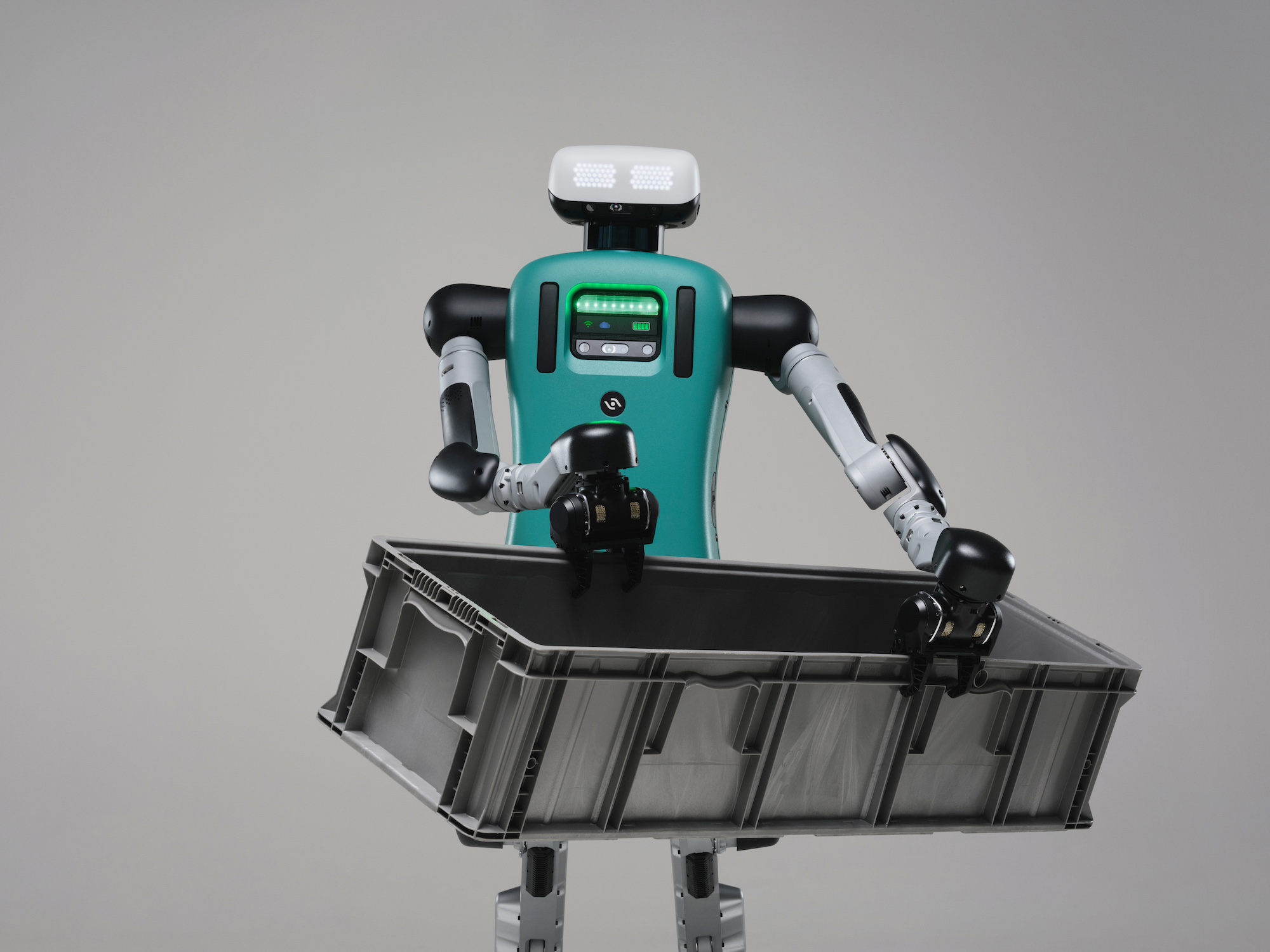
Atlas enters through a separate door: GlobalFoundries becomes the first customer outside the automotive industry in Boston Dynamics' early-adopter program, described by the company as evaluating "customer readiness and integration needs" ahead of onsite testing next year. Atlas itself is still, in Boston Dynamics' own words, "currently in early production." Pradip Singh, GlobalFoundries' chief manufacturing officer, frames the payoff in maintenance terms: "Spot has helped us shift from reactive to predictive maintenance." Zack Jackowski, Boston Dynamics' chief product and technology officer, describes GlobalFoundries as one of the company's earliest Spot customers, now scaling the program globally. Neither man claims a robot has touched a wafer. Nobody needed to ask them to leave that part out. It was never on the table.
The Floor the Robot Still Can't Reach
A semiconductor fab is really two buildings stacked on top of each other. The clean side is the one people picture: filtered air, gowned technicians, wafers moving between tools in sealed pods. The sub-fab is the unglamorous machine room underneath it, full of the pumps, chillers, gas cabinets and exhaust systems that keep the clean side running. That is where Spot's 90,000 Singapore inspections happened. That is where Atlas is scheduled to start.
The clean side solved its robot problem decades ago, and not with anything that walks. Wafers travel inside foundry fabs on overhead hoist transport systems: rail-mounted vehicles that carry sealed cassettes along tracks above the tool floor, handing them off to load ports without a hand, wheel or paw ever touching the wafer or the air around it. That architecture exists because cleanrooms are classified by how few particles of a given size are allowed per cubic meter of air, and a legged machine is a particle generator by design. Joints shed friction debris. Actuators run hot. Cables and hinges collect dust that a sealed overhead rail never will. Neither company's release mentions a timeline, or even an ambition, for putting Spot or Atlas on that side of the building. That omission is not an oversight. It is the actual boundary of what this deal proves.
A Pattern Bigger Than One Fab
Set GlobalFoundries next to the rest of this month's humanoid news and the pattern holds. GXO and Apptronik's planned 1,000-robot Apollo rollout, announced November 14, is a warehouse story: aisles, shelves and cardboard, not clean-room tolerances. Earlier this year, Hyundai paraded Atlas at the FIFA World Cup, a showcase built for cameras, not throughput. Each of these puts a legged or humanoid machine inside a company's real estate. None of them puts one inside the specific process that company exists to run. A warehouse robot moving boxes, a stadium mascot waving at a crowd and a quadruped reading a pressure gauge one floor below the wafers are three different jobs wearing the same "humanoid milestone" headline.
That is worth sitting with for a second: the industry keeps measuring progress in buildings entered, not processes touched.
The Real Win, and Its Limit
None of this makes GlobalFoundries' expansion hollow. Predictive maintenance on gas systems and pumps is genuinely valuable work, and it is exactly the kind of job a mobile inspection robot is good at: repetitive, data-rich, and often dangerous enough that keeping a human technician out of a high-pressure gas cabinet room is a safety win on its own terms. A 99 percent mission-success rate across 90,000 inspections is a real operational number, not a demo reel. GlobalFoundries renewed and expanded a four-year-old program because the sub-fab work pencils out, not because a press cycle demanded it.
But that value is identical in kind to what mobile inspection robots already do in oil refineries, power plants and water treatment facilities. It says nothing new about whether a legged machine can handle anything resembling precision semiconductor work, and the early-adopter language around Atlas, "integration needs," "task-specific testing," reads like a company being careful not to promise more than a skills workshop one floor below the product it actually makes.
What Would Actually Change the Story
The test that matters is not another press release about site count or inspection volume. It is whether Boston Dynamics or any competitor ever publishes a photo of a legged robot on the clean side of a production fab, among the tools where wafers are actually handled, rather than beneath it among the gas lines. Until that photo exists, every "robot enters the chip fab" headline is a basement story borrowing a cleanroom's reputation. Having spent years cataloguing robot deployments for a living, the gap between where a press release photographs a robot and where that robot is actually allowed to work is, in my experience, the single most reliable predictor of how much of the surrounding coverage to discount.
This account draws on Boston Dynamics' and GlobalFoundries' own November 17, 2026 release materials and prior, independently verified reporting on related humanoid deployments. It is for general information purposes only and does not constitute investment, financial, or legal advice.
Hero image: Boston Dynamics.