Agility Robotics Goes Public With US$174,000 Revenue, US$362 Million Loss
Agility Robotics began trading on Nasdaq as AGLT on November 5, disclosing US$174,000 in first-half 2026 revenue against a US$362 million loss, the first audited unit economics the humanoid-robotics sector has had to show.

Agility Robotics began trading on the Nasdaq Stock Market on November 5, 2026, under the ticker AGLT, completing a reverse merger with the special-purpose acquisition company Churchill Capital Corp XI and becoming the first pure-play humanoid robotics maker on a United States public market. The listing also delivered the company's first public financial disclosure: US$174,000 in revenue against a US$362 million net loss for the first half of 2026.
Churchill XI shareholders approved the combination on November 2 with more than 84 percent of votes cast in favor, and the deal closed two days later. The transaction raised approximately US$465 million in gross proceeds before expenses: roughly US$164 million from Churchill's trust account, about US$201 million from a common-stock private placement at US$10 a share led by Foxconn, and US$100 million in equity funding Agility had already collected since the merger was announced in October. The renamed entity, domesticated from the Cayman Islands to Delaware, trades alongside warrants under AGLTW.
A Decade of Engineering Meets a Single Quarter of Accounting
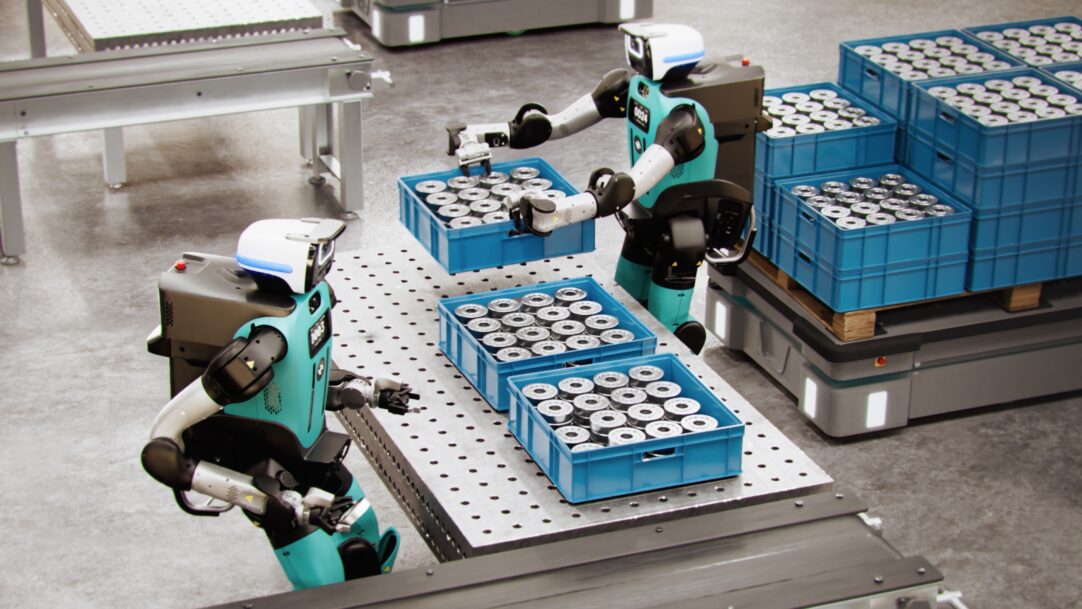
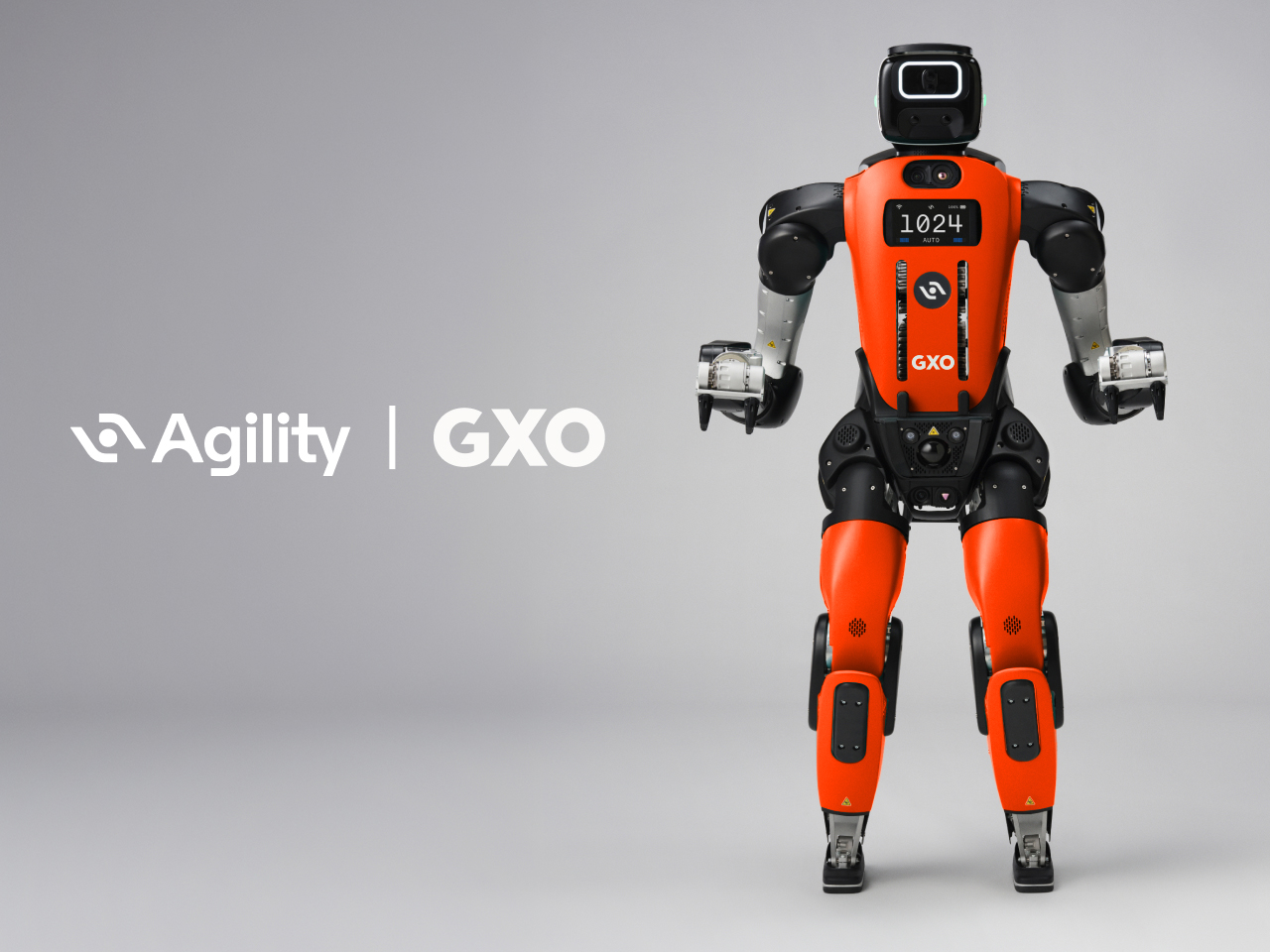
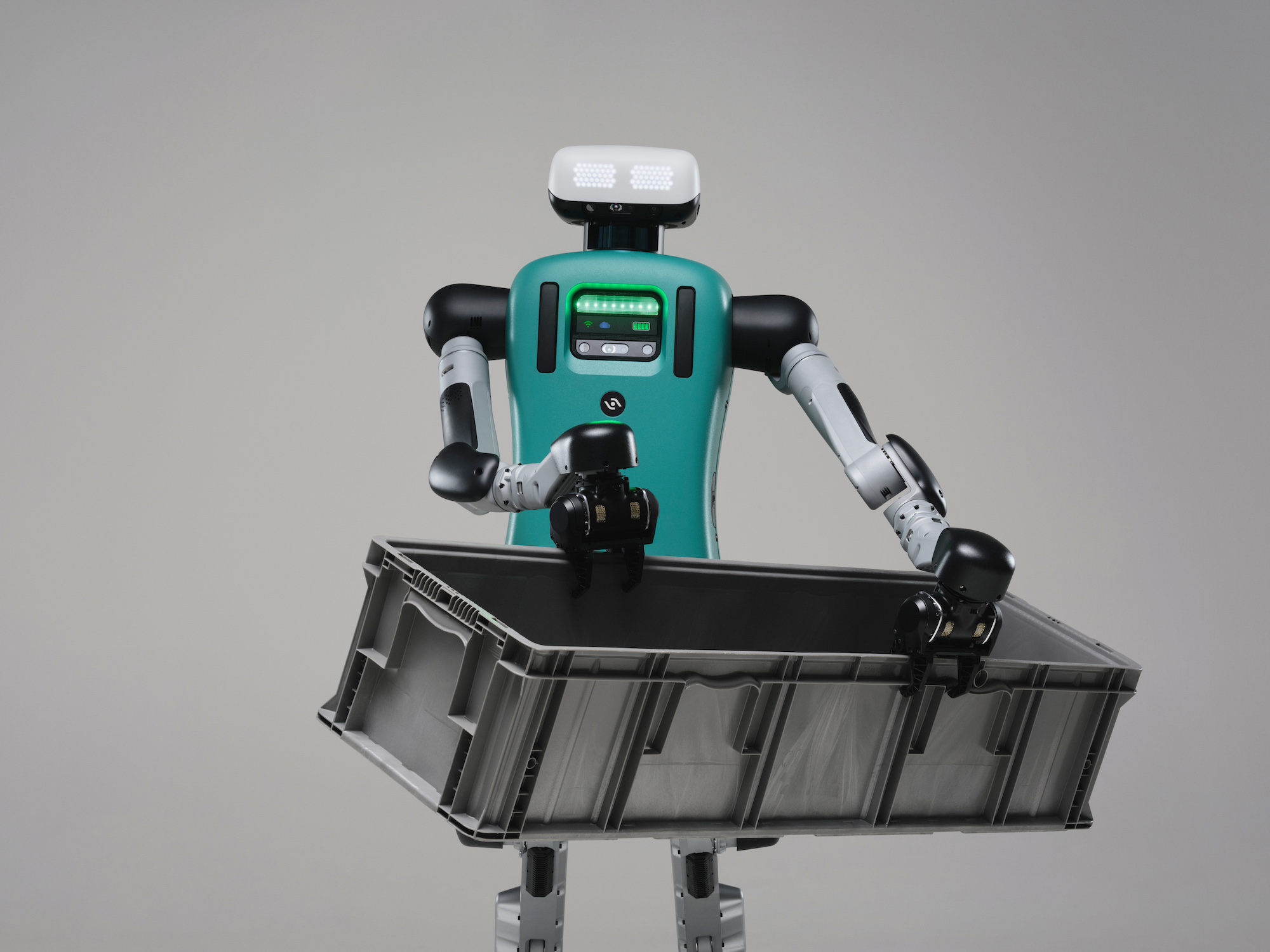
Agility was spun out of Oregon State University in 2015 and has spent the years since building Digit, a bipedal humanoid designed for tote-handling and trailer-unloading work in warehouses. The company says Digit has logged more than 65,000 hours of real-world operation at nine customers, including Schaeffler, GXO, Toyota Motor Manufacturing Canada, and Mercado Libre. That operating history is real. What going public added was a set of numbers procurement teams can now hold the company to rather than take on faith.
Agility is headquartered in Salem, Oregon, with engineering offices in Pittsburgh and Fremont, California, and until now it set its own pace for disclosing how that decade of work was translating into paying customers. A public listing removes that discretion. From this quarter forward, Agility reports revenue, losses, and cash burn on the same calendar every other listed company follows, whether or not the numbers flatter the pitch.
Chief executive Peggy Johnson, in comments tied to the listing, framed the gap plainly: the SPAC capital covers what Agility needs today but does not by itself guarantee the company reaches self-sustaining revenue. Spending more than US$2,000 for every dollar of revenue in a single half-year is not unusual for a hardware company mid-scale-up, but it is the kind of ratio that used to live inside a venture capital data room rather than a quarterly filing. Buyers evaluating Digit against a build-versus-buy decision, or against a rival platform, now get to see that ratio every quarter, not just when Agility chooses to disclose it.
What the Pipeline Numbers Are Actually Worth
Johnson pointed to US$300 million in planned contracts from 30 customers lined up for Digit 5, the next-generation robot due to be demonstrated publicly at CES 2027 and broadly available by the end of that year. She declined to name the customers or confirm whether any are also investors in the company, which is a reasonable disclosure boundary for a newly public firm but also means the figure cannot yet be checked against named deployments the way the current nine-customer list can.
The commercial mechanics behind that pipeline are more concrete. A proof-of-concept engagement costs a prospective customer US$500,000, and four customers had signed on to that tier as of May 2026. Agility says a single Digit unit can save a customer roughly US$100,000 a year under its robot-as-a-service pricing, a figure built on the idea that warehouse tote-handling is a job, in Johnson's words, that "you don't want to give a human." The company's own performance data backs part of that pitch: Digit places loads with 98 percent accuracy. It is less convincing on the harder half of warehouse work, where fine-grained manipulation, irregular packaging, and mixed-SKU picking still sit mostly beyond what the robot can do unsupervised.
Manufacturing Capacity Is Not the Same as Manufacturing Demand
Agility says its production facility can build up to 10,000 Digit units a year, a figure the company has not paired with an actual production target or a backlog number large enough to use that capacity. That gap between theoretical throughput and contracted demand is the single most useful thing a procurement buyer can take from this listing: Agility has solved the harder engineering problem of making a humanoid that can run a real shift in a real warehouse, and it has not yet solved the easier-sounding but commercially tougher problem of filling an assembly line with firm orders.
This is where the listing reframes, rather than repeats, the story RobotAIGeek covered when Agility first announced it was going public. That earlier story was about strategic posture: Agility choosing to sell robots as a standalone public company while competitors chose to be absorbed into larger industrial parents or acquired outright. The trading debut replaces that strategic question with an accounting one. The market now has quarterly visibility into whether a humanoid-robotics pure-play can grow revenue faster than it burns cash, and the first data point is not close.
The First Public Benchmark the Sector Did Not Ask For
Humanoid robotics has raised enormous private capital over the past two years without a single company disclosing audited unit economics the way a public filer must. Figure, Apptronik, and China's wave of humanoid builders have all cited pilot deployments and letters of intent, but none of them face the quarterly reporting discipline Agility now does. That makes AGLT, whether Agility intended it or not, the first real public benchmark for what humanoid-robot revenue actually looks like at this stage of the industry, rather than what venture pitch decks project it will look like in three years. Every competitor's internal numbers will now get measured against a public one, and every procurement team negotiating with a private humanoid vendor gains a reference point for how aggressive that vendor's growth claims probably are.
That visibility cuts in Agility's favor in one respect: a buyer can verify its claims instead of relying on vendor-supplied projections, which lowers the due-diligence cost of including Digit on a shortlist. It cuts against Agility in another. Competitors still operating privately can keep claiming faster growth and tighter losses without anyone checking the math, while Agility's numbers are now a matter of public record every quarter, available to customers, competitors, and short-sellers alike. Being first to disclose is not obviously an advantage in a sector where every rival is still allowed to round up.
The Comparison Buyers Should Actually Be Making
None of this makes Digit a bad robot or Agility a bad vendor. Ninety-eight percent load-placement accuracy across 65,000 operating hours is a legitimate, hard-won engineering record, not a demo-stage claim. But a public listing changes what due diligence looks like. A procurement team evaluating Digit against a conventional automated storage and retrieval system, or against a rival humanoid still operating as a private company, can now run Agility's unit economics against its own cost-of-capital assumptions using real disclosed numbers instead of vendor-supplied projections. That is a meaningfully different conversation than the one available before November 5.
It is also worth separating two decisions that are easy to collapse into one. Deciding whether Digit is the right robot for a specific tote-handling or trailer-unloading task is a capability question, and the nine-customer deployment history plus the 98 percent accuracy figure answer it reasonably well for that narrow job. Deciding whether to bet a capital budget on Agility as a company surviving to profitability is a separate, harder question, and the US$362 million half-year loss means that bet still depends on Digit 5 landing enough of that US$300 million pipeline to matter. A procurement team can reasonably say yes to the first question and still want contractual protection, such as a service-continuity clause or an escrow arrangement, against a negative answer to the second.
The honest reading of the listing is that it tests, in public and on a quarterly clock, whether warehouse operators are actually willing to pay humanoid-robot prices for tasks that cheaper fixed automation or contingent labor already covers at scale. Agility's bet is that the flexibility of a general-purpose bipedal robot, deployable without reconfiguring a facility, is worth the premium once Digit 5 ships. The nine-customer base says some buyers already believe that. The US$362 million loss says the rest of the market has not yet been convinced it is worth paying for broadly.
For every dollar of revenue Agility reported in the first half of 2026, it spent more than US$2,000 getting there. That is the number this listing put on the public record, and it is the one every quarterly filing from here will be measured against, starting with whatever Agility reports for the second half of 2026 once Digit 5 orders begin converting into booked revenue rather than pipeline estimates.
This analysis synthesizes company statements, regulatory filings tied to the transaction, and public market activity around Agility Robotics' Nasdaq listing.
Disclaimer: This article is for informational purposes only and does not constitute investment, financial, or legal advice. Figures are drawn from public company and regulatory disclosures current as of publication and may change.