China Warned of a Robot Bubble. Shanghai Just Ordered 8,000 More.
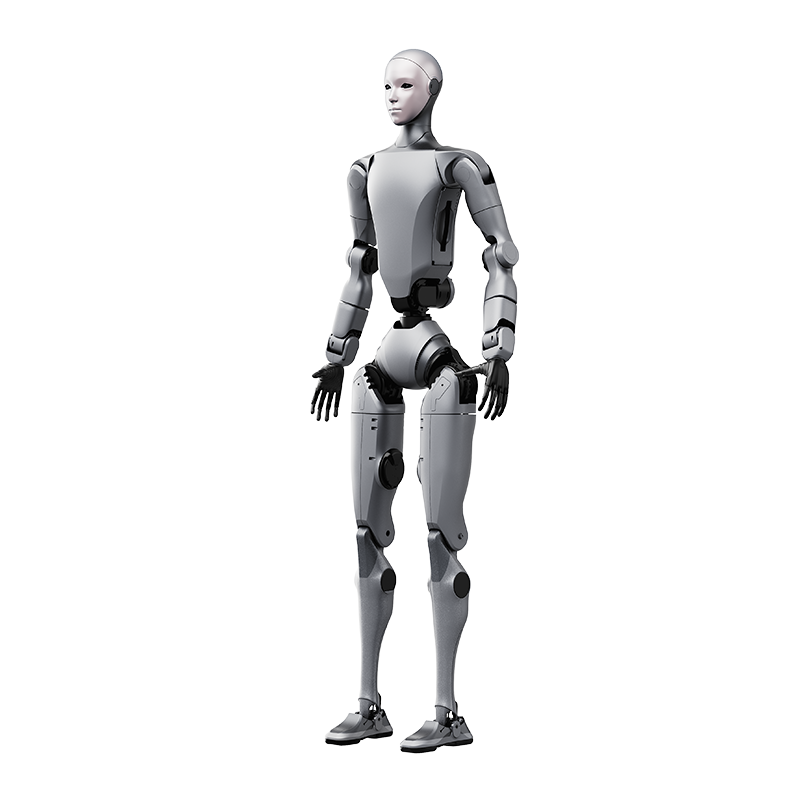
China's National Development and Reform Commission warned in November 2025 that the country's humanoid robot sector had too many near-identical companies chasing an unproven market. A year later, Shanghai answered with a quota: 8,000 humanoid robots into local factories by 2028, regardless of whether factory operators had asked for them. For buyers outside China, the revenue rankings crediting Chinese manufacturers with global leadership increasingly measure procurement policy, not proven demand.

Beijing's top economic planning agency stood in front of reporters in November 2025 and said, in effect, that the country's humanoid robot industry had a problem: too many companies selling versions of the same thing into a market that had not yet said it wanted them. Shanghai's answer, delivered almost exactly a year later at the opening of the China International Industrial Fair, was not fewer entrants or clearer demand signals. It was a quota. Eight thousand humanoid robots into local factories by 2028, set by target rather than pulled in by orders.
That is the detail missing from every chart this month showing Chinese manufacturers taking the top spots in global humanoid robot revenue. Some of that lead is being manufactured by procurement policy, not by buyers choosing the product on its merits.
The warning nobody in the rankings mentions
At a routine November 2025 press briefing, a National Development and Reform Commission spokesperson, Li Chao, told reporters that China already had more than 150 humanoid robot companies, over half of them startups or newcomers crossing over from other industries. She called that good for innovation, then pivoted to the risk directly: the market needed protecting against nearly identical products "crowding in" at launch, and against the kind of competition that squeezes out real research spending. The commission's stated next step was to build out industry entry and exit mechanisms, so that a company could actually fail and leave the market, not just keep raising on the story.
Fourteen months on, there is no public sign that mechanism exists yet. What exists instead is a bigger target.
What the money people already knew
Venture investors reached that conclusion earlier and more bluntly than any regulator. In March 2025, Zhu Xiaojun of GSR China Investment, one of the most prominent early backers of China's robotics sector, told an audience at a Shanghai Jiao Tong University alumni investment forum that the hype around embodied intelligence had gotten so loud even his mother had started forwarding him articles about it. He said his fund was already exiting some of its early embodied-intelligence positions, and framed the sector's trajectory the way he has framed other cycles he has lived through: hype, bubble, a die-off, then whatever survives earns the right to call itself an industry. He said embodied intelligence was still waiting for its own breakout proof point, the kind of moment that forces a market to take a technology seriously on the merits rather than the pitch. Other investors in the room pushed back, arguing some froth is normal in any sector building toward a real outcome. Both things can be true. That is what a bubble sounds like from the inside, before anyone agrees on what to call it.
Shanghai's answer: a quota, not a verdict
The plan Shanghai launched on October 12, called the city's action to accelerate next-generation smart manufacturing, runs four major initiatives across nineteen specific tasks. Buried inside the industrial-robot-density targets and smart-factory counts is the headline number: 8,000 humanoid robots working inside Shanghai factories by 2028, alongside a target of 600 industrial robots per 10,000 workers and 500 advanced-tier smart factories. The plan also targets smart-manufacturing equipment output above ¥200 billion, roughly US$28 billion, by the same date.
Read next to the NDRC's own warning, the irony is hard to miss. A regulator spent a news conference cautioning against identical products crowding into the market before demand had proven itself. A year later, a city government set a specific unit count for exactly that category of robot, hit by a specific date, independent of whether factory operators had actually asked for it. That is not the market correcting itself. It is a government underwriting the very dynamic the warning described, just moved up a level, from company strategy to municipal policy.
A government target is not demand. It is demand's understudy, rehearsing a part the market has not cast yet.
Three ways to place a robotics bet, in the same week
It helps to see what the alternative looks like, and three other robotics stories broke the same week as Shanghai's plan. Kodama Systems raised a modest US$7 million to scale teleoperated forestry robots, a narrow, unglamorous niche where the buyer is a logging operator with a specific labor-safety problem and a syndicate of climate- and forestry-focused funds willing to underwrite it. Doosan Robotics handed its technology roadmap to an executive who built his career in autonomous driving, importing operational discipline from an industry that has already been forced to prove its autonomy claims against real-world liability, rather than minting a new humanoid narrative from scratch. NVIDIA and the German government built an industrial AI pact around Agile Robots and Siemens, a bet on owning the software layer other manufacturers' equipment runs on, not a bet on a specific robot headcount by a fixed year.
None of those three bets look like Shanghai's. Each ties its sizing to a specific, named buyer or technical problem. Shanghai's ties its sizing to a date on a government action plan.
What a buyer outside China should actually read in the ranking
A market-research estimate has been circulating this month, crediting Chinese manufacturers with the top five positions in global humanoid robot revenue for the first half of 2026, built on a reported 36,000 units shipped and roughly US$540 million in revenue industry-wide. Treat that figure for what it is: one research firm's estimate, not an audited disclosure, and increasingly a number built on a market where a meaningful share of forward demand is now a government procurement target rather than an enterprise buyer's independent purchase decision.
I read vendor pitch decks from a desk in the Philippines, where "China already leads humanoid robotics" shows up as a closing argument more often than a caveat. The ranking is real. What it is evidence of is not. A regulator warning about product homogeneity, an early-stage investor disclosing exits, and a city government answering both with a unit quota is not the profile of a technology that has found its buyer. It is the profile of an industry still manufacturing its own demand curve, one policy target at a time.
China's manufacturing scale, parts cost, and iteration speed are genuine advantages that will outlast any single subsidy cycle, and no buyer should mistake this column for a bet against Chinese hardware winning on cost. The distinction worth holding onto is narrower: scale advantage and demand validation are not the same fact, and only one of them is currently being measured. The number worth tracking between now and 2028 is not another revenue ranking. It is whether the entry and exit mechanism the NDRC promised in November 2025 ever forces one of those 150-plus companies to actually fail, or whether Shanghai's quota becomes the template every other city copies to keep the shakeout from starting at all.
This analysis reflects the author's own reading of the National Development and Reform Commission's November 2025 press briefing transcript, public reporting on Zhu Xiaojun's March 2025 remarks at the Shanghai Jiao Tong University alumni investment forum, multiple independent reports on Shanghai's October 12, 2026 smart-manufacturing action plan, and this week's reporting on Kodama Systems, Doosan Robotics, and the NVIDIA-Germany industrial AI pact. It is provided for general information purposes only and does not constitute investment, legal, or professional advice.
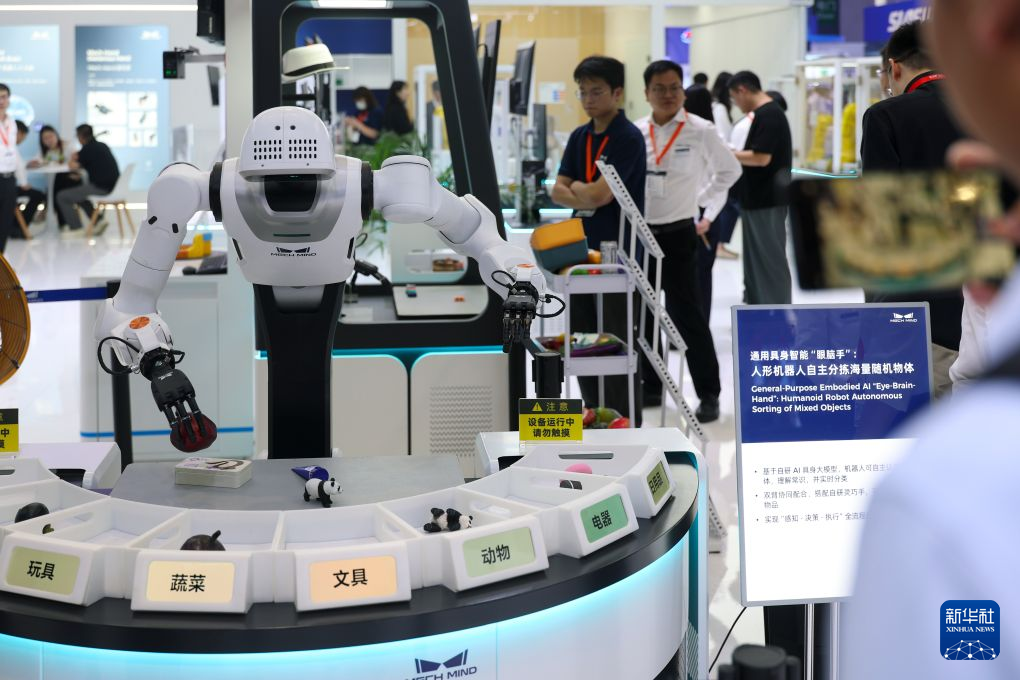
Hero image: a general-purpose embodied-AI robot sorting objects at the 2026 China International Industrial Fair in Shanghai, October 12, 2026. Photo: Xinhua News Agency.