DESCRIPTION
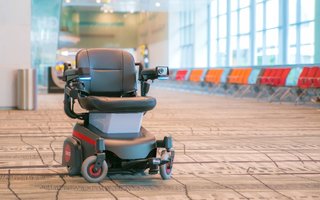
GAROO is a Medical-Robots from Doog. It is built for Medical-Assistance, Helping, Transport. Key figures: 52 kg, 100 kg payload.
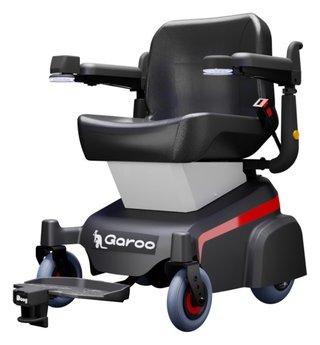
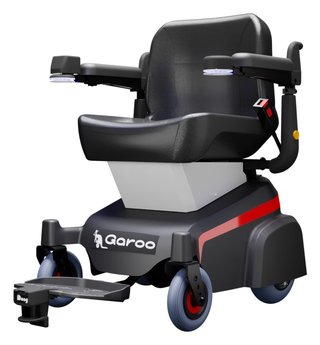
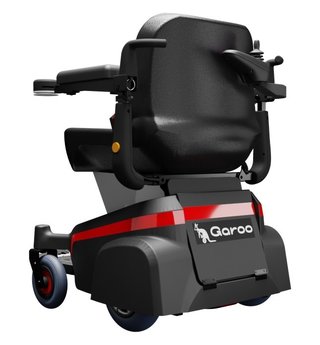
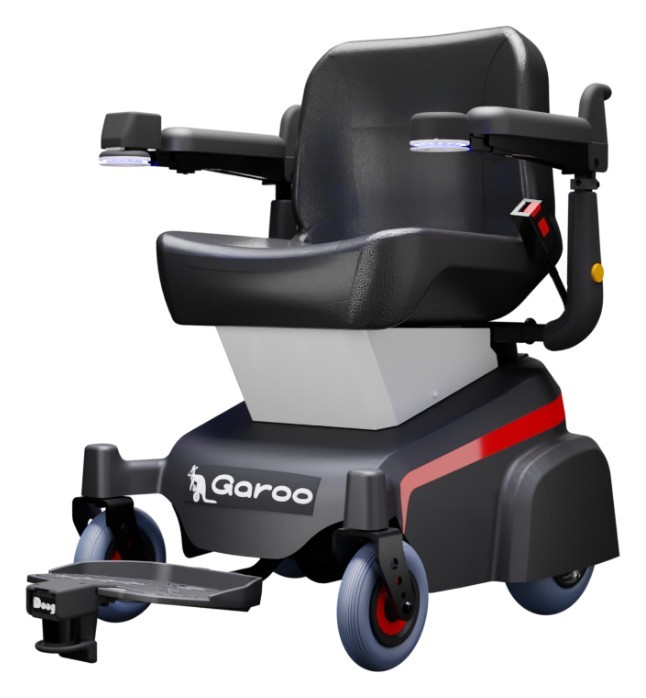
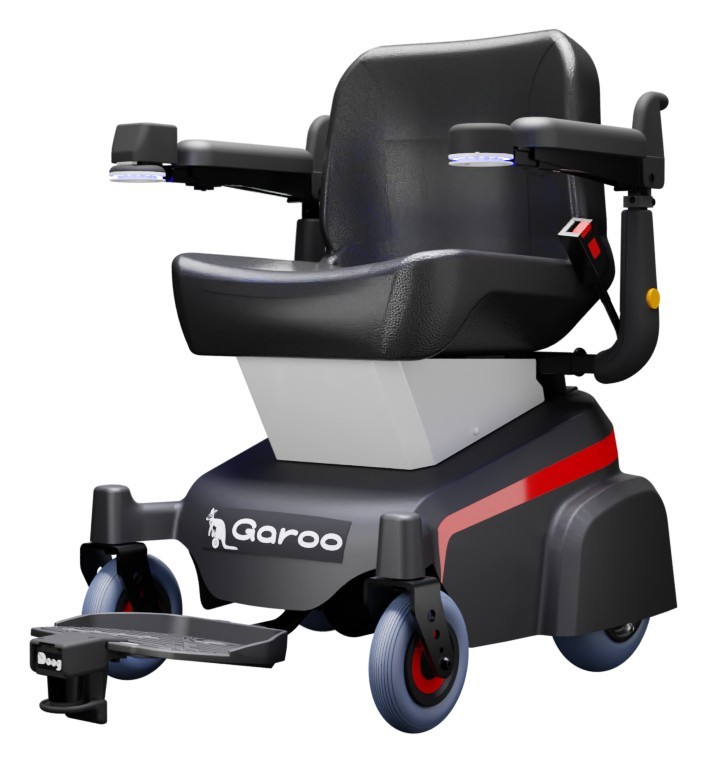
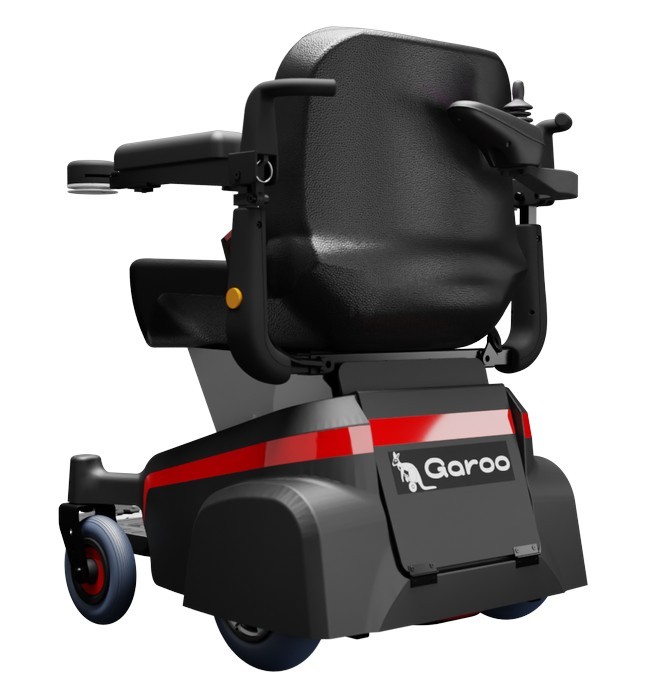
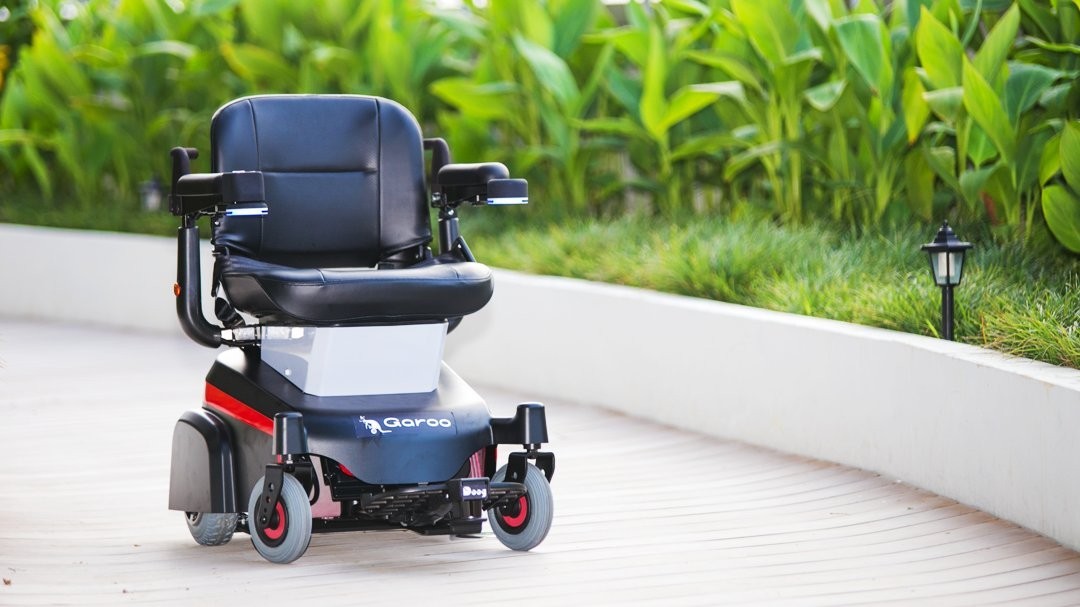
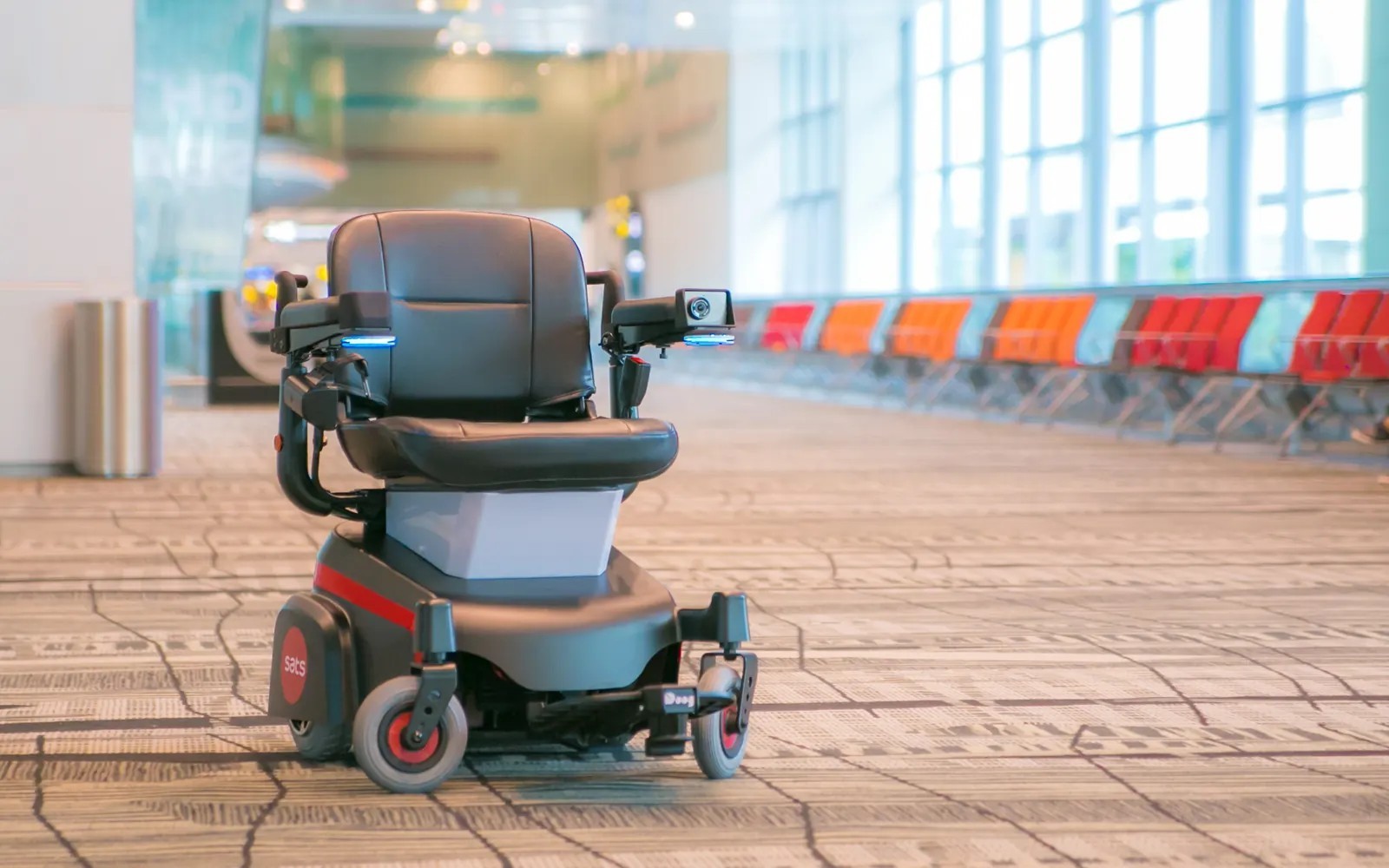
GAROO is Doog's robotic wheelchair for airports, hospitals and other large facilities that move passengers or patients every day. It uses the same navigation technology as the THOUZER robotic cart in wheelchair form and works in Follow-Me mode: a LiDAR sensor tracks the target ahead within a 10 m radius, so GAROO follows a staff member with no map, floor markers or fixed route, and a person stays in charge of every journey. GAROO was developed together with an airport operator, where it is used for passenger mobility services, and is built for organisations rather than personal use. Several GAROOs can be lined up so that the first follows the staff member and each one behind follows the one ahead, letting one staff member lead up to three passengers per trip. It travels at up to 5 km/h, works in all wheelchair-accessible areas up to a 6-degree gradient and covers 10 to 15 km per charge. Safety features include a seat belt that must be fastened before it moves, passenger exit detection by LiDAR that stops it and sounds an alarm, a STOP button for the passenger, and a joystick at the back for staff to take direct control.
FEATURES
- Follow-Me: follows a staff member with LiDAR, 10 m sensing radius
- One staff member leads up to 3 GAROOs in a line
- No mapping, floor markers or fixed route
- one button to start
- Up to 5 km/h
- 6-degree max gradient
- Passenger up to 100 kg
- seat width 460 mm, seat height 460-510 mm
- 10-15 km per charge
- about 8 h charging
- Seat belt interlock and LiDAR passenger exit detection with alarm
- Passenger STOP button
- staff joystick at the back
TECHNICAL SPECIFICATIONS
Verified| Physical | |
| Weight | 52 kg |
|---|---|
| Dimensions | L 825 mm × W 580 mm |
| Payload | 100 kg |
| Mobility | |
| Movement Type | Wheeled |
| Speed | 5 km/h |
| Environment | Airports, hospitals, healthcare centres and other large wheelchair-accessible facilities |
| Power | |
| Battery Life | 480 Wh |
| Sensing & Compute | |
| Sensors | LiDAR (Follow-Me tracking, 10 m radius; passenger exit detection), Seat belt sensor, STOP button |
ROBOT FORUMS
Loading forums...
TECHNICAL SPECIFICATIONS
Verified| Physical | |
| Weight | 52 kg |
|---|---|
| Dimensions | L 825 mm × W 580 mm |
| Payload | 100 kg |
| Mobility | |
| Movement Type | Wheeled |
| Speed | 5 km/h |
| Environment | Airports, hospitals, healthcare centres and other large wheelchair-accessible facilities |
| Power | |
| Battery Life | 480 Wh |
| Sensing & Compute | |
| Sensors | LiDAR (Follow-Me tracking, 10 m radius; passenger exit detection), Seat belt sensor, STOP button |
Images
 martti

 martti
 martti
 martti
 martti
Image Contributions
Videos
ROBOT FORUMS
Loading forums...
RATINGS
FREQUENTLY ASKED QUESTIONS
What is the GAROO?
GAROO is Doog's robotic wheelchair for airports, hospitals and other large facilities that move passengers or patients every day. It uses the same navigation technology as the THOUZER robotic cart in wheelchair form and works in Follow-Me mode: a LiDAR sensor tracks the target ahead within a 10 m radius, so GAROO follo…
Who makes the GAROO?
The GAROO is made by Doog, a robotics company based in Japan.
How much does the GAROO cost?
Doog has not publicly announced pricing for the GAROO. You can enquire through RobotAIGeek for current pricing.
What is the GAROO used for?
The GAROO is designed for medical-assistance, helping, and transport. It is used in airports and healthcare settings.
What is the payload capacity of the GAROO?
The GAROO has a payload capacity of 100 kg.
How much does the GAROO weigh?
The GAROO weighs 52 kg.
How fast is the GAROO?
The GAROO can move at speeds of up to 5 km/h.
COMPARE WITH SIMILAR ROBOTS
See how this robot stacks up against its closest alternatives
- GAROO vs Scewo BRO
- GAROO vs ibot PMD
- GAROO vs Tek RMD M1
- GAROO vs RODEM
- GAROO vs Patient Transfer Bed Robot