Youbaote Raises A+ Round for Hazardous-Work Robots
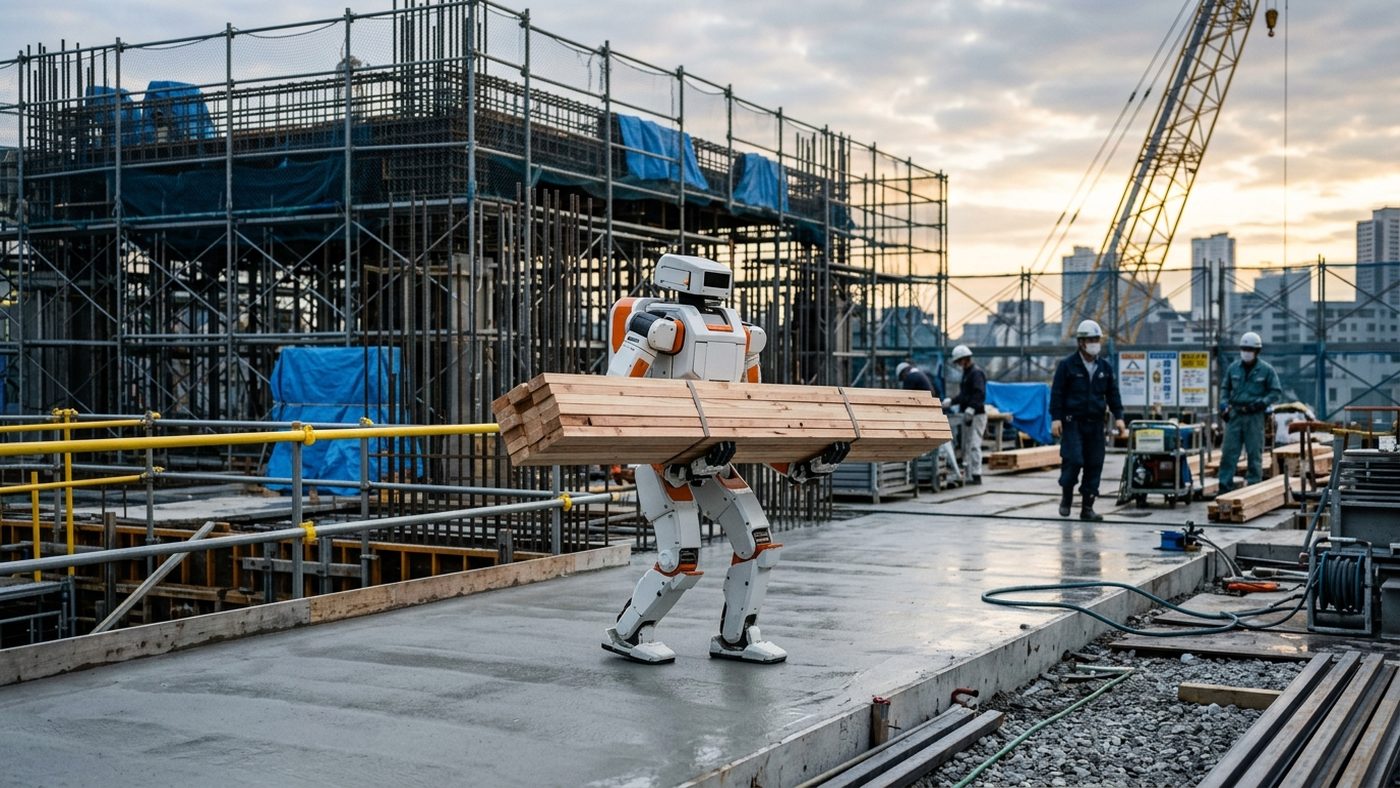
Youbaote raised an A+ round to expand production and service capacity for humanoid and quadruped robots used in mining, power, emergency response, and other hazardous settings.

JINAN, China, Sept. 3, 2026. Shandong Youbaote Intelligent Robot raised an A+ round that a participating investor described as being at the hundred-million-yuan scale. The company plans to use the capital to expand production and service capacity for humanoid and quadruped robots deployed in mines, emergency response, power operations, and other hazardous settings.
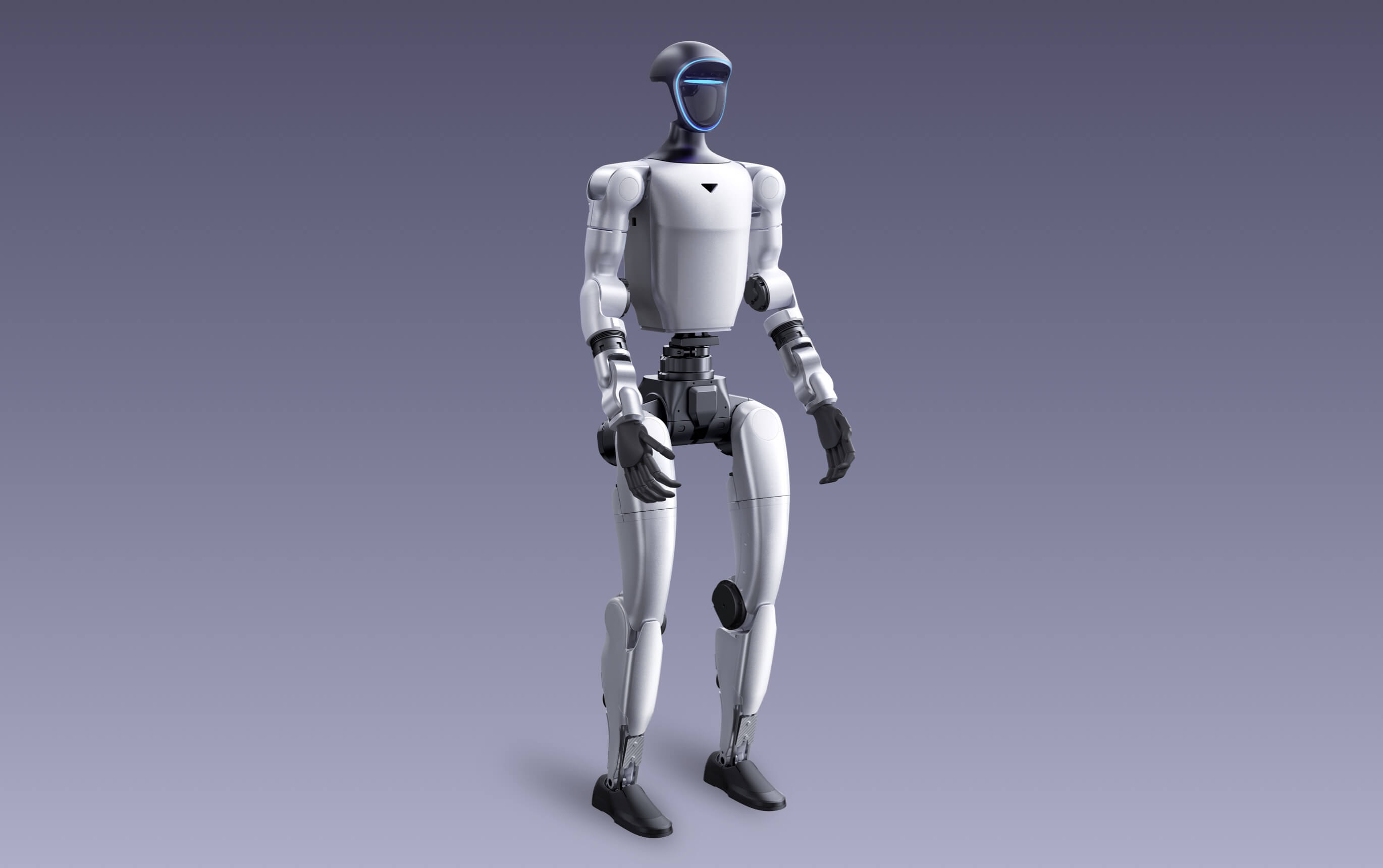
Youbaote, also known in Chinese as 优宝特, is a Jinan-based robotics manufacturer founded in 2014. It develops electrically driven, hydraulically driven, and hybrid legged machines, including the Xingzhe Taishan humanoid and YoboGo quadrupeds. Its niche is not household companionship. It is building robots for unstructured worksites where reliability matters more than a polished stage routine.
Patient Capital Moves Toward Hazardous Work
Orient Securities Capital led the financing. Jinan Xianxing Investment Group and Zibo High-tech Zone Venture Capital joined as new investors, while Lenovo Star added to its earlier position. The exact amount, valuation, and ownership terms were not disclosed. That matters because the phrase used in the announcement establishes broad scale without supporting a precise dollar conversion or a claim about how much cash reached the company.
The more useful information is where management says the money will go. Youbaote plans to strengthen its production and service network across China, add a central China base and a production-assembly facility, and shorten the path between components, final assembly, delivery, and field support. For buyers, that is a better signal than another laboratory video. Industrial customers do not procure a robot body alone. They procure uptime, spare parts, software support, integration work, and a supplier that can reach a failed machine before the worksite loses a shift.
The funding arrives after Youbaote spent more than a decade developing legged systems in Shandong rather than chasing a single consumer-facing product. Its official history traces the company from an early hydraulic servo arm and small quadruped through larger YoboGo machines, high-torque integrated joint motors, and the Xingzhe Taishan humanoid. The thread connecting those products is a focus on machines that can carry sensors or tools through terrain designed for people, not automated guided vehicles.
Reliability Is the Product in a Dangerous Worksite
A mine tunnel, disaster zone, power substation, or industrial inspection route exposes the central weakness in many robot demonstrations. A machine may walk across a clean floor, recover from a planned push, or complete a rehearsed sequence. That does not prove it can work around dust, water, uneven ground, radio interference, poor lighting, heat, or a task that changes halfway through execution.
Youbaote is directing its technical pitch at that gap. The company describes an integrated stack spanning core components, the robot body, motion control, perception, and higher-level task execution. It is also developing an integrated controller designed around high computing capacity and lower power consumption, alongside world-model and reinforcement-learning techniques for dynamic movement and body awareness.
In plain terms, the machine has to solve two jobs at once. It must keep itself upright while deciding what the worksite requires next. A quadruped crossing broken ground cannot treat balance as a separate feature from inspection. Its camera angle, foot placement, battery use, communications link, and route plan all affect whether the customer gets usable data or sends a person into the danger zone anyway.
That is why procurement teams should treat robustness as an operating metric, not a marketing adjective. Useful questions include how often the robot completes a route without intervention, how quickly it recovers from a fall, how long seals and joints survive in the target environment, whether communications fail safely, and how much operator training is required. A financing announcement cannot answer those questions. It can, however, fund the testing, manufacturing controls, and service network needed to produce credible answers.
A Sports Win Is Evidence, Not an Industrial Qualification
Youbaote’s Xingzhe Taishan humanoid recently won a tug-of-war event at the second World Humanoid Robot Games. The company presents that result as evidence of joint output, force control, and dynamic balance. Those capabilities are relevant to industrial work, particularly tasks that require a robot to brace, pull, or remain stable under changing loads.
The limit is equally important. A competition win is not the same as certification for a mine, an emergency-response procurement, or continuous duty at a power facility. Competition rules define the surface, load, duration, and recovery conditions. Real customers define a harsher test through maintenance intervals, safety cases, site integration, and responsibility when the machine stops in a restricted area.
This distinction does not reduce the value of the result. It puts it in the right place. The tug-of-war performance is a technical proof point that can attract buyers and investors. The next proof point must be an operating record. A robot used around hazardous infrastructure earns trust through repeated shifts, documented failures, and repair data, not applause.
The gap between a public demonstration and a deployable system is already visible across China’s humanoid market. Inspection deployments that pass 100 units at PetroChina set a much higher commercial bar because they show a customer expanding use across real sites. Youbaote’s new capital should be judged against that kind of evidence: named deployments, fleet size, repeat orders, and measurable reduction in human exposure.
Regional Capital Is Buying a Manufacturing Footprint
The investor group also reveals how China’s robotics financing market is changing. The round combines a national securities-linked investor, a long-standing early-stage backer, and local government-associated capital from Jinan and Zibo. Each can contribute something different: financial discipline, company-building experience, industrial land or facilities, supplier introductions, and access to regional customers.
That mix is well suited to a hardware company leaving prototype economics behind. A software startup can add customers without duplicating factories. A legged-robot manufacturer must manage actuators, controllers, batteries, seals, castings, machining, calibration, testing, and final assembly. Expanding output without raising failure rates is a production-engineering problem as much as a fundraising milestone.
The company says it has already established a Shenzhen research center and now wants a broader national network. That split can be practical. Shenzhen offers electronics, embedded computing, and product-development talent, while Shandong brings heavy-industry customers and manufacturing depth. The risk is organizational drag. More bases can shorten service response, but they can also duplicate teams and stretch management before orders justify the footprint.
Buyers should therefore watch where the next facility sits and what it actually does. A showroom or research office is not production capacity. A credible expansion would specify assembly lines, quality-control systems, annual output, service coverage, and the product families supported. Those details will show whether the round is financing a scalable operating model or a larger corporate map.
The Market Is Moving Beyond General-Purpose Humanoids
Youbaote’s positioning offers a useful counterweight to the industry’s obsession with a single general-purpose humanoid. The company is developing humanoids, quadrupeds, heavy-load machines, and explosion-resistant variants rather than assuming one body can serve every worksite. That is closer to how industrial automation is normally bought.
Form follows the job. A quadruped may be better for inspection on stairs and broken terrain. A wheeled platform may be cheaper on flat floors. A humanoid may make sense when the site, tools, and controls were built around human reach and posture. Hydraulic actuation may suit high-force work even when an electric system is quieter and easier to maintain. The right procurement question is not which form looks most advanced. It is which form completes the task at the lowest risk-adjusted cost.
This is also where Youbaote can avoid competing only on spectacle or unit price. China already has well-funded humanoid makers with strong motion control, supply-chain scale, or broad public recognition. A smaller supplier needs a narrower reason to win. Field knowledge in mining, power, public safety, and emergency response can become that reason if it is converted into application software, end effectors, certifications, and service practices that a general-purpose rival cannot copy quickly.
The company’s application list points in that direction, but it remains a list rather than proof of scale. The financing release does not disclose revenue, order backlog, customer concentration, gross margin, or fleet uptime. It also does not separate paid deployments from demonstrations or pilot projects. Those omissions should keep expectations measured. Capital can accelerate manufacturing, but it does not manufacture demand.
The Next Disclosure Must Be About Delivery
The strongest reading of this financing is not that another humanoid company found investors. It is that investors backed a specialized legged-robot supplier to build the production and service machinery around hazardous-work deployments. That is a harder and more valuable transition than making a robot walk smoothly on camera.
It also creates a clear test. The next meaningful announcement should contain operating facts: a named industrial customer, a purchase order, a fleet delivered, a service region opened, a production line commissioned, or an uptime result from a difficult site. Those are the numbers that will tell procurement teams whether Youbaote is moving from engineering capability to repeatable supply.
China’s robotics funding cycle is crowded enough that financing alone no longer establishes leadership. A recent Tsinghua-linked robotics funding round showed how investors are also backing non-humanoid approaches, while the broader physical-AI capital story increasingly depends on the infrastructure around deployment. Youbaote’s round will earn its significance if it produces the least glamorous outcome in robotics: machines that arrive on time, keep working, and are repaired quickly when they do not.
This analysis synthesizes Youbaote’s official company disclosures and the financing statement from a participating investor as of September 3, 2026.
This article is provided for general information purposes only and does not constitute investment, procurement, legal, or engineering advice.