
XTRONROBOT's Inspection Robots Clear 100 Units at PetroChina
Shenzhen robotics startup XTRONROBOT has completed the first batch of a 100-plus unit order for explosion-proof inspection robots from PetroChina's Xinjiang oilfield division, backed by a new Series A1 funding round.

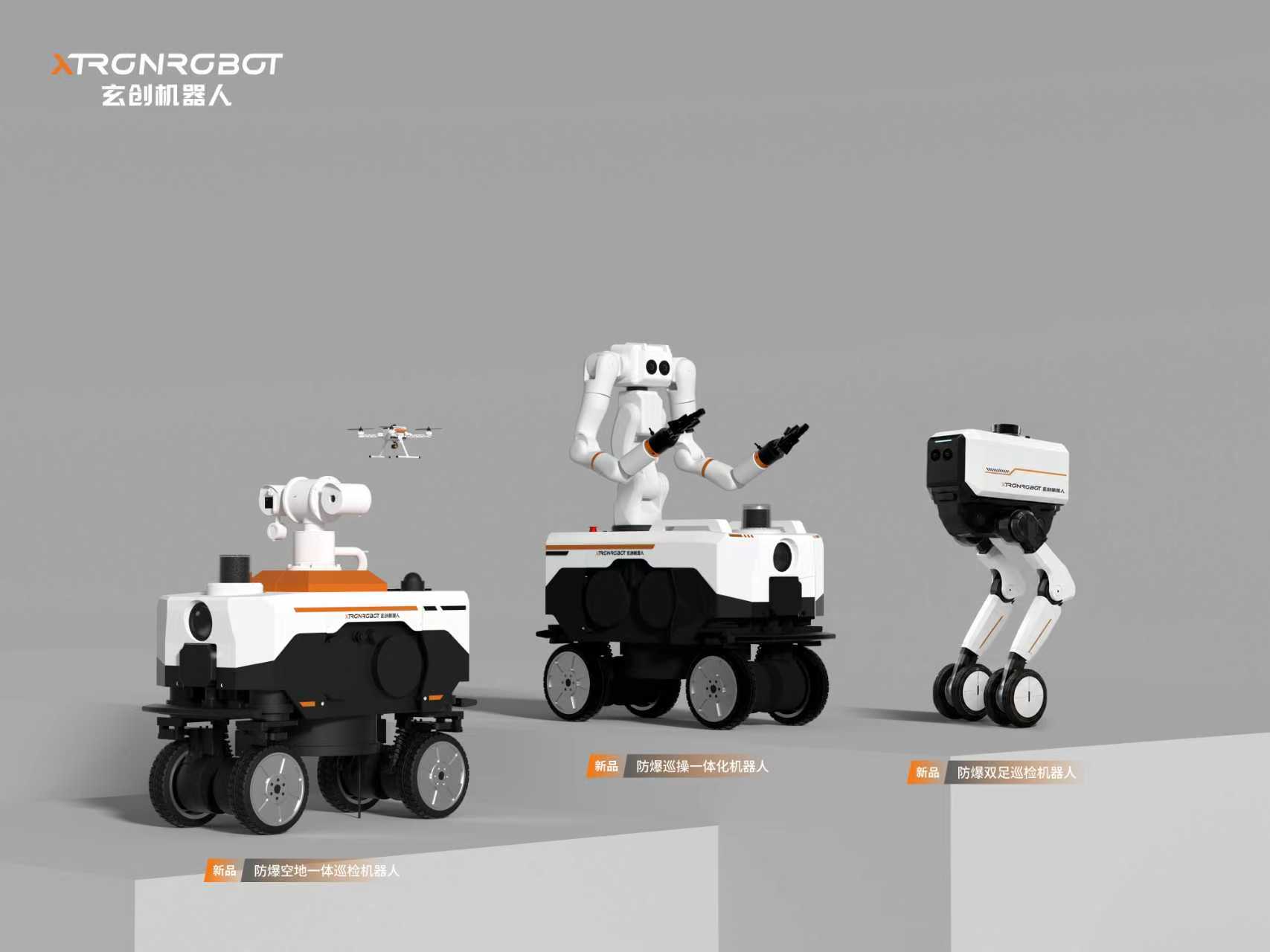
Shenzhen-based XTRONROBOT said Saturday it has finished the first batch of a contract for more than 100 explosion-proof inspection robots ordered by PetroChina's Xinjiang oilfield division, with new units now leaving its production line at a pace of 20 a month. The disclosure, paired with a fresh Series A1 funding round, marks one of the larger single-customer robot orders reported this year in China's oil and gas sector, a segment where buyers have historically been slow to substitute machines for trained human crews.
Founded in December 2022, XTRONROBOT (玄创机器人) traces its engineering roots to the Harbin Institute of Technology's robotics research programs, with additional technology transferred from the Fujian, Quanzhou-based Advanced Manufacturing Technology Research Institute. The company builds wheeled, tracked and rail-mounted robots designed to work inside oil, gas, chemical and new-energy facilities where a spark, a gas leak or an unshielded human presence can trigger an explosion. Chief executive Fu Zhe, who holds degrees from Harbin Institute of Technology, the University of Birmingham, the University of Sheffield and Imperial College London, spent roughly a decade in industrial manufacturing before founding the company.
The Economics of Sending Machines Instead of Crews
The pitch XTRONROBOT is making to procurement teams at state energy companies is narrower and more concrete than the general automation narrative sweeping Chinese manufacturing. Fu said a customer replacing manual inspection rounds with the company's robots can recover the purchase cost within about eighteen months, a payback window built primarily on reduced headcount for routine, hazardous patrol duty rather than any productivity multiplier. That framing matters to a buyer like PetroChina's Xinjiang operation, where inspection rounds in extreme cold and remote terrain carry both labor cost and safety liability that a fixed capital outlay can offset over time.
An eighteen-month payback is a specific, checkable claim rather than a marketing slogan, and it puts XTRONROBOT's sales pitch in the same register buyers use to evaluate compressors, valves or any other piece of capital equipment: cost per unit, deployment timeline and a defined break-even point. For a hazardous-duty inspection budget, that is a more useful number than any claim about artificial intelligence sophistication, and it explains why an order of this size came from an existing state-owned energy customer rather than a splashy pilot with a new logo.
China's oil, gas and chemical operators have been under sustained regulatory pressure to reduce the number of workers who physically enter high-risk zones, part of a broader industrial safety push that has already pushed refineries and chemical parks toward remote monitoring and automated shutoff systems. Robots that can inspect and, increasingly, act on equipment inside those zones fit directly into that compliance agenda, which gives a vendor like XTRONROBOT a second buyer justification beyond the labor-cost math: a Xinjiang facility operator can point to a deployed robot fleet as evidence of reduced human exposure to hazardous conditions, a consideration that carries weight with safety regulators independent of any productivity case.
That combination, a hard payback number plus a compliance narrative, is a more durable sales argument than either point alone, and it is one reason procurement officers at other state energy companies are likely to view the Xinjiang contract as a reference case rather than an isolated pilot.
The scale of the order also puts pressure on XTRONROBOT's own operations. Producing 20 robots a month across four distinct hardware configurations, each requiring separate explosion-proof certification and quality control, is a materially harder manufacturing problem than shipping a single standardized unit at the same volume, and it is the kind of scale-up test that has tripped up better-funded robotics start-ups elsewhere.
Four Machines for Four Kinds of Danger
The order covers several distinct hardware configurations rather than a single robot model, reflecting how differently hazardous industrial sites are laid out. One line pairs a wheeled ground unit with an unmanned aerial vehicle, using the drone to inspect elevated structures such as flare stacks and communication towers while the ground robot handles routine patrol at floor level. A second configuration uses a dual-wheel-leg locomotion system built specifically to move through narrow corridors and low-clearance spaces that wheeled platforms cannot reach, a common obstacle in older refinery and chemical-plant layouts never designed with robots in mind.
The most operationally significant model in the order is XTRONROBOT's inspection-and-operation robot, which carries a dual-arm mechanism capable of physically manipulating equipment rather than only observing it. Instead of flagging an anomaly for a human technician to correct, the robot can turn a valve or press a switch directly, closing the loop between detection and action inside a hazardous zone without requiring a person to enter it. That distinction, between robots that merely report problems and robots that can act on them, is where much of the commercial value in industrial inspection robotics is shifting, and it is also where the engineering difficulty rises sharply, since a robot arm operating live equipment in an explosive atmosphere carries far higher certification and reliability requirements than a camera on a cart.
A Funding Trail Built on Repeat Orders
XTRONROBOT disclosed a Series A1 round in the tens of millions of RMB, roughly US$1.4 million to US$14 million depending on the undisclosed exact figure, with new investors Qianhai Ark, Guangyang and West Lake Sci-Tech Innovation Investment joining the capitalization table. The round follows an earlier Pre-A financing led by Dongfang Fuhai with Yunyue Capital advising, and a subsequent Pre-A-plus round backed by Qianhai Ark Fund, Hangzhou Runmiao Fund, West Lake Innovation and a state-linked guidance fund in Shenzhen's Futian district. The pattern across three rounds in roughly a year and a half is a company raising in step with delivered contracts rather than ahead of them, a sequencing that tends to reassure buyers who are wary of vendors that oversell a technology roadmap before it has shipped hardware.
That sequencing is reinforced by XTRONROBOT's existing customer list, which already included Wanhua Chemical, one of China's largest chemical manufacturers, and Pingmei Shenma, a major coal-chemical group, before the PetroChina Xinjiang order was signed. A start-up selling capital equipment into state-owned and large private industrial buyers typically needs reference customers willing to vouch for reliability before a second buyer will commit to a nine-figure unit count, and XTRONROBOT's move from chemical-plant deployments into an oil and gas major suggests its safety and reliability record cleared that bar with at least one prior sector before Xinjiang signed on.
The identity of the newest investor is itself a signal worth noting. Guangyang, a publicly listed industrial components manufacturer, is a strategic corporate investor rather than a pure financial one, the kind of backer that typically diligences a robotics supplier's manufacturing process and component sourcing before committing capital. A venture fund can be persuaded by a demo and a growth story; an industrial manufacturer writing a check is closer to a customer underwriting a supplier it may eventually integrate with, and its presence on the capitalization table alongside Qianhai Ark and West Lake Sci-Tech Innovation Investment suggests XTRONROBOT's production process, not only its robot design, has already passed some outside scrutiny.
Where XTRONROBOT Sits in a Crowded Field
Explosion-proof and hazardous-environment inspection robotics is an older and more fragmented Chinese market than the humanoid robots dominating recent industry headlines, with established listed vendors already selling wheeled and rail-mounted patrol units to substations and chemical plants. What differentiates a newer entrant like XTRONROBOT is less the base hardware than the breadth of form factors offered under one contract, spanning aerial-ground pairs, legged units for tight spaces and dual-arm robots that can operate equipment rather than only monitor it. Winning a mixed-fleet order at this scale from a PetroChina division suggests the company's manufacturing capacity, currently sufficient for 20 units a month, is being tested by a customer with the purchasing power to demand exactly that kind of hardware diversity in one procurement cycle.
The broader signal for buyers evaluating hazardous-duty automation is that the segment is proving out commercially well ahead of the more heavily funded humanoid robot category, precisely because the return on investment is narrower and easier to underwrite. A humanoid robot promising general-purpose labor substitution asks a buyer to make a bet on a technology roadmap; an explosion-proof inspection robot asks a buyer to compare its purchase price against the fully loaded cost of a hazardous-duty patrol shift, a calculation industrial safety officers already know how to run. That difference in underwriting complexity helps explain why a three-year-old company with no public brand recognition outside China's robotics trade press can land a hundred-unit order from a state energy major while flashier, better-funded humanoid platforms are still mostly running pilots.
XTRONROBOT's near-term test is whether it can hold delivery quality steady as monthly output scales to meet Xinjiang's remaining unit count, since a single field failure in a hazardous environment carries reputational cost far beyond the contract at hand. For procurement teams elsewhere in oil, gas and chemical manufacturing watching this order, the more durable takeaway is that mixed-fleet hazardous inspection contracts, not single-robot pilots, are becoming the unit of purchase that large industrial buyers are now willing to sign.
This article is for general information purposes only and does not constitute investment, financial, legal or procurement advice. The analysis synthesizes company statements and public market activity. Readers should verify details with primary sources before making business decisions.











