A Tsinghua Startup's Third Funding Round This Year Comes With a Bet Against the Humanoid Race
LingYu Robotics, a Tsinghua-founded infrastructure startup, closed its third funding round of 2026, betting that wheeled teleoperated robots generating force-labeled data are worth more right now than a fully autonomous humanoid.

A Tsinghua Startup's Third Funding Round This Year Comes With a Bet Against the Humanoid Race
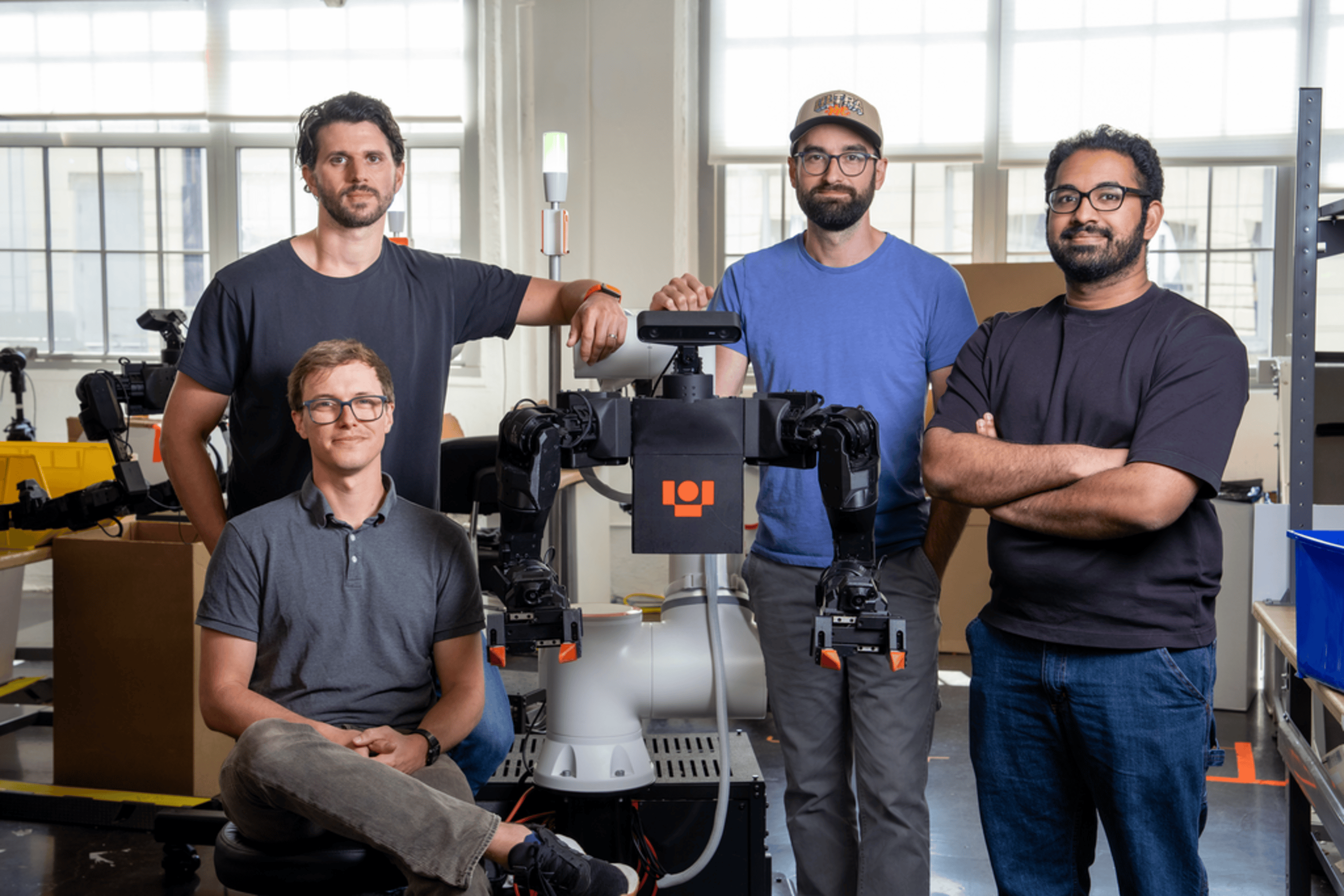
Most Chinese embodied-AI startups chasing capital this year are showing off bipedal robots with dexterous hands. LingYu Robotics (灵御智能), a Beijing-based infrastructure company spun out of Tsinghua University's automation department, closed its third funding round of 2026 this week with the opposite pitch: wheeled robots, no dexterous hands, and a workforce of remote human operators standing in for the autonomy the rest of the industry is still chasing.
The company disclosed a Pre-A round in the low hundreds of millions of RMB (roughly US$30 million to US$70 million at current exchange rates, an approximate range since LingYu did not disclose an exact figure), led by Zhuzhou Industrial Investment, Feitu Ventures, Future Frontier Ventures and Xinneng Ventures, with Maple Pledge Capital serving as financial advisor. It is the third round LingYu has closed since January, following earlier rounds from InnoAngel Fund, Huaying Capital, Galaxy Innovation Capital, Futian Capital, Lihe Ventures and Tianying Capital. The company has not disclosed a combined total, describing cumulative funding only as being in the hundreds of millions of RMB (roughly US$30 million-plus on the same approximate conversion). For Future Frontier Ventures, the round marks its first investment since the fund's founding, a detail the firm volunteered rather than one LingYu disclosed as a selling point.
The Hardware Is Deliberately Unglamorous
LingYu was founded in early 2025 by co-founder and chief scientist Mo Yilin, a tenured associate professor in Tsinghua's automation department who studied under Richard M. Murray, the Caltech roboticist and US National Academy of Engineering member, and by co-founder and CEO Jin Ge, a Tsinghua automation graduate and Tsinghua MBA who previously worked as a managing partner at Yuanjing Ventures and vice president at Aoliang Photonics. Much of the core team shares a Tsinghua undergraduate background and more than two decades of prior working history together, with members drawn from ByteDance, Kuaishou, Tencent and Meituan.
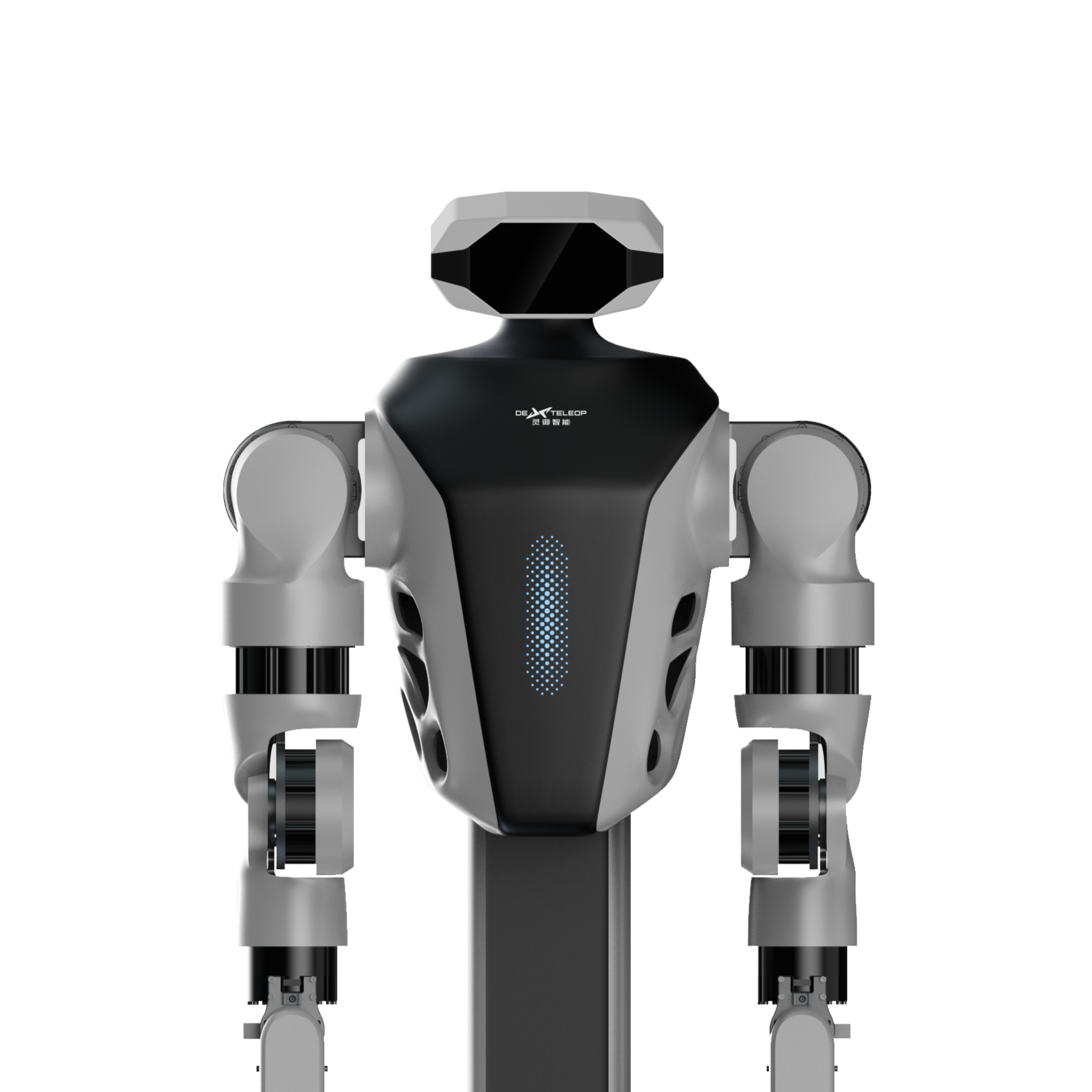
The company's TA-series robots, sold and described on its own site under the brand LingYu Robotics, use a 7-axis force-control arm, dual ultra-wide-angle cameras, modular end-effectors and an omnidirectional wheeled chassis rather than legs or dexterous hands. LingYu's own published specifications put repetition positioning accuracy at plus or minus 0.1 millimeters, force control across a 0 to 10 newton range, and end-to-end teleoperation latency, the delay between an operator's hand movement and the robot's response, under 100 milliseconds. Mo said in comments accompanying the funding announcement that the design tradeoffs were deliberate: a current-feedback algorithm replaces a six-axis force-torque sensor, and a wheeled base with a gripper replaces bipedal legs and a dexterous hand, cutting cost to a half or a third of comparable systems while reducing complexity and power draw. "A truly durable robot has to run continuously in real settings without failing, hold enough force-control precision to complete fine manipulation, and stay consistent over long operation so every frame of data is reusable," Mo said.
The Product Is the Data, Not the Robot
LingYu frames its TA-series hardware as the delivery mechanism for what it considers its actual product: force-labeled interaction data. Every grasp, delivery and shelf contact the robots make is logged with joint torque, contact force and end-effector force-curve data alongside standard visual footage, a dimension the company says is largely absent from vision-only datasets used to train embodied-AI models. CEO Jin Ge said LingYu plans to build a dataset exceeding one million hours of high-quality real-robot data within the next year, with full time synchronization, spatial calibration and force labeling built in. The company says its data-production capacity has climbed from a few hours a day in June 2026 to several hundred hours a day currently, with a target of several thousand hours a day by year-end, a growth rate the company says would let it match the scale of the largest publicly available open-source real-robot dataset, currently around 100,000 hours, in roughly a month at current pace. That comparison is a company-reported estimate rather than an independently benchmarked figure.
Where the Robots Actually Work
LingYu says it has deployed its TA-series robots at what it describes as hundred-unit scale inside JD's 7Fresh supermarket chain, operating continuously across stores in Beijing and Tianjin after an initial single-store validation in Taiyuan. The company operates the robots through remote teleoperation: human operators sit at a command center, in one case as far away as Suqian, and control robots in stores hundreds of kilometers away through the company's Nexus platform. Every human takeover generates what the company calls demonstration data, recordings of an operator's precise control and response to an unusual situation, which it says feeds back into model training.
Jin described the current operating model as roughly half teleoperated and half autonomous attempt-and-verify, a ratio he said the company expects to shift gradually rather than jump to full autonomy. He drew a direct comparison to the safety-driver ratios used in China's autonomous-vehicle rollout: "We started with three cars per safety monitor. Now some operations manage fifty cars per monitor. We believe autonomy can only increase once robots are genuinely running in real settings." Mo was blunter about why LingYu chose this path over chasing full autonomy from the outset: current embodied-AI models generalize poorly outside their training distribution, he said, citing a supermarket sorting task where a model trained to place red apples on a plate worked reliably against a plain background but failed the moment a nearby shopper wore a red shirt, because the model had learned a color-to-target shortcut rather than a genuine concept of what an apple is. Edge cases like that, he argued, only surface once a robot is doing real, unscripted work, which is the argument LingYu makes for teleoperation as a data-generation strategy rather than a stopgap.
Jin also framed remote operation as a labor-economics play in its own right, not just a bridge to autonomy. Centralizing operators in one location, he said, replaces a model where each of a thousand stores needs its own on-site staff member with one where a single supervisor can oversee dozens of remote operators, standardizing work quality and making it directly monitorable. He pointed to China's uneven regional development as a specific advantage: workers who previously had to migrate to a city for factory or service work can now operate a store's robot remotely from their home region. The same model, he argued, extends naturally to hazardous or unpleasant work, such as waste sorting or operations involving radiation, dust or high heat, where an operator can work from a controlled, comfortable room instead of the physical site itself.
What a Buyer or Investor Should Actually Weigh
LingYu's pitch depends on a chain of claims that are checkable to different degrees. Its funding history, investor list and executive backgrounds are verifiable through public company records and the investors' own statements. Its hardware specifications are published on its own site. Its deployment scale, data-production rate and the pace at which it expects to close the gap with the largest open datasets are self-reported figures that have not been independently audited, and buyers evaluating the company's data-supply pitch should ask specifically what fraction of its reported hundred-unit deployment is generating billable commercial value today versus running as an extended pilot, and what the actual defect or intervention rate looks like across a full operating day rather than a single demo.
The retail deployment itself is a genuine test rather than a controlled showcase. A supermarket floor has unpredictable foot traffic, shelves that are restocked and depleted continuously, and lighting and layout that change without notice, which is a harder environment than a fenced warehouse or a rehearsed conference floor. Investors weighing LingYu's pitch against China's broader embodied-AI funding wave, where capital has increasingly shifted from lab demonstrations toward companies with a working commercial deployment, are betting that a company selling force-labeled data from real retail floors, rather than a finished autonomous humanoid, is where the near-term value in the sector actually sits. Whether that data-flywheel argument holds up depends on questions LingYu's own public disclosures have not yet answered: unit economics per store, gross margin on the teleoperation service itself, and how much of the reported data growth is being sold to outside model developers versus consumed internally.
The investor commentary attached to the round reflects the same framing. Feitu Ventures, which describes itself as a decade-long specialist in industrial robotics, credited LingYu with what it called an original structural revision of the robotic arm built around humanoid-like motion characteristics, paired with proprietary motion-control and cloud-platform technology, achieving human-comparable dexterity at a competitive cost. Zhuzhou Industrial Investment framed the company's choice to prioritize human-machine hybrid operation over an unproven fully autonomous system as evidence of clear-eyed execution rather than caution, arguing that solving real high-risk or commercial-scene problems first and letting the data flow back into the model is a more disciplined path than most embodied-AI companies are currently taking. None of the four new investors disclosed the size of their individual checks, and none offered an independent estimate of LingYu's valuation.
Disclaimer: This article is for general information purposes only and does not constitute investment, legal, or procurement advice. Readers should verify details with primary sources before making business decisions.