
XFEON raises 300M+ RMB to accelerate physical AI chips and embodied data platform
Chengdu-based XFEON has closed a funding round of more than 300 million yuan led by Dingxu Investment, with Kaipuyun, Gaojie Capital and Anshu Capital participating. Founded in 2021, the company builds physical AI chips and an embodied data infrastructure, and plans to use the capital to advance next generation silicon, an embodied data flywheel, an embodied brain platform and scenario driven commercialization.
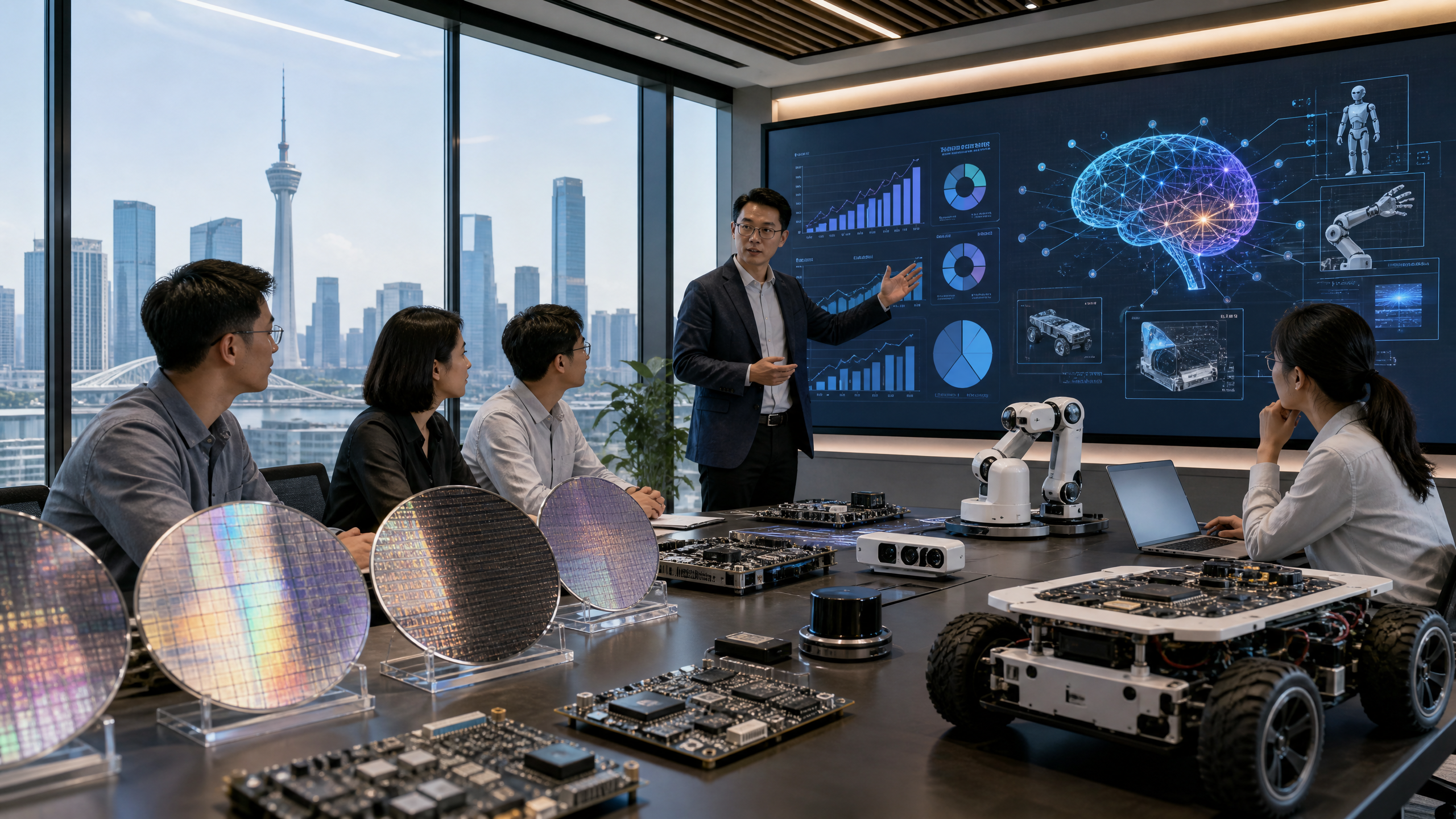
XFEON, formally registered as 星凡星启成都科技有限公司 and founded in 2021, announced on July 6, 2026 that it has completed a funding round of more than 300 million yuan. Dingxu Investment led the round, with participation from listed company Kaipuyun, as well as Gaojie Capital and Anshu Capital. The company positions itself as a chip and data infrastructure provider for physical AI, and says it has grown at a compound annual rate of 99.3 percent since inception. The proceeds will support next generation physical AI chips, an embodied data flywheel, an embodied brain platform, and scenario driven commercialization.
What happened and who is backing it
XFEON’s new capital push places a clear bet on the convergence of silicon, data, and real world autonomy. The company is headquartered in Chengdu, and it is targeting the infrastructure layers that make embodied systems useful beyond the lab. Investors on the cap table reflect a mix of financial and industrial interest.
* Deal size: more than 300 million yuan, undisclosed valuation.
* Date: July 6, 2026.
* Lead investor: Dingxu Investment.
* Participating investors: Kaipuyun, Gaojie Capital, Anshu Capital.
* Use of proceeds: physical AI chip research and development for the next generation, an embodied data flywheel to capture, label, and reuse real world interaction data, an embodied brain platform that coordinates models and runtime, and scenario commercialization across priority sectors.
While the company has not disclosed a detailed product catalog, the emphasis on both silicon and data pipelines suggests a full stack approach. That means chips designed for robotics and embodied intelligence workloads, domain specific data collection and feedback loops, and a platform for control and inference that can scale across customers.
Why investors care
Physical AI has moved from concept to deployment. Once it was a research term; today it describes a broad shift in which AI leaves the screen and acts in the world through robots, vehicles, and devices. That shift stresses the stack in two places. First, the hardware must execute low latency, energy efficient inference while interfacing with sensors, actuators, and safety logic. Second, the data and training loops must incorporate messy, non repeatable real world experience.
Investors are funding companies that can address both pressure points at once. A firm that can deliver efficient chips tuned for embodied tasks and a repeatable data engine that improves performance over time can capture value from each deployment, not just from a single chip sale. The embodied brain platform concept reinforces that value capture by keeping developers and integrators inside the ecosystem for updates, model improvements, and scenario packs.
For a city like Chengdu that has spent years building semiconductor capacity and a robotics supplier base, a company with a combined chip and data platform approach can become an anchor for local demand, talent, and supply partners.
Inside the thesis: physical AI chips and embodied data flywheels
Physical AI chips are not just accelerators. They must schedule heterogeneous sensor streams, support deterministic control cycles for safety, and run perception and planning workloads with strict latency and power requirements. A general purpose data center accelerator is powerful, but it is not always the best fit for a mobile robot that runs on a battery and must stop within centimeters. That creates an opening for application specific instruction sets, low precision arithmetic where acceptable, sensor fusion blocks on chip, and interfaces tuned for field upgrades.
The embodied data flywheel completes the loop. It describes a process in which deployed systems generate interaction data, which is captured with metadata about context and outcomes. That data is curated into training sets for fine tuning, simulation assets, and evaluation. The improved models then flow back to devices through an update pipeline that is safe and auditable. With each cycle, performance improves, coverage expands, and unit economics get better. Companies that own both the silicon and the data flows can optimize end to end and reduce integration friction for customers.
XFEON’s reference to an embodied brain platform suggests an orchestration layer that brings models, planning, safety, and hardware acceleration together in a consistent runtime. If delivered, that can shorten development time for integrators and allow scenario modules that map to logistics, inspection, hospitality, or light industrial tasks.
Market impact and a shifting competitive field
China’s AI chip landscape already includes heavyweights focused on automotive inference, data center training, and edge computing. Horizon Robotics has pushed deeply into in vehicle compute for driver assistance and autonomy. Enflame Technology, also known as Suiren, has specialized in data center AI training accelerators. Cambricon has a mix of data center and edge inference products and is a public company. Sophgo has emphasized edge inference and deployment toolchains across a wide range of devices.
XFEON is not trying to win the same race on generic throughput. It is targeting the place where embodied intelligence meets reality, a niche that values workload shaped performance, software safety, and a continuous upgrade path anchored in data. If the market for service robots, logistics robots, mobile inspection platforms, and autonomous devices continues to expand, that niche becomes a large addressable segment.
For investors, the strategic value is tied to three levers.
* First, margins. If a vendor provides both chips and the software platform, it can capture recurring revenue from licensing, updates, and scenario packs rather than relying only on upfront hardware sales.
* Second, switching costs. Data driven performance and platform dependencies increase the cost for customers to change vendors, which can improve retention and lifetime value.
* Third, defensibility. Hardware that is co designed with platform software can create a performance envelope that is difficult to copy without equivalent data and integration experience.
The counterweight is that integration risk grows along with ambition. A full stack company must succeed at silicon design, firmware, compiler and runtime, data tooling, and customer enablement. Each layer introduces schedule risk and quality exposure.
What the funds will enable
XFEON has specified four areas for capital deployment.
* Next generation physical AI chips. Expect investment in architectures that balance general purpose compute with fixed function acceleration for perception and planning. Power budgets and thermal performance will be key for mobile platforms.
* Embodied data flywheel. The company will need robust logging, labeling, and curation pipelines, plus tooling that makes it easy for customers to contribute data in privacy compliant, safe ways. Simulation and synthetic data may complement the loop where real data is scarce.
* Embodied brain platform. An integrated runtime and developer platform that unifies model management, safety supervision, sensor fusion, and control logic would unlock customer productivity. Strong APIs and documentation will be as important as raw performance.
* Scenario commercialization. The company will likely pick a few verticals where data density and integration partners are accessible. Logistics, industrial inspection, and commercial service robotics are common starting points. Early lighthouse deployments matter more than broad but shallow pilots.
If execution goes to plan, the result is a stack that can be used by integrators and original equipment manufacturers, with flexible deployment models that range from boards to modules to fully integrated compute units.
Economic drivers for embodied AI now
Demand is rising for automation that navigates unpredictable environments. Warehouses are dynamic; hotels and hospitals are built for people, not robots; and outdoor inspection tasks vary by hour. In each case, the cost of human labor, the need for consistency, and safety obligations push buyers toward embodied AI that can adapt. Three structural shifts make this moment different from earlier robotics cycles.
* Foundation models for perception and language are improving rapidly, which shortens time to an acceptable baseline for many tasks.
* Edge hardware is catching up, and developers can run more expressive models under tighter power and latency budgets.
* Data tools are better. Fine tuning, reinforcement learning from interaction, and simulation pipelines are easier to deploy than a few years ago.
These shifts do not guarantee success, but they improve the odds that a focused chip and platform provider can find product market fit with enterprise buyers.
Risks and friction points
A full stack embodied AI strategy faces practical headwinds.
* Supply chain and manufacturing. Securing mature process capacity, packaging partners, and testing vendors is mandatory. In a constrained environment, new entrants must offer a compelling business case to foundry and assembly partners.
* Software burden. A chip without a great toolchain will not win. Compilers, debuggers, profilers, quantization utilities, and model conversion are heavy engineering lifts that continue long after tape out.
* Safety and certification. Deployments in hospitals, hotels, or industrial sites require safety cases, logging, and human factors validation. Certification timelines can stretch sales cycles.
* Data governance. The embodied data flywheel works only if customers trust the company with sensitive operational data and if the company enforces strong privacy and security controls.
* Capital intensity. Silicon design and platform software both consume capital. Sequencing milestones, controlling burn, and focusing on a few high value scenarios will matter for runway.
What to watch next
Several signals will indicate whether XFEON can convert this raise into durable position.
* Technical disclosures. Architecture notes, performance per watt metrics, and latency for common robotics workloads will help buyers compare options.
* Developer traction. The number of beta partners, the speed with which developers can bring up systems, and the availability of comprehensive documentation and examples are leading indicators.
* Lighthouse deployments. One or two credible, scaled deployments in logistics, inspection, or service robotics would validate the platform and populate the data flywheel.
* Manufacturing partners. Announcements about foundry, packaging, and module assembly will clarify production readiness and delivery timelines.
* Ecosystem alliances. Partnerships with integrators, robot original equipment manufacturers, and simulation vendors can accelerate adoption and reduce integration risk for customers.
Regional significance: Chengdu’s role in the stack
Chengdu has built a foundation in electronics manufacturing and has attracted robotics integrators and suppliers that support the broader western China region. A physical AI chip and data platform company based in the city can plug into that base. Local governments often encourage anchor projects that promise jobs, upstream and downstream orders, and export potential. If XFEON succeeds in bringing products to market, it can catalyze training programs, component supplier growth, and a deeper bench of embedded software and systems engineers in the region.
Investor view: return path and positioning
The return story for a company like XFEON is a blend of hardware sales and software revenue. Hardware shipments drive initial revenue and customer onboarding. Platform licensing, updates, and scenario packs create a stream of recurring revenue. As deployments grow, the embodied data flywheel should improve performance and reduce per deployment support costs, which can lift gross margin over time.
Exit paths in China have included domestic public listings and strategic acquisitions by platform companies, automotive groups, and industrial automation leaders. For a young company, the most credible path begins with tight vertical focus, repeatable deployments, and visible metrics such as cost per task reduction for customers and improvement in mean time between human interventions.
Competitive landscape at a glance
The companies below illustrate different strategies around the embodied AI stack. Figures for peers reflect public reporting through 2024 unless otherwise noted.

How to read this moment
A funding round of more than 300 million yuan is not a market changing sum by itself, but it is enough to move a focused roadmap forward. The specific mix of chip design, data flywheel engineering, and platform software demands cross functional excellence and patience from investors. Buyers will judge by results in the field. Can robots and autonomous devices do more work with fewer interventions? Do updates make systems meaningfully more capable every quarter? Are safety cases easier to assemble, audit, and maintain?
If XFEON executes well, it can help turn embodied AI promise into factory and hotel outcomes. For investors and customers, the signal to watch is not headcount growth or brand awareness. It is the shape of the learning curve that comes from real deployments and real data.
Sources
* Sina Finance
* Eastmoney
* Sohu
* OFweek














