
SK Hynix Record Nasdaq Debut Signals Capital Flow to AI Infrastructure
SK Hynix raised $26.5 billion in the largest US equity sale by a foreign company, with 7x oversubscription. The article connects this to the robotics supply chain through HBM (High Bandwidth Memory) chips essential for embodied AI compute. It covers the Yongin cluster funding, Micron's $250B US expansion plan, and why massive upstream investment in AI compute infrastructure has downstream implications for robotics cost curves and capability scaling.
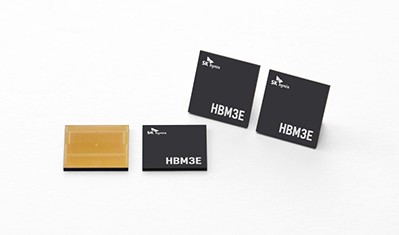
SK Hynix raised 26.5 billion dollars through its American Depositary Receipt listing on Nasdaq, making it the largest equity sale by a foreign company in United States capital markets history. The offering was seven times oversubscribed, reflecting intense investor demand for exposure to the high bandwidth memory (HBM) supply chain that underpins artificial intelligence computing infrastructure. For the robotics and embodied AI sector, this capital injection into memory chip production capacity has direct supply chain implications. HBM chips are essential components in the GPU clusters that train foundation models for robotic perception, planning, and control. Constraints in HBM supply directly constrain the pace at which embodied AI systems can be developed and deployed.
SK Hynix, headquartered in Icheon, South Korea, is the world's second largest memory chip manufacturer and the dominant supplier of HBM chips to NVIDIA, which uses them in its H100, H200, and Blackwell series GPU accelerators. The company controls approximately 50 percent of the global HBM market, making its production capacity a critical bottleneck in the AI compute supply chain.
Capital Concentration in the Component Supply Chain
The 26.5 billion dollar raise will fund expansion of SK Hynix's advanced packaging facilities in Icheon and its new Yongin semiconductor cluster, which is designed to produce next generation HBM4 chips at scale beginning in 2027. The Yongin facility represents a total investment of approximately 120 trillion Korean won (roughly 90 billion dollars) over the next decade, making it one of the largest single site industrial investments in history.
This capital concentration in a single component of the AI supply chain reflects the structural reality that compute infrastructure is the binding constraint on AI progress. Foundation model training requires thousands of GPUs operating in parallel, and each GPU requires multiple HBM chips to achieve the memory bandwidth necessary for efficient training. A shortage of HBM chips directly limits the number of GPU clusters that can be built, which directly limits the pace of AI model development.
For robotics companies that depend on foundation models for their embodied AI capabilities, the SK Hynix expansion is a positive supply chain signal. More HBM production capacity means more GPU availability, which means faster model training cycles and lower compute costs over time. However, the benefits will not materialize immediately. The Yongin facility will not reach full production until 2028 or 2029, meaning that HBM supply constraints will persist through the near term.
The Hardware Bottleneck for Embodied Intelligence
Embodied AI systems require significantly more compute than traditional software AI applications. A large language model processes text tokens sequentially. An embodied AI system must simultaneously process visual input from multiple cameras, proprioceptive data from joint sensors, force feedback from contact surfaces, and spatial mapping data from LiDAR or depth sensors, all while generating motor commands at millisecond latency. This multi modal, real time processing requirement demands both training compute (for model development) and inference compute (for deployment).
The training side of this equation is where HBM supply matters most. Training a state of the art embodied AI model requires thousands of GPU hours on clusters equipped with the latest HBM chips. Companies that cannot access sufficient training compute cannot develop competitive models, which means they cannot build competitive robots. The SK Hynix expansion therefore has downstream implications for which robotics companies will have access to the compute resources necessary to remain competitive.
On the inference side, the compute requirements for deployed robots are more modest but still significant. A humanoid robot operating autonomously requires onboard processing capabilities that consume between 50 and 200 watts of power, using specialized inference chips that also incorporate high bandwidth memory. As deployment scales from hundreds to thousands of robots, the aggregate demand for inference grade memory chips will become a material factor in the supply chain.
Geopolitical Implications of Semiconductor Manufacturing
The SK Hynix Nasdaq listing also carries geopolitical significance. By raising capital in US markets, SK Hynix strengthens its financial ties to the American technology ecosystem while maintaining its manufacturing base in South Korea. This positioning allows the company to serve both Western and Asian customers while navigating the increasingly complex export control landscape that governs advanced semiconductor technology.
The concurrent announcement by Micron Technology of a 250 billion dollar US manufacturing expansion plan underscores the geopolitical dimension of memory chip production. Both the United States and South Korea are investing heavily in domestic semiconductor capacity to reduce dependence on any single geographic concentration of production. For robotics companies, this geographic diversification of the memory supply chain reduces the risk of supply disruption from regional conflicts or trade restrictions.
However, the capital intensity of semiconductor manufacturing means that only a small number of companies can compete at the leading edge. The HBM market is effectively a duopoly between SK Hynix and Samsung, with Micron as a distant third. This concentration creates supply chain risk for the entire AI and robotics ecosystem, regardless of geographic diversification efforts.
Translating Semiconductor Investment into Robotics Capability
Consider the relationship between steel production capacity and automobile manufacturing in the early 20th century. The availability of affordable, high quality steel was a prerequisite for mass automobile production, but steel companies did not build cars. Similarly, HBM chip production is a prerequisite for advanced robotics, but memory companies do not build robots. The investment in upstream capacity creates the conditions for downstream innovation, but the innovation itself must come from the robotics companies that use the compute infrastructure.
For procurement teams evaluating robotics vendors, the SK Hynix expansion is a positive indicator for the medium term trajectory of the sector. More compute capacity means faster model improvement, which means more capable robots at lower cost over time. However, the benefits are distributed across the entire ecosystem rather than accruing to any single vendor. The competitive advantage will go to robotics companies that use the available compute most efficiently, not simply those with the largest compute budgets.
The Structural Implication for Capital Markets
The seven times oversubscription of the SK Hynix offering confirms that institutional investors view AI infrastructure as a generational investment theme. The capital flowing into the AI supply chain, from chip manufacturing to data center construction to energy infrastructure, dwarfs the capital flowing directly into robotics companies. This asymmetry reflects the market's assessment that the infrastructure layer carries lower risk and more predictable returns than the application layer.
For robotics startups seeking venture capital, this dynamic creates both opportunity and challenge. The opportunity is that abundant AI infrastructure investment will reduce compute costs over time, lowering the capital requirements for model development. The challenge is that investor attention and capital are concentrated in the infrastructure layer, making it harder for application layer companies to compete for funding.
The SK Hynix listing confirms that the AI compute supply chain is attracting capital at unprecedented scale. The downstream implications for robotics and embodied AI are positive but indirect, flowing through reduced compute costs and expanded model training capacity over a multi year timeline.
The downstream impact on robotics compute costs will follow a predictable trajectory. As HBM production capacity expands, prices will decline following the historical pattern of semiconductor cost curves. Current HBM pricing of approximately 20 to 30 dollars per gigabyte is expected to decline to 10 to 15 dollars per gigabyte by 2028 as new capacity comes online. This cost reduction will flow through to GPU pricing, which will flow through to cloud computing costs for model training, which will ultimately reduce the cost of developing and deploying embodied AI systems. The lag between upstream capacity investment and downstream cost reduction is typically 18 to 24 months.
The timing of the SK Hynix listing coincides with a broader wave of semiconductor companies accessing US capital markets. The CHIPS and Science Act has created incentives for semiconductor manufacturers to establish US production capacity, and listing on US exchanges facilitates access to the capital necessary for these multi billion dollar facility investments. For SK Hynix specifically, the Nasdaq listing provides a currency for potential US acquisitions and partnerships while signaling commitment to the US market that may ease regulatory scrutiny of its supply relationships with American technology companies.
The environmental sustainability dimension of semiconductor expansion is increasingly relevant to corporate procurement decisions. Advanced semiconductor fabrication consumes enormous quantities of ultra pure water and electricity. The Yongin facility will require dedicated power generation and water treatment infrastructure, raising questions about the environmental footprint of the AI compute supply chain. Companies with ESG commitments may face scrutiny over the upstream environmental impact of their AI and robotics deployments, creating demand for transparency in the semiconductor supply chain that does not currently exist at scale.
This analysis synthesizes regulatory filings, market data, and public corporate announcements as of July 2026.














