
Simplexity Robotics Ships 100 Robots to Factory Floors
Simplexity Robotics, founded less than a year ago, has delivered its first 100 i7 Pro embodied AI robots to production lines including harmonic reducer maker Leaderdrive, moving from laboratory validation to multi site industrial deployment at an unusually fast pace.
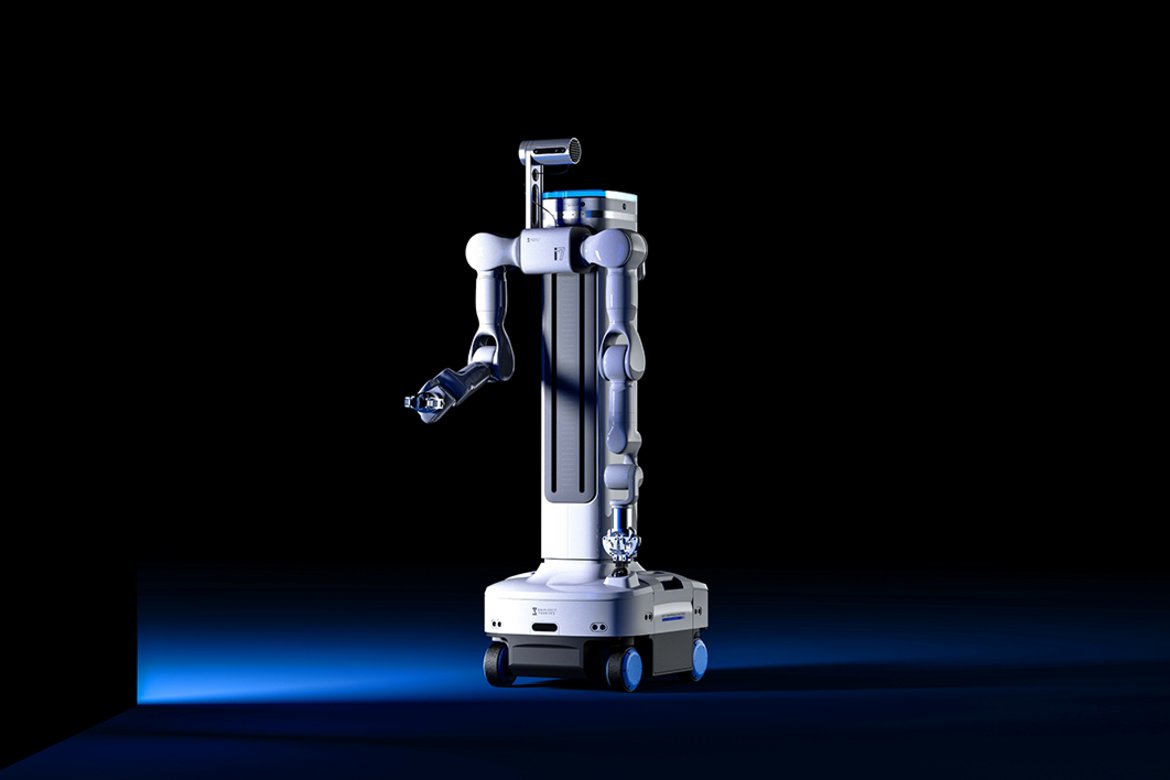
Eleven Month Old Simplexity Robotics Ships 100 Robots to Factory Floors
The One Hundred Unit Moment
A compact fleet of one hundred robots has become a signal as much as a shipment, crystallizing a market reality that has been simmering beneath the headlines of China's robotics scene. Simplexity Robotics moved from demonstration bench to paid production in less than a year, and that pace underlines a structural shift in embodied AI, where the limiting factor is no longer raw model capability alone, but how quickly software can be folded into hardware and then into a live production line. The implication is clear, factories will favor the team that can deliver a reliably integrated machine quickly, rather than the team that waits to perfect every research metric before shipping.
Simplexity has chosen precision over theater, and the company is using its i7 Pro robot to make that argument on real factory floors. The machines are now working at a harmonic reducer maker with deep roots in the robot supply chain, as well as at optical module and flexible printed circuit board production lines that feed AI infrastructure makers. The deployments are concentrated in manufacturing environments where repeatability and uptime yield immediate payback, not in glamorous general purpose demos, and that choice tells the investor and procurement communities something important about where commercialization actually happens.
A One Hour Promise, Built in Eleven Months
Simplexity Robotics is led by Jia Peng, and the company was founded roughly eleven months before this deployment milestone. That rapid timeline is uncommon even in China, where manufacturing breadth and supplier density can accelerate timelines, because outfitting a robot for live production usually means months of integration work. Simplexity’s core sales pitch is simple and aggressive, it says an i7 Pro can be deployed and operational within about one hour of unboxing, which reframes the buying conversation from a long integration project to a plug and play decision.
The company has organized itself around a model defines hardware philosophy, connecting a proprietary LaST0 foundation model directly to iterative mechanical design. Rather than treating chassis and control systems as frozen platforms and building software on top of them, Simplexity embraces concurrent development. Software updates inform small hardware changes, and those hardware nips and tucks feed back into the model training cycle. The approach is less about radical hardware reinvention, and more about compression of the iteration loop, which matters when a customer values time to production over an extra percentage point of bench performance.
The One Hundred Deployment, Unpacked
The first one hundred units of the i7 Pro were distributed across several industrial sites in China. The largest tranche went to Leaderdrive, a manufacturer of harmonic reducers that supplies a large share of the joint components used across the domestic robot industry. At Leaderdrive the robots are undertaking CNC machine loading and unloading, shuttling between different machine tools and placing workpieces with a precision the company describes as high placement accuracy.
Other units were embedded in optical module and flexible printed circuit board production lines, environments that demand gentleness, repeatability, and exacting part handling. Early adopter research labs and developer customers also received units, expanding Simplexity’s reference base beyond manufacturing into developer programs that can co iterate software on real hardware. The company reports high performance on benchmark tasks, and it emphasizes that the deployment set was not a single concentrated proof, but a distributed set of working references across multiple production contexts.
Inside the i7 Pro, in Plain Language
Understanding why this matters requires peeling back a few layers of technology without getting lost in jargon. A CNC machine follows a digital program to sculpt metal and other materials. The loading and unloading step is simple to describe, yet onerous to staff, because it is repetitive and still demands careful alignment to avoid scrap. The i7 Pro uses optical sensors and its LaST0 foundation model to perceive parts, infer grip strategies, and sequence motion between machines.
At the core is a language and perception driven control stack. Cameras feed an environment model, the foundation model reasons about the task using both visual and textual instruction cues, and a motion controller translates those plans into joint trajectories for the arm. The company reports a 99.9 percent success rate on industry standard manipulation benchmarks, and it has designed the robot to be modular so the same base unit can be retooled for different end effectors, grippers, and soft contact tasks. That modularity is a commercial choice. It reduces the cost of supporting multiple scenarios, and it shortens the time required to move a robot from one line to another.
Why Leaderdrive's Vote Matters
When a major component supplier chooses a young startup to automate its own production, that decision carries weight. Leaderdrive understands the tolerances and failure modes of robotic joints better than almost any customer, since it makes them. The fact that Leaderdrive accepted the i7 Pro into a live CNC operation signals confidence in both hardware reliability and the integration story Simplexity offers.
Beyond signalling, there is a practical multiplier effect. Leaderdrive’s factories are integrated into supply chains that feed other robotic and automation companies. If the i7 Pro proves durable and reliable in this environment, Simplexity gains not only a reference customer but also a window into a network of prospective buyers who prioritize components that have been validated by a supplier rather than a system integrator. That expands the reach of the one hundred unit milestone from a marketing achievement to a potential channel strategy.
The New Metric in Embodied AI
The fast timeline forces a rethinking of what counts as competitive advantage in embodied AI. Historically the conversation centered on model scale and synthetic benchmarks, with value measured in top line numbers. That landscape is changing. The metric that a factory CIO now cares about is time from box to meaningful throughput, and the costs of integration and maintenance over a year.
This shift favors companies that can translate lab competency into operational stability. It privileges deployment engineering, testbeds that mirror real world variability, and software architecture designed for continuous over the air updates without breaking existing deployments. It also elevates the importance of developer ecosystems that can customize task libraries quickly. A system that can be tuned with a graphical task editor by a production engineer in a shift, rather than requiring weeks of code, will win more procurement cycles.
Market Dynamics and Competitive Implications
China’s embodied AI field contains a spectrum of strategies. Some companies aim for scale early, manufacturing thousands of simple units designed for narrow tasks. Others pursue broad generality, building humanoid or highly capable manipulators that promise flexibility across domains but often require long integration times. Simplexity has chosen a middle path, focusing on a set of structured industrial scenarios where hardware reliability and repetitive tasks create clear returns on automation investment.
That tactical choice will invite copycat responses and accelerated feature races. Competitors with deeper pockets could compress Simplexity’s window of advantage by offering larger production runs or subsidized pilot programs. Conversely, more specialized rivals may undercut Simplexity on price for single use cases. The core competitive advantage that endures will likely be execution at scale, with an emphasis on reliability metrics, spare parts logistics, and local support networks that minimize downtime.
What Factory Buyers Should Ask
Procurement teams evaluating embodied AI vendors should treat the one hundred unit deployment as a meaningful but not definitive reference. Relevant questions to press on include actual uptime statistics measured over weeks not hours, mean time between failures on mechanical and sensing subsystems, average time for role change from one production line to another, and the scope of maintenance services included in the initial contract. The one hour out of box claim is a useful screening metric, but real world conversions often depend on how closely a buyer’s workpiece geometry and tooling match the vendor’s test fixtures.
Buyers should also request data on successful interventions during abnormal events, such as part jams or imperfect tolerances, and demand clarity on software update policies to avoid surprise regressions. Finally, insist on field references that can corroborate warranty handling and spare parts lead times because a lab grade result does not always translate into enterprise grade support.
Scaling from One Hundred to One Thousand
The headline one hundred figure is a credible achievement, but the strategic test for Simplexity will be scaling without sacrificing reliability. Mass deployments introduce new failure modes, from supply chain constraints for actuators and sensors to software versioning conflicts across fleets. Simplexity must prove it can sustain field support, scale manufacturing of critical components, and maintain a feedback loop that turns live operational data into fast improvements without destabilizing existing customers.
If the company can convert these one hundred references into repeat orders and then into multi hundred unit rollouts, it will have validated the model defines hardware thesis at scale. That in turn would create a virtuous cycle where deployment data accelerates product quality, which shortens sales cycles for subsequent customers, and which improves unit economics enough to lower pricing for broader adoption.
A Market That Rewards Speed and Reliability Together
Simplexity Robotics has turned youth into a strategic advantage, betting that speed to revenue and real factory references matter more to industrial buyers than a long research record. The company’s approach speaks to a broader recalibration in the embodied AI market. Investors and customers now reward not only capability, but also the engineering and operational practices that convert capability into predictable throughput on the factory floor.
For an economy that is racing to build AI infrastructure and expand production of both robots and their components, that recalibration will have ripple effects. Startups that can demonstrate a repeatable deployment playbook stand to capture both early revenue and the learning curve advantage that comes with continuous operation. Those that wait for a laboratory perfect model risk being leapfrogged by faster iterators who use the factory as their living laboratory.
The near term will be a proving ground. Simplexity’s challenge is to transform one hundred scattered references into an industrial thesis that prospective buyers can trust at scale. The industry’s lesson for now is straightforward, speed matters, but it must be married to engineering discipline. The company that delivers both will not simply win pilots, it will redefine what it means to be commercially mature in embodied AI.














