
Shimizu Corporation Tests Unitree Humanoid Robots for Construction Sites
Shimizu Corporation has initiated field trials of AI-powered humanoid robots, including models from Unitree, to address Japan's severe labor shortage in the construction industry.
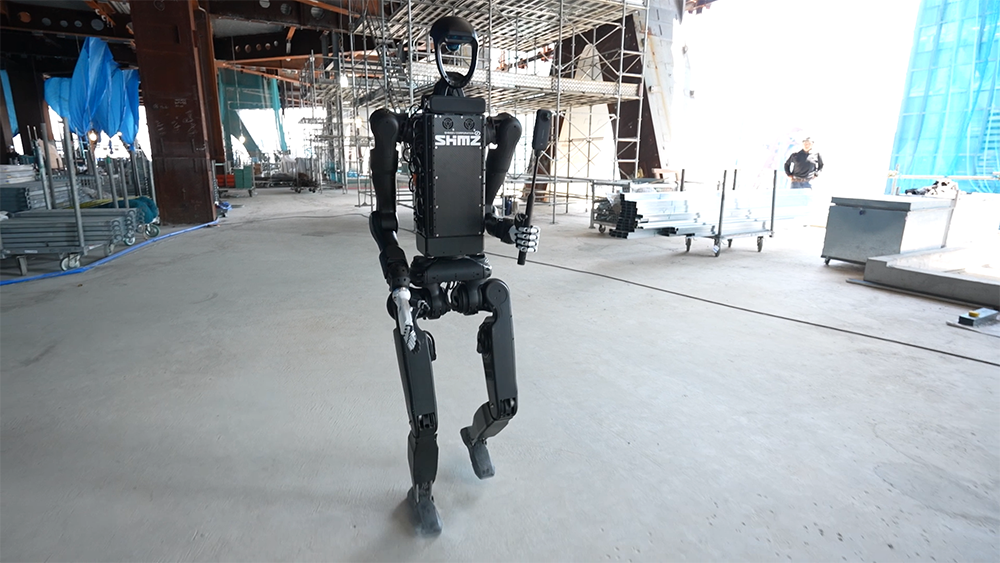
Shimizu Corporation has initiated full-scale field trials of AI-powered humanoid robots at construction sites, specifically testing a Unitree robot for autonomous site inspections and robotic arms for painting tasks. The deployment aims to address Japan's severe labor shortage by developing versatile, multi-tasking robots capable of adapting to dynamic construction environments.
What Happened
Shimizu Corporation, a major Japanese architectural and civil engineering firm, has commenced practical field trials of AI robots at its construction sites. The initiative focuses on implementing Physical AI, which allows robots to adaptively control their movements based on real-world conditions perceived through cameras and sensors.
During a recent trial at the Tokiwabashi Project (Torch Tower) site, a humanoid robot autonomously navigated the environment at a speed of 1.0 meter per second while carrying a camera. The robot followed a pre-designated route, sensing and judging the site conditions to perform inspection patrols. According to single-source reporting, the specific humanoid robot being tested for these patrols is manufactured by China's Unitree.
In addition to the humanoid robot, Shimizu is testing robotic arms that have learned to mimic the movements of human workers to perform painting tasks. The company is collaborating with technical partners, including Sony Corporation, to develop an AI ecosystem tailored for the construction industry. This ecosystem will facilitate data collection, simulation, AI model training, and practical implementation, moving away from single-task programmed machines toward versatile robots capable of handling multiple tasks.
Why It Matters
The integration of humanoid robots into active construction sites represents a significant shift in how the industry approaches automation. Traditional construction robots are typically programmed for specific, repetitive tasks and struggle to adapt to the constantly changing environment of a building site. By utilizing Physical AI, Shimizu is attempting to bridge the gap between controlled automation and the unpredictable nature of real-world construction.
This transition is driven by acute demographic pressures. Japan's working-age population is projected to shrink by nearly 15 million over the next few decades, creating a critical labor shortage across multiple sectors. The construction industry is particularly vulnerable, facing significant worker deficits globally. For context, the United States construction sector needs to attract an estimated 349,000 new workers in 2026 alone.
By developing an AI ecosystem that models and archives the skills of experienced workers, Shimizu is not only automating tasks but also attempting to preserve specialized knowledge that might otherwise be lost as the current workforce ages and retires. The successful deployment of these systems could provide a blueprint for other general contractors facing similar demographic challenges.
Bigger Signal
The deployment of humanoid robots by a major general contractor like Shimizu signals a broader industry trend toward flexible, multi-purpose automation platforms. While specialized robots have been used in construction for years, their application has been limited by their inability to adapt to new tasks or environments without extensive reprogramming. Humanoid robots, equipped with advanced AI and sensors, offer the potential to perform a wide range of tasks, from site inspection to material handling and finishing work.
This shift is supported by advancements in AI, particularly in the areas of computer vision and machine learning. The ability of robots to perceive their surroundings, learn from human demonstrations, and adapt their behavior in real-time is crucial for operating safely and effectively in complex environments like construction sites. The collaboration between construction firms and technology companies, such as Shimizu's partnership with Sony, highlights the interdisciplinary nature of this technological evolution.
The use of robots from companies like Unitree also indicates a growing acceptance of commercially available, off-the-shelf hardware platforms. Instead of developing custom robots from scratch, construction firms can leverage existing hardware and focus their efforts on developing the specialized software and AI models required for their specific applications. This approach can significantly reduce development costs and accelerate the deployment of robotic solutions.
Strategic Implications
For construction companies, the adoption of AI robots requires a strategic reassessment of their operations and workforce management. The successful integration of these technologies will depend not only on the capabilities of the robots themselves but also on the ability of companies to adapt their processes and train their employees to work alongside them.
One key strategic consideration is the development of the necessary AI infrastructure. As Shimizu's initiative demonstrates, deploying AI robots requires a robust ecosystem for data collection, simulation, and model training. Companies will need to invest in the hardware, software, and expertise required to build and maintain this infrastructure. This may involve forming partnerships with technology providers or acquiring specialized startups.
Another strategic implication is the potential impact on the construction workforce. While robots can help alleviate labor shortages, they will also change the nature of work in the industry. Workers will need to acquire new skills to operate, maintain, and collaborate with robotic systems. Companies must proactively address these workforce transitions through training programs and clear communication to ensure a smooth integration of new technologies.
Market Context and Competitors
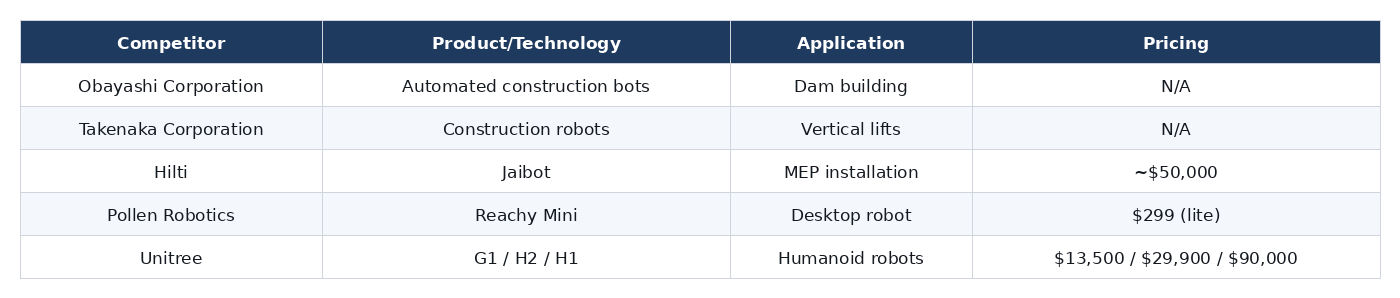
The push for construction automation is not unique to Shimizu, though the approach varies across the industry. Other major Japanese contractors are also investing heavily in robotics. Obayashi Corporation has deployed automated construction technology, including fully automated systems for building dams. Takenaka Corporation is developing various construction robots, such as vertical lifts.
Globally, companies are introducing specialized and semi-automated solutions. Hilti offers the Jaibot, a semi-automated robot designed for mechanical, electrical, and plumbing installation work. While specialized robots like the Jaibot focus on specific tasks, the introduction of general-purpose humanoid robots like those from Unitree suggests a move toward more flexible automation platforms. Unitree's lineup includes models ranging from the $13,500 G1 to the $90,000 H1, offering different capabilities for various applications.
Procurement Perspective
For procurement officers and strategic planners in the construction sector, the shift toward versatile AI robots requires a reevaluation of capital expenditure models. Traditional construction equipment is often amortized over long periods based on single-use applications. Humanoid robots, however, function more like a flexible labor platform. The initial hardware cost, such as the $90,000 for a high-end Unitree model, must be weighed against the robot's ability to perform multiple tasks across different phases of a project, from initial site inspection to final finishing work.
Beyond hardware pricing, the true value of these systems lies in the software and the AI ecosystem supporting them. Procurement strategies must account for ongoing software updates, AI model training, and integration with existing site management systems. The collaboration between Shimizu and technology companies like Sony highlights the necessity of cross-industry partnerships to successfully deploy these advanced systems.
Industry Insight
"The transition from single-task programmed machines to versatile AI robots capable of adapting to dynamic environments is essential for addressing the severe labor shortages facing the global construction industry."
Company Background
Shimizu Corporation, founded in 1804, is a prominent architectural, civil engineering, and general contracting firm based in Japan. The company generates annual sales of approximately US$15 billion. Shimizu has a history of investing in construction automation, having previously developed the "Shimz Smart Site" next-generation production system. This system included specialized robots such as the Robo-Welder, the Robo-Buddy for multi-purpose tasks, and the Robo-Carrier for automated material transport. The current focus on AI and humanoid robots builds upon this foundation, aiming to create more adaptable and versatile solutions for the modern construction site.
The development of these technologies is not merely an academic exercise but a practical response to a pressing business need. As the construction industry grapples with the dual challenges of an aging workforce and a shrinking pool of new entrants, the ability to automate complex tasks will become a critical competitive advantage. Shimizu's investment in AI robotics positions the company at the forefront of this technological transformation, potentially setting new standards for efficiency and safety in construction.
The success of these field trials will likely influence the broader adoption of AI robots in the construction industry. If Shimizu can demonstrate the reliability and cost-effectiveness of these systems in real-world conditions, it could pave the way for widespread deployment across the sector. This would not only transform the way buildings are constructed but also create new opportunities for technology providers and robotics manufacturers.
In the long term, the integration of AI robots into construction could lead to the development of entirely new building methods and architectural designs. As robots become more capable and versatile, they may be able to perform tasks that are currently impossible or too dangerous for human workers. This could open up new possibilities for construction in challenging environments, such as deep underground or in space.
The ongoing collaboration between construction firms, technology companies, and research institutions will be crucial for realizing the full potential of AI robotics in construction. By working together, these stakeholders can overcome the technical and regulatory hurdles that currently limit the widespread adoption of these technologies. The future of construction will likely be defined by the seamless integration of human expertise and robotic capabilities, creating a more efficient, safe, and sustainable industry.
Sources
1. Shimizu Corporation official news release (English): https://www.shimz.co.jp/en/company/about/news-release/2026/2026027.html
2. Shimizu Corporation official news release (Japanese): https://www.shimz.co.jp/company/about/news-release/2026/2026027.html
3. Nikkei Asia coverage: https://asia.nikkei.com/Business/Technology/Japan-s-Shimizu-bets-on-humanoid-robots-to-tackle-construction-labor-crunch
4. Unitree G1 product page: https://shop.unitree.com/products/unitree-g1
5. Unitree H1 product page: https://shop.unitree.com/products/unitree-h1
6. ABC 2026 construction workforce shortage release: https://www.abc.org/News-Media/News-Releases/abc-construction-industry-must-attract-349000-workers-in-2026-despite-macroeconomic-headwinds














