
Seoul's DDP to Deploy SK Intellix NAMUHX Wellness Robots
The Seoul Design Foundation has partnered with SK Intellix to deploy a fleet of autonomous NAMUHX wellness robots across Dongdaemun Design Plaza, turning the Zaha Hadid landmark into a public test bed for air quality monitoring and contactless health screening.
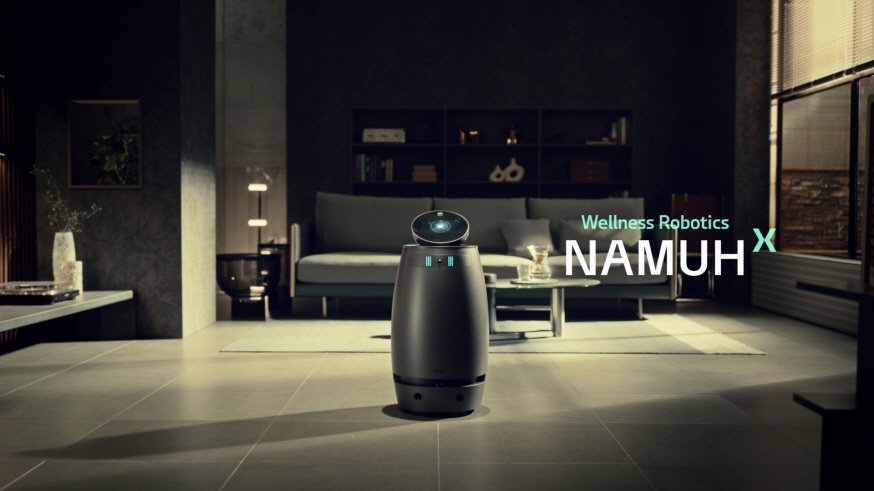
Seoul's Design Icon Becomes a Living Lab
Seoul's Dongdaemun Design Plaza ("DDP"), a gleaming Zaha Hadid landmark better known for fashion week and design festivals, is about to be rewired as a public health experiment. The Seoul Design Foundation has signed a partnership to deploy a fleet of NAMUHX wellness robots from SK Intellix across the DDP complex, turning its flowing corridors and cavernous exhibition halls into a continuous field trial for autonomous air quality management, contactless vital sign screening, and intelligent wayfinding. This is the market reality, a moment when novelty robotics seeks sustained operational evidence. The structural shift is visible too, cultural institutions serving as low friction launchpads for urban tech that needs messy, repeated public interaction to mature. The implication is straightforward: if these robots can perform reliably at DDP, the conversation moves from eye catching demos to commercial procurement conversations for transit hubs, hospitals, and corporate campuses.
From Runway to Lab Floor, a High Profile Proof Point
DDP is not a sterile test site. It is a destination, a stage for trends where tens of thousands of visitors pass through on busy days, where exhibitions are carefully curated and every surface counts in a design minded city. That is exactly why SK Intellix wants NAMUHX there. The company positioned NAMUHX as a dedicated wellness robotics line that blends mobile environmental sensing, non contact health screening, and conversational AI into a single platform. The flagship A1 model won industry recognition earlier this year for its autonomous, blind spot free air purification and a rapid facial analysis based vital sign check that returns several indicators in about ten seconds, paired with a large language model based voice assistant for hands free operation. Placing a fleet at DDP gives SK Intellix an opportunity to collect repeated, operational data at scale, data that will be the currency needed to convince facilities managers to sign multi site contracts.
SK Intellix sits inside the SK Networks group, a South Korean industrial and technology cluster with the balance sheet and distribution relationships to push hardware into public venues. But unlike the largest conglomerates that have diversified robotics bets, SK Intellix has carved a narrower niche with NAMUHX. The brand name blends the Korean word for tree with a symbol meant to imply open ended innovation, a gesture toward both organic wellness imagery and technological ambition. For a company in its growth phase, a visible, name brand deployment inside a semi public institution offers the credibility of a reference client without the full pressure of a commercial procurement environment.
How the Robots Move, Sense, and Speak
A wellness robot is easier to explain than to build. In functional terms the NAMUHX units consolidate three systems that normally live separately in modern buildings. There are the environmental sensors that measure particulate matter, CO2, volatile organic compounds and other contaminants. There are the kiosks or cameras used for temperature or rudimentary vital sign checks. There are wayfinding terminals and staffed reception desks for directions. NAMUHX takes those point solutions, places them on a mobile platform, and sends the system where people actually are rather than waiting for visitors to come to a fixed point.
Technically the robots use indoor self driving navigation built on simultaneous localization and mapping, visual inertial odometry, and proximity sensors tuned for dense pedestrian environments. The locomotion is deliberate, paced at walking speed to coexist with foot traffic. For air monitoring the units combine high sensitivity particle counters and chemical sensors with active purification modules that can engage when localized contamination is detected. The contactless vital sign screening relies on short duration optical analysis of a visitor's face, extracting pulse and respirations through subtle skin color shifts, plus temperature and other indicators inferred through camera data. The voice layer is an LLM based assistant trained to handle conversational queries about exhibitions, directions, and basic wellness guidance, designed to reduce friction in a public setting.
These are complex stacks, and the differences between a trade show demo and sustained deployment are profound. Navigation models have to handle variable occlusion and erratic crowd flows, air sensors must prove repeatable across large open plates, and the facial analysis systems must maintain accuracy across diverse demographics and lighting conditions while respecting privacy and consent.
Why DDP Is a Strategic Test Bed
Public facing wellness robots have often been one offs, promotional units at conferences or short pilots in controlled environments. A fleet at DDP is different. It provides continuity, repeated exposures, and a meaningful cross section of use cases from a design vernissage to a weekend crowd. For SK Intellix the metrics to be mined are operational, not just anecdotal. How many people engage with the vital sign screening, and under what conditions do they opt in or out? How does the robot grid route around installation geometry, temporary exhibits, and performance load? What is the maintenance cadence for filters and sensors when units operate daily in a dusty urban building?
Those answers will determine whether NAMUHX can move from pilot to product, and how SK Intellix will package its offering. The company has not publicly clarified whether it plans to sell robots outright, lease fleets as a robotic as a service offering, or monetize through recurring platform subscriptions. The DDP partnership is a low friction environment to test those business models. The foundation benefits too, it gains a working example of smart building hardware that enhances visitor experience, aligns with Seoul's civic branding around future forward design, and provides fodder for programming at events like the Next Creative Festival later in the year.
A National Playbook Written in Public Space
This deployment reveals a broader municipal playbook. Seoul is increasingly using cultural venues as visible test beds, letting companies iterate in front of citizens rather than behind closed doors. That strategy spreads risk, because a semi public foundation can sign partnerships with startup terms that would be harder to negotiate with a commercial landlord or hospital that demands contractual guarantees. It also accelerates learning, because the feedback loop from real viewers is immediate and repeatable.
For South Korea's robotics industry this moment is also a reputational pivot. Much of the sector's headlines this year centered on industrial robotics and defense adjacent plays, which frame Korea as a manufacturing and national security powerhouse. Wellness robots are softer tech, but they are also the interface between robotics and everyday civic life. Success in this category could broaden public acceptance and create a pipeline of demand that sits alongside industrial contracts.
Privacy, Accuracy, and the Sociology of Consent
Technical feasibility is only half the issue. Public health functionality embedded in autonomous units in civic spaces raises governance questions that will shape adoption. Facial analysis for vital sign inference is comparatively low friction, but it is not invisible. Consent flows, signage, and opt out modalities will be scrutinized by visitors and by regulators. Data storage policies, retention periods, anonymization techniques, and third party access protocols will determine whether the public sees these units as helpful or intrusive.
Operators will want to test the false positive and false negative rates of any health screening, because they change downstream operational burdens. A false alarm can create a scene in a crowded exhibition, while missed detections can undermine trust in the system entirely. That is why we expect the Seoul Design Foundation and SK Intellix to publish utilization dashboards and accuracy metrics after an initial run, the kind of transparency that turns a pilot into a credible reference.
Commercial Implications and Competitive Landscape
NAMUHX sits between vendor classes. It is not a conventional home assistant competitor to domestic robot efforts, nor is it a pure industrial seller. Its closest rivals are modular smart building vendors and fixed health kiosk providers. NAMUHX's central bet is consolidation, that facility managers prefer one mobile platform that can flex across use cases rather than several cheaper fixed devices. That calculus depends on total cost of ownership, maintenance complexity, and demonstrated value from real world data.
Large conglomerates in Korea have the scale to build rival offerings that bundle hardware with existing consumer electronics and service networks. For a smaller brand like SK Intellix the route to scale is a string of high visibility reference deployments that can be leveraged into sales into hospitals, universities, and transit operators. The DDP rollout is tactical in that sense, a marquee case study intended to convert curiosity into procurement conversations.
Practical Metrics for Buyers and Integrators
For facilities managers and systems integrators considering similar projects, watching DDP will be instructive. Ask to see anonymized utilization logs, sensor calibration records, and incident reports after three months in operation. Demand integration APIs for building management systems and visitor apps, because interoperability is the key to scaling beyond a single site. Insist on clear privacy documentation and third party audits of any biometric functions. From a procurement view, pilot cost should include operations personnel, spare parts provisioning, and remote monitoring dashboards, not just the upfront hardware price.
The Metrics That Will Separate Pilot from Product
Several indicators will reveal whether this is a marketing notch or a meaningful product milestone. The first is uptime and mean time between failures, a raw measure of operational readiness in a busy public building. The second is the ratio of public engagement to opt outs for the health screening feature, which will signal social acceptance. The third is how SK Intellix prices subsequent deals, whether it moves toward hardware sales, subscription services, or a hybrid. The presence of third party audits, data sharing agreements, and published accuracy metrics will determine if this deployment becomes a credible reference for hospital and transit procurement.
A Design Icon That Tests the Market
SK Intellix has traded a controlled trade show spotlight for the unpredictable theatre of one of Seoul's most photographed civic spaces. That move exposes the product to real world constraints, and that exposure will define whether NAMUHX is an interesting proof of concept or a repeatable commercial offering. In the best case, DDP will produce operational evidence that accelerates adoption across Asia and beyond, giving wellness robotics a foothold in everyday urban infrastructure. In the more conservative scenario, the project will surface integration and governance challenges that demand more engineering and policy work before fleet level rollouts are feasible.
This analysis synthesizes public statements and corporate materials provided by the institutions and companies discussed. Readers should conduct independent due diligence before making business, investment, or procurement decisions.














