
Samsung's Rainbow Robotics Boosts Humanoid Supply to Toyota Fivefold
Rainbow Robotics, the South Korean humanoid maker majority owned by Samsung Electronics, has increased its cumulative RB-Y1 robot supply to Toyota to around 25 units, five times its initial 2024 batch, as the world's top selling automaker expands its use of Korean made humanoids.
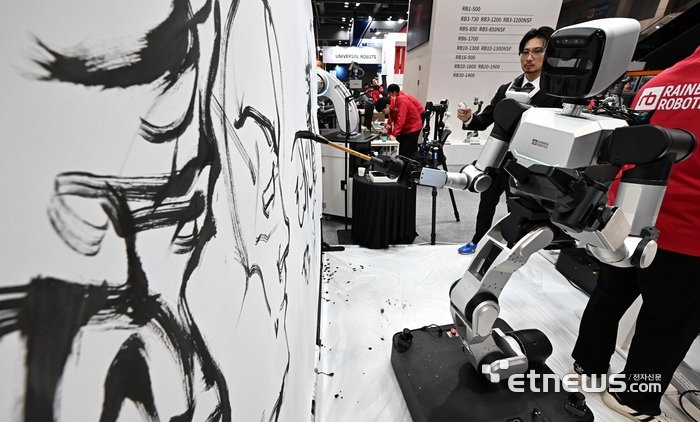
Samsung Electronics is expanding the supply of its Rainbow Robotics humanoid to Toyota, the world's largest automaker by sales volume. According to industry sources cited by South Korea's Electronic Times, Rainbow Robotics has delivered a cumulative total of around 25 units of its mobile humanoid RB-Y1 to Toyota since an initial batch of five to six units in 2024, a roughly fivefold increase in two years.
Toyota sold 11,322,575 vehicles worldwide last year, ranking first among global automakers for the sixth consecutive year. Its continued, growing purchases of RB-Y1 units are being read by industry observers as validation of Rainbow Robotics' technology, particularly notable because Japan already has a deeply established domestic robotics supply chain built around companies such as Fanuc, Yaskawa Electric, and Kawasaki Heavy Industries.
How Many Robots Has Rainbow Robotics Sent to Toyota
Rainbow Robotics, the Samsung owned South Korean humanoid maker, has delivered a cumulative total of about 25 RB-Y1 mobile humanoid robots to Toyota since 2024, up from an initial batch of five to six units, a roughly fivefold increase in supply over two years according to industry sources.
Company Background
Rainbow Robotics was originally a Korean spinout robotics company before Samsung Electronics acquired a majority stake, raising it to 35 percent, and folded the business into its electronics division as a subsidiary in 2024. The move was part of Samsung's push to build a robotics business as a future growth engine beyond its core semiconductor and consumer electronics operations.
The RB-Y1 robot itself is a mobile dual arm humanoid built on a wheeled base, with each arm capable of handling loads of about 3 kilograms, positioning it for lighter picking, sorting, and assembly assistance tasks rather than heavy industrial lifting. Its wheeled, mobile design lets it move between different workstations rather than being fixed to a single point on a production line, which is one reason it has found early traction in both manufacturing and logistics settings.
Beyond the Factory Floor
Toyota is not Rainbow Robotics' only commercial customer. The RB-Y1 has also been piloted at a Coupang fulfillment center to test warehouse sorting efficiency and reliability, extending the robot's use case from manufacturing into logistics. Rainbow Robotics is reportedly also in discussions with CJ Logistics about further supply opportunities, suggesting the company is trying to build a customer base across multiple industries rather than depending on a single sector.
One of the drivers behind Korean companies exploring robot deployment more aggressively is the country's Serious Accidents Punishment Act, which increases legal liability for workplace injuries and deaths. Replacing certain repetitive or hazardous tasks with robots is one way companies are trying to manage that liability while also addressing rising labor costs.
Why It Matters
The competition to supply humanoid robots to major automakers is intensifying quickly. Tesla continues to expand production floor use of its own Optimus humanoid, while Hyundai Motor is doing the same with Atlas, built by its subsidiary Boston Dynamics. Toyota's decision to keep buying more Korean made humanoids from Rainbow Robotics, rather than developing an equivalent in house or leaning entirely on Japan's existing robot ecosystem, is a signal that the company sees a specific advantage in RB-Y1's mobility and versatility across multiple tasks.
The Bigger Signal
A repeat, growing order from the world's largest automaker carries more weight than a single pilot announcement, because automakers rarely expand humanoid deployments without measurable productivity or safety gains. If Rainbow Robotics can convert this Toyota relationship into supply deals with other automakers, and Samsung's backing suggests it has the capital to scale manufacturing, Korea's position in the global humanoid supply chain could shift from a promising newcomer to an established alternative to Japanese and American suppliers.
Strategic Perspective
Manufacturers evaluating humanoid suppliers should treat repeat orders from a single large customer, especially one with as much production scale and quality scrutiny as Toyota, as a stronger signal than headline funding rounds or one-off demonstrations. Companies planning multi-year robotics procurement should also watch whether Rainbow Robotics expands beyond Toyota to other automakers this year, since that would confirm the RB-Y1's versatility claim rather than a single customer relationship built on convenience or existing ties.
Market Context: Korea's Bid to Lead Humanoid Hardware
Rainbow Robotics' growing Toyota relationship is part of a broader push by South Korean industry to position the country as a leading hardware supplier for the global humanoid robotics market, which some industry estimates now place at around 370 billion dollars over the coming years. Korean auto parts manufacturers, facing maturing margins in their traditional automotive supply business, are increasingly pivoting toward robotics component and integration work, betting that their existing precision manufacturing expertise transfers well to humanoid hardware production.
Samsung's integration of Rainbow Robotics as a subsidiary gives that strategy a well capitalized anchor company, but the broader ecosystem argument depends on more than one success story. Industry analysts covering the sector have pointed to Boston Dynamics, itself owned by Hyundai Motor Group, and Rainbow Robotics as the two most visible proof points for Korea's ambitions in humanoid hardware, meaning both companies' commercial results carry outsized weight for how seriously global buyers take Korean-made humanoid robots as a category, rather than viewing this supply relationship as an isolated success.
Hyundai Motor's own stock performance has cooled recently as weaker domestic vehicle sales overshadowed investor enthusiasm about its robotics ambitions, a reminder that robotics revenue still represents a small fraction of these companies' overall business and that automotive fundamentals continue to drive investor sentiment more than robotics headlines do, at least for now.
What to Watch Next
The most important indicator for Rainbow Robotics' trajectory will be whether it lands a second major automaker customer beyond Toyota within the next year. A single customer relationship, even one with the world's largest automaker, leaves open the possibility that RB-Y1's adoption is specific to Toyota's particular production needs rather than broadly applicable across the industry. Readers should also watch Samsung's broader robotics investment signals, including whether the company expands Rainbow Robotics' manufacturing capacity, and whether the reported discussions with CJ Logistics convert into a confirmed supply agreement. Confirmation on either front would strengthen the case that Korea is building a genuine, diversified humanoid hardware export industry rather than a single high profile customer relationship.
The Simple Explanation
A mobile humanoid robot like the RB-Y1 is built differently from the large, fixed robotic arms that have worked on car assembly lines for decades. Those older industrial robots are bolted to one spot on the factory floor and repeat the same motion thousands of times a day. A mobile humanoid instead has a wheeled base and two arms, letting it roll between different stations and switch between tasks such as parts transport, light assembly help, or sorting, more like a flexible temporary worker than a fixed machine. That flexibility is expensive to build correctly, since balance, navigation, and safe movement around people all have to work together, which is why Toyota's repeated, growing orders carry weight: a car manufacturer with extremely high reliability standards has tested this flexibility in real production conditions and kept buying more.
The Strategic Perspective
Toyota's decision to keep expanding its Rainbow Robotics order, rather than developing an equivalent humanoid internally or waiting for a Japanese domestic alternative to mature, reflects a broader shift in how even the most vertically integrated manufacturers think about robotics procurement. Building a competitive humanoid program from scratch takes years and enormous capital, and Toyota's calculus appears to be that buying a proven, continuously improving platform from an external supplier, even one based in a different country, beats the multi-year cost and risk of building comparable technology in house. That logic could apply just as easily to other automakers still deciding whether to build or buy their way into humanoid robotics, and Rainbow Robotics' growing order book gives it a credible answer for any automaker weighing that decision today.
The Bottom Line
Samsung Electronics says it plans to keep expanding Rainbow Robotics' product lineup and global customer base, and the next signal to watch is whether a second major automaker places a comparable order in the coming months. The broader lesson for any manufacturer weighing humanoid adoption is that Toyota's own due diligence process, spanning more than two years and multiple order cycles, has already done much of the risk assessment work that a first-time buyer would otherwise need to perform independently, making Rainbow Robotics a lower-risk starting point for evaluation than newer, less proven suppliers. Suppliers positioning themselves against Rainbow Robotics will need more than a competitive price to win share, they will need a comparably long, verifiable deployment record with a customer of similar scale and scrutiny, which very few humanoid makers currently possess. That gap in verifiable track record, more than any single technical specification, is likely to be the deciding factor in the next round of automaker humanoid procurement decisions across the industry.
Source Evidence
Electronic Times (etnews): https://en.etnews.com/20260707200002
The Korea Herald: https://www.koreaherald.com/article/10771827














