
RoboFest 2026 Singapore Robotics Festival
In April 2026, Singapore became one of the first nations in the world to deploy a government-backed public robotics festival as a deliberate instrument of national AI strategy — not as spectacle, but as workforce infrastructure. RoboFest 2026 is not a festival. It is workforce infrastructure with an admission fee.

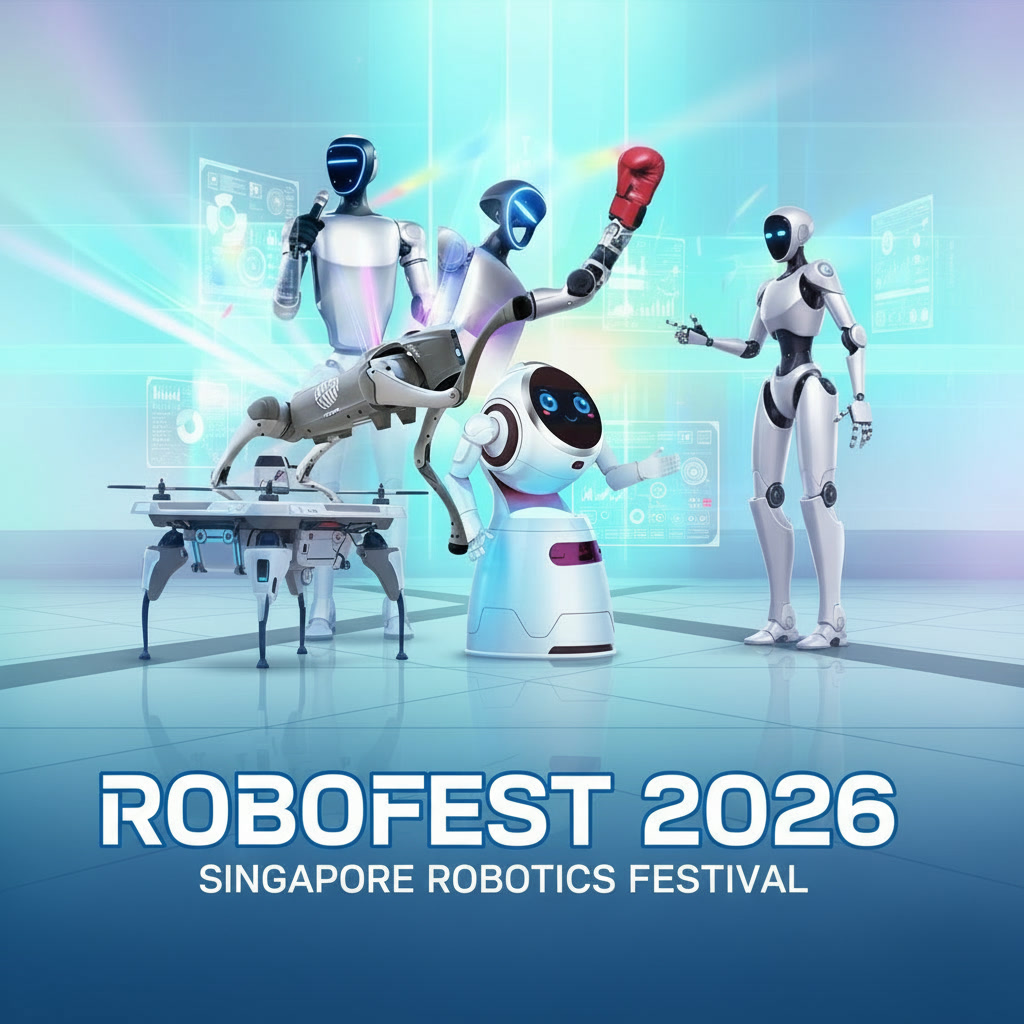
A child in a Singapore primary school watches a robot dog navigate a fire course. Next to her, a senior citizen operates a remote household assistant called Robi Butler. Across the hall, a mid-career adult codes a drone for the first time. None of them came to learn about government strategy. But that is precisely what they are experiencing. Science Centre Singapore opened RoboFest 2026 on 9 April — four days, four zones, and a question printed on every piece of signage: "As machines advance, what does it mean to be fully human?"
That framing is not incidental. In April 2026, Singapore became one of the first nations in the world to deploy a government-backed public robotics festival as a deliberate instrument of national AI strategy — not as spectacle, but as workforce infrastructure. "A robotics festival is not science communication. It is talent pipeline management at a national scale." The Ministry of Education, GovTech, AI Singapore, NUS, and Nanyang Polytechnic are all partners. Minister of State Jasmin Lau of the Ministry of Digital Development and Information opened the event. This is not a Science Centre acting alone. This is a coordinated institutional signal about where Singapore believes the gap in its AI ambition actually sits.
What actually happened here, and why it matters:
The surface story is a four-day event with robot boxing, drone coding, and a comedy show called My Colleague is a Robot Dog. The structural story is that Singapore has a specific problem it cannot solve with funding alone — AI adoption rate among its SMEs jumped from 4.2% to 14.5% in a single year (IMDA Singapore Digital Economy Report, October 2025), and non-SME adoption moved from 44% to 62.5% in the same period. The government is now committed to bringing 10,000 enterprises through its National AI Impact Programme over three years. The bottleneck is not money. It is human readiness. RoboFest is not the solution to that problem. It is the ground-floor of the pipeline that produces one.
Two questions surface immediately:
Q: What is RoboFest 2026? A: RoboFest 2026 is Singapore's first dedicated robotics and AI festival, hosted at Science Centre Singapore from 9 to 12 April 2026. It features four experiential zones — live robot demonstrations, industry and research exhibits, hands-on AI and robotics workshops, and the 18th edition of RoboCup Singapore, which doubles as the national selection event for the 2026 RoboCup World Championship, confirmed by the RoboCup Singapore Regional Committee.
Q: Is this connected to Singapore's national AI strategy? A: Yes, directly. RoboFest is supported by the Ministry of Education, GovTech Singapore, and AI Singapore, and opened by Minister of State Jasmin Lau from MDDI — the same ministry that announced Singapore's S$1 billion National AI Research and Development Plan in January 2026 (MDDI, January 2026). The event is one component of a coordinated public AI literacy push running alongside the National AI Impact Programme launched at the Committee of Supply debates in March 2026.
The Mechanism the Headlines Miss
Singapore Funds AI Fluency, Not Just AI Research
The S$1 billion NAIRD plan announced in January 2026 targets research capacity. But the IMDA's National AI Impact Programme, launched in March 2026, targets something harder to fund: the willingness of ordinary workers and small business owners to engage with AI at all. Singapore's own SGDE report from October 2025 documented that SME AI adoption tripled in a year — which sounds impressive until you consider that it moved from 4.2% to 14.5%, meaning more than 85% of SMEs still had not adopted AI in any meaningful form. RoboFest is directed at the people behind that 85%. It is framed as curiosity. Its function is normalisation.
The RoboCup Arena Does More Work Than It Looks
Embedded inside RoboFest is the 18th edition of RoboCup Singapore — the national selection platform for teams competing at RoboCup Asia-Pacific 2026 and the RoboCup World Championship 2026, confirmed by the RoboCup Singapore Regional Committee. This is not a side event. RoboCup is, per its own international body, "widely regarded as the pinnacle robotics competition, recognised by top academic institutions and industries worldwide." Placing it inside a public festival means that Singapore's most competitive young robotics talent is performing — and being identified — in front of families, educators, and potential industry sponsors simultaneously. The spectacle produces pipeline.
What Coverage Misses
What most coverage misses is that RoboFest's design inverts the usual direction of public science communication. Most science festivals explain what technology already does. RoboFest is structured around the question of what people should do — and it positions that question for every demographic segment simultaneously: children in the Learning Hub, seniors in Robotics in Real Life, mid-career adults in the Playground. That is not exhibition design. That is workforce segmentation. The festival's own promotional language asks: "If AI becomes common, what should every Singaporean know how to do?" That question is not rhetorical. It is a national skills policy problem framed as a family outing.
RobotAIGeek's Read
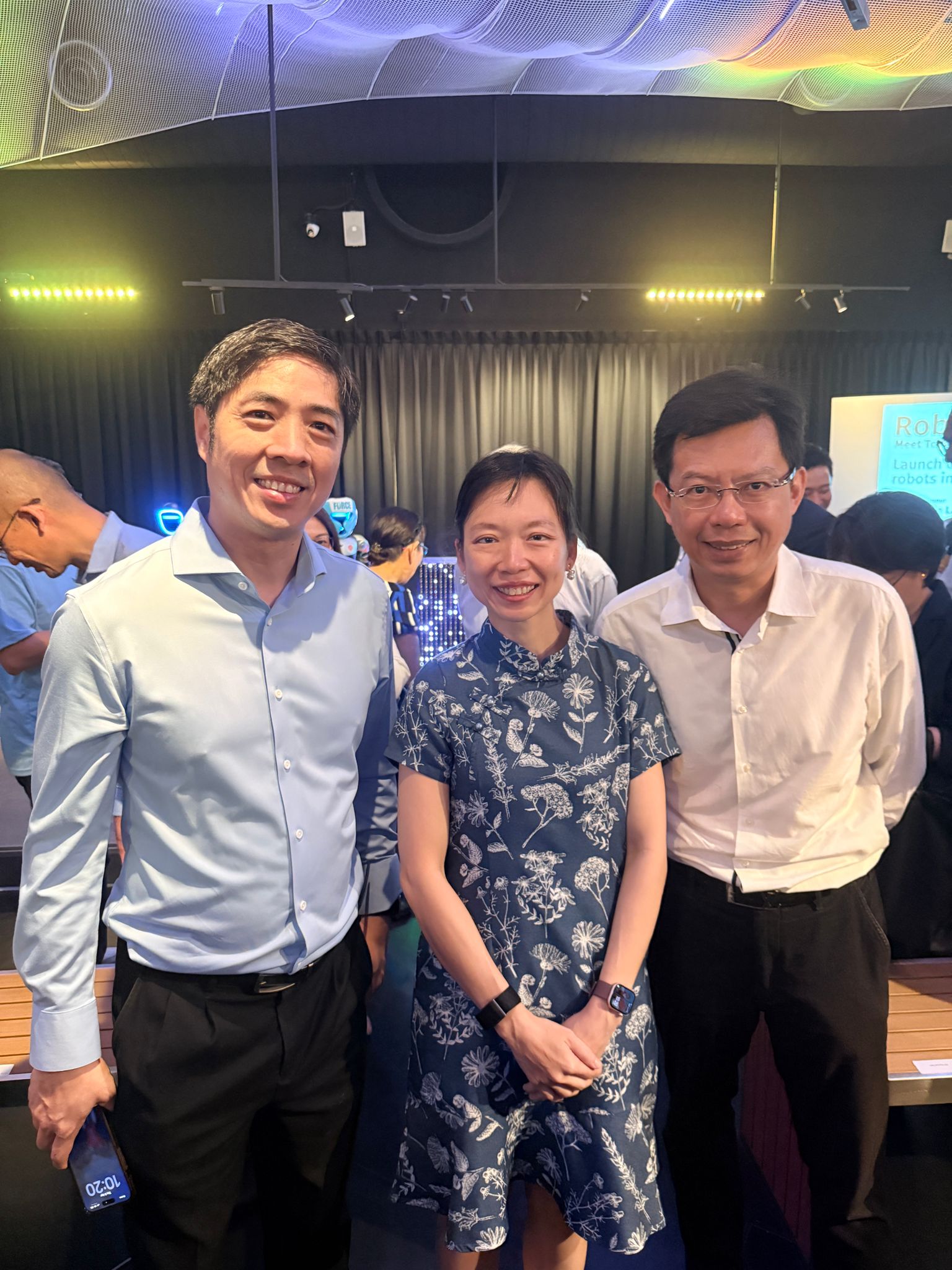
We attended the launch. The government backing was visible not in signage but in institutional density: the breadth of agencies represented, the presence of a minister at an opening that most countries would assign to a science official, and the deliberate integration of competitive robotics into a public engagement format. Singapore is not experimenting with public AI education. It is industrialising it.
Central Tension
Public robotics engagement at national scale builds the broad AI literacy Singapore needs, but it concentrates that investment in a city-state with the infrastructure to execute it — widening the gap between Singapore's AI readiness and that of its regional neighbours who cannot replicate the institutional density behind events like this one.
This development sits at the intersection of AI education policy and workforce economics that this site tracks closely.
Robotics is moving from controlled environments into everyday social spaces — the where robots are used question is now as much about classrooms and science centres as it is about factories. And the human workforce question underneath RoboFest — who adapts, who leads, and who gets left behind as AI fluency becomes a baseline expectation — is the same question driving the future of work analysis this site has tracked since before the current wave of investment began.
If Singapore's AI literacy strategy succeeds in closing its SME adoption gap, what changes first — the talent entering the workforce, the enterprise deployment rate, or the regional competitive advantage Singapore holds? The answer depends on whether normalisation at the festival level actually converts to adoption at the business level — and that data will not be visible for at least eighteen months.
1. What is happening at RoboFest 2026? RoboFest 2026 runs from 9 to 12 April at Science Centre Singapore and is the Centre's first festival dedicated entirely to robotics and AI. It features four zones: the Playground (live robot demonstrations including robot boxing and fire-fighting dog demos), Robotics in Real Life (exhibits from NUS and companies including Stellaris Robotics), the Learning Hub (hands-on workshops and the Singapore debut of the LEGO Education CS & AI Kit), and the RoboCup Arena hosting the 18th RoboCup Singapore championship. Admission is included with standard Science Centre tickets.
2. Who opened RoboFest 2026? RoboFest 2026 was officially opened by Minister of State Jasmin Lau from Singapore's Ministry of Digital Development and Information (MDDI). The event is supported by the Ministry of Education, GovTech Singapore, AI Singapore, NUS, and Nanyang Polytechnic, reflecting cross-agency coordination rather than a standalone Science Centre initiative.
3. How does RoboFest connect to Singapore's AI strategy? RoboFest sits within a coordinated push that includes Singapore's S$1 billion National AI Research and Development Plan announced by MDDI in January 2026, and the National AI Impact Programme launched at the Committee of Supply debates in March 2026, which aims to bring 10,000 enterprises through AI adoption support over three years. According to IMDA's SGDE Report (October 2025), SME AI adoption in Singapore jumped from 4.2% to 14.5% in 2024, but more than 85% of SMEs had still not adopted AI — the public engagement gap that RoboFest is designed to begin closing.
4. What is RoboCup Singapore 2026? RoboCup Singapore 2026 is the 18th edition of the national robotics competition, serving as the official selection platform for teams representing Singapore at RoboCup Asia-Pacific 2026 and the RoboCup World Championship 2026, according to the RoboCup Singapore Regional Committee. Competitions run from 11 to 12 April within the RoboFest festival. RoboCup is internationally recognised by academic institutions and industry as the leading competitive robotics platform globally.














