
Oxipital AI Raises Series A as Food Plants Adopt Its Vision Platform
Bedford, Massachusetts based Oxipital AI has closed a Series A round to expand its V-CORTX AI vision platform after landing a contract to deploy 120 systems for foreign object detection across food manufacturing lines facing persistent labor shortages.
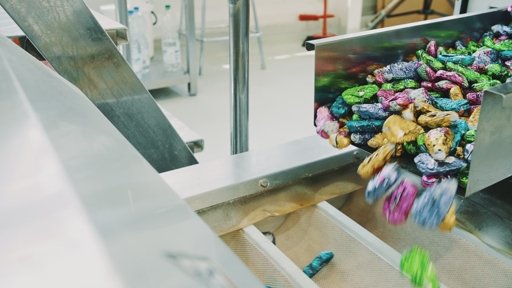
Market reality is blunt and operational, not theoretical. Food manufacturers are still losing sleep over tiny pieces of plastic, bone, or metal slipping into packaged goods, incidents that trigger recalls, fines, and brand damage far larger than the immediate cost of the product involved. Structural shift is unfolding as persistent hiring trouble for line inspection and quality assurance persuades companies to treat automated inspection as a necessity rather than an optional efficiency play. The implication for venture and procurement teams is clear, a narrow but high value market that rewards solutions marrying accuracy with ease of use.
Into that opening arrived Oxipital AI, a Bedford, Massachusetts company that this July closed a Series A round to scale its V CORTX vision platform after securing a contract to deploy 120 systems across multiple production lines for foreign object detection. Investors leading the round include SAS Private Equities and Scale Venture Partners, with participation from Material Impact and existing backers. The cash infusion is meant to move the company from validated pilots to factory floor scale, faster than the traditional one line at a time model that has long slowed adoption of new inspection technologies.
Why the problem looks simple but is not
Catching a stray fragment on a fast moving production line sounds straightforward until you stand beside a high volume belt and watch the product vary from minute to minute. Natural variation in raw ingredients, shifting lighting, condensation on packaging, and hundreds of small mechanical variances conspire to make a single trained camera model brittle. Conventional vision systems excel in repeatable, low variance environments like electronics assembly, but food production is a different class of problem. The staffing reality compounds the difficulty. Quality assurance teams are typically staffed by food safety specialists rather than machine learning engineers, and turnover in repetitive inspection roles has been stubbornly high for years.
Oxipital is selling a thesis that both pieces need to be solved together, that perception must be both accurate and approachable. The company projects 400 percent revenue growth for the year, a number driven by that 120 unit contract and by a pipeline of customers where the combination of regulatory pressure and staffing gaps makes automation a recurring spend rather than a discretionary one.
From Bedford labs to production lines
Oxipital AI is led by CEO Mark J. Chiappetta and operates from Bedford, in the Greater Boston technology corridor. The V CORTX platform debuted publicly in late 2025 at a major packaging and processing show. The platform is designed as a three part stack, a Vision Model Manager that ships pretrained inspection models to avoid the need for each plant to collect and annotate thousands of images, a visual Recipe Builder that lets plant engineers assemble inspection workflows without writing code, and an Analytics Dashboard that produces real time throughput, defect trend, and quality performance metrics.
That architecture is an intentional play against the high barrier to entry many plants face when they are offered configurable but engineering heavy systems. Oxipital believes the buyer profile in food manufacturing, where many plants are mid sized and lack embedded data science talent, will reward a product that moves the configuration burden from model training onto a drag and drop workflow layer. In practice that means a plant quality manager can select a pretrained model, tweak the inspection sequence visually, and push an update to cameras on the line without waiting weeks for a bespoke model training cycle.
V CORTX in plain English
At its core foreign object detection is a detection and classification task, a computer vision problem. The traditional approach trains a model on a very specific product presentation, and any deviation in appearance or lighting can cause false negatives or create a flood of false positives that clog the production feedback loop. Oxipital’s approach layers generalized perception models, pretrained on wide variation, with a workflow layer that lets human operators specify rules and contextual logic visually. Think of it as combining a broad, adaptable visual intelligence with human readable guardrails, enabling systems to operate closer to human level inspection performance while still producing consistent metrics and analytics.
Practical trade offs remain. Any automated inspection will produce both false positives and false negatives, and the performance envelope shifts by product type, packaging, and belt speed. Oxipital’s pitch is that the time to value is shorter because plant staff can iterate visually, and that reduces the total cost of ownership compared with systems that require a machine learning team to retune models continuously.
Why food companies are writing checks
Food safety incidents have outsized consequences. A single consumer complaint about a foreign object can cascade into full product recalls, regulatory investigations, and media scrutiny that damages brand trust for years. Those outcomes turn quality assurance from a line item in an operations budget into a board level concern. More prosaically, the economics are straightforward. The cost of a recall or regulatory action dwarfs the cost of installing inspection systems across many lines, provided those systems scale and maintain required detection performance.
Labor supply adds an additional layer. Quality assurance and line inspection roles are difficult to staff, and the roles are critical and constant. This creates recurring demand for solutions that reduce headcount exposure or shift inspectors to higher value tasks. Oxipital is selling automation as a risk reduction investment that also frees existing teams to focus on root cause analysis and process improvement, not just watching a conveyor.
How Oxipital stacks up against the giants
The machine vision market is not empty. Large incumbents have decades of experience selling industrial cameras, sensors, and image processing software, and they bring deep engineering talent into large enterprise accounts. Those vendors typically excel when a customer has a dedicated automation team or when the manufacturing task is stable and repeatable.
Oxipital’s competitive bet is that food processing is a distinct submarket where variability is the rule, and that accessibility and speed to deploy matter as much as raw detection performance. By packaging pretrained models and a visual workflow, Oxipital targets mid market and enterprise customers who want to move from pilot to production across multiple plants without investing heavily in custom engineering. Whether this posture proves durable depends on two factors, how quickly incumbents replicate a similar no code product offering, and how well Oxipital executes at scale when the new 120 system rollout begins.
The broader signal for robotics and perception
This raise sits inside a wider shift in industrial automation, where investors and operators are paying more attention to the perception layer that sits underneath robots and conveyor equipment. Better sensing increases the value of robots already in place, because machines can operate faster, more reliably, and with fewer false stops. For platform companies that sell both sensing and the higher level orchestration software, the prize is to become the de facto perception provider for a vertical.
For food and consumer packaged goods manufacturers specifically, perception is an enabler of downstream automation, from robotic pick and place to sorting and packaging. That increases the addressable market for companies like Oxipital if they can demonstrate not only defect detection but also system robustness across a variety of environments and operators.
Questions buyers and investors should demand answers to
Automated inspection is not a plug and play commodity. A few commercial and technical questions help separate serious solutions from promising demos. Buyers should insist on comparable operating metrics, false positive and false negative rates, from a production line that mirrors their own. They should test the ease of updating the system when products change, and measure how often the system requires outside engineering support versus plant led configuration.
Investors should push for proof points that show repeatable deployment cadence, not just large one off pilots. A single large contract is notable, but the business model depends on multiple customers agreeing to roll out across sites. Margin dynamics also matter. The unit economics of camera and compute procurement at scale, combined with the cost of ongoing support and models, determine whether a software defined perception company can hold its price points against incumbents bundled hardware offers.
The test that will define the next year
The 120 system deployment is a clear inflection point. If Oxipital can turn that contract into a smooth replication play, demonstrate low support cost per site, and show sustained detection performance across varied products, the company will have proven both its product and its go to market playbook. If the rollout reveals brittle edge cases that require heavy engineering intervention, then the company faces a longer horizon to prove its no code thesis.
For the market broadly the outcome will be instructive. A successful scale rollout will likely accelerate consolidation, prompting larger machine vision vendors to build or acquire no code capabilities targeted to food processing. It will also validate investor interest in perception layer plays, pushing more capital into companies that can translate sensing into operational ROI quickly.
A pragmatic caveat
No technology eliminates risk entirely. Automated inspection shifts the profile of risk from human error to algorithmic oversights and integration mistakes. Sophisticated buyers will plan for layered defenses, combining automated systems with sampling, periodic human audits, and strong analytics to triangulate anomalies. Done right, the combination reduces both the frequency and severity of incidents.
Oxipital AI has taken a narrow, safety critical manufacturing problem and turned it into a potential scaling business by focusing on usability and pretrained models. The Series A gives it runway to prove the thesis at industrial scale. The next twelve months will tell whether V CORTX becomes the template other vendors copy, or whether the category remains fragmented because the variability of food processing is simply too stubborn for a one size fits most model.
This analysis synthesizes company statements and public market signals around perception and industrial automation. Readers should conduct independent due diligence before making investment or procurement decisions.














