Mitsubishi and Highlanders plan 1,000 humanoids a month in Kyoto
Mitsubishi Motors and University of Tokyo startup Highlanders signed an MOU to jointly develop and mass produce humanoid robots at Mitsubishi’s former Kyoto engine plant. The partners target 1,000 units per month by late 2027, with initial deployment inside Mitsubishi factories to assemble cars and build more robots.
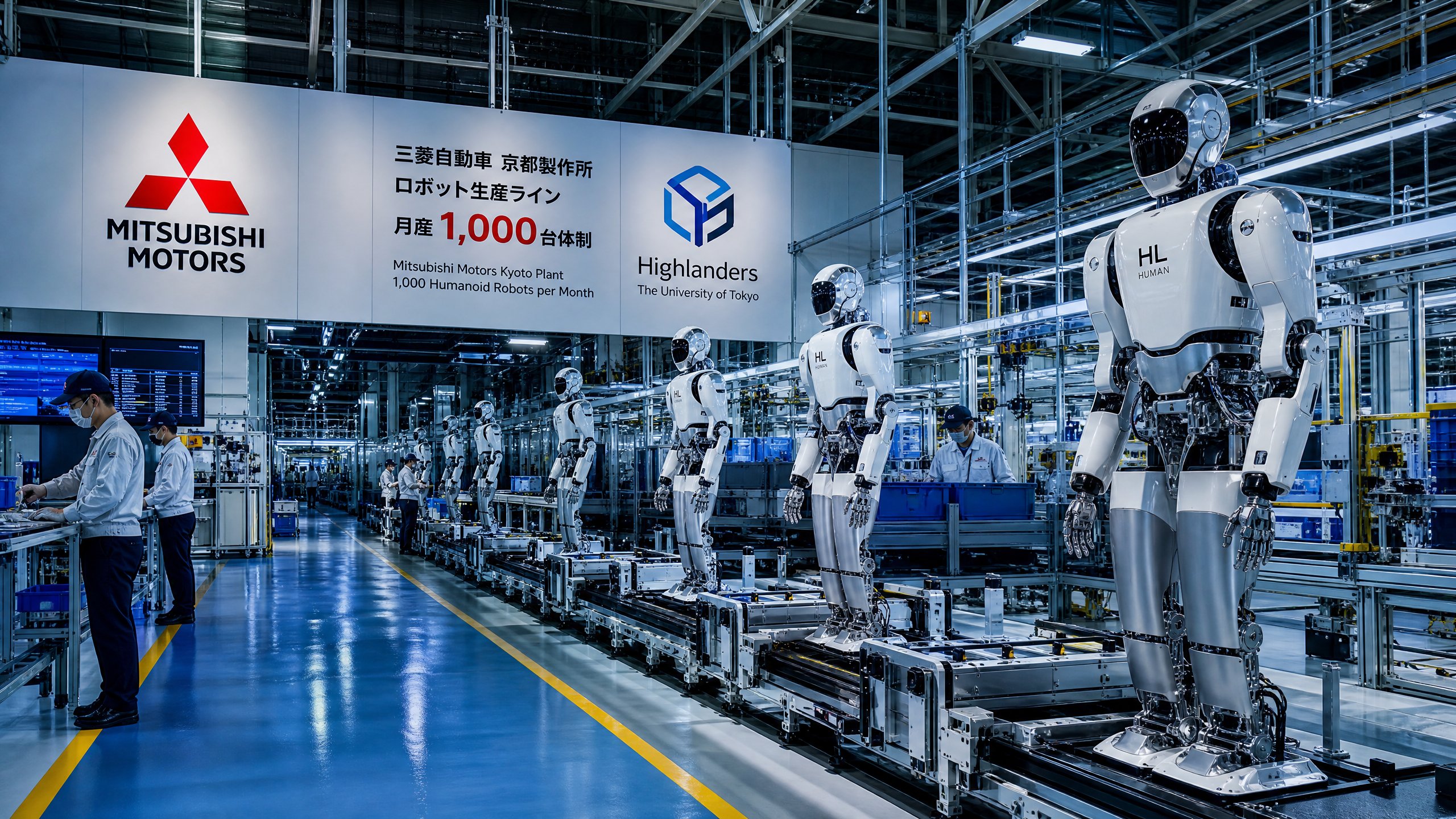
Mitsubishi Motors and University of Tokyo spinout Highlanders signed a memorandum of understanding to jointly develop and mass produce humanoid robots in Japan. Production will be housed at Mitsubishi’s former Kyoto engine plant. The partners aim to reach 1,000 units per month by the end of 2027.
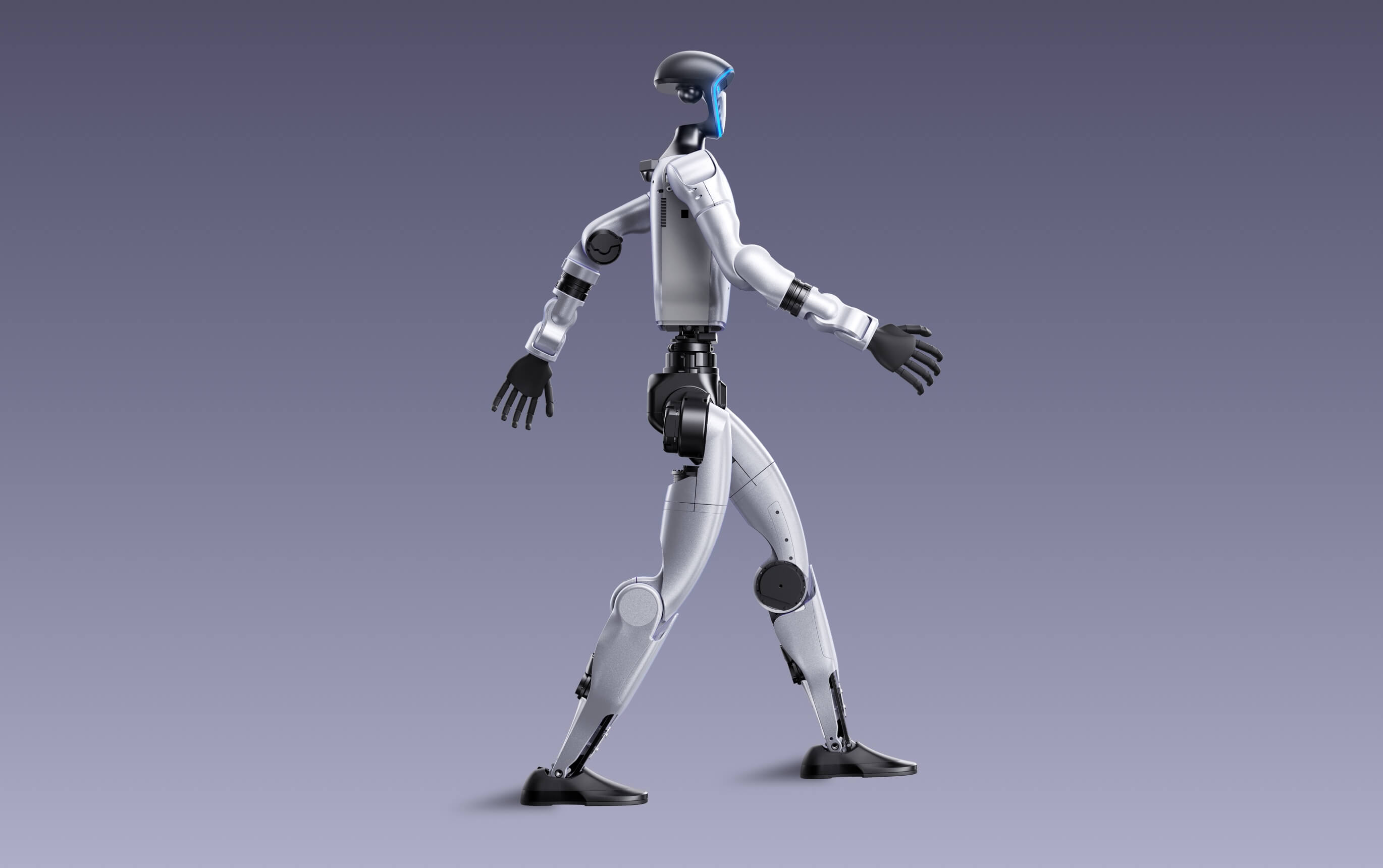
Highlanders HL Human platform features 19 degrees of freedom with AI powered perception and natural language interaction. The companies will first deploy units inside Mitsubishi factories to assemble cars and to build more robots. The move converts idle internal combustion capacity and puts a major automaker into direct competition with Tesla and Hyundai.
Major Japanese automaker is converting engine capacity into a humanoid bet
Mitsubishi Motors, headquartered in Tokyo, is moving to repurpose its Kyoto site that once turned out internal combustion engines into a high volume robot plant. Highlanders, a University of Tokyo born startup, brings humanoid designs and software that handle perception, planning, and natural verbal interaction. Together they aim for a monthly run rate that would place the venture among the largest planned humanoid programs globally.
The nut of the strategy is simple. Automotive companies own some of the world’s most advanced precision manufacturing assets and production know how. Many of those assets are tied to engine machining and assembly that is winding down. Humanoids promise a new product class where factory scale and reliability are decisive. Putting the two together is both a hedge against the shifting economics of the auto sector and an attempt to lead a new industrial category.
Production target reframes humanoids as a manufacturing scale product
A target of 1,000 robots per month by late 2027 signals a scale mindset. That volume equates to 12,000 units annually once the ramp stabilizes. In an industry that has largely been defined by research pilots and limited runs, the signal is that humanoids are graduating from demonstration to repeatable product. It also puts pressure on teams elsewhere that have announced plans but have yet to commit legacy assets to production.
The analogy is a kitchen upgrade. Many humanoid programs today resemble talented chefs in home kitchens experimenting with recipes. Mitsubishi is opening a commercial kitchen with line cooks, supply contracts, and a consistent menu. The food still needs to taste good, but the system is built for dozens of servings per hour rather than one beautiful plate a night.
Kyoto conversion leans on Japan’s precision supply base
Kyoto and the broader Kansai region sit near tier one suppliers for motors, reducers, bearings, and sensors. Humanoids require compact high torque actuators, precision gears, and lightweight structures. Japan houses major players across these categories that could shorten lead times and improve quality. Motor specialists like Nidec and Minebea Mitsumi, gearmakers such as Harmonic Drive Systems and Nabtesco, and robotics component firms including THK and NSK operate within trucking distance. Sony leads in image sensors, and Renesas can support embedded control. This regional clustering can become a strategic advantage as demand increases and buyers prioritize predictable delivery.
The project also opens a new demand vector for legacy automotive machining talent. Actuator housings, joint components, and structural parts demand similar tolerances as engine parts. Skilled technicians formerly focused on cylinder heads and crankshafts can pivot to harmonic drive housings and linkages. Retraining is required, but the base capability is aligned. A former engine line can be reconfigured with CNC cells, inspection rigs, and end of line calibration for actuators and limbs.
First deployments inside Mitsubishi set up an operational flywheel
Mitsubishi plans to use the early humanoids inside its own manufacturing plants. This approach builds a feedback loop where the user and the maker are the same enterprise. Tasks such as kitting, machine tending, materials movement, and certain final assembly roles can serve as controlled environments for iterative learning. The robots can be updated with new software overnight and retried on similar tasks across multiple lines. Human trainers and industrial engineers can pair program behaviors without dealing with the complexity of external customer contracts.
There is also a subtle signaling effect. If a major automaker uses humanoids in its own factories to tighten takt times and improve quality, it reassures suppliers and peers that the technology is maturing. The risks are not eliminated. A jammed gripper or a misread instruction still halts the line. But the willingness to trial on critical paths inside a global manufacturer suggests rising confidence in reliability and safety.
Competitive dynamics intensify as automakers and robotics firms converge
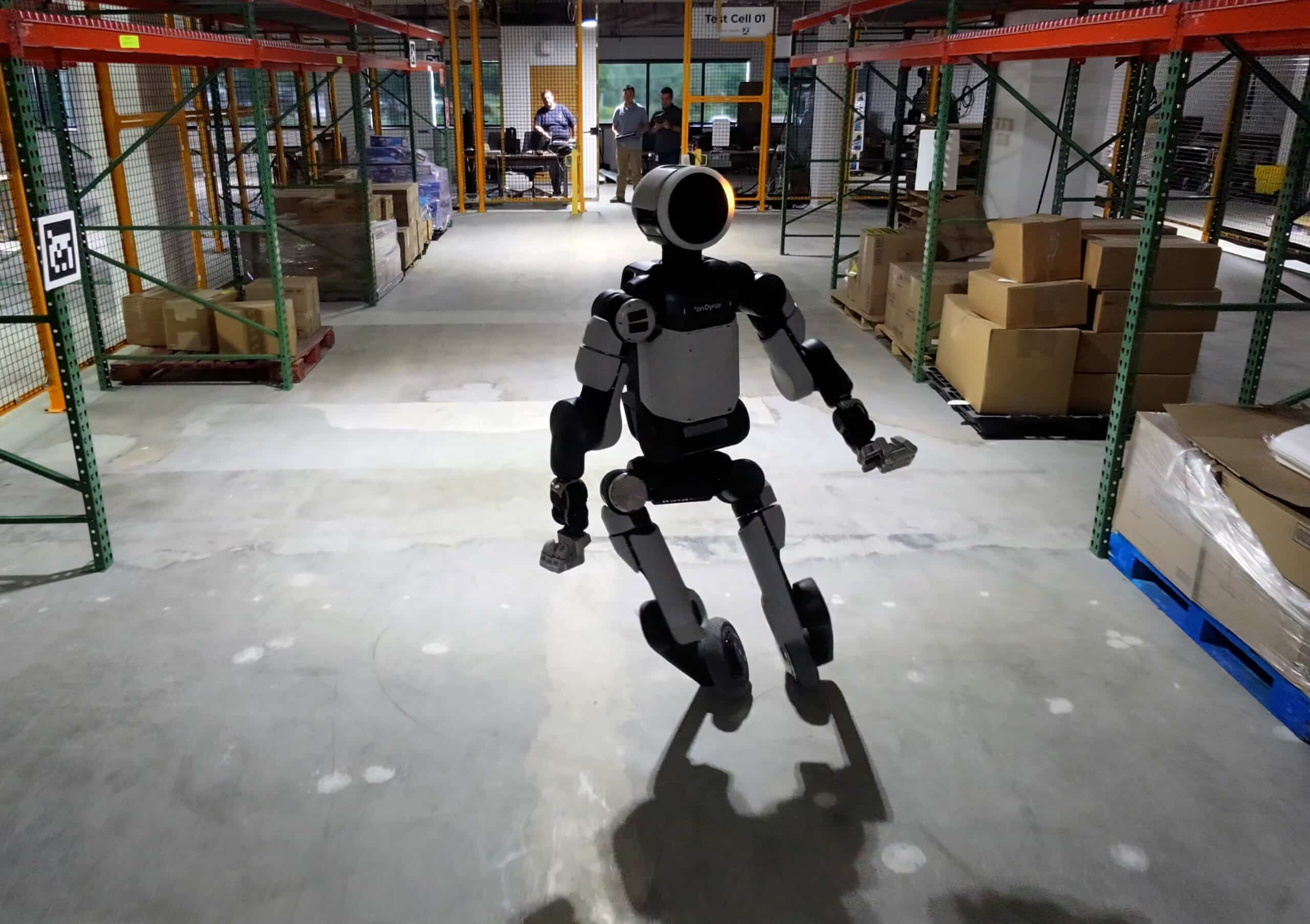
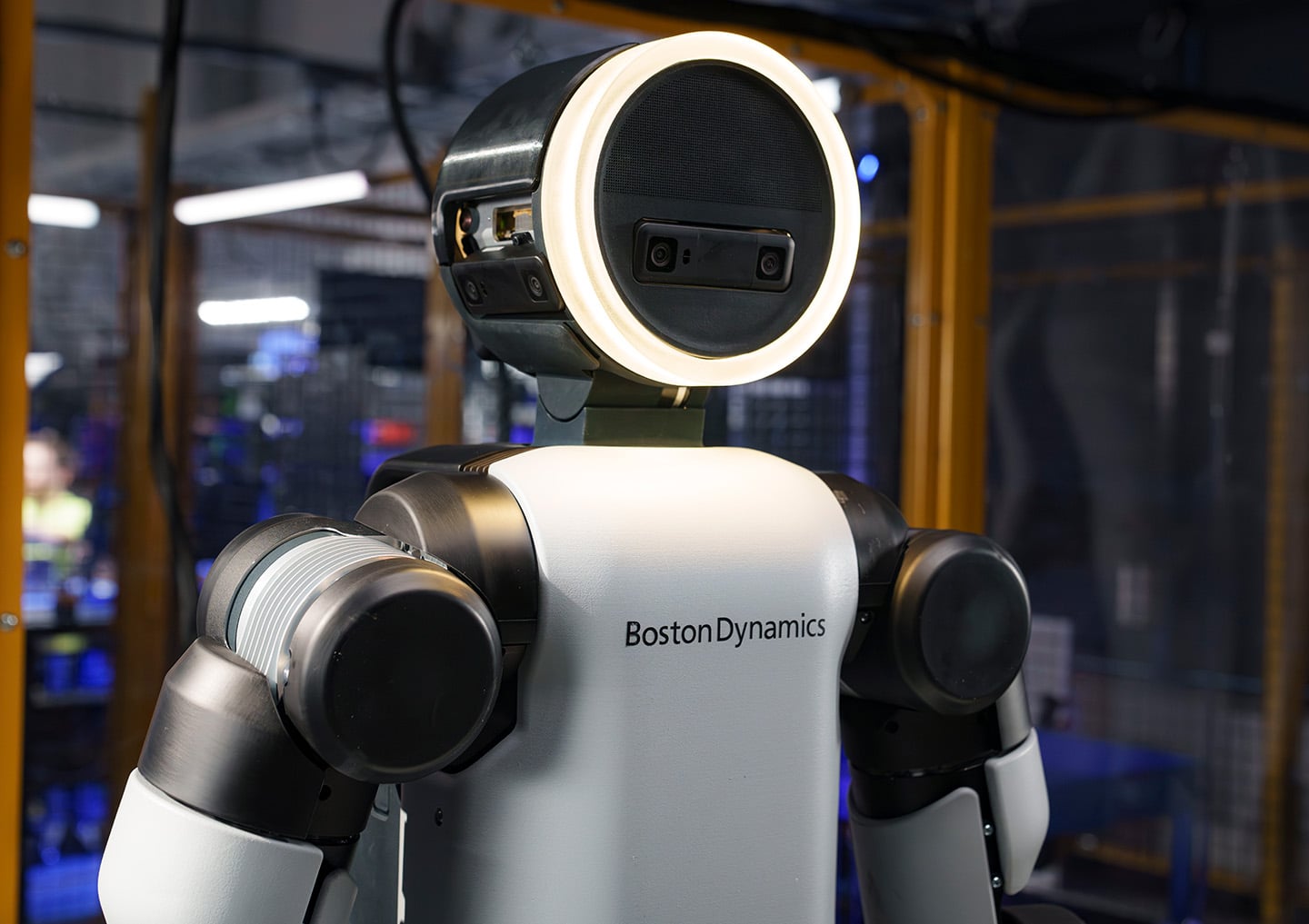
Tesla has promoted its Optimus program and showcased progress in dexterity and walking, while indicating plans for internal factory use before broader sales. Hyundai owns Boston Dynamics and recently previewed a new generation of Atlas with electric actuation that targets industrial tasks. Agility Robotics has opened a factory in Oregon to build the bipedal Digit, with a stated goal of five figures in annual capacity. Chinese firms including Unitree and Fourier Intelligence have shown aggressive pricing and rapid iteration.
Mitsubishi and Highlanders now add a Japanese anchor to this race. The difference is the direct conversion of a legacy engine plant with an explicit monthly target and a clear initial customer in Mitsubishi. That could create a practical sprint where shipping and uptime trump video demos. The winners will combine cost control, reliability, and software that generalizes across dozens of tasks. The Kyoto program, if it holds schedule, vaults Japan into a production centric role that complements research at labs across the country, including Toyota Research Institute and national universities.
Cost structure and business model options tilt toward service revenue
The economics of humanoids are still being shaped. Unit prices across the sector vary widely, with some Chinese vendors promoting configurations under US$100,000 while others target higher performance units that likely command several hundred thousand US dollars. If Mitsubishi and Highlanders can build 12,000 units per year, even a conservative price band creates meaningful revenue. At an illustrative US$100,000 per unit, that output would imply US$1.2 billion in annual sales. If they pursue robotics as a service with monthly fees, recurring revenue could smooth cash flows and improve margins once manufacturing costs fall.
Automotive scale purchasing can pull material costs down through long term contracts for motors, gears, battery cells, and structural materials. Existing supplier relationships and production planning systems can be repurposed. The company can also share overhead across its automotive footprint. Quality systems, logistics, and compliance teams can support both cars and robots. That leverage matters because early units will likely have higher warranty costs and require frequent firmware and hardware updates. An automaker accustomed to recall procedures and service bulletins can translate those rhythms into a robot service model.
Software stack must blend perception, planning and language safely
Highlanders reports AI powered perception and natural language interaction for its HL Human platform. In a factory, this translates into multimodal perception that understands people, tools, part bins, and signage, combined with motion planning that respects safety distances and workspace rules. Language interaction can speed retraining and reduce the effort to reprogram tasks. Workers could give short instructions to adjust a routine rather than rewrite code in a teach pendant.
Safety is paramount. Building codes and standards touch everything from pinch force to fall detection and protective stop behavior. Industrial robots must meet ISO 10218 and collaborative systems align with ISO 15066. Mobile service robots intersect UL 3300 in North America. In Japan, regulators and insurers will look for rigorous risk assessments and proven functional safety in software and hardware. The Kyoto deployment inside Mitsubishi lines gives the team a proving ground where safety officers and operators can pressure test scenarios before external sales.
Skeptical view highlights hard problems that remain unsolved
The humanoid proposition still carries significant technical risk. Hands remain the most complex part of the body. Grippers and fingertips must handle soft cable harnesses, rigid brackets, and delicate trim without crushing or dropping them. The generalization path from one workstation to another is nontrivial. Slight differences in bin placement or lighting can cause repeated failures. Battery endurance for a full shift is challenging without frequent charging or swappable packs, which adds operational complexity. Walking is mostly solved at low speeds, but balancing while carrying awkward loads exposes failure modes.
The economics could also disappoint. If a robot cannot match or exceed the throughput of a human worker across varied tasks, the payback period stretches. Unplanned downtime is particularly costly on automotive lines calibrated in seconds. Even if Mitsubishi can make robots cheaply, service and spare parts networks must be built. Software updates that break compatibility with trained behaviors can create rework and lost hours. The lesson from early collaborative robots is caution. Many were deployed to a niche set of tasks where speed and payload were limited. Humanoids aim higher but that makes validation harder.
Disclaimer: This article is for informational purposes only and does not constitute financial or investment advice.