
IAG Invests in Verve Motion to Bring Wearable Robotics to Aviation
International Airlines Group (British Airways, Iberia parent) invested in Verve Motion, a Harvard University spin-out that makes soft-textile exosuits for baggage handlers. The company has raised $55M+ total. The article covers the biomechanics of repetitive lifting injuries in aviation ground handling, the connected-data platform that tracks worker fatigue, the economics of musculoskeletal injury claims in airlines, and how wearable robotics represents a distinct adoption pathway that bypasses the safety certification barriers facing full humanoid robots.
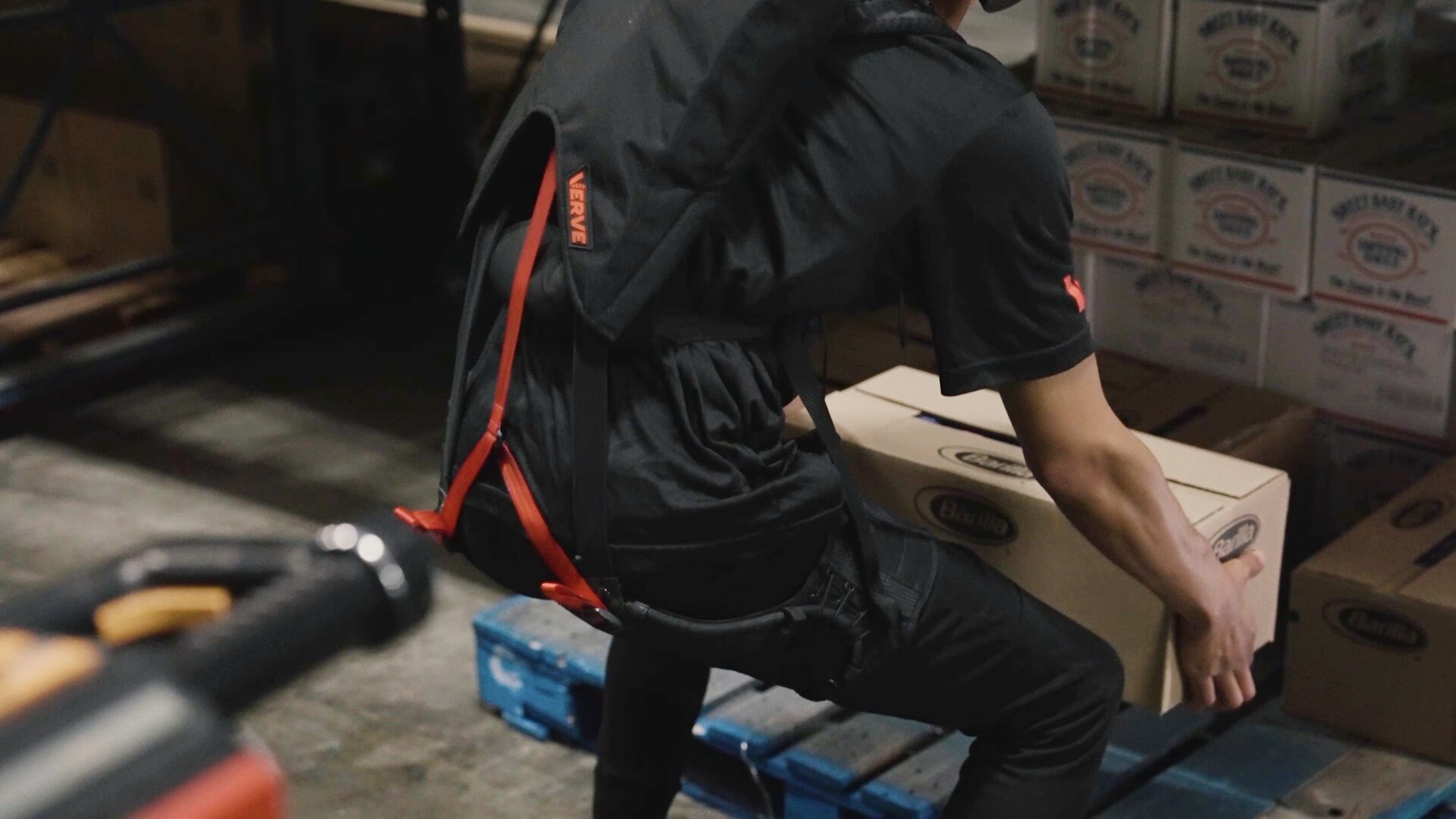
International Airlines Group has made a strategic investment in Verve Motion to develop and test wearable robotics technology for aviation ground operations. The investment, made through IAGi Ventures, targets a specific and measurable problem. Baggage handlers across IAG's airline operations perform thousands of repetitive lifting tasks per shift, resulting in musculoskeletal injuries that account for a significant portion of ground operations workforce attrition and insurance costs. The wearable exosuit technology is designed to provide shoulder and back support during these lifting tasks, reducing physical strain without restricting natural movement or requiring changes to existing workflows.
Verve Motion, a Cambridge, Massachusetts based company spun out of Harvard University's Biodesign Lab in 2020, develops connected exosuits that use lightweight textile based actuators rather than rigid mechanical frames. The company was founded by Spanish entrepreneur Ignacio Galiana and has raised more than 55 million dollars in venture funding. Its technology differs from traditional industrial exoskeletons by using soft robotics principles that allow the suit to move with the body rather than constraining it to predetermined motion paths.
Physical AI Applications in Repetitive Labor
Wearable robotics occupies a distinct position in the automation spectrum. Unlike autonomous robots that replace human workers, exosuits augment human capability while keeping the worker in the loop. This distinction matters for industries where complete automation is impractical due to task variability, regulatory requirements, or the need for human judgment. Aviation ground operations fall squarely in this category. Baggage handling involves irregular shaped items, variable weights, confined cargo hold spaces, and time pressure that makes full automation technically challenging and economically questionable for most airport configurations.
The connected aspect of Verve Motion's exosuits adds a data layer to the physical augmentation. Each suit collects biomechanical data on the wearer's movements, forces, and posture throughout the shift. This data enables fleet level analysis of ergonomic risk, identification of high strain tasks, and optimization of work rotation schedules to distribute physical load more evenly across the workforce. For operations managers, this data transforms worker safety from a reactive insurance claim process into a proactive risk management system.
IAG, which operates British Airways, Iberia, Vueling, Aer Lingus, and LEVEL, carries approximately 122 million passengers annually. The ground operations workforce across these airlines numbers in the tens of thousands, with baggage handlers representing one of the largest single job categories. Even a modest reduction in injury rates across this workforce produces material savings in workers compensation costs, temporary staff replacement, training, and operational disruption.
The Economics of Workplace Injury Reduction
Musculoskeletal injuries among baggage handlers typically result in 10 to 30 days of lost work time per incident, with severe cases requiring surgical intervention and extended rehabilitation. The direct cost per injury, including medical treatment, workers compensation, and temporary replacement labor, ranges from 5,000 to 50,000 dollars depending on severity and jurisdiction. The indirect costs, including reduced team productivity, overtime for remaining workers, and administrative burden, often equal or exceed the direct costs.
A wearable exosuit that reduces injury incidence by 30 to 50 percent, which is the range claimed by Verve Motion based on pilot deployments in logistics environments, would produce annual savings of several million dollars across IAG's ground operations. The return on investment calculation depends on the per unit cost of the exosuit, its maintenance requirements, and its useful life. At a typical exosuit cost of 3,000 to 8,000 dollars per unit with a two to three year useful life, the payback period for a fleet deployment is likely under 18 months if the injury reduction claims hold in aviation specific conditions.
However, aviation ground operations present unique challenges that differ from the warehouse and logistics environments where Verve Motion has previously deployed. Baggage handlers work in confined cargo holds with limited headroom, on elevated conveyor systems, in variable weather conditions, and under strict time constraints driven by aircraft turnaround schedules. The exosuit must perform reliably across all these conditions without impeding the worker's ability to move quickly and safely in tight spaces.
Expanding Wearable Technology Beyond the Warehouse
The IAG investment signals that wearable robotics is expanding from its initial market in warehouse logistics into adjacent industries with similar physical labor profiles. Aviation ground operations, construction, healthcare patient handling, and agricultural harvesting all involve repetitive lifting tasks that cause cumulative musculoskeletal damage. Each industry presents different environmental conditions and regulatory requirements, but the underlying biomechanical challenge is similar.
For procurement managers in industries with high rates of manual handling injuries, the IAG investment provides validation that a major enterprise buyer considers wearable robotics technology mature enough for operational testing. The pilot program structure, with testing before scaled deployment, is the appropriate adoption pathway for a technology that must prove its value in a specific operational context before committing to fleet wide procurement.
The competitive landscape for wearable robotics includes Sarcos Technology (now part of Paladin AI), German Bionic, Ekso Bionics, and several Japanese manufacturers including Cyberdyne. Verve Motion's differentiation lies in its soft robotics approach, which produces lighter, more comfortable devices that workers are more likely to wear consistently throughout a full shift. Compliance, meaning the percentage of time workers actually wear the device, is the critical adoption metric that determines whether the technology delivers its theoretical benefits in practice.
The Broader Signal for Physical AI in Services
Consider the difference between giving a worker a better tool and giving a worker a better body. Traditional ergonomic interventions, such as adjustable workstations, lifting aids, and task rotation schedules, give workers better tools. Wearable robotics gives workers enhanced physical capability, reducing the gap between what the job demands and what the body can sustain over a full career. This distinction positions wearable robotics as a workforce retention strategy rather than purely a safety intervention.
In industries facing structural labor shortages, the ability to extend the productive career of existing workers is as valuable as reducing injury costs. A baggage handler who can work comfortably until age 60 rather than developing chronic back problems at age 45 represents 15 additional years of experienced, trained labor that does not need to be replaced. For airlines facing persistent recruitment challenges in physically demanding ground roles, this workforce longevity benefit may be more valuable than the direct injury cost savings.
The Verification Standard for Wearable Robotics Claims
Injury reduction claims from wearable robotics companies should be evaluated with the same rigor applied to any capital equipment purchase. The relevant questions are whether the claimed reduction was measured in a controlled study or in actual operational deployment, whether the study population is comparable to the buyer's workforce, whether the measurement period was long enough to capture seasonal variation and compliance decay, and whether the comparison accounts for the Hawthorne effect of workers modifying behavior when they know they are being observed.
The IAG pilot program will provide aviation specific data that does not currently exist in the published literature. Until that data is available, procurement teams in aviation should treat wearable robotics as a promising technology requiring operational validation rather than a proven solution with guaranteed outcomes.
The investment by a major airline group confirms that wearable robotics has reached the credibility threshold for enterprise pilot programs in aviation. The technology addresses a genuine operational problem with measurable economic impact. The remaining question is whether the benefits demonstrated in warehouse environments transfer reliably to the distinct physical demands of aviation ground operations.
The long term trajectory for wearable robotics points toward increasingly intelligent systems that not only provide physical support but also guide worker behavior. Future generations of exosuits may incorporate haptic feedback that nudges workers toward ergonomically optimal lifting techniques, or provide real time alerts when fatigue indicators suggest increased injury risk. This evolution from passive support to active guidance represents a fundamental shift in the relationship between worker and technology, moving from augmentation to coaching.
The data collection aspect of connected exosuits introduces privacy and labor relations considerations that procurement teams must address. Biomechanical data collected from workers can reveal information about individual performance, fatigue levels, and physical limitations. Labor unions and works councils in European markets may require negotiation over data collection scope, storage duration, and access rights before deployment can proceed. IAG's operations span multiple European jurisdictions with varying data protection requirements under GDPR, adding compliance complexity to the deployment.
The scalability of the exosuit deployment model depends on the maintenance and cleaning requirements of the devices. In aviation ground operations, exosuits will be exposed to weather, jet fuel residue, hydraulic fluid, and physical impacts from baggage handling. The durability of textile based actuators under these conditions is unproven at scale, and the cost of replacement components and regular maintenance will factor into the total cost of ownership calculation. Verve Motion's service model, whether it involves on site maintenance staff, swap programs for damaged units, or self service repair kits, will significantly influence the economic case for fleet deployment.
This analysis synthesizes corporate announcements, industry injury data, and public market activity as of July 2026.














