
Humanoid Robots Hit the Mainstream as China and Tesla Race to Redefine Automation
The article highlights a rapid surge in humanoid robotics, with systems like EngineAI’s T800 and Tesla’s Optimus moving from prototypes toward real-world factory, service, and home deployments, while companies such as Unitree push performance records and lower-cost access. It also notes that despite major progress in speed, strength, and AI-driven control, humanoids still face serious challenges in achieving reliable human-like dexterity and handling unpredictable tasks.
Humanoid Robots: Racing Toward a Future of Automation and Assistance
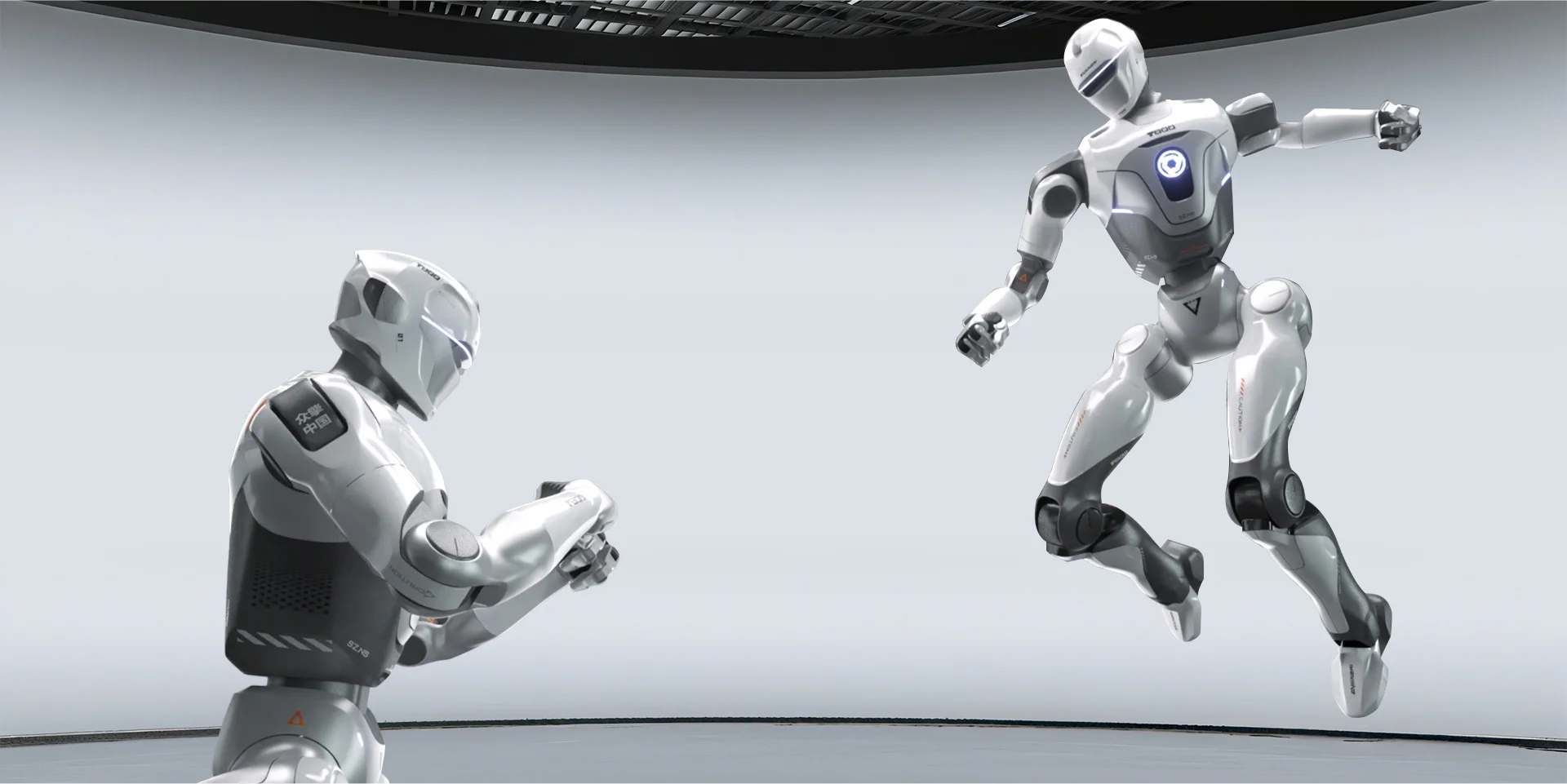
In the fast-evolving world of robotics, 2025 and 2026 have marked a pivotal shift from experimental prototypes to real-world deployments. China's EngineAI unveiled its T800 humanoid in December 2025, a machine poised to redefine industrial and service tasks with its impressive specs. Meanwhile, Tesla's Optimus is gearing up for production, signaling a broader trend where humanoids are stepping out of labs and into factories, homes, and beyond. These advancements, driven by intense competition between U.S. and Chinese firms, promise to transform logistics, manufacturing, and even household chores. But as excitement builds, experts caution about lingering challenges in achieving true human-like dexterity.
China's T800: A Martial Arts Master in Metal
EngineAI's T800 stands tall at 1.73 meters and weighs 75 kg, boasting 43 degrees of freedom that allow for fluid, dynamic movements. With a maximum joint torque of 450 N·m and a top speed of 3 m/s (about 6.7 mph), this robot isn't just walking—it's sprinting toward practical applications. Powered by a modular solid-state battery offering 2-4 hours of endurance, the T800 is constructed from aviation-grade alloy and features active cooling to handle high-intensity tasks. Its advanced perception system includes 360° LiDAR and RealSense cameras, enabling it to navigate complex environments and perform feats like martial arts routines. Designed for logistics, services, and factories, the T800 exemplifies China's push in humanoid robotics, blending speed, strength, and sensory prowess.
What makes the T800 suitable for high-dynamic tasks?
Its 43 degrees of freedom and 450 N·m joint torque allow for precise, powerful movements.
How long can it operate on a single charge?
Between 2 to 4 hours, thanks to its modular solid-state battery.
Tesla's Optimus and Global Speed Records
Across the Pacific, Tesla is accelerating its Optimus program. In March 2025, the company announced plans for low-volume production of around 5,000 units in 2025, primarily for internal factory use, with ambitions to scale to 50,000 by 2026. The Gen 2 model leverages AI from Tesla's autonomous vehicles, excelling in walking, object handling, and navigation. A key shift in training methodology emphasizes video-based learning over traditional motion capture, potentially speeding up development. Not to be outdone, Unitree Robotics claimed a staggering 10 m/s speed record in testing, shattering previous benchmarks and highlighting the race for faster, more agile humanoids.
In April 2026, Realbotix deployed its Vinci robot to Ericsson, equipped with face recognition, conversation memory, and real-time engagement features tailored for enterprise settings. These developments underscore a global surge in humanoid capabilities, from Tesla's production scalability to Unitree's velocity triumphs.

Broader Trends: From Homes to Deep Seas
Beyond humanoids, the robotics landscape is buzzing with innovation. UniX AI's Panther, a wheeled dual-arm robot, is entering real homes for everyday assistance, while Princeton's heat-activated soft robot operates without motors, offering flexible, energy-efficient designs. IHMC unveiled its Alex humanoid at an open house, and Harvard's neurobots incorporate functional nervous systems for more intuitive responses. Meanwhile, HARP's artificial muscles can lift 100 times their body weight, pushing the boundaries of strength in soft robotics.
Commercial expansions are equally thrilling: Unitree's R1, dubbed the cheapest humanoid, launched globally on AliExpress, democratizing access. Investments are pouring in, with Infravision securing $91 million for drones, advancements in thrombectomy robots for medical precision, deep-sea exploration bots, and delivery systems like Starship and Avride's partnership with Grubhub. These trends signal robots infiltrating critical sectors, from healthcare to transportation, driven by both U.S. and Chinese ingenuity.
What is the significance of Unitree's R1 launch?
It makes humanoid robots more affordable and accessible via global e-commerce.
How do soft robots like Princeton's differ from traditional ones?
They use heat activation instead of motors, enabling simpler, more adaptable designs.
Challenges Ahead: Dexterity and Beyond
Despite the hype, not all is smooth sailing. Robotics pioneer Rodney Brooks has voiced skepticism about the path forward.
Current humanoids won't achieve dexterity via video training alone, despite heavy VC funding, due to hardware and learning limitations.
Brooks argues that while video-based training is promising—as seen in Tesla's approach—it falls short of replicating the nuanced hand-eye coordination humans take for granted. This highlights a core challenge: bridging the gap between lab demos and reliable, dexterous performance in unpredictable real-world scenarios.
Looking ahead, these advancements could reshape economies, with humanoids handling repetitive tasks in factories and services, potentially alleviating labor shortages. Yet, ethical questions loom—will they displace jobs or augment human capabilities? As deployments ramp up, from EngineAI's T800 to Tesla's Optimus, the robotics revolution is no longer science fiction; it's knocking on our doors.
In summary, 2025-2026 has been a banner period for humanoid robotics, with speed, strength, and smarts taking center stage. Stay tuned as these machines evolve from novelties to necessities.
References:
- https://www.youtube.com/watch?v=wbLl3aSOzoc (Posted December 2025)
- https://www.youtube.com/watch?v=J5L3Y-Qtdaw (Posted December 2025)
- https://builtin.com/robotics/tesla-robot (Posted March 2025)
- https://www.youtube.com/watch?v=HOgCL8lKuDc (Posted April 2026)
- https://www.therobotreport.com (Posted various 2025-2026)
- https://www.youtube.com/shorts/CoGhsTTPAuc (Posted 2025)
- https://rodneybrooks.com/why-todays-humanoids-wont-learn-dexterity/ (Posted 2025)
(Word count: 748)














