
ForSight Robotics Completes Fully Robotic Cataract Surgery on Human Patient
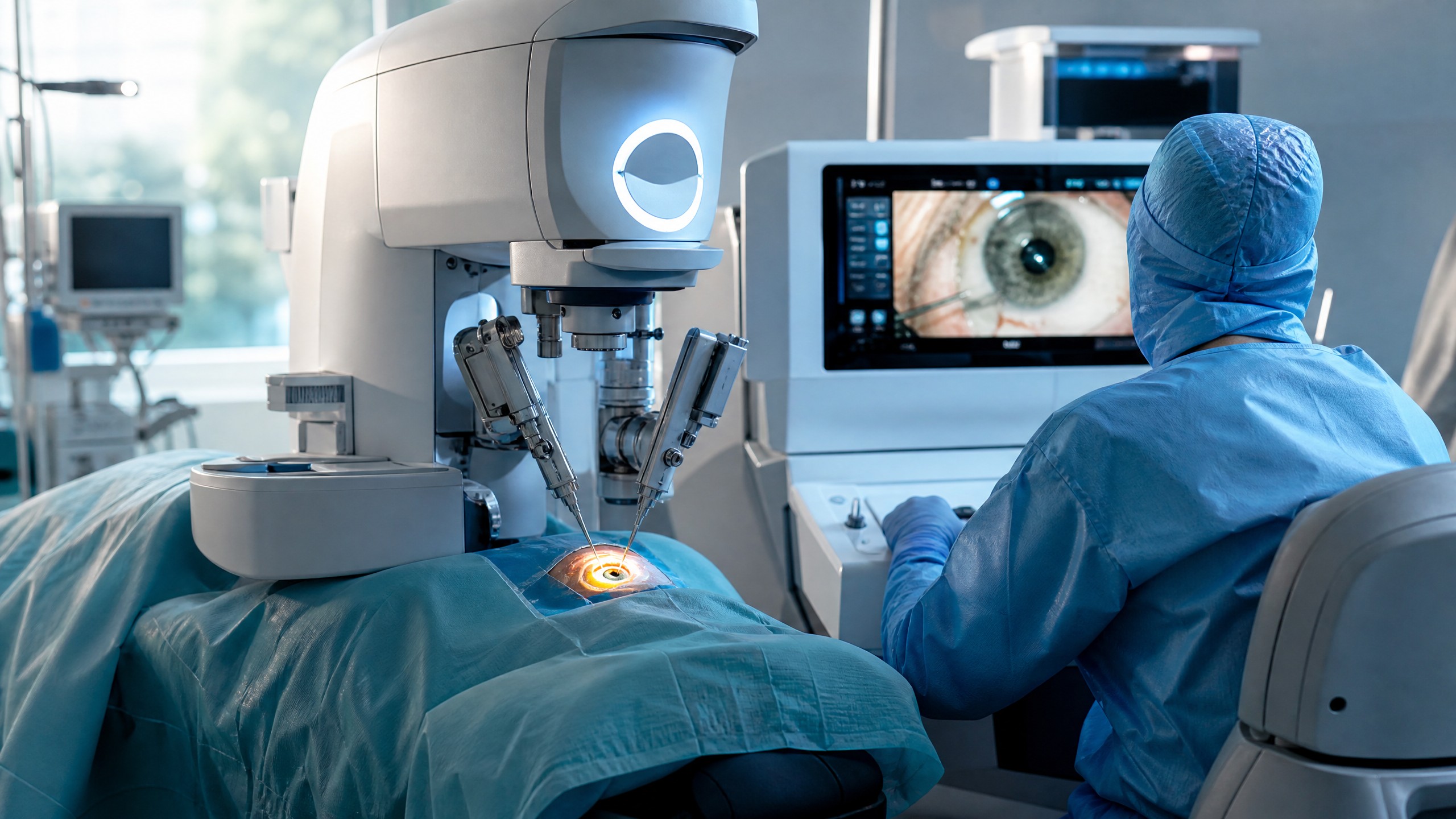
ForSight Robotics has achieved a historic milestone by completing the world's first fully robotic cataract surgery on a human patient using its JASPER platform, addressing critical surgeon shortages, consistency challenges, and ergonomic strain in ophthalmology. The procedure marks a major step for robotic microsurgery, although it should be understood as robot-assisted surgery under surgeon control rather than independent AI autonomy.
The Promise of Robotic Precision in Ophthalmology
The operating room has long been a domain where human dexterity is pushed to its absolute limits, particularly in microsurgical disciplines like ophthalmology. Cataract surgery is one of the most common and most standardized surgical procedures in the world, yet it remains technically demanding. The surgeon works within tiny anatomical spaces, interacts with transparent and delicate tissues, and must maintain extremely stable instrument control while the patient is awake under local anesthesia. A movement that would be trivial in many surgical settings can become consequential when the target is the lens capsule, cornea, or anterior chamber of the eye.
For decades, the promise of robotic assistance in eye surgery has hovered on the horizon, offering practitioners the prospect of micron-level precision, tremor reduction, and motion scaling that could go beyond the physical limits of the human hand. In theory, a robotic system can filter hand tremor, slow down large human movements into smaller instrument movements, maintain stable positioning over long periods, and enforce software-defined safety boundaries. In practice, translating those benefits into routine ophthalmic surgery has proven exceptionally difficult. Eye surgery is not simply a matter of moving a tool with greater stability. The robot must support real-time visualization, adapt to tissue motion, preserve the surgeon's situational awareness, and fit into an outpatient workflow that has been optimized for speed and repeatability.
This is why cataract surgery is such a consequential target for medical robotics. It is the most frequently performed surgery globally, and the global burden of cataract-related visual impairment remains enormous. Cataract surgery is also a high-volume procedure where small improvements in safety, throughput, surgeon comfort, or standardization could have system-level effects. Even a modest reduction in complication rates or a meaningful extension of surgeon career longevity could matter when scaled across millions of cases.
The tension between the theoretical capabilities of robotics and the practical realities of the operating theater has been a defining narrative in surgical innovation. Robotic platforms have changed the practice of urology, gynecology, thoracic surgery, and some areas of general surgery, but ophthalmology has remained largely dependent on highly trained specialists using manual instruments and microscopes. The reason is not a lack of interest. It is the unique difficulty of the eye as a surgical environment. Transparent tissues are harder for imaging systems to interpret than many other anatomical structures. The working volume is small. Patient cooperation matters. The procedure is often performed under topical or local anesthesia, and the patient is expected to leave the clinic relatively quickly.
At the same time, dependence on human dexterity alone creates its own constraints. Ophthalmologists often perform multiple procedures in sequence, sometimes in high-volume surgical centers where ergonomic strain accumulates over years. Studies and professional reports have repeatedly pointed to significant musculoskeletal burden among eye surgeons, including neck, back, shoulder, and wrist problems caused by microscope posture and repeated fine movements. A robotic platform that allows a surgeon to operate from a more ergonomic console, while preserving or improving surgical precision, could therefore address both clinical and occupational health issues.
The challenge, then, has not merely been to build a robot that can move inside an eye. The real challenge has been to engineer a platform that can support the entire cataract workflow safely, efficiently, and under local anesthesia, while giving the surgeon the authority and feedback needed to make intraoperative decisions. ForSight Robotics' JASPER platform is notable because it is positioned not as a simple instrument holder or partial task robot, but as a system intended to support a full cataract procedure from first incision through final closure.
The JASPER Platform's Deployment Reality
In a development that bridges the gap between theoretical promise and clinical reality, Israel-based ForSight Robotics announced the successful completion of the world's first fully robot-assisted cataract surgery on a human patient. Featured in The Robot Report on July 9, 2026, the milestone was achieved using the company's fourth-generation JASPER platform [1]. The procedure took place in April and was performed from the first incision to final closure without the need for general anesthesia, aligning with modern outpatient cataract surgery standards [2].
The case was executed by Dr. Alexey Rapoport, with Dr. Robert Edward T. Ang of the Asian Eye Institute in Manila serving as the Principal Investigator [2]. That clinical setting matters. A first-in-human surgical robotics milestone is not just a laboratory demonstration. It requires patient selection, surgeon training, procedural planning, institutional oversight, contingency planning, and post-operative monitoring. The transition from animal models and simulated environments into a human operating room is a major threshold for any surgical robot, especially in ophthalmology.
The JASPER platform is designed to optimize the workflow and tactile logic of conventional cataract surgery rather than replace the surgeon's clinical judgment. It integrates advanced artificial intelligence algorithms, high-resolution 3D imaging, and micromechanics to support surgeons with precision and motion scaling [3]. The surgeon remains in control throughout the procedure, while the system assists by filtering motion and using defined no-fly zones to help prevent instruments from leaving safe anatomical boundaries [3]. That distinction is essential. The achievement should not be interpreted as a fully autonomous AI robot independently deciding how to operate on a patient. It is more accurately understood as a complete robot-assisted cataract procedure in which robotic hardware performs the instrument motions under surgeon command, with AI-enabled safeguards and imaging support.
The successful human deployment of JASPER suggests a significant maturation of robotic microsurgery. The robotic hand is described as offering micron-level precision, which is valuable in a procedure where tissue planes, incisions, and capsular manipulation require extraordinary control [3]. Motion scaling can convert a surgeon's larger, more comfortable hand movements into much smaller movements at the surgical site. Tremor filtering can reduce involuntary motion. Three-dimensional visualization can help the surgeon maintain depth perception and spatial awareness. Software-defined boundaries can reduce the risk that an instrument moves into a region designated as unsafe.
The system's data layer may prove just as important as its mechanical layer. Advanced data analytics can capture procedural information, analyze instrument trajectories, compare techniques, and potentially identify patterns associated with better outcomes [3]. In mature deployment, that data could help standardize best practices, support training, enable credentialing, and improve quality assurance across multiple facilities. Cataract surgery is already standardized compared with many procedures, but outcomes still vary based on surgeon experience, patient anatomy, case complexity, and intraoperative decision making. A robotic system that captures high-resolution procedural data could create a feedback loop that manual surgery cannot easily match.
The transition from preclinical work to first-in-human use is especially meaningful because ForSight had reportedly built experience through animal models, where more than 24 surgeons had completed hundreds of procedures before the human case [3]. That type of staged development is necessary for robotic systems operating in delicate anatomy. It allows engineers and clinicians to refine user interfaces, instrument response, safety constraints, imaging integration, and emergency protocols before treating human patients.
Navigating the Friction of Clinical Integration
Despite the technical importance of JASPER's first-in-human procedure, the path to widespread clinical integration will be shaped by practical friction. Cataract surgery is not only delicate, it is also highly optimized. Experienced surgeons in high-volume centers can perform many procedures in a day. Operating rooms, preoperative workflows, sterilization cycles, and patient turnover patterns are designed around efficiency. Any robotic system entering that environment must prove that it can integrate without undermining the throughput that makes modern cataract care economically viable.
This creates a high bar for adoption. JASPER must demonstrate not only that it can perform a procedure safely, but that it can do so with predictable setup time, reliable calibration, efficient instrument exchange, smooth patient positioning, and rapid turnaround between cases. A system that improves precision but slows a surgical center dramatically may struggle to gain traction, especially if reimbursement does not recognize the additional technology cost. Conversely, if robotic assistance reduces complications, expands the range of cases a surgeon can handle confidently, or allows surgeons to maintain productivity with less physical strain, the operational case becomes stronger.
The financial implications are also substantial. ForSight Robotics, backed by $125 million in prior funding, is targeting the US market and FDA clearance [1]. The capital expenditure required for a sophisticated ophthalmic robot will likely be meaningful, and providers will need to evaluate acquisition cost, service contracts, training requirements, disposable instruments, room modifications, and staff workflow changes. Return on investment may come through several channels. These include improved consistency, lower complication-related costs, premium patient demand, surgeon recruitment and retention, expanded case capacity, or the ability to treat more complex patients with greater confidence.
The ergonomic argument deserves special attention. Reports cited by ForSight and ophthalmology publications indicate that roughly two-thirds of ophthalmologists may suffer from musculoskeletal issues [2]. This is not a minor workplace inconvenience. Chronic neck, back, and shoulder strain can reduce productivity, shorten careers, and affect quality of life. In a specialty already facing global workforce shortages, preserving surgeon longevity is strategically important. JASPER's personalized ergonomic design and surgeon-centered positioning are intended to allow physicians to operate more comfortably while maintaining control of the procedure [3]. If the platform can reduce physical strain without sacrificing speed or outcomes, that could become one of its strongest adoption drivers.
Regulatory clearance will be another critical gate. A first-in-human milestone demonstrates feasibility, but it does not automatically establish broad safety or efficacy. ForSight will need to generate clinical evidence acceptable to regulators, surgeons, payers, and hospital procurement committees. Outcomes will likely be evaluated against conventional manual cataract surgery, which already has a strong safety record in experienced hands. That means the robot must compete against a mature benchmark. It is not enough to be impressive; it must be demonstrably useful.
Training will also be central. A robotic cataract system changes how surgeons interact with instruments, imaging, and feedback. Even experienced ophthalmologists may need structured simulation, proctored cases, and credentialing pathways before independent use. Surgical centers will need protocols for case selection, system checks, emergency conversion to manual surgery, and staff responsibilities. These details determine whether a technology remains confined to flagship demonstrations or becomes routine infrastructure.
The competitive landscape adds another layer of friction. ForSight Robotics is not alone in the race to automate and augment ophthalmic surgery. Horizon Surgical Systems, a UCLA spin-off, has made progress with its Polaris platform, including first-in-human robotic-assisted cataract surgeries [4]. The Polaris system similarly combines robotics and AI-driven imaging to enhance precision and consistency [5]. These parallel developments indicate that robotic ophthalmology is becoming a competitive category rather than a single-company experiment.
For hospitals and ambulatory surgery centers, competition can be beneficial, but it also complicates purchasing decisions. Procurement teams will need to compare clinical evidence, surgeon interface design, integration requirements, service models, instrument ecosystems, regulatory status, and total cost of ownership. They may also need to consider whether a system is limited to cataract surgery or can expand into other ophthalmic procedures over time. A platform with a broader procedural roadmap could justify its capital cost more easily than one focused on a single use case, even if that use case is very large.
The Outcome: Redefining the Economics of Sight
The successful fully robotic cataract surgery by ForSight Robotics is more than a technical demonstration. It is a signal that the economics and delivery model of ophthalmic care may be entering a new phase. By proving that a robotic system can manage the entire cataract procedure under surgeon control and local anesthesia, JASPER points toward a future in which surgical precision, ergonomic sustainability, and procedural standardization become more tightly linked.
The global need is immense. With an estimated 600 million people worldwide requiring cataract surgery and only about 30 million procedures performed annually, the shortage is not simply a clinical problem. It is a capacity problem, a workforce problem, and an infrastructure problem [6]. Cataracts remain a leading cause of preventable blindness. In many regions, the limiting factor is not whether the disease is treatable, but whether trained surgeons, equipped facilities, and affordable care pathways are available at sufficient scale.
Robotics cannot immediately solve that access gap. Early systems are likely to appear first in well-funded hospitals, private surgical centers, and research institutions. However, first deployments can still matter. They validate workflows, generate outcome data, refine user interfaces, and help determine whether robotic systems can eventually support lower-cost, higher-scale models. If robotic cataract surgery matures in the same way many other technologies have matured, cost reduction, platform competition, and improved training pipelines could expand access over time.
The implications for procurement and operations are significant. As robotic platforms like JASPER and Polaris move toward commercialization, healthcare facilities must begin evaluating whether their surgical suites, staffing models, and capital budgets can support ophthalmic robotics. They will need to consider room footprint, imaging integration, sterilization workflows, surgeon scheduling, patient positioning, and IT infrastructure for data capture. Robotic surgery is not only a device purchase. It is an operational transformation.
The Autonomous Robot Penetration Index, or ARPI, provides a useful lens for evaluating how deeply autonomous or semi-autonomous robotics can penetrate a given market. In cataract surgery, several ARPI factors point to meaningful long-term potential. Task repeatability is high because cataract surgery follows a relatively standardized sequence. Market volume is extremely high because cataracts affect hundreds of millions of people. Labor scarcity is acute because the global supply of ophthalmic surgeons is insufficient. Precision advantage is strong because robotics can offer tremor filtration and motion scaling at microsurgical scale. Data advantage is also strong because instrument motion and imaging data can be captured and analyzed for continuous improvement.
At the same time, several ARPI factors limit rapid penetration. Regulatory burden is very high because the robot operates directly on delicate human anatomy. Liability sensitivity is high because even rare complications can threaten vision. Workflow tolerance is low because cataract centers depend on rapid throughput. Capital intensity is likely high in the early market. Trust barriers may also be significant because patients and surgeons must accept robotic execution in a procedure that has historically been associated with expert manual skill.
Taken together, the ARPI outlook for robotic cataract surgery is promising but staged. Early penetration will likely concentrate in premium centers and clinical trial environments. Midterm adoption will depend on evidence that robotics can match manual surgery on speed and safety while improving consistency, ergonomics, or complex-case handling. Longer-term penetration could accelerate if system costs fall, training becomes standardized, regulatory pathways mature, and robotic platforms support multiple ophthalmic procedures.
Ultimately, the JASPER deployment represents a critical step toward a future where robotic precision and human surgical judgment work together to reduce preventable blindness. The procedure does not eliminate the need for skilled ophthalmologists. Instead, it suggests a different model of expertise, one in which surgeons guide robotic instruments through high-resolution imaging interfaces while software systems enforce safety constraints and capture procedural intelligence. If that model proves clinically and economically durable, it could reshape ophthalmic care over the next decade.
What is the JASPER Platform?
The JASPER platform is a robotic surgery system developed by ForSight Robotics, specifically designed for ophthalmic procedures such as cataract surgery. It integrates a robotic hand with micron-level precision, advanced 3D image guidance, and artificial intelligence algorithms to assist surgeons. The system features no-fly zones to help prevent instruments from moving outside safe boundaries and provides motion scaling to reduce the impact of human tremor.
JASPER is designed to perform the entire cataract procedure from start to finish while the patient is under local anesthesia. That design choice is important because conventional cataract surgery is usually performed in outpatient settings without general anesthesia. A robotic system that required general anesthesia would be misaligned with mainstream clinical practice and would face higher cost, risk, and operational barriers.
The system aims to improve surgical consistency, reduce surgeon fatigue, and expand access to high-quality eye care. Its core value proposition combines three layers. The first is mechanical precision, using robotic actuation to support extremely fine movements. The second is imaging and perception, using high-resolution visualization to help guide the surgeon. The third is software assistance, using algorithms and safety boundaries to reduce risk and capture procedural data. The platform remains surgeon controlled, which means the doctor directs the operation while the robot executes movements with enhanced precision and safeguards.
Significance of this Advancement
The advancement of fully robotic cataract surgery signals a broader transition in medical robotics from assisting with large-scale procedures to mastering the micro-level complexities of the human eye. This is an important shift. Earlier generations of surgical robots gained adoption in procedures where the operating field was larger and where minimally invasive access created an obvious ergonomic and visualization advantage. Ophthalmology presents a different challenge. The operating field is tiny, the tissues are fragile, and the procedure is already minimally invasive and efficient when performed manually by expert surgeons.
For robotic systems to gain ground in this field, they must offer benefits beyond novelty. They need to improve precision, reduce surgeon strain, support consistent outcomes, and fit into high-volume surgical practice. If JASPER and similar platforms can do that, the implications may extend beyond cataracts. Other microsurgical disciplines could benefit from the same convergence of high-resolution imaging, robotic actuation, motion scaling, and AI-enabled safety systems. Potential areas include retinal surgery, corneal procedures, neurosurgery, reconstructive microsurgery, and vascular microsurgery.
The broader technological signal is the convergence of three trends. First, imaging systems are becoming more capable of supporting real-time surgical decision making. Second, robotics is becoming precise enough for delicate anatomical work at micron scale. Third, AI systems are increasingly useful as procedural assistants, not necessarily by making independent clinical decisions, but by enforcing constraints, interpreting visual information, and supporting workflow intelligence. Together, those trends suggest that the next major frontier for medical robotics may be less about large robotic arms and more about fine control in anatomically constrained environments.
Strategic Implications
For healthcare administrators and procurement teams, the emergence of platforms like JASPER and Polaris requires a reevaluation of capital expenditure planning for surgical suites. The decision to adopt these systems will depend on a complex calculation involving initial capital cost, potential throughput changes, surgeon training time, service requirements, complication-related expenses, patient demand, and the strategic value of offering advanced robotic care.
Facilities that successfully integrate ophthalmic robotics early may gain advantages in surgeon recruitment and patient marketing. Highly trained ophthalmologists may be drawn to centers that reduce ergonomic strain and provide advanced tools for complex cases. Patients may also view robotic precision as a marker of premium care, although providers will need to communicate clearly that the surgeon remains in control. Overstating autonomy could create trust and liability problems.
There is also a strategic data opportunity. Robotic platforms can record instrument motion, timing, imaging, and procedural decisions in ways that manual surgery cannot easily capture. Over time, this could create datasets useful for training, benchmarking, quality improvement, and device refinement. A healthcare system that deploys such platforms across multiple sites could compare performance, identify best practices, and standardize care delivery. That may become increasingly important as payers and regulators focus on measurable outcomes.
For manufacturers, the strategic challenge is to move from milestone to market. ForSight must build clinical evidence, secure regulatory clearance, establish manufacturing reliability, train surgeons, support field service, and convince buyers that JASPER is not only clinically impressive but operationally rational. In surgical robotics, many promising systems fail not because the core technology is weak, but because the economics, training burden, or workflow integration does not support broad deployment.
Hard Truth
While robotic cataract surgery is often described as a potential answer to the global backlog of patients, the hard truth is that technology alone cannot solve the access problem in the near term. Critics are right to note that expensive surgical robots will probably be deployed first in well-funded medical centers, private hospitals, and advanced academic institutions. That could initially widen the gap between high-resource and low-resource care settings.
This concern should not be dismissed. Cataract blindness is most burdensome in regions where affordability, transportation, workforce availability, and surgical infrastructure are already major barriers. A high-cost robot does not automatically help a rural clinic or a public hospital with limited operating capacity. If robotic surgery remains expensive, complex, and dependent on specialized maintenance, it may have limited relevance to the populations most in need.
However, that critique does not invalidate the milestone. Early deployment in high-resource settings is often how complex medical technology is refined. Clinical evidence must be generated somewhere. Surgeons must learn how to use the system. Engineers must identify failure modes, improve usability, and reduce cost. Competition between platforms can also drive down prices and accelerate innovation. The long-term question is whether robotic cataract systems can become cheaper, more reliable, easier to train on, and scalable enough to support broader access.
The most realistic view is neither hype nor dismissal. JASPER's first-in-human procedure is a major technical and clinical milestone, but it is not yet proof of mass adoption. The next phase will depend on evidence, economics, regulatory progress, and operational fit. If those pieces align, robotic cataract surgery could become one of the most important applications of medical robotics because it targets a procedure with enormous global volume, clear precision requirements, and a direct connection to quality of life.
Sources:
[1] The Robot Report. "ForSight Robotics raises $125M for cataract surgery tech."
[3] Eyes On Eyecare. "ForSight Robotics performs FIH robot-based cataract surgery."
[5] Ophthalmology Times. "Horizon Surgical Systems performs first AI-assisted cataract surgery."
Disclaimer: This article is for informational purposes only and does not constitute financial, investment, medical, or technical advice.














