Faraday Future Puts Nine Robots and a Reverse Split Behind One Bet
Faraday Future unveiled nine new robots and opened sales of its US$89,900 Futurist humanoid at a September 19 launch event, its clearest bid yet to prove a decade-long pivot from failed EV maker to robotics vendor can work.

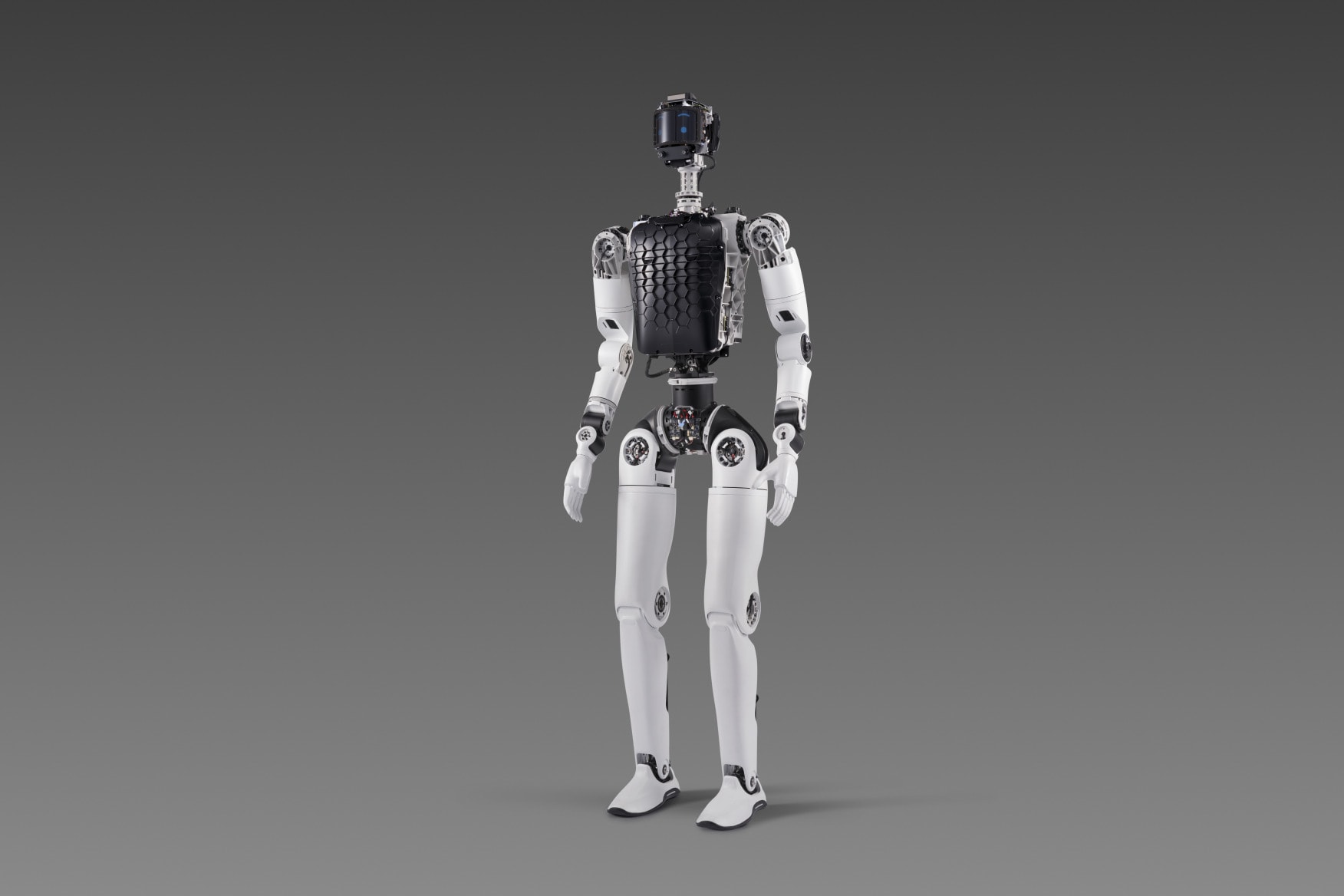
Gardena, California. Faraday Future closed its "919" launch event Friday evening by putting nine new robots on the market at once, from tabletop companions to a full-size humanoid, and opening retail sales of its All-New Futurist for US$89,900. The event, streamed from the company's Gardena headquarters at 5:00 p.m. Pacific time, completed a product rollout the company calls its "One-Brain Multi-Form Multi-Capability" Robot World 2.0.
Faraday Future is better known for what it has not delivered than for what it has. The company spent a decade trying and mostly failing to build an electric-vehicle rival to Tesla, burning through funding rounds, stalling a planned Nevada factory, and watching founder Jia Yueting declare personal bankruptcy along the way. A 1-for-150 reverse stock split in July, executed to keep its Nasdaq listing intact, is the clearest marker of how thin that runway has become. The nine-robot launch is the company's attempt to prove that its pivot into embodied artificial intelligence, the branch of AI concerned with machines that sense and act in physical space, is a second act rather than a second failure.
The Devices Behind the Headline Count
The nine devices unveiled Friday span three body types and three size classes: humanoid, quadruped, and mobile-manipulator forms, each offered in large, medium, and small configurations. They sit under six named product lines. Futurist and Master anchor the humanoid range, with a compact Master Mini beneath them. Aegis and Navi cover the quadruped, or four-legged, category. Faber rounds out the lineup as the company's mobile-manipulator series, a wheeled base paired with dual robotic arms built for warehouse and light-industrial tasks.
The All-New Futurist is the flagship of the nine. It carries 28 high-performance motors capable of up to 500 newton-meters of peak torque, enough to lift and carry objects with the kind of force procurement teams look for in a warehouse or hospitality deployment rather than a lab demo. The robot supports interaction in roughly 50 languages through a customizable, screen-based facial display, and Faraday Future says it is the first full-size humanoid robot sold in the United States to natively run Nvidia's Sonic full-body motion control system, the chipmaker's software layer for coordinating a humanoid's balance, gait, and manipulation in real time. At US$89,900, including what the company calls a US$10,000 Skills package of pre-loaded task capabilities, the Futurist prices itself well above Unitree's mass-market humanoids and closer to the range Boston Dynamics and Agility Robotics quote for early enterprise fleets.
Four industry-specific packages shipped alongside the hardware: K-12 education, research, security, and inspection. The education and research packages pair the smaller Master Mini and Nova units with curriculum and lab-integration software aimed at university robotics programs and secondary-school STEM classrooms, a lower-cost entry point than the full-size Futurist. The security and inspection pairing leans on the Aegis quadruped, which Faraday Future says has already cleared full compliance certification in the United States and was on the show floor this week at the International Manufacturing Technology Show (IMTS) 2026 in Chicago demonstrating patrol and anomaly-detection routines. The robots use multi-sensor fusion and simultaneous localization and mapping, the technique that lets a machine build a map of an unfamiliar space while tracking its own position inside it, to operate without a human driving every step.
A Domestic Label That May Matter More Than the Spec Sheet
Faraday Future's timing on the security and inspection line intersects with a policy shift that has nothing to do with robot design. The Federal Communications Commission added humanoid and quadruped robots to its Covered List under the Secure and Trusted Communications Networks Act in July, effectively blocking new US import authorizations for those categories from Chinese manufacturers on national-security grounds, citing the risk that data collected by such devices could be used for surveillance or remotely commandeered. For a security contractor or a critical-infrastructure operator that can no longer buy a Chinese-built quadruped for a US site, a Nasdaq-listed company assembling and compliance-certifying its Aegis units domestically has an opening that has little to do with whether its robot out-performs a Unitree Go2 on raw specifications. Faraday Future is treating that opening as unfinished business rather than a settled advantage: the company is using part two of its "Built in USA" business partner conference, running alongside its International Conference on Intelligent Robots and Systems (IROS) 2026 exhibit in Pittsburgh later this month, specifically to recruit upstream manufacturing and supply-chain partners for US-based production. Whether Faraday Future's supply chain, which has long drawn on Chinese manufacturing relationships tied to founder Jia Yueting's earlier ventures, qualifies cleanly under the rule today or only after that localization push lands is a compliance question buyers in regulated sectors will want answered before signing, not assumed from a press release.
What the Sales Numbers Are Actually Saying
The more consequential story sits in the numbers Faraday Future has been reporting alongside the product news rather than in the specification sheet. Cumulative robot sales and shipments reached 552 units through the end of August, the company said in an August disclosure, with August alone setting a monthly record of 158 units. Management has set a target of 2,000 units for the full year and says the robotics line is now running at a positive product-level gross margin, meaning each unit sold brings in more than it costs to build, a distinction the car business never managed to reach.
Those figures matter more for what they say about survival than about market share. A 2,000-unit annual target is a rounding error next to the tens of thousands of humanoids that Chinese manufacturers such as Unitree and AgiBot shipped in the first half of 2026 alone, and Faraday Future's own history gives buyers ample reason to discount a headline number until it shows up in two or three consecutive quarters. What a positive gross margin on a few hundred units does establish is that the unit economics are no longer the open question they were for the FF 91 electric vehicle, where the company delivered only a handful of cars while losing hundreds of millions of dollars. Selling a US$89,900 robot at a profit, even in small volume, is a different balance-sheet problem than losing money on every unit at scale.
For a buyer evaluating the Futurist against a Boston Dynamics Atlas or a 1X Neo, the calculus is less about brand pedigree and more about whether a company with Faraday Future's balance sheet will still be shipping spare parts and software updates in three years. The reverse split bought the company a continued Nasdaq listing, not a resolved cash position, and procurement teams weighing a multi-year service contract on unproven hardware are right to price that risk into any deal, the same way they would with any small-cap vendor whose stock has been diluted repeatedly to stay funded.
The near-term test of whether Friday's launch was a one-off marketing push or the start of a repeatable sales motion comes fast. Faraday Future is scheduled to exhibit at IROS 2026 in Pittsburgh from September 28 to 30 at booth 932 as well, its next chance to convert show-floor interest from research labs and industrial integrators into signed orders rather than demo-day headlines. The company will also report third-quarter results in the coming weeks, the first financial disclosure to fall entirely after the 919 launch and the clearest early read on whether September order volume moved past the August record of 158 units or merely matched it.
A Crowded Field Faraday Future Is Betting Breadth Can Cut Through
Breadth is the explicit strategy. Where Tesla has concentrated on a single Optimus line and Boston Dynamics on the enterprise-grade Atlas, Faraday Future is trying to win by fielding six product families and nine individual devices at once, wagering that some combination of size, form, and price point will match a given buyer's job faster than a narrower competitor's roadmap. The approach mirrors what Faraday Future once tried in electric vehicles, spreading resources across multiple planned models before any one of them reached meaningful volume, and the parallel is not lost on investors who watched that strategy fail to produce a viable car business.
Scale puts that bet in perspective. AgiBot shipped roughly 8,400 humanoid units in the first half of 2026 alone, a 44 percent share of the global market, with Unitree close behind at about 5,900 units and 31 percent share. Faraday Future's 552 units through August, spread across a full calendar year rather than six months, sit two orders of magnitude below either Chinese rival's run rate. The company is not competing on volume. Its bet is that a domestically certified, six-line catalog sold directly to US buyers in education, security, and light-industrial niches can find profitable space that the volume leaders, focused on humanoid form factors and largely selling into China and the Middle East, are not chasing as hard.
The commercial test is not whether the Futurist can walk convincingly in a promotional video. Every credible humanoid on the market can do that by now. The test is whether a security firm, a hospital system, or a school district signs a multi-unit order this quarter and keeps the robots running past the warranty period, the gap between a demonstration and a deployable system that separates every entrant in this category right now. Faraday Future's own account of 552 cumulative units sold since February, against a 2,000-unit target for the year, is the number to track. If the company posts even 400 more units by year-end, the pivot from car company to robotics vendor will look like a rare second chance realized. If the pace stalls closer to the August run rate, the nine robots unveiled Friday will read less like a product launch and more like the last full-scale attempt from a company that has run out of them before.
This analysis synthesizes company statements, product disclosures, and public market activity related to Faraday Future's robotics business. It is for general information purposes only and does not constitute investment, financial, or legal advice.
Hero image credit: Faraday Future.