
Budget 2026: Singapore’s AI Subsidy Signals a Workforce Infrastructure Shift
Singapore’s six-month AI subsidy is not about giving workers better chatbots — it is about embedding AI into the baseline expectations of professional work. As AI shifts from optional tool to economic infrastructure, the real question becomes whether this move compounds national capability — or deepens platform dependence.

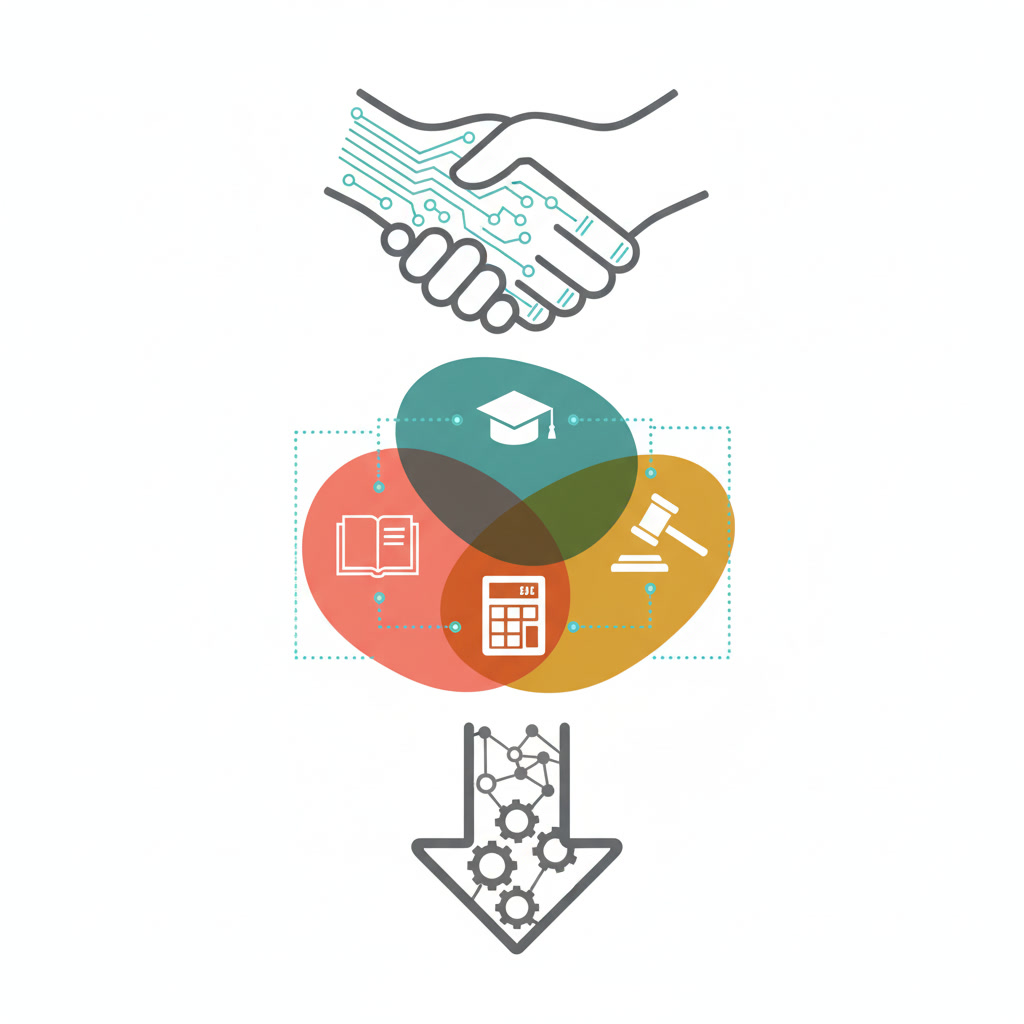
Singapore’s Budget 2026 announcement offering six months of premium AI tools to citizens who complete selected training courses is not merely a productivity subsidy.
It is a structural move to embed AI tools into baseline workforce capability expectations.
By linking premium AI access to SkillsFuture pathways — beginning with sectors such as accountancy and law — the government is accelerating applied AI adoption across the labour force.
This reframes AI from consumer software to economic infrastructure.
The long-term question is not whether people will use AI.
It is whether AI becomes an expected professional baseline.
What Was Announced in Budget 2026
According to reporting by The Straits Times (12 February 2026),
Prime Minister Lawrence Wong announced that Singaporeans who take selected AI-related courses will receive six months of free access to premium AI tools. The SkillsFuture website will also be redesigned to make AI learning pathways clearer and easier to navigate, with early focus areas including accountancy and law.
Source: The Straits Times, Budget 2026: Workers to get help building practical AI capabilities, starting with accountancy and law.
This establishes the policy foundation.
Everything below is structural interpretation.
Definition — What Does “AI as Workforce Infrastructure” Mean?
AI as workforce infrastructure refers to a shift where AI tools are treated not as optional productivity enhancers, but as baseline capability enablers embedded into everyday professional workflows.
This differs fundamentally from:
Casual chatbot experimentation
One-off digital literacy courses
Temporary exposure to AI tools
Infrastructure alters expectations.
And expectations reshape hiring standards, productivity benchmarks, and economic design.
What Actually Changed (Beyond the Headline)
1. AI Access Becomes Policy-Backed
AI exposure is no longer purely market-driven. The state is actively lowering barriers to premium AI usage.
2. Premium AI Tools Are Positioned as Learning Infrastructure
This goes beyond entry-level chatbot literacy. It signals structured, applied integration into professional tasks.
3. SkillsFuture Is Being Re-Architected Around AI Pathways
The redesign indicates AI capability is becoming central — not peripheral — to national workforce development.
4. AI Normalisation Expands Into Regulated Professions
Beginning with law and accountancy signals institutional acceptance of AI augmentation in knowledge-intensive sectors.
Why This Matters (Structural Implications)
This policy shifts system-level variables:
AI becomes embedded in hiring baselines
Productivity expectations recalibrate upward
Firms redesign workflows around AI-first processes
AI competency becomes a differentiator in professional services
At scale, this accelerates national capability compounding.
But infrastructure decisions also introduce strategic dependencies.
The Strategic Tension
This strengthens competitiveness.
It also increases reliance on AI platform providers — most of which are foreign-owned.
If AI tools become embedded in daily professional workflows, leverage shifts toward whoever controls model access, pricing structures, and update cycles.
The structural question is whether workforce AI normalization will eventually be paired with sovereign AI infrastructure investment.
This is not merely a training issue.
It is an ecosystem and power issue.
This development reinforces:
What Is AI Robotics : AI as capability infrastructure rather than novelty software.
Future of Work & Economy : Skill recalibration, augmentation, and shifting productivity baselines.
Platforms & Ecosystems : Structural dependency and platform leverage dynamics.
RobotAIGeek Position
This is not an automation policy. It is a capability compounding policy.
The real shift is not AI access. It is AI expectation.
And expectations reshape labor markets faster than subsidies do.
Frequently Asked Questions
Is this policy about replacing workers with AI?
No. The focus is on augmentation and capability development rather than displacement.
Why provide premium access instead of relying on free tools?
Premium tiers offer access to more advanced models, stronger reasoning capabilities, and higher usage limits — increasing applied productivity potential.
Does this create platform dependency risk?
Potentially. As workflows become optimized around specific AI tools, switching costs and ecosystem lock-in can increase over time.
Why begin with law and accountancy?
These are structured, knowledge-intensive sectors where AI augmentation can generate measurable productivity gains without immediate physical automation.
What Happens Next?
Watch for:
Expansion into additional regulated sectors
Employer-level AI competency expectations
Moves toward sovereign AI infrastructure initiatives
Public-private partnerships around AI tool integration
If AI becomes expected infrastructure, the next debate will not be adoption.
It will be control.














