
BrainCo Launches Brain to Robot AI Platform for Rapid Integration
BrainCo debuted an integrated brain to robot AI research and development platform at WAIC 2026, utilizing non invasive EEG and AI algorithms to decode motor intent into robot commands in under 200 milliseconds.
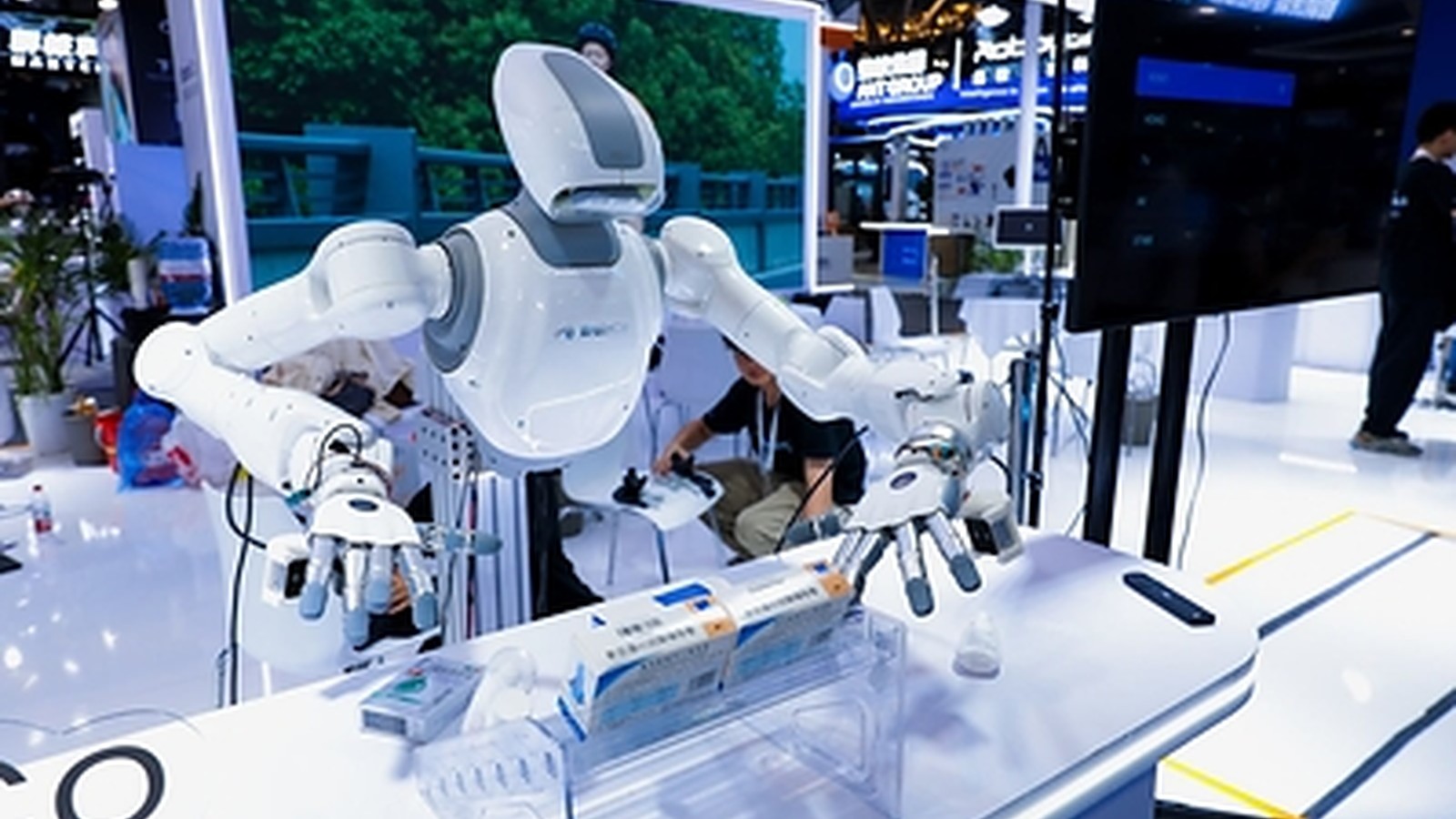
Imagine a robotics laboratory where researchers spend months writing custom integration code just to connect a neural signal decoder to a robotic arm. The friction between capturing human intent and executing a physical robot command has historically stalled embodied artificial intelligence development. On July 17, 2026, BrainCo introduced a system designed to eliminate that friction, debuting an integrated brain to robot artificial intelligence research and development platform at the World Artificial Intelligence Conference in Shanghai. The platform is built to reduce the integration work between neural signals, decoding algorithms, and real robots, allowing researchers to focus on application rather than infrastructure.
How does the BrainCo platform connect human intent to robot action?
The BrainCo Brain-Controlled Robot AI Platform is a unified software and hardware system that uses a non invasive electroencephalogram headset and artificial intelligence algorithms to decode human motor intent and convert it into commands for commercially available robots in under 200 milliseconds.
BrainCo, founded in 2015, has spent a decade developing non invasive brain computer interface technology. The company focuses on capturing faint brain signals and decoding intent so that laboratory research can become accessible technology. The new platform uses a Neuro-Embodied-AI framework with three linked stages. An electroencephalogram headset captures brain signals, artificial intelligence algorithms decode motor or control intent, and the decoded intent becomes a command for the target robot. BrainCo says the complete process takes less than 200 milliseconds and works with commercially available humanoid machines, robotic arms, and four legged robotic dogs.
The friction in embodied artificial intelligence development often stems from the lack of high quality training data. To address this, BrainCo also introduced an Embodied AI Data Collection Solution. This solution features a dual arm wheeled data collection platform and a high precision data collection glove. It captures both physical execution data and electroencephalogram data from the human operator simultaneously. By synchronizing the human operator physical movements with their neural signals, the system provides a richer dataset for training embodied artificial intelligence models. During the event, BrainCo also showcased the Revo 3 Dexterous Hand, Intelligent Bionic Hand, and Intelligent Bionic Leg.
Understanding the Neuro-Embodied-AI Framework
Think of the Neuro-Embodied-AI framework as a universal translator between the human brain and a machine. When a person thinks about moving their arm, their brain generates specific electrical patterns. The non invasive electroencephalogram headset acts as a highly sensitive microphone, listening to these electrical patterns through the scalp. However, these signals are noisy and difficult to interpret, much like trying to isolate a single conversation in a crowded room.
The artificial intelligence algorithms serve as the interpreter, filtering out the noise and identifying the specific patterns associated with the intended movement. Once the intent is decoded, the control mapping software translates it into the specific programming language understood by the target robot, whether it is a robotic arm or a four legged dog. The entire process, from the initial thought to the robot physical movement, happens in under 200 milliseconds, creating a near instantaneous connection between human intent and machine action. This unified approach removes the need for researchers to build their own custom translators, allowing them to focus on training the robots for specific tasks.
The integration of these components into a single platform is a significant engineering achievement. Previously, researchers had to piece together hardware from different vendors, write custom software to synchronize data streams, and manually calibrate the system for each user. BrainCo platform automates much of this process, providing a standardized environment for embodied artificial intelligence research. This standardization is crucial for reproducing experiments and sharing data across different laboratories, which accelerates the overall pace of innovation in the field.
The Reality of Non Invasive Brain Computer Interfaces
Most coverage of brain computer interfaces focuses heavily on surgical implants, portraying them as the only viable path to high fidelity machine control. This narrative ignores the significant regulatory, medical, and ethical hurdles associated with invasive procedures. While implants offer higher signal to noise ratios, non invasive systems like BrainCo platform provide immediate, scalable utility for research and development environments without requiring neurosurgery. The true bottleneck in embodied artificial intelligence research is not always the absolute fidelity of the neural signal, but the speed and ease with which researchers can collect synchronized neural and physical data to train models. By prioritizing a unified, non invasive workflow, BrainCo is addressing the immediate data collection needs of the robotics industry rather than waiting for the widespread clinical approval of surgical implants.
The non invasive approach also broadens the potential user base for brain computer interface technology. Surgical implants are currently restricted to clinical trials for individuals with severe motor impairments. In contrast, non invasive systems can be used by healthy individuals in research, industrial, and consumer settings. This wider applicability drives faster iteration and commercialization of the technology. BrainCo focus on non invasive solutions positions the company to capture a larger share of the emerging market for brain controlled devices, particularly in sectors where surgical intervention is not a viable option.
The continuous improvement of artificial intelligence algorithms is mitigating the inherent limitations of non invasive electroencephalogram technology. As machine learning models become more sophisticated at filtering noise and identifying subtle patterns in neural data, the performance gap between non invasive and invasive systems is narrowing. BrainCo claims high precision and sub-200ms latency, demonstrating the effectiveness of their proprietary algorithms in processing neural signals in real time. This rapid processing speed is essential for applications that require immediate feedback, such as controlling a robotic arm or moving a virtual object.
Evaluating the Brain Computer Interface Market
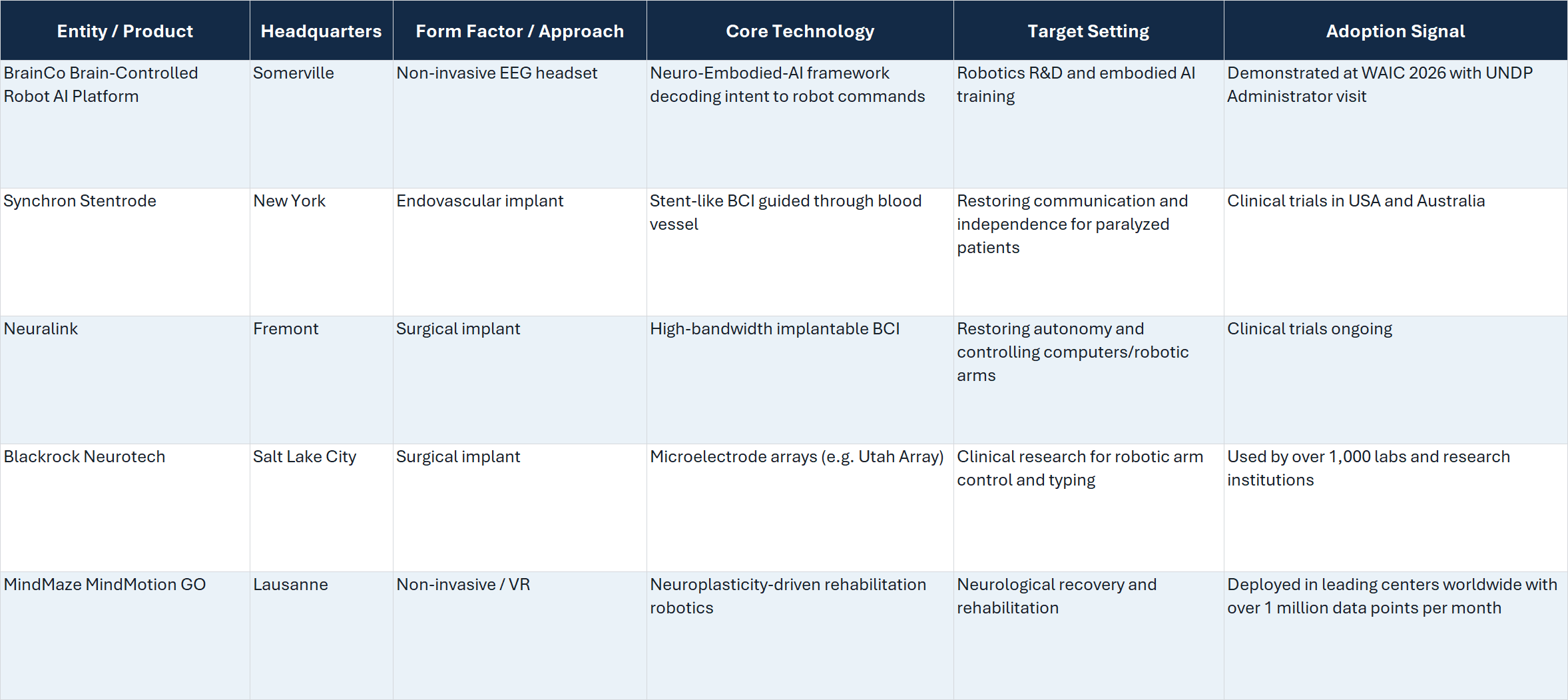
Adoption Analysis for Robotics Research
The availability of the BrainCo platform represents a shift in how robotics laboratories might approach embodied artificial intelligence training. While specific pricing and exact commercial availability dates beyond the July 17 debut were not explicitly disclosed, the system is positioned as a ready to use tool for researchers and developers. The platform compatibility with various commercially available robots, including humanoid machines and robotic dogs, lowers the barrier to entry for laboratories that already possess robotic hardware but lack the specialized neurotechnology expertise to build custom brain computer interfaces.
Reliability evidence currently rests on BrainCo's company claims and public demonstrations. The company says the full chain from signal capture to robot command takes less than 200 milliseconds. At the World Artificial Intelligence Conference, a user wearing the headset controlled a robotic arm that grasped a cup and picked up an apple. Alexander De Croo, Administrator of the United Nations Development Programme, also visited the exhibition. These observations verify that the demonstration occurred, but they do not provide an independent accuracy rate, long duration test, or comparison across users and laboratories.
The economics of implementing such a system depend on an undisclosed pricing model. The proposed value lies in connecting neural decoding with robot control through one research platform. For procurement managers and laboratory leaders, the central test is whether the three stage workflow works consistently with their existing robots, users, safety controls, and data infrastructure. Independent teams would need to measure setup effort, command accuracy, latency, calibration time, and repeatability before treating the conference demonstration as evidence of routine laboratory performance.
The implementation of the BrainCo platform requires a paradigm shift in how researchers approach data collection. Instead of relying solely on physical sensors and cameras, laboratories can now incorporate neural data into their training pipelines. This multimodal approach provides a more comprehensive understanding of human intent, which is crucial for developing robots that can anticipate and respond to human needs. The platform unified software process simplifies the integration of these disparate data streams, allowing researchers to focus on developing more sophisticated artificial intelligence models.
Strategic Implications for Technology Evaluators
For sourcing teams and technology evaluators in the robotics sector, the introduction of integrated brain to robot platforms signals a maturation of the tools available for embodied artificial intelligence development. The historical approach required assembling disparate hardware and software components, often demanding expertise in both neuroscience and robotics. A unified platform shifts the focus from building infrastructure to generating training data.
Operations leaders should evaluate the platform data collection capabilities, specifically the simultaneous capture of physical execution data and electroencephalogram data. The persistent shortage of high quality training data is a recognized bottleneck in embodied artificial intelligence. Systems that can efficiently capture synchronized human intent and physical action offer a distinct advantage in training more responsive and capable robotic systems. Evaluators must weigh the convenience of a non invasive, unified system against the inherent signal limitations of electroencephalogram technology compared to invasive alternatives.
The platform broad compatibility with third party robots is a critical factor for procurement managers. A system that integrates with existing laboratory hardware maximizes previous capital expenditures. However, buyers must verify the depth of this compatibility and ensure the control mapping software supports the specific robotic platforms utilized in their research pipelines. The true test of the platform will be its performance in independent laboratory settings, beyond controlled exhibition environments.
"The true bottleneck in embodied artificial intelligence research is not always the absolute fidelity of the neural signal, but the speed and ease with which researchers can collect synchronized neural and physical data to train models."
The integration of neural decoding and robotic control into a single platform represents a significant step forward for the industry. By lowering the barrier to entry and simplifying the data collection process, BrainCo is enabling a wider range of researchers to participate in the development of embodied artificial intelligence. This democratization of access is likely to accelerate the pace of innovation and lead to the creation of more capable and responsive robotic systems.
This analysis synthesizes company statements, official filings, and public market activity available as of July 17, 2026.
Disclaimer: This article is for informational purposes only and does not constitute financial, investment, legal, or procurement advice. Product specifications, pricing, and availability may change, so readers should verify details directly with the relevant company before making decisions.














