ANSCER Robots Win Conditional US Market Access
The FCC granted conditional approval to ANSCER's AR250, AR650 and AR1250, tying U.S. market access to an onshoring plan and ongoing vetting.
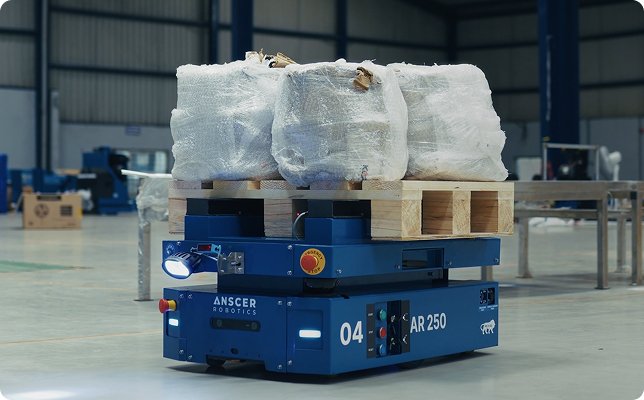
Three ANSCER Robotics mobile-robot platforms gained conditional access to the United States on September 18, when the Federal Communications Commission removed the AR250, AR650, and AR1250 from its Covered List after the Department of War approved the specific devices. The decision lets those models proceed through the equipment-authorization system, but it does not amount to a permanent company-wide clearance. Their exemption remains tied to ANSCER's continuing compliance with an onshoring plan and to updated product vetting.
For U.S. automation buyers, the direct answer is that the three named robots are now eligible for market access while their approved configurations and supply arrangements continue to satisfy federal conditions. That is more useful than a vague policy signal, because procurement teams have model numbers they can evaluate. It is also narrower than a conventional product certification: the regulator can reverse the exemption if ANSCER fails to follow its onshoring plan or if the approval application is found to contain a false statement or misrepresentation.
ANSCER Robotics is a Bengaluru-based autonomous mobile robot developer with an additional office in Plano, Texas. Its official materials say the company designs, engineers, and validates its robots in India for factory and warehouse material movement. The AR line uses a common mobile base with interchangeable top modules for jobs such as trolley transport, lifting, conveyors, tugging, and mobile manipulation. The three approved models span payload ratings of up to 250 kilograms, 650 kilograms, and 1,250 kilograms, giving the FCC decision practical relevance across light material handling and heavier industrial flows.
The Approval Opens a Door and Leaves It on a Hinge
The September decision follows a rule change with unusually direct consequences for robotics hardware. On July 28, the FCC added foreign-produced advanced robotic devices to the Covered List, except for devices granted a conditional approval by the Department of War. Equipment on that list faces restrictions in the FCC authorization process that governs whether radio-frequency products can be imported or marketed in the United States. Modern mobile robots depend on wireless links, controllers, sensors, fleet software, and remote service connections, so the authorization path is not a peripheral paperwork issue. It can determine whether a robot configuration is legally ready for sale.
The FCC's September notice says the Department of War reviewed ANSCER's submission and made a specific determination that the three listed platforms do not pose risks to U.S. national security. That finding required the FCC's Public Safety and Homeland Security Bureau to exclude the devices from the Covered List. The notice does not disclose the contents of ANSCER's onshoring plan, identify a factory, set a domestic-content percentage, or announce a production timetable. The public evidence therefore supports one precise conclusion: AR250, AR650, and AR1250 have conditional regulatory access. It does not support claims that ANSCER has completed U.S. manufacturing, won an order, or moved its supply chain.
This distinction matters because “approved” can sound final when the operative word is “conditional.” The FCC says the exemption remains effective indefinitely when no termination date is listed, but only while the recipient follows its onshoring plan and its products continue to clear updated vetting. That combination creates an open-ended compliance obligation rather than a one-time checkpoint. ANSCER has passed the first decision gate; it now has to preserve the facts that supported the decision.
Why Three Model Numbers Matter
Device-specific approval is a constraint, but it also gives buyers something concrete to place in a sourcing file. The AR250 is the compact member of the group, rated for loads up to 250 kilograms and intended for trolleys, shelves, cartons, totes, and other unit loads. The AR650 moves into heavier material handling, while the AR1250 extends the same platform approach to loads up to 1,250 kilograms. ANSCER describes the family as using simultaneous localization and mapping, laser-based obstacle detection, and fleet integration with warehouse or enterprise systems.
The common-platform design is commercially important because a buyer can standardize navigation, fleet management, charging, and support while changing the top module for a different workflow. That is the same strategic appeal behind broader efforts to build unified mobile-robot platforms across multiple material-handling jobs. A standardized base can reduce training and spares complexity. It can also make configuration control harder when one chassis is sold with several sensors, radios, controllers, and attachments.
The FCC notice names platforms, not every future variant that might carry a familiar badge. A procurement team should therefore match the offered bill of materials, communications modules, firmware, and top-module configuration to the equipment actually covered by the authorization record. If a distributor substitutes a radio, controller, or network component, the buyer needs to know whether that change remains inside the approved configuration. Model-family familiarity is not a substitute for traceability.
That is especially relevant in a market where Chinese suppliers dominate mobile-robot volume and global manufacturers source components across borders. RobotAIGeek's analysis of industry shipment data found that China accounted for 69 percent of the world's mobile-robot shipments. ANSCER's India-engineered positioning offers buyers another supply option, but the new U.S. rule shows that country labels alone do not settle market access. Regulators are asking where products are made, how they are vetted, and whether a company can keep an approved supply arrangement intact.
Onshoring Is Now Part of the Product
The most consequential phrase in the FCC notice is not a payload rating or a navigation feature. It is “continuous compliance with the onshoring plan.” In practical terms, ANSCER's U.S. proposition now includes an operational promise about how approved robots will be sourced, built, configured, or supported. The public notice does not say which of those activities the plan covers, so a responsible buyer cannot assume more than the regulator disclosed. What buyers can infer is that supply-chain execution has become part of the product's compliance state.
That changes the diligence conversation. A plant manager once might have compared route accuracy, cycle time, battery runtime, safety scanners, and integration cost. Those questions still matter. The buyer now also needs evidence that the delivered unit matches the approved platform, that replacement parts will not quietly alter the configuration, and that service updates will preserve the conditions under which market access was granted. The sales team can describe capability; legal, security, and operations teams have to document continuity.
The consequence is not unique to ANSCER. When a regulator connects authorization to production geography and continuing vetting, vendor risk moves upstream. Contract language may need to cover notice of hardware substitutions, firmware provenance, component origin, remote-access controls, and the supplier's duty to disclose any change in approval status. Acceptance testing should record serial numbers and configuration identifiers, while lifecycle support should specify how repaired or upgraded machines remain within the authorized design.
This is the same reason experienced automation buyers treat safety documentation, drive compatibility, and service support as part of a component purchase rather than an afterthought. RobotAIGeek's procurement guide for servo motors and drives makes the broader point: technical performance matters only when the surrounding documentation, certification, integration, and replacement path survive the full operating life. Conditional market access adds another layer to that discipline.
The Buyer's Checklist Has Changed
A buyer considering one of the three approved platforms should begin with the exact equipment-authorization record and work outward. The first question is whether the quoted AR250, AR650, or AR1250 configuration is the same configuration covered by the approval. The second is who will import, integrate, and service it in the United States. The third is how ANSCER and its channel partners will notify customers if updated vetting changes the status of a model, component, or software release.
The fourth question is operational: what happens to an installed fleet if the conditional approval ends? The FCC notice says non-compliance or a material misrepresentation could return the devices to the Covered List. It does not describe a customer remedy, a spare-parts plan, or the treatment of units already operating at a site. Those issues belong in the purchase agreement. Buyers should ask for change-control commitments, status notifications, support continuity, and a defined response if authorization conditions change.
The fifth question concerns proof of onshoring. ANSCER should not have to publish security-sensitive details from its application, but commercial customers need enough evidence to understand which operations occur in India, which occur in the United States, and which entities control firmware, data access, repairs, and final configuration. A Plano office can support sales and service, but an address alone does not prove the manufacturing or supply-chain steps required by the confidential plan.
None of this diminishes the value of the approval. ANSCER secured a model-specific path through a new restriction that applies broadly to foreign-produced advanced robotic devices. That is a meaningful competitive asset, especially for a supplier trying to give U.S. manufacturers an alternative source of autonomous material-handling equipment. The discipline is to value the decision for what it is: permission conditioned on execution, not evidence that commercial execution has already happened.
What Would Turn Conditional Access Into Commercial Proof
The next useful evidence will not be another policy statement. It will be a public account of how ANSCER is implementing the onshoring plan, which U.S. partners will integrate and service the robots, and whether the first approved configurations reach operating customer sites. A documented installation of an AR250, AR650, or AR1250 with traceable hardware and a durable support arrangement would connect regulatory access to an actual procurement result.
Until then, the September 18 notice should change how buyers classify ANSCER. The company is no longer merely a foreign mobile-robot vendor seeking entry into the United States. It is a conditionally approved supplier whose market access depends on keeping product, production, and compliance aligned. That status opens the door, but every shipment still has to fit through it.
This analysis draws on public statements from the Federal Communications Commission and ANSCER Robotics regarding the September 2026 conditional approval and the AR-series platforms. It is for general information purposes only and does not constitute investment, financial, or legal advice.
Hero image credit: ANSCER Robotics.