The AMR Industry's Most Important Number Isn't the Acquisition Price. It's What Comes After.
Rockwell's undisclosed-price purchase of AGILOX extends an eight-year pattern of AMR makers selling to industrial incumbents with no public reckoning of outcomes, except once, when Ocado paid 97% less for 6 River Systems than Shopify had four years earlier.


Rockwell Automation announced on Wednesday that it is buying AGILOX, an Austrian maker of forklift-style autonomous mobile robots. The price was not disclosed. It was not disclosed in 2023 either, when Rockwell paid somewhere around US$600 million for Clearpath Robotics and its OTTO Motors unit. It was not disclosed in 2021, when ABB bought Spain's ASTI Mobile Robotics Group, or when Zebra Technologies paid US$290 million in cash for the 95% of Fetch Robotics it did not already own. Of the handful of independent AMR companies that have been absorbed into bigger industrial names over the last eight years, exactly one deal ever produced a public number for what happened next. That number is a 97% markdown, and it should worry anyone running a fleet of robots from a company that might get bought, far more than anything in this week's press release.
I track robot and manufacturer records for a living, which means I spend more time than most reading the fine print on deals like this one. The fine print is almost always the same: strategic rationale, a platform story, a quote from the departing founder about scale they could not have reached alone. What is almost never in the fine print is what the acquired company was actually worth once the acquirer had owned it for a while. Mobile Industrial Robots, Fetch Robotics, ASTI Mobile Robotics, Clearpath and its OTTO Motors unit, and now AGILOX were all bought at a number set by a seller's leverage and a buyer's appetite at a single moment. Only one of them, a company called 6 River Systems, ever gave the market a second number to compare it against.
The One Deal With a Sequel
Shopify bought 6 River Systems, maker of the Chuck fleet of warehouse AMRs, in 2019 for US$450 million, paid partly in cash and partly in stock, as part of its short-lived push into owning e-commerce logistics infrastructure end to end. Four years later, with that push abandoned, Shopify sold 6 River to Ocado Group. Ocado's own 2023 financial disclosure put the price at US$12.7 million. That is roughly 3 cents on every dollar Shopify spent, for a business that Ocado itself said still had Chuck robots running in more than 100 warehouses for upward of 70 customers at the time of the second sale.
A 97% collapse in four years is not a rounding error in anyone's deal model. It is the single clearest data point the AMR category has ever produced about what these businesses are actually worth once the acquiring company stops needing a platform story and starts needing the unit to make money on its own. The industry's response to that data point was not to reckon with it. It was to treat 6 River as a one-off, a casualty of Shopify's specific retreat from logistics, unrelated to the Teradynes and Zebras and ABBs that kept buying AMR makers on the same basic thesis a few years later.
I do not think it was unrelated. I think it was the one time the thesis got tested in public.
What Carlyle's Four Years Actually Bought
AGILOX is a useful case to sit next to that number. Carlyle took a majority growth stake in the company in 2021 and, by Carlyle's own account, watched AGILOX quadruple its revenue over the following four years while the company added a robots-as-a-service subscription line. Quadrupling revenue in a growth-equity portfolio company is a genuinely good outcome, the kind that is supposed to set up a clean exit at a rich multiple. Instead, Carlyle is exiting into an undisclosed-price sale to a strategic buyer, the same pattern as Clearpath's sale to Rockwell two years earlier and MiR's sale to Teradyne back in 2018, where the headline US$148 million in cash was paired with up to another US$124 million riding on performance targets the company would need to hit after the deal, not before it.
Here is the pattern interrupt worth sitting with: of these five deals, spanning eight years and four different industrial acquirers, only two, MiR and Fetch, ever had a confirmed price at signing. Not one of the five has ever produced a second, later number for an outside observer to check the first one against. AGILOX's quadrupled revenue is Carlyle's own framing, offered with no base figure and no price tag attached to it at all. The only AMR deal that ever got a sequel was 6 River Systems, and the sequel was a 97% write-down of the number that came before it.
The acquisition price is marketing. The number that tells you whether the business was real is the one nobody publishes.
The Question an ASEAN Buyer Actually Has to Ask
None of this is academic for a procurement team outside the US and Europe, where service networks for any given AMR brand are already thinner and switching costs are already higher. When Rockwell absorbed Clearpath and OTTO Motors in 2023, it kept both brand names, said it would not consolidate the product lines, and has since expanded OTTO's manufacturing footprint rather than shrinking it, by the company's own public statements. That is the good outcome, and it is worth stating plainly rather than assuming the worst reflexively. But a buyer evaluating AGILOX robots today, or any AMR vendor still independent enough to be acquisition bait, cannot know in advance whether they will get Rockwell's Clearpath treatment or Shopify's 6 River treatment. The only honest answer is that the deal terms that matter to an operator, the service-level commitment, the spare-parts roadmap, the price of the next fleet expansion, are almost never the terms that get disclosed at signing. They surface later, piecemeal, usually after the contract is already in place.
That asymmetry is the actual story standing behind Wednesday's announcement, more than whether AGILOX and OTTO's fleet software will ever run as one system, which is the question most of this week's coverage will focus on. A fleet manager who has already standardized a plant floor on an AMR brand that then gets sold is not negotiating from a position of strength. The leverage belonged to AGILOX and Carlyle on the way into this deal. It does not automatically transfer to the customer on the way out.
What the Taxonomy Tells You That the Press Release Does Not
Running a platform that has to classify every one of these companies by ownership, not just by product, makes the pattern harder to miss than it would be reading each announcement in isolation. A company that called itself an independent AMR maker in 2020 is, by 2026, a division with a parent's name bolted on in at least five cases I can point to directly, and the direction of travel has not reversed once. Every one of those divisions still makes the same robots, mostly under the same brand, which is precisely why the change is easy to miss if you are only reading press releases rather than tracking ownership over time. The product continuity is real. The independence was never going to be.
That is worth saying plainly, because the AMR sector still gets covered, including by me, as though scale and funding rounds are the measure of health. A fairer measure is how many of the category's name-brand startups from 2015 to 2020 are still answerable to their own board rather than to a conglomerate's quarterly numbers. By my count, not many. The ones that are not folded in yet are, for the most part, waiting for the right offer, which is a different thing than winning.
If you are buying AMRs this quarter from a company that is still independent, the AGILOX deal is not a reason to panic. It is a reason to ask, before you sign, what happens to your service contract if the company you are buying from is not independent in three years, and to notice that almost nobody in this industry will give you a straight answer, because almost nobody has had to give one in public since 2023.
This column reflects the author's own analysis of public company disclosures, including Rockwell Automation's, Ocado Group's, Zebra Technologies', and Teradyne's own statements and filings, and is provided for general information purposes only; it does not constitute investment, financial, or procurement advice.
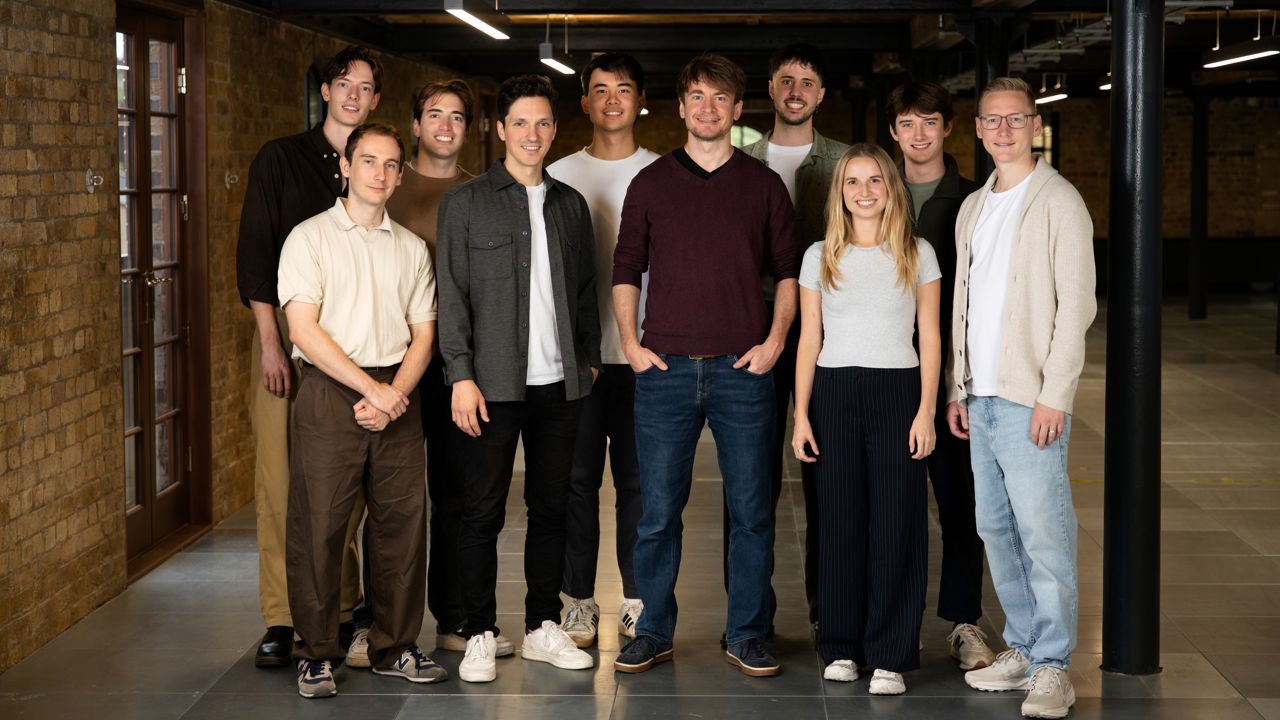
Hero image: Visitors view a row of AGILOX autonomous mobile robots during an open-house event at the company's Austrian facility. Photo: AGILOX.